Silvia Amicone - Böcker
Visar alla böcker från författaren Silvia Amicone. Handla med fri frakt och snabb leverans.
2 produkter
2 produkter
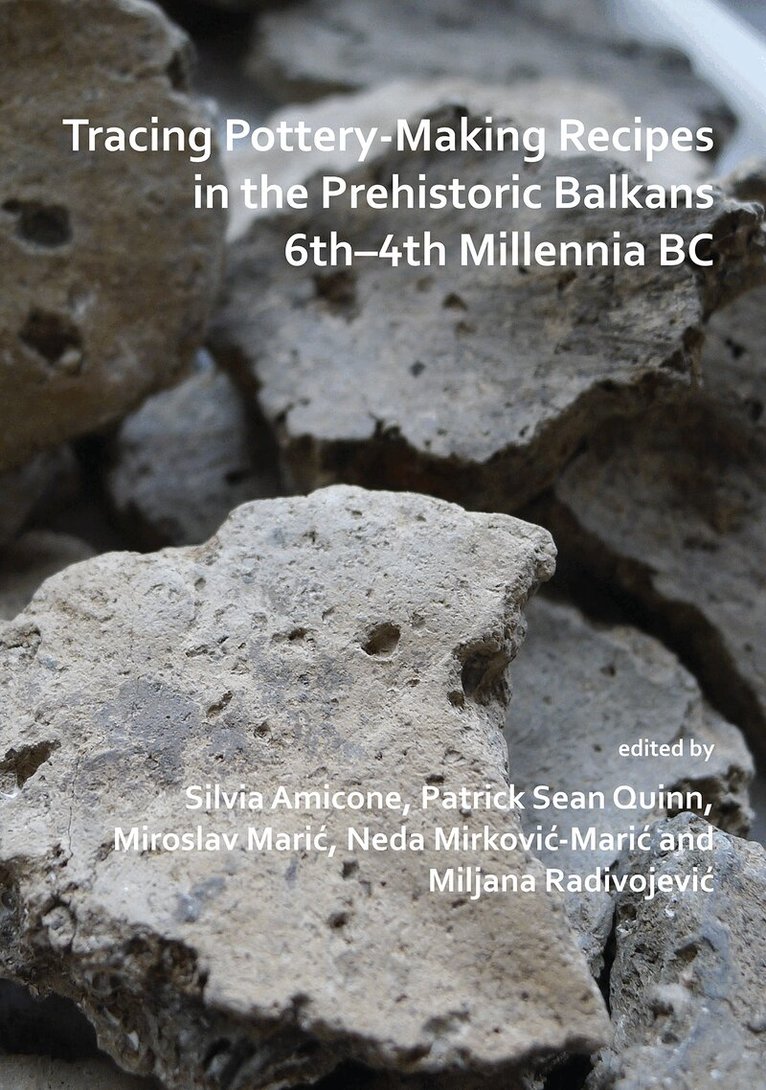
Tracing Pottery-Making Recipes in the Prehistoric Balkans 6th–4th Millennia BC
Häftad, Engelska, 2019
472 kr
Skickas
Tracing Pottery-Making Recipes in the Prehistoric Balkans 6th–4th Millennia BC is a collection of twelve chapters that capture the variety of current archaeological, ethnographic, experimental and scientific studies on Balkan prehistoric ceramic production, distribution and use. The Balkans is a culturally rich area at the present day as it was in the past. Pottery and other ceramics represent an ideal tool with which to examine this diversity and interpret its human and environmental origins. Consequently, Balkan ceramic studies is an emerging field within archaeology that serves as a testing ground for theories on topics such as technological know-how, innovation, craft tradition, cultural transmission, interaction, trade and exchange. This book brings together diverse studies by leading researchers and upcoming scholars on material from numerous Balkan countries and chronological periods that tackle these and other topics for the first time. It is a valuable resource for anyone working on Balkan archaeology and also of interest to those working on archaeological pottery from other parts of the world.
Pottery Technology at the Dawn of the Metal Age
Exploring Dynamics within Vinča Material Culture
Inbunden, Engelska, 2025
802 kr
Tillfälligt slut
This book investigates the reconstruction and transmission of pottery-making recipes at the Neolithic/Chalcolithic sites of Belovode and Pločnik (c. 5350/5300–4500), two key settlements of the Vinča culture located in northeast and south Serbia, respectively. Both sites have recently yielded some of the earliest known copper artefacts in Eurasia, making them exceptional case studies for exploring the evolution of ceramic technology during the transition to the Metal Age. An interdisciplinary methodology—combining macroscopic observations with a suite of analytical techniques including thin section petrography, XRF, XRPD, and SEM—was applied to a wide selection of ceramic samples. These samples span the full typological and technological spectrum of pottery from both sites, enabling the reconstruction and comparison of production recipes across different occupational phases. The study’s primary aim was to trace the transmission of technological knowledge in pottery production and to investigate potential pyrotechnological links with the emergence of early metallurgy. The results demonstrate the value of integrating materials science with archaeological inquiry. They reveal distinct technological choices and refined craftsmanship, offering fresh insights into the interplay between ceramic production and metallurgical innovation at the dawn of the Metal Age.