Simon Conway Morris - Böcker
Visar alla böcker från författaren Simon Conway Morris. Handla med fri frakt och snabb leverans.
11 produkter
11 produkter
445 kr
Skickas inom 7-10 vardagar
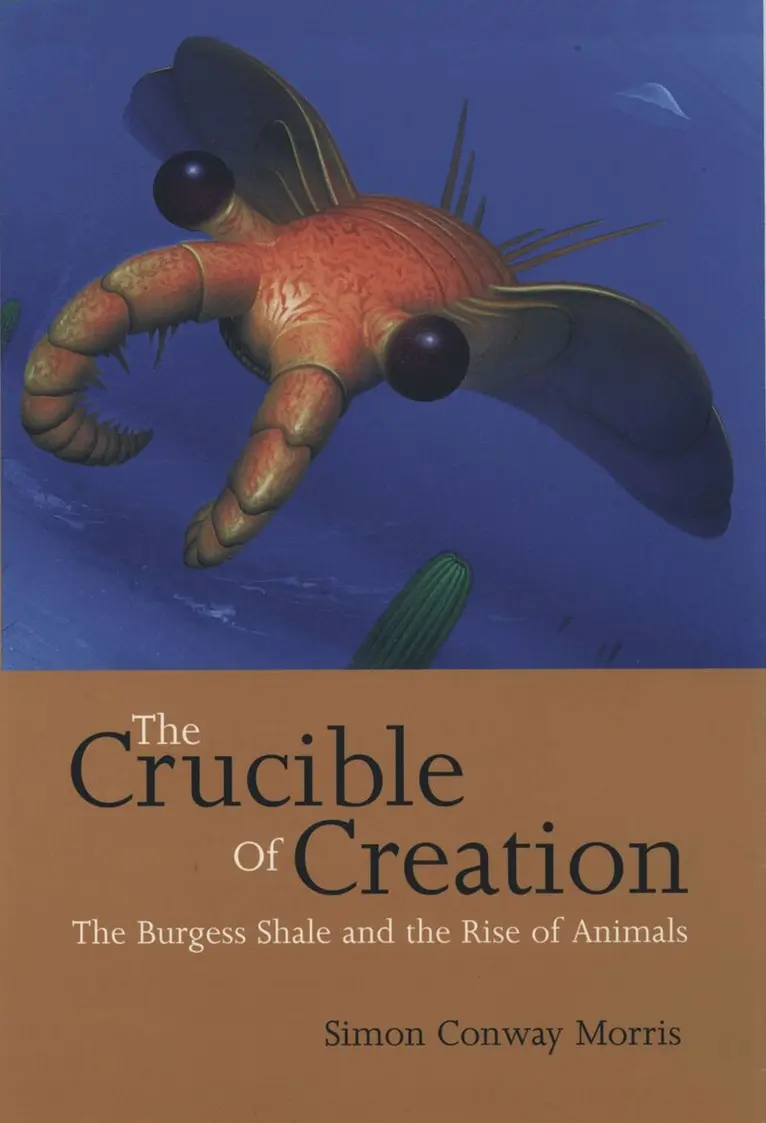
'tells a great story and manages to be informative at all levels. Conway Morris has a collector's eye for the sort of entertaining yet informative snippets that keep readers on their toes.' New Scientist Located in the west of Canada, the Burgess Shale contains a unique collection of fossil remains, and has become an icon for those studying the history of life. This remarkable book takes us on a fresh journey back in time through the Burgess Shale and its astonishing collection of pre-Cambrian creatures. In an entertaining and readable style, Simon Conway Morris paints a vivid picture of the critical period which saw the diversification of all the major animal groups, and takes a controversial stance on current evolutionary theories that is sure to provoke much interest and debate. 'It is less bleak in its assessment of life on earth and it is spiritually uplifting, rather than dry and mechanistic as some would have us believe' THES 'The centerpiece of The Crucible of Creation is a description, authoritative and readable, of the animals themselves. New York Times Book Review
507 kr
Skickas inom 7-10 vardagar
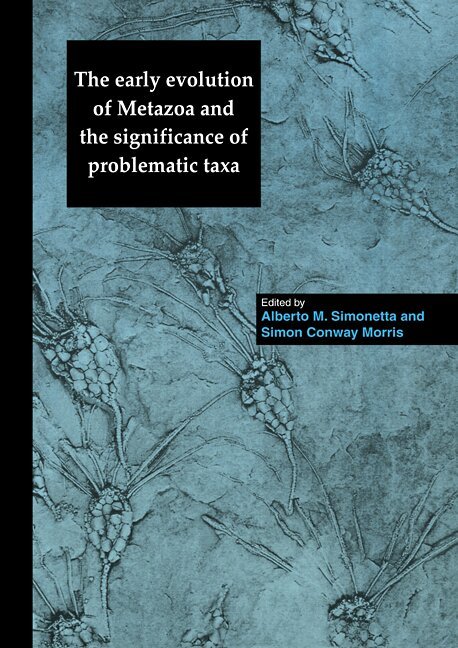
One of the great enigmas of evolutionary biology has been how to treat animals of problematic systematic position. Many are known only as fossils, so this area has been of particular interest to palaeobiologists. This book represents a wide synthesis. It embraces not only general problems of animal classification of animals and new information on their molecular sequences that bear on their wider relationships, but also addresses more specific problems. These include details appraisals of both living and fossil groups. From the fossil record special emphasis is laid on examples from exceptionally preserved biotas that include the Burgess shale-type faunas of the Cambrian of south China and western North America, the Carboniferous Mazon Creek beds of Illinois, and the Jurassic Osteno beds of northern Italy. In addition, experimental studies of soft-patrt preservation in jellyfish are relevant to comparable preservation in the fossil record.
397 kr
Skickas inom 7-10 vardagar
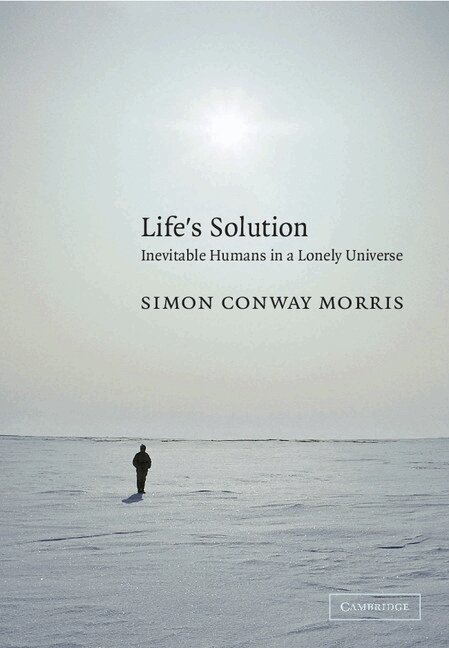
The assassin's bullet misses, the Archduke's carriage moves forward, and a catastrophic war is avoided. So too with the history of life. Re-run the tape of life, as Stephen J. Gould claimed, and the outcome must be entirely different: an alien world, without humans and maybe not even intelligence. The history of life is littered with accidents: any twist or turn may lead to a completely different world. Now this view is being challenged. Simon Conway Morris explores the evidence demonstrating life's almost eerie ability to navigate to a single solution, repeatedly. Eyes, brains, tools, even culture: all are very much on the cards. So if these are all evolutionary inevitabilities, where are our counterparts across the galaxy? The tape of life can only run on a suitable planet, and it seems that such Earth-like planets may be much rarer than hoped. Inevitable humans, yes, but in a lonely Universe.
1 303 kr
Skickas inom 7-10 vardagar
The assassin's bullet misses, the Archduke's carriage moves forward, and a catastrophic war is avoided. So too with the history of life. Re-run the tape of life, as Stephen J. Gould claimed, and the outcome must be entirely different: an alien world, without humans and maybe not even intelligence. The history of life is littered with accidents: any twist or turn may lead to a completely different world. Now this view is being challenged. Simon Conway Morris explores the evidence demonstrating life's almost eerie ability to navigate to a single solution, repeatedly. Eyes, brains, tools, even culture: all are very much on the cards. So if these are all evolutionary inevitabilities, where are our counterparts across the galaxy? The tape of life can only run on a suitable planet, and it seems that such Earth-like planets may be much rarer than hoped. Inevitable humans, yes, but in a lonely Universe.
Del 2 - Cambridge Astrobiology
Fitness of the Cosmos for Life
Biochemistry and Fine-Tuning
Inbunden, Engelska, 2007
1 508 kr
Skickas inom 7-10 vardagar
This highly interdisciplinary 2007 book highlights many of the ways in which chemistry plays a crucial role in making life an evolutionary possibility in the universe. Cosmologists and particle physicists have often explored how the observed laws and constants of nature lie within a narrow range that allows complexity and life to evolve and adapt. Here, these anthropic considerations are diversified in a host of new ways to identify the most sensitive features of biochemistry and astrobiology. Celebrating the classic 1913 work of Lawrence J. Henderson, The Fitness of the Environment for Life, this book looks at the delicate balance between chemistry and the ambient conditions in the universe that permit complex chemical networks and structures to exist. It will appeal to a broad range of scientists, academics, and others interested in the origin and existence of life in our universe.
676 kr
Skickas inom 10-15 vardagar
Reflecting a rich technical and interdisciplinary exchange of ideas, Water and Life: The Unique Properties of H20 focuses on the properties of water and its interaction with life. The book develops a variety of approaches that help to illuminate ways in which to address deeper questions with respect to the nature of the universe and our place within it.Grouped in five broad parts, this collection examines the arguments of Lawrence J. Henderson and other scholars on the "fitness" of water for life as part of the physical and chemical properties of nature considered as a foundational environment within which life has emerged and evolved. Leading authorities delve into a range of themes and questions that span key areas of ongoing debate and uncertainty. They draw from the fields of chemistry, biology, biochemistry, planetary and earth sciences, physics, astronomy, and their subspecialties. Several chapters also deal with humanistic disciplines, such as the history of science and theology, to provide additional perspectives.Bringing together highly esteemed researchers from multidisciplinary fields, this volume addresses fundamental questions relating to the possible role of water in the origin of life in the cosmos. It supports readers in their own explorations of the origin and meaning of life and the role of water in maintaining life.
Del 2 - Cambridge Astrobiology
Fitness of the Cosmos for Life
Biochemistry and Fine-Tuning
Häftad, Engelska, 2012
1 034 kr
Skickas inom 7-10 vardagar
This highly interdisciplinary 2007 book highlights many of the ways in which chemistry plays a crucial role in making life an evolutionary possibility in the universe. Cosmologists and particle physicists have often explored how the observed laws and constants of nature lie within a narrow range that allows complexity and life to evolve and adapt. Here, these anthropic considerations are diversified in a host of new ways to identify the most sensitive features of biochemistry and astrobiology. Celebrating the classic 1913 work of Lawrence J. Henderson, The Fitness of the Environment for Life, this book looks at the delicate balance between chemistry and the ambient conditions in the universe that permit complex chemical networks and structures to exist. It will appeal to a broad range of scientists, academics, and others interested in the origin and existence of life in our universe.
1 748 kr
Skickas inom 10-15 vardagar
Reflecting a rich technical and interdisciplinary exchange of ideas, Water and Life: The Unique Properties of H20 focuses on the properties of water and its interaction with life. The book develops a variety of approaches that help to illuminate ways in which to address deeper questions with respect to the nature of the universe and our place within it.Grouped in five broad parts, this collection examines the arguments of Lawrence J. Henderson and other scholars on the "fitness" of water for life as part of the physical and chemical properties of nature considered as a foundational environment within which life has emerged and evolved. Leading authorities delve into a range of themes and questions that span key areas of ongoing debate and uncertainty. They draw from the fields of chemistry, biology, biochemistry, planetary and earth sciences, physics, astronomy, and their subspecialties. Several chapters also deal with humanistic disciplines, such as the history of science and theology, to provide additional perspectives.Bringing together highly esteemed researchers from multidisciplinary fields, this volume addresses fundamental questions relating to the possible role of water in the origin of life in the cosmos. It supports readers in their own explorations of the origin and meaning of life and the role of water in maintaining life.
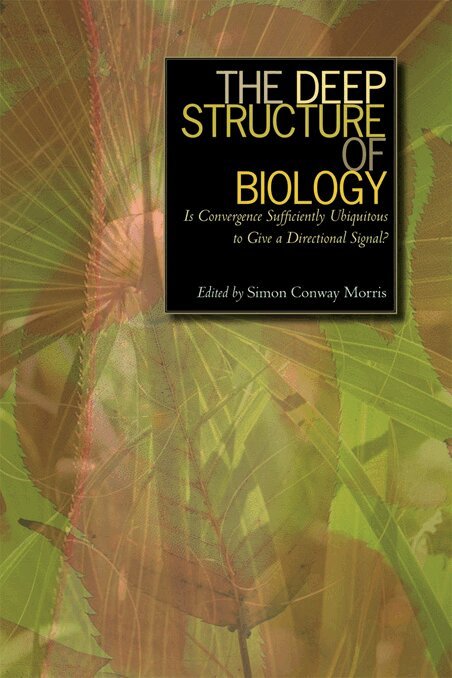
Deep Structure of Biology
Is Convergence Sufficiently Ubiquitous to Give a Directional Signal
Häftad, Engelska, 2008
346 kr
Skickas inom 11-20 vardagar
Twelve renowned scientists and theologians offer penetrating insights into the evolution dialogue in The Deep Structure of Biology. Each considers whether the orthodox evolution model is sufficient and offers their perspective on evolution and biology. Essays include: Chance and Necessity in Evolution Green Plants as Intelligent Organisms Canny Corvoids and Political Primates: A Case for Convergent Evolution in Intelligence Social and Cultural Evolution in the Ocean: Convergences and Contrasts with Terrestrial Systems Purpose in Nature: On the Possibility of a Theology of Evolution Editor Simon Conway Morris provides the introduction, an overview of the issues, and an essay on evolution and convergence. Other contributors are Richard Lenski, George McGhee, Karl Niklas, Anthony Trewavas, Nigel Franks, Nicola Clayton, Nathan Emery, HalWhitehead, Robert Foley, Michael Ruse, Celia Deane-Drummond, and John Haught. The discussion of biology and evolution in these essays broadens the scope of the traditional evolution discussion as it aims to stimulate the development of other research programs. Scholars in the science and religion field will find this book a valuable resource.
401 kr
Skickas inom 5-8 vardagar
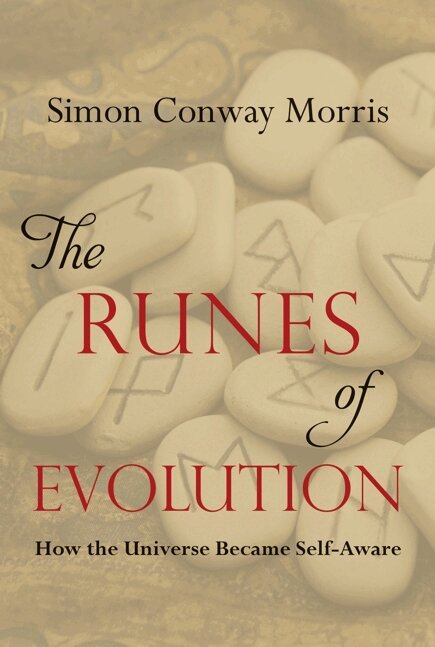
How did human beings acquire imaginations that can conjure up untrue possibilities? How did the Universe become self-aware? In The Runes of Evolution, Simon Conway Morris revitalizes the study of evolution from the perspective of convergence, providing us with compelling new evidence to support the mounting scientific view that the history of life is far more predictable than once thought. A leading evolutionary biologist at the University of Cambridge, Conway Morris came into international prominence for his work on the Cambrian explosion (especially fossils of the Burgess Shale) and evolutionary convergence, which is the process whereby organisms not closely related (not monophyletic), independently evolve similar traits as a result of having to adapt to similar environments or ecological niches. In The Runes of Evolution, he illustrates how the ubiquity of convergence hints at an underlying framework whereby many outcomes, not least brains and intelligence, are virtually guaranteed on any Earth-like planet. Conway Morris also emphasizes how much of the complexity of advanced biological systems is inherent in microbial forms. By casting a wider net, The Runes of Evolution explores many neglected evolutionary questions. Some are remarkably general. Why, for example, are convergences such as parasitism, carnivory, and nitrogen fixation in plants concentrated in particular taxonomic hot spots? Why do certain groups have a particular propensity to evolve toward particular states? Some questions lead to unexpected evolutionary insights: If bees sleep (as they do), do they dream? Why is that insect copulating with an orchid? Why have sponges evolved a system of fiber optics? What do mantis shrimps and submarines have in common? If dinosaurs had not gone extinct what would have happened next? Will a saber-toothed cat ever re-evolve? Cona Morris observes: “Even amongst the mammals, let alone the entire tree of life, humans represent one minute twig of a vast (and largely fossilized) arborescence. Every living species is a linear descendant of an immense string of now-vanished ancestors, but evolution itself is the very reverse of linear. Rather it is endlessly exploratory, probing the vast spaces of biological hyperspace. Indeed this book is a celebration of how our world is (and was) populated by a riot of forms, a coruscating tapestry of life.” The Runes of Evolution is the most definitive synthesis of evolutionary convergence to be published to date.
351 kr
Skickas inom 7-10 vardagar
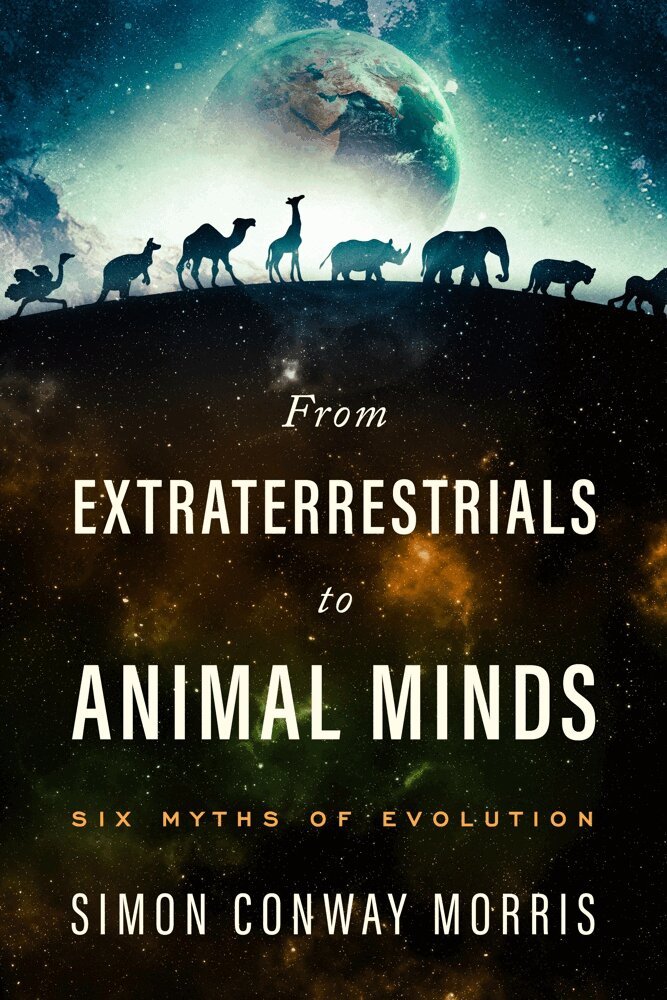
In this learned romp of science writing, Cambridge professor Simon Conway Morris cheerfully challenges six assumptions-what he calls ‘myths’-that too often pass as unquestioned truths amongst the evolutionary orthodox. His convivial tour begins with the idea that evolution is boundless in the kinds of biological systems it can produce. Not true, he says. The process is highly circumscribed and delimited. Nor is it random. This popular notion holds that evolution proceeds blindly, with no endgame. But Conway Morris suggests otherwise, pointing to evidence that the processes of evolution are “seeded with inevitabilities.” If that is so, then what about mass extinctions? Don’t they steer the development of life in radically new directions? Rather the reverse, claims Conway Morris. Such cataclysms accelerate evolutionary developments that were going to happen anyway. And what about that other evolutionary canard: the “missing link”? There is plenty to choose from in the fossil record, but persistently overlooked is that in any group, there is not one but a phalanx of “missing links.” Once again, we under-score the near-inevitability of evolutionary outcomes. Turning from fossils to minds, Conway Morris critically examines the popular tenet that the intelligence of humans and animals are the same thing, a difference of degree, not kind. A closer scrutiny of our minds shows that, in reality, an unbridgeable gulf separates us from even the chimpanzees, so begging questions of consciousness and Mind.Finally, Conway Morris tackles the question of extraterrestrials. Undoubtedly, the size and scale of the universe suggest that alien life must exist somewhere beyond Earth and our tiny siloed solar system? After all, evolutionary convergence more than hints that human-like forms are universal. But Dr. Conway Morris has serious doubts. The famous Fermi Paradox (“Where are they?”) appears to hold: Alone in the cosmos-and unique, but not quite in the way one might expect.