Simon Dor - Böcker
Visar alla böcker från författaren Simon Dor. Handla med fri frakt och snabb leverans.
2 produkter
2 produkter
362 kr
Skickas inom 7-10 vardagar
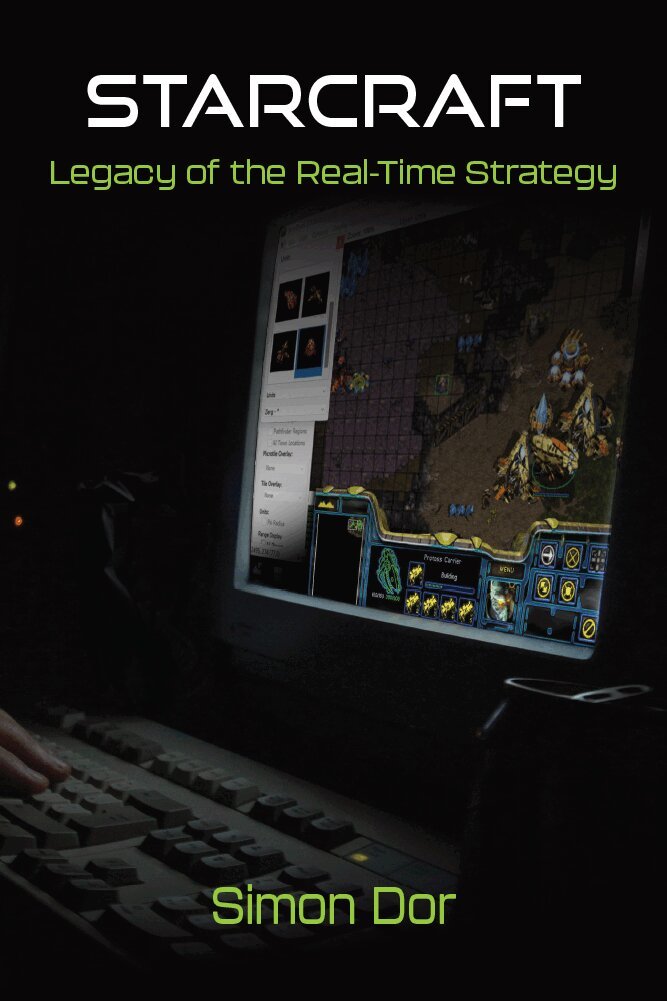
StarCraft (Blizzard Entertainment, 1998) is a real-time strategy video game, placing the player in command of three extraterrestrial races fighting against each other for strategic control of resources, terrain, and power. Simon Dor examines the game’s unanticipated effect by delving into the history of the game and the two core competencies it encouraged: decoding and foreseeing. Although StarCraft was not designed as an e-sport, its role in developing foreseeing skills helped give rise to one of the earliest e-sport communities in South Korea. Apart from the game’s clear landmark status, StarCraft offers a unique insight into changes in gaming culture and, more broadly, the marketability and profit of previously niche areas of interest. The book places StarCraft in the history of real-time strategy games in the 1990s—Dune II, Command & Conquer, Age of Empires—in terms of visual style, narrative tropes, and control. It shows how design decisions, technological infrastructures, and a strong contribution from its gaming community through Battle.net and its campaign editor were necessary conditions for the flexibility it needed to grow its success. In exploring the fanatic clusters of competitive players who formed the first tournaments and professionalized gaming, StarCraft shows that the game was key to the transition towards foreseeing play and essential to competitive gaming and e-sports.
1 942 kr
Kommande
Depictions of Power draws connections between strategy and management games and their singular depiction of power relationships.One could say that strategy and management games are the quintessential depictions of power. Rather than being centered on a single character, these games put the players in situations where they have power over other entities or other players. Moreover, narrative contextualization in the genre depicts the player as a leader, manager, governor, general, or even as a god of some sort. As such, they take an implicit or explicit stance on power, through control, agency, identity, ownership, affiliation, or loyalty, for instance.Depictions of Power explores how power is depicted and/or experienced in strategy and management games through gameplay, narrative, representation, dialogs, mechanics, and gaming systems. Most games overemphasize the agency of the player, but others offer a critical perspective on war or control. Strategy and management games are treated as a unique corpora to underline their similarities and go beyond a sole militaristic perspective. This book argues that games must be criticized and questioned, but that they can themselves criticize and question power. As such, they must be explored, analyzed, and contextualized in the history of gameplaying.Contributors to this collection cover a wide diversity of playing experiences, discussing strategy and management games such as Civilization, Cities: Skylines, Total War, Pharaoh, Command & Conquer, Trader Life Simulator, Riot: Civil Unrest, and The Sims.