Simon Esmonde Cleary - Böcker
Visar alla böcker från författaren Simon Esmonde Cleary. Handla med fri frakt och snabb leverans.
8 produkter
8 produkter
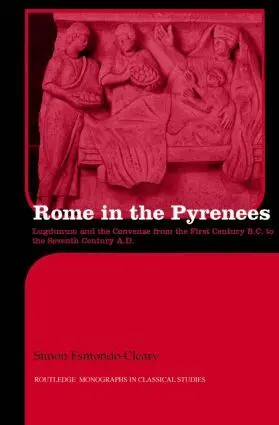
Rome in the Pyrenees
Lugdunum and the Convenae from the first century B.C. to the seventh century A.D.
Inbunden, Engelska, 2007
2 886 kr
Skickas inom 5-8 vardagar
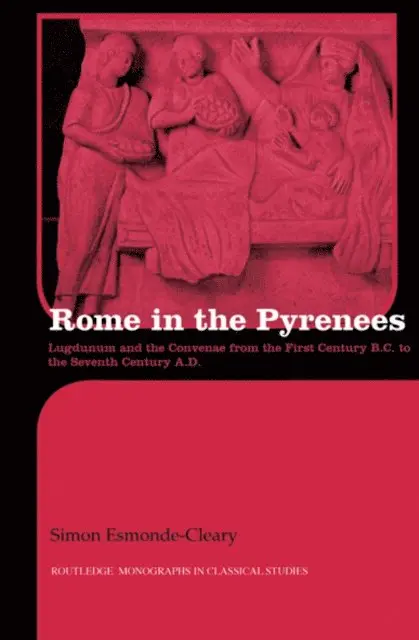
Rome in the Pyrenees is a unique treatment in English of the archaeological and historical evidence for an important Roman town in Gaul, Lugdunum in the French Pyrenees, and for its surrounding people the Convenae. The book opens with the creation of the Convenae by Pompey the Great in the first century B.C. and runs down to the great Frankish siege in A.D. 585 and its aftermath.Now the town of Saint-Bertrand-de-Comminges, Lugdunum is one of the best-known Roman towns in Gaul, with a rich selection of monuments at the town itself and important remains in the countryside, such as the classic villa at Montmaurin or the votive altars, cinerary caskets and sarcophagi in the local marble. The book traces how the Convenae used their marble to help create their identity, invisible before Pompey but amongst the richest and most distinctive in Gaul by the second century A.D.Drawing on his own excavations at Saint-Bertrand and the extensive earlier and recent work there, Simon Esmonde Cleary combines a clear description of the buildings and monuments of Lugdunum and of its countryside with a discussion of what they can tell us about the impact of Rome on this remote corner of its empire.This book will be extremely valuable to ancient historians, classicists and students of Roman archaeology, and contains a guide to the visible Roman remains of the area.
Rome in the Pyrenees
Lugdunum and the Convenae from the first century B.C. to the seventh century A.D.
Häftad, Engelska, 2012
831 kr
Skickas inom 10-15 vardagar
Rome in the Pyrenees is a unique treatment in English of the archaeological and historical evidence for an important Roman town in Gaul, Lugdunum in the French Pyrenees, and for its surrounding people the Convenae. The book opens with the creation of the Convenae by Pompey the Great in the first century B.C. and runs down to the great Frankish siege in A.D. 585 and its aftermath.Now the town of Saint-Bertrand-de-Comminges, Lugdunum is one of the best-known Roman towns in Gaul, with a rich selection of monuments at the town itself and important remains in the countryside, such as the classic villa at Montmaurin or the votive altars, cinerary caskets and sarcophagi in the local marble. The book traces how the Convenae used their marble to help create their identity, invisible before Pompey but amongst the richest and most distinctive in Gaul by the second century A.D.Drawing on his own excavations at Saint-Bertrand and the extensive earlier and recent work there, Simon Esmonde Cleary combines a clear description of the buildings and monuments of Lugdunum and of its countryside with a discussion of what they can tell us about the impact of Rome on this remote corner of its empire.This book will be extremely valuable to ancient historians, classicists and students of Roman archaeology, and contains a guide to the visible Roman remains of the area.
1 702 kr
Skickas inom 7-10 vardagar
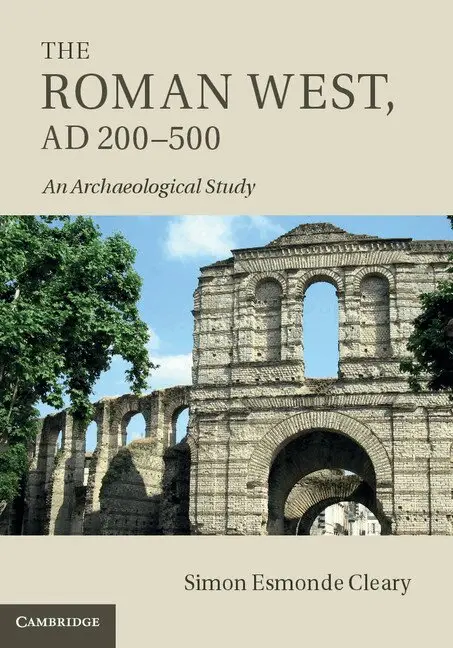
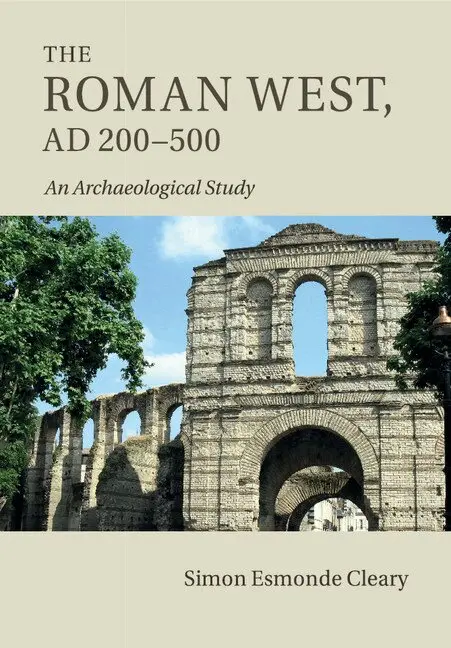
This book describes and analyses the development of the Roman West from Gibraltar to the Rhine, using primarily the extensive body of published archaeological evidence rather than the textual evidence underlying most other studies. It situates this development within a longer-term process of change, proposing the later second century rather than the 'third-century crisis' as the major turning-point, although the latter had longer-term consequences owing to the rise in importance of military identities. Elsewhere, more 'traditional' forms of settlement and display were sustained, to which was added the vocabulary of Christianity. The longer-term rhythms are also central to assessing the evidence for such aspects as rural settlement and patterns of economic interaction. The collapse of Roman imperial authority emphasised trends such as militarisation and regionalisation along with economic and cultural disintegration. Indicators of 'barbarian/Germanic' presence are reassessed within such contexts and the traditional interpretations questioned and alternatives proposed.
474 kr
Skickas inom 7-10 vardagar
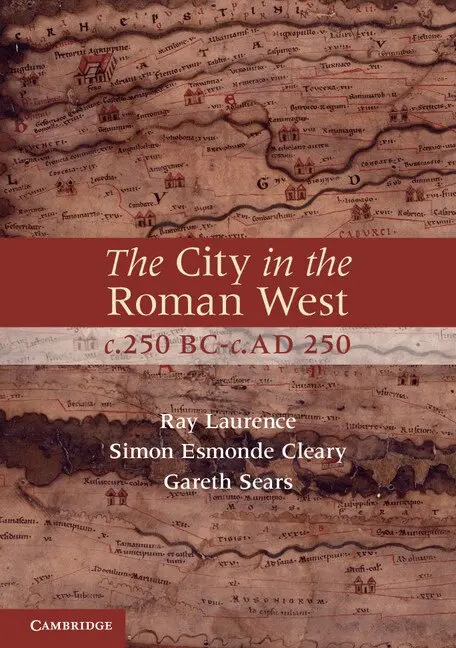
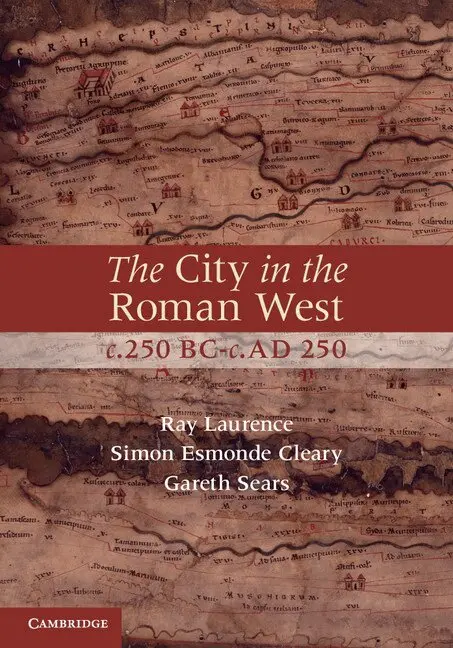
The city is widely regarded as the most characteristic expression of the social, cultural and economic formations of the Roman Empire. This was especially true in the Latin-speaking West, where urbanism was much less deeply ingrained than in the Greek-speaking East but where networks of cities grew up during the centuries following conquest and occupation. This well-illustrated synthesis provides students and specialists with an overview of the development of the city in Italy, Gaul, Britain, Germany, Spain and North Africa, whether their interests lie in ancient history, Roman archaeology or the wider history of urbanism. It accounts not only for the city's geographical and temporal spread and its associated monuments (such as amphitheatres and baths), but also for its importance to the rulers of the Empire as well as the provincials and locals.
1 295 kr
Skickas inom 7-10 vardagar
The city is widely regarded as the most characteristic expression of the social, cultural and economic formations of the Roman Empire. This was especially true in the Latin-speaking West, where urbanism was much less deeply ingrained than in the Greek-speaking East but where networks of cities grew up during the centuries following conquest and occupation. This well-illustrated synthesis provides students and specialists with an overview of the development of the city in Italy, Gaul, Britain, Germany, Spain and North Africa, whether their interests lie in ancient history, Roman archaeology or the wider history of urbanism. It accounts not only for the city's geographical and temporal spread and its associated monuments (such as amphitheatres and baths), but also for its importance to the rulers of the Empire as well as the provincials and locals.
240 kr
Skickas
Chedworth is one of the few Roman villas in Britain whose remains are open to the public, and this book seeks to explain what these remains mean. The fourth century in Britain was a ‘golden age’ and at the time the Cotswolds were the richest area of Roman Britain. The wealthy owners of a villa such as Chedworth felt themselves part of an imperial Roman aristocracy. This is expressed at the villa in the layout of the buildings, rooms for receiving guests and for grand dining, the provision of baths, and the use of mosaics. The villa would also have housed the wife, family and household of the owner and been the centre of an agricultural estate. In the nineteenth century Chedworth was rediscovered, and part of the villa’s tale is the way in which it was viewed by a nineteenth-century Cotswold landowner, Lord Eldon, and then its current owners, the National Trust. Now, in this remarkable and beautifully illustrated volume, Chedworth’s story is told in full.
1 132 kr
Skickas inom 5-8 vardagar
583 kr
Skickas inom 7-10 vardagar
This book describes and analyses the development of the Roman West from Gibraltar to the Rhine, using primarily the extensive body of published archaeological evidence rather than the textual evidence underlying most other studies. It situates this development within a longer-term process of change, proposing the later second century rather than the 'third-century crisis' as the major turning-point, although the latter had longer-term consequences owing to the rise in importance of military identities. Elsewhere, more 'traditional' forms of settlement and display were sustained, to which was added the vocabulary of Christianity. The longer-term rhythms are also central to assessing the evidence for such aspects as rural settlement and patterns of economic interaction. The collapse of Roman imperial authority emphasised trends such as militarisation and regionalisation along with economic and cultural disintegration. Indicators of 'barbarian/Germanic' presence are reassessed within such contexts and the traditional interpretations questioned and alternatives proposed.