Simon J. Ortiz - Böcker
Visar alla böcker från författaren Simon J. Ortiz. Handla med fri frakt och snabb leverans.
11 produkter
11 produkter
283 kr
Skickas
220 kr
Skickas inom 7-10 vardagar
265 kr
Skickas inom 7-10 vardagar
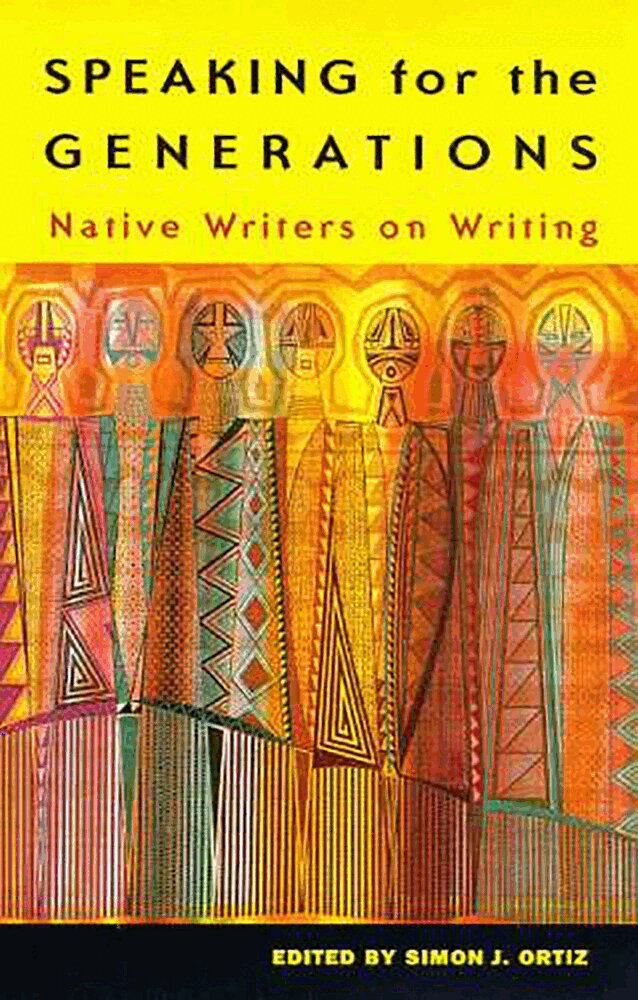
Now it is my turn to stand. At Acoma Pueblo meetings, members rise and announce their intention to speak. In that moment they are recognized and heard. In Speaking for the Generations, Acoma Pueblo poet Simon Ortiz brings together contemporary Native American writers to take their turn. Each offers an evocation of herself or himself, describing the personal, social, and cultural influences on her or his development as a writer. Although each writer's viewpoint is personal and unique, together they reflect the rich tapestry of today's Native literature. Of varied backgrounds, the writers represent Indian heritages and cultures from the Pacific Northwest to the northern plains, from Canada to Guatemala. They are poets, novelists, and playwrights. And although their backgrounds are different and their statements intensely personal, they share common themes of their relationship to the land, to their ancestors, and to future generations of their people. From Gloria Bird's powerful recounting of personal and family history to Esther Belin's vibrant tale of her urban Native homeland in Los Angeles, these writers reveal the importance of place and politics in their lives. Leslie Marmon Silko calls upon the ancient tradition of Native American storytelling and its role in connecting the people to the land. Roberta J. Hill and Elizabeth Woody ponder some of the absurdities of contemporary Native life, while Guatemalan Victor Montejo takes readers to the Mayan world, where a native culture had writing and books long before Europeans came. Together these pieces offer an inspiring portrait of what it means to be a Native writer in the twentieth century. With passion and urgency, these writers are speaking for themselves, for their land, and for the generations.
265 kr
Skickas inom 7-10 vardagar
When Faustin, the old Acoma, is given his first television set, he considers it a technical wonder, a box full of mystery. What he sees on its screen that first day, however, is even more startling than the television itself: men have landed on the moon. Can this be real? For Simon Ortiz, Faustin's reaction proves that tales of ordinary occurrences can truly touch the heart. ""For me,"" he observes, ""there's never been a conscious moment without story."" Best known for his poetry, Ortiz also has authored 26 short stories that have won the hearts of readers through the years. Men on the Moon brings these stories together stories filled with memorable characters, written with love by a keen observer and interpreter of his people's community and culture. True to Native American tradition, these tales possess the immediacy and intimacy of stories conveyed orally. They are drawn from Ortiz's Acoma Pueblo experience but focus on situations common to Native people, whether living on the land or in cities, and on the issues that affect their lives. We meet Jimmo, a young boy learning that his father is being hunted for murder, and Kaiser, the draft refuser who always wears the suit he was given when he left prison. We also meet some curious Anglos: radicals supporting Indian causes, scholars studying Indian ways, and San Francisco hippies who want to become Indians too. Whether telling of migrants working potato fields in Idaho and pining for their Arizona home or of a father teaching his son to fly a kite, Ortiz takes readers to the heart of storytelling. Men on the Moon shows that stories told by a poet especially resound with beauty and depth.
220 kr
Skickas inom 7-10 vardagar
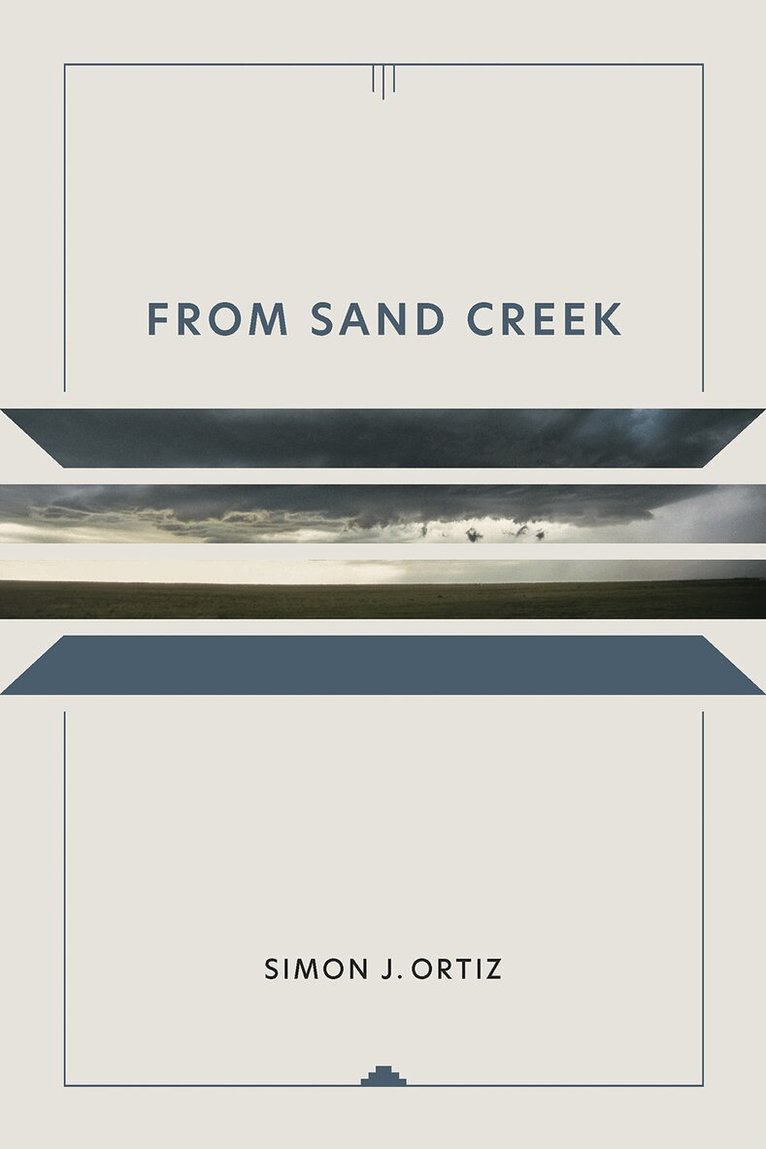
The massacre of Cheyenne and Arapaho women and children by U.S. soldiers at Sand Creek in 1864 was a shameful episode in American history, and its battlefield was proposed as a National Historic Site in 1998 to pay homage to those innocent victims. Poet Simon Ortiz had honored those people seventeen years earlier in his own way. That book, from Sand Creek, is now back in print. Originally published in a small-press edition, from Sand Creek makes a large statement about injustices done to Native peoples in the name of Manifest Destiny. It also makes poignant reference to the spread of that ambition in other parts of the world--notably in Vietnam--as Ortiz asks himself what it is to be an American, a U.S. citizen, and an Indian. Indian people have often felt they have had no part in history, Ortiz observes, and through his work he shows how they can come to terms with this feeling. He invites Indian people to examine the process they have experienced as victims, subjects, and expendable resources--and asks people of European heritage to consider the motives that drive their own history and create their own form of victimization.Through the pages of this sobering work, Ortiz offers a new perspective on history and on America. Perhaps more important, he offers a breath of hope that our peoples might learn from each other: This America- has been a burden- of steel and mad- death,- but, look now,- there are flowers- and new grass- and a spring wind- rising- from Sand Creek.
220 kr
Skickas inom 7-10 vardagar
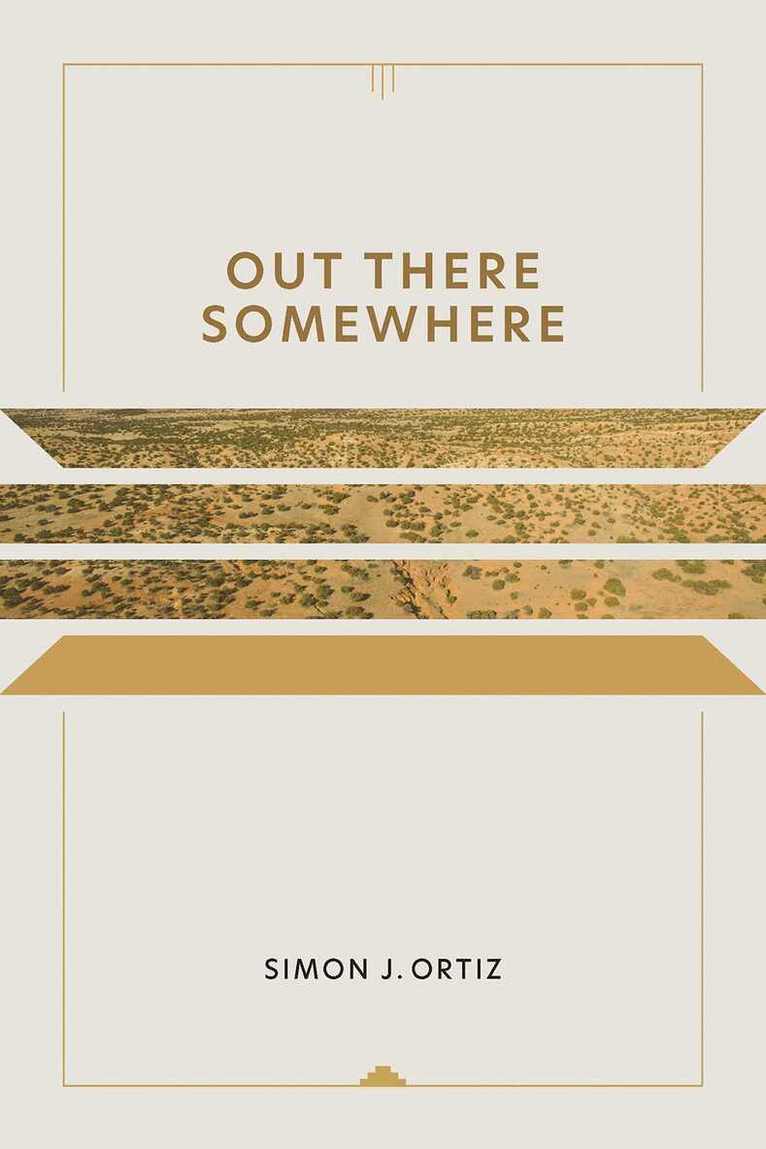
He has been out there somewhere for a while now, a poet at large in America. Simon Ortiz, one of our finest living poets, has been a witness, participant, and observer of interactions between the Euro-American cultural world and that of his Native American people for many years. In this collection of haunting new work, he confronts moments and instances of his personal past and finds redemption in the wellspring of his culture. A writer known for deeply personal poetry, Ortiz has produced perhaps his most personal work to date. In a collage of journal entries, free-verse poems, and renderings of poems in the Acoma language, he draws on life experiences over the past ten years recalling time spent in academic conferences and writers' colonies, jails and detox centers to convey something of the personal and cultural history of dislocation. As an American Indian artist living at times on the margins of mainstream culture, Ortiz has much to tell about the trials of alcoholism, poverty, displacement.But in the telling he affirms the strength of Native culture even under the most adverse conditions and confirms the sustaining power of Native beliefs and connections: "With our hands, we know the sacred earth. / With our spirits, we know the sacred sky." Like many of his fellow Native Americans, Ortiz has been "out there somewhere" Portland and San Francisco, Freiburg, Germany, and Martinique away from his original homeland, culture, and community. Yet, as these works show, he continues to be absolutely connected socially and culturally to Native identity: "We insist that we as human cultural beings must always have this connection," he writes, "because it is the way we maintain a Native sense of existence." Drawing on this storehouse of places, times, and events, Out There Somewhere is a rich fusion taking readers into the heart and soul of one of today's most exciting and original American poets.

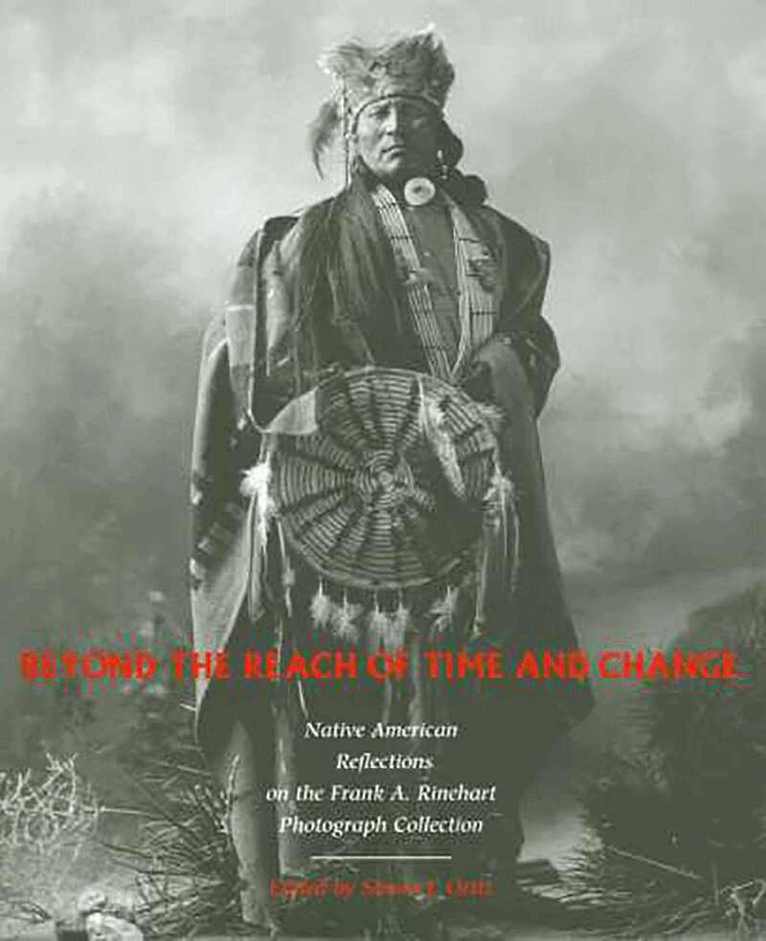
Beyond the Reach of Time and Change
Native American Reflections on the Frank a. Rinehart Photograph Collection
Häftad, Engelska, 2005
427 kr
Skickas inom 7-10 vardagar
Around the turn of the twentieth century, most photographs of Indians pandered to shameless, insensitive stereotypes. In contrast, photographic portraits made by Frank A. Rinehart conveyed the dignity and pride of Native peoples. More than 545 Native Americans representing tribes from all over the country attended the Trans-Mississippi and International Exposition in Omaha in 1898 to be part of an event known as the Indian Congress. Rinehart, the exposition’s official photographer, and his assistant Adolph Muhr made more than 500 glass-plate negatives depicting Native Americans in their traditional dress, now housed at Haskell Indian Nations University and regarded as one of the best photographic documentations of Indian leaders from this era.This book provides an unusual perspective on the Rinehart collection. It features one hundred outstanding images printed from the original negatives made by Rinehart and Muhr at the Congress and over the course of the next two years. It also includes 14 essays by modern Native American writers, artists, and educators—some of them descendants of the individuals photographed—reflecting on the place of these images in their heritage.Beyond the Reach of Time and Change is not another coffee-table book of historical Indian photographs but rather a conversation between Indian people of a century ago and today. Just as the Rinehart collection offers today's Native Americans a unique connection to the past, this book offers all readers a positive understanding of continuity and endurance within the American Indian community.
206 kr
Skickas inom 3-6 vardagar
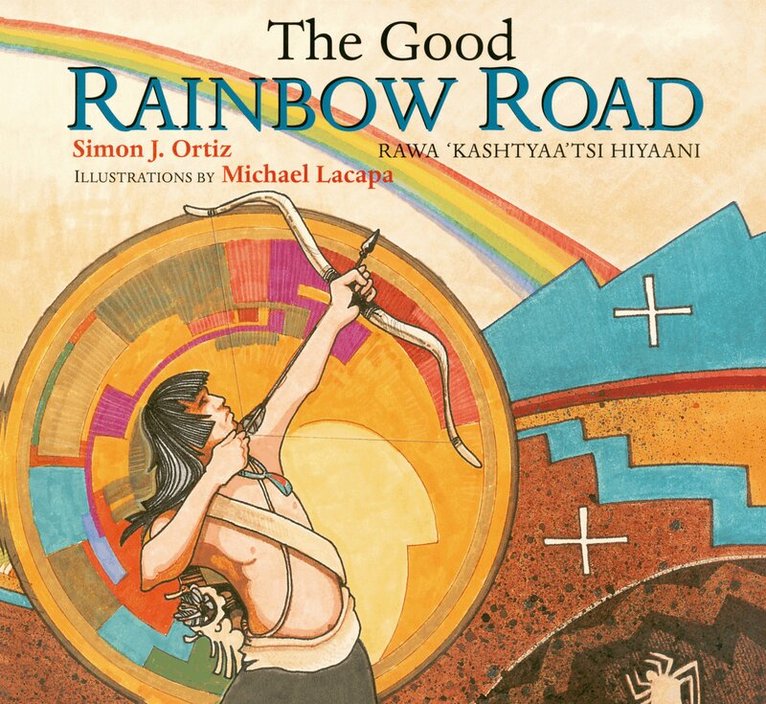
This is the story of two courageous boys and of how they saved their village. Their village is called Haapaahnitse, Oak Place, and it lies at the foot of a mountain. Once there was a lake and a stream nearby, but they have dried up. Once rain and snow came, but no more. Not only did the crops wither and die, even the hardy oak trees have become brittle sticks. The land has become barren and dry. Two brothers, Tsaiyah-dzehshi, whose name means First One, and Hamahshu-dzehshi, Next One, are chosen for an important mission. They are sent on a westward trek to the home of the Shiwana, the Rain and Snow Spirits, to ask them to bring the gift of water to the village again. The brothers cross deserts and mountains on an arduous journey until they are finally stopped short by a treacherous canyon filled with molten lava. ‘The Good Rainbow Road’ tells how the brothers overcome this last challenge and continue on to their destination. Written in the tradition of Native American oral storytelling and accompanied by colourful illustrations from celebrated Native artist Michael Lacapa, it brings the powers of language, memory, and imagery to a tale that will captivate children ages seven and up. As Simon Ortiz writes, ""‘The Good Rainbow Road’ is located in the Native American world, but it is not limited to that world. Even considering humankind's many ethnic and racial differences, we are all part of each other as people and the rest of all Creation, and our stories join us together."" This is the foundation of ‘The Good Rainbow Road’, and on that road young readers will broaden their understanding of humanity's common bonds. ‘The Good Rainbow Road’ is presented in Keres, the language of Acoma Pueblo and six other Pueblo communities in New Mexico, and in English, with an additional Spanish translation in the back of the book.
220 kr
Skickas inom 7-10 vardagar
Light As Light is acclaimed poet Simon J. Ortiz’s first collection in twenty years. The poems in this volume celebrate the wonders and joy of love in the present while also looking back with both humorous and serious reflections on youth and the stories, scenes, people, and places that shape a person’s life. Light As Light brims with giddy, wistful long-distance love poems that offer a dialogue between the speaker and his beloved. Written in Ortiz’s signature conversational style, this volume claims poetry for everyday life as the poems find the speaker on a morning run, burnt out from academic responsibilities, missing his beloved, reflecting on sobriety, walking the dog, and pondering the act of poem making. The collection also includes prayer poems written for the speaker’s son; poems that retell traditional Acoma stories and history; and poems that engage environmental, political, and social justice issues--making for a well-rounded collection that blends the playful and the profound.The poems in Light As Light travel far across both space and memory, landing everywhere from the New Mexico of the speaker’s childhood, to California, Tucson, and present-day Beijing, and many airports, highways, and way stations in between. The central concern uniting this collection is language itself: the weight and significance of English and Keres, as well as the nature and power of poetry as a way of life. No collection of Indigenous literature is complete without the work of Simon Ortiz, and this book is a powerful journey through the poet’s life--both a love letter to the future, and a sentimental, authentic celebration of the past.
356 kr
Skickas inom 7-10 vardagar
Light As Light is acclaimed poet Simon J. Ortiz’s first collection in twenty years. The poems in this volume celebrate the wonders and joy of love in the present while also looking back with both humorous and serious reflections on youth and the stories, scenes, people, and places that shape a person’s life. Light As Light brims with giddy, wistful long-distance love poems that offer a dialogue between the speaker and his beloved. Written in Ortiz’s signature conversational style, this volume claims poetry for everyday life as the poems find the speaker on a morning run, burnt out from academic responsibilities, missing his beloved, reflecting on sobriety, walking the dog, and pondering the act of poem making. The collection also includes prayer poems written for the speaker’s son; poems that retell traditional Acoma stories and history; and poems that engage environmental, political, and social justice issues--making for a well-rounded collection that blends the playful and the profound.The poems in Light As Light travel far across both space and memory, landing everywhere from the New Mexico of the speaker’s childhood, to California, Tucson, and present-day Beijing, and many airports, highways, and way stations in between. The central concern uniting this collection is language itself: the weight and significance of English and Keres, as well as the nature and power of poetry as a way of life. No collection of Indigenous literature is complete without the work of Simon Ortiz, and this book is a powerful journey through the poet’s life--both a love letter to the future, and a sentimental, authentic celebration of the past.
202 kr
Skickas inom 3-6 vardagar