Simon McVeigh - Böcker
Visar alla böcker från författaren Simon McVeigh. Handla med fri frakt och snabb leverans.
7 produkter
7 produkter
577 kr
Skickas inom 7-10 vardagar
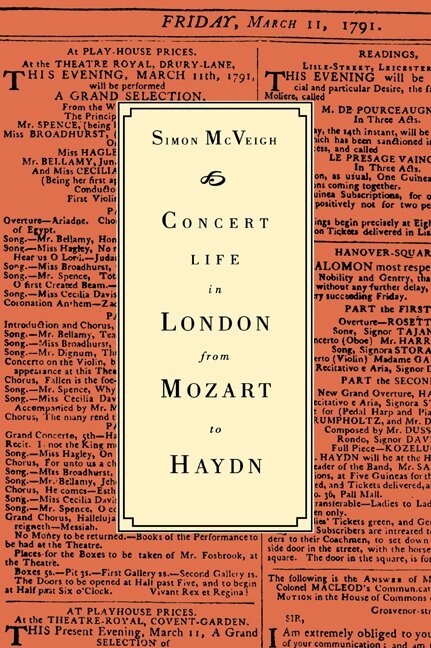
During the second half of the eighteenth century, the pace of London's concert life quickened dramatically, reflecting both the prosperity and the commercial vitality of the capital. The most significant development was the establishment of the public concert within the social and cultural life of fashionable society. The subscription concerts that premiered symphonies by J. C. Bach and Haydn were conspicuous symbols of luxury, even though they were promoted on broadly commercial lines. Drawing on hitherto untapped archival sources and a comprehensive study of daily newspapers, this book analyses audiences at venues as diverse as the Hanover Square Rooms, Vauxhall Gardens and City taverns. The musical taste of the London public is investigated in the light of contemporary theories of aesthetics, and there is detailed discussion of the financial and practical aspects of concert management and performance, in a period that encouraged enterprise and innovation.
1 282 kr
Skickas inom 7-10 vardagar
During the second half of the eighteenth century, the pace of London's concert life quickened dramatically, reflecting both the prosperity and the commercial vitality of the capital. The most significant development was the establishment of the public concert within the social and cultural life of fashionable society. The subscription concerts that premiered symphonies by J. C. Bach and Haydn were conspicuous symbols of luxury, even though they were promoted on broadly commercial lines. Drawing on hitherto untapped archival sources and a comprehensive study of daily newspapers, this book analyses audiences at venues as diverse as the Hanover Square Rooms, Vauxhall Gardens and City taverns. The musical taste of the London public is investigated in the light of contemporary theories of aesthetics, and there is detailed discussion of the financial and practical aspects of concert management and performance, in a period that encouraged enterprise and innovation.
2 150 kr
Skickas inom 10-15 vardagar
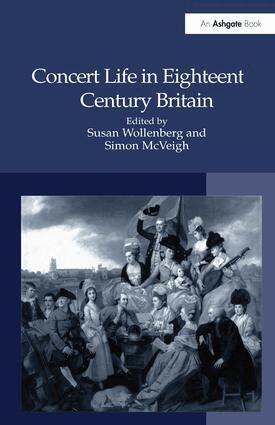
In recent years there has been a considerable revival of interest in music in eighteenth-century Britain. This interest has now expanded beyond the consideration of composers and their music to include the performing institutions of the period and their relationship to the wider social scene. The collection of essays presented here offers a portrayal of concert life in Britain that contributes greatly to the wider understanding of social and cultural life in the eighteenth century. Music was not merely a pastime but was irrevocably linked with its social, political and literary contexts. The perspectives of performers, organisers, patrons, audiences, publishers, copyists and consumers are considered here in relation to the concert experience. All of the essays taken together construct an understanding of musical communities and the origins of the modern concert system. This is achieved by focusing on the development of music societies; the promotion of musical events; the mobility and advancement of musicians; systems of patronage; the social status of musicians; the repertoire performed and published; the role of women pianists and the 'topography' of concerts. In this way, the book will not only appeal to music specialists, but also to social and cultural historians.
845 kr
Skickas inom 10-15 vardagar
In recent years there has been a considerable revival of interest in music in eighteenth-century Britain. This interest has now expanded beyond the consideration of composers and their music to include the performing institutions of the period and their relationship to the wider social scene. The collection of essays presented here offers a portrayal of concert life in Britain that contributes greatly to the wider understanding of social and cultural life in the eighteenth century. Music was not merely a pastime but was irrevocably linked with its social, political and literary contexts. The perspectives of performers, organisers, patrons, audiences, publishers, copyists and consumers are considered here in relation to the concert experience. All of the essays taken together construct an understanding of musical communities and the origins of the modern concert system. This is achieved by focusing on the development of music societies; the promotion of musical events; the mobility and advancement of musicians; systems of patronage; the social status of musicians; the repertoire performed and published; the role of women pianists and the 'topography' of concerts. In this way, the book will not only appeal to music specialists, but also to social and cultural historians.
1 007 kr
Skickas inom 7-10 vardagar
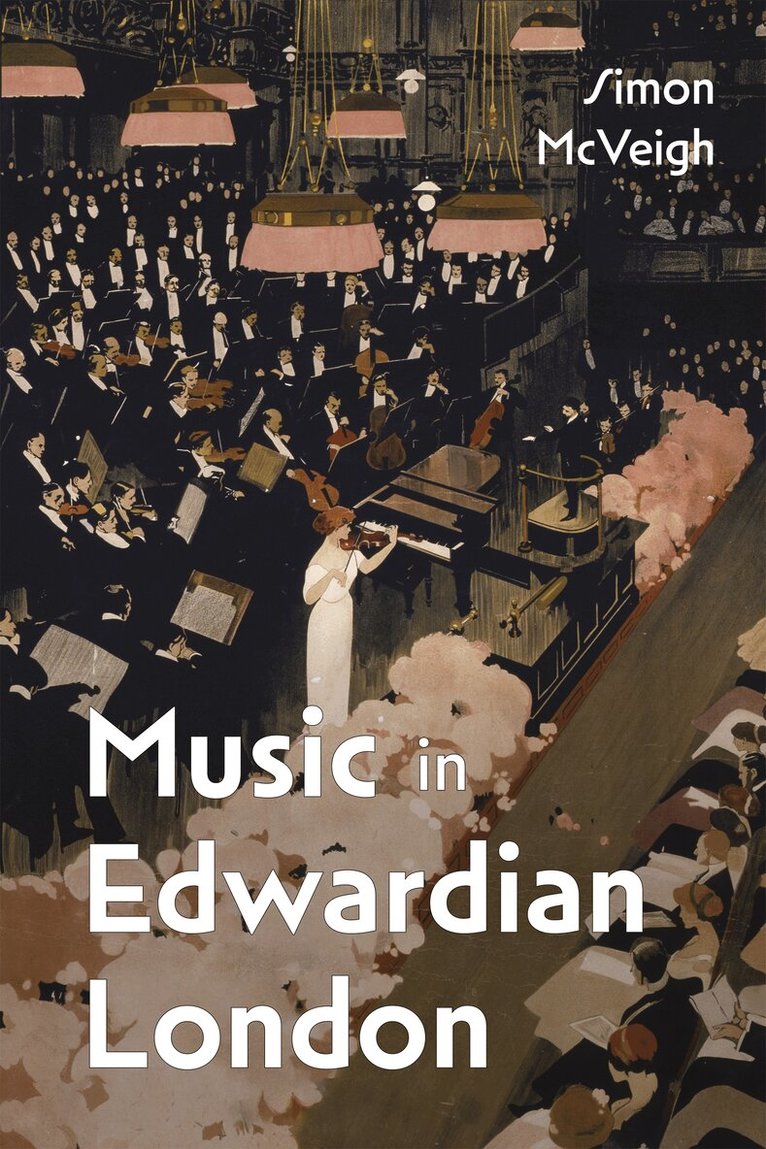
Traversing London's musical culture, this book boldly illuminates the emergence of Edwardian London as a beacon of musical innovation.The dawning of a new century saw London emerge as a hub in a fast-developing global music industry, mirroring Britain's pivotal position between the continent, the Americas and the British Empire. It was a period of expansion, experiment and entrepreneurial energy. Rather than conservative and inward-looking, London was invigorated by new ideas, from pioneering musical comedy and revue to the modernist departures of Debussy and Stravinsky. Meanwhile, Elgar, Holst, Vaughan Williams, and a host of ambitious younger composers sought to reposition British music in a rapidly evolving soundscape.Music was central to society at every level. Just as opulent theatres proliferated in the West End, concert life was revitalised by new symphony orchestras, by the Queen's Hall promenade concerts, and by Sunday concerts at the vast Albert Hall. Through innumerable band and gramophone concerts in the parks, music from Wagner to Irving Berlin became available as never before. The book envisions a burgeoning urban culture through a series of snapshots - daily musical life in all its messy diversity. While tackling themes of cosmopolitanism and nationalism, high and low brows, centres and peripheries, it evokes contemporary voices and characterful individuals to illuminate the period. Challenging issues include the barriers faced by women and people of colour, and attitudes inhibiting the new generation of British composers - not to mention embedded imperialist ideologies reflecting London's precarious position at the centre of Empire. Engagingly written, Simon McVeigh's groundbreaking book reveals the exhilarating transformation of music in Edwardian London, which laid the foundations for the century to come.
330 kr
Skickas
Traversing London's musical culture, this book boldly illuminates the emergence of Edwardian London as a beacon of musical innovation.The dawning of a new century saw London emerge as a hub in a fast-developing global music industry, mirroring Britain's pivotal position between the continent, the Americas and the British Empire. It was a period of expansion, experiment and entrepreneurial energy. Rather than conservative and inward-looking, London was invigorated by new ideas, from pioneering musical comedy and revue to the modernist departures of Debussy and Stravinsky. Meanwhile, Elgar, Holst, Vaughan Williams, and a host of ambitious younger composers sought to reposition British music in a rapidly evolving soundscape.Music was central to society at every level. Just as opulent theatres proliferated in the West End, concert life was revitalised by new symphony orchestras, by the Queen's Hall promenade concerts, and by Sunday concerts at the vast Albert Hall. Through innumerable band and gramophone concerts in the parks, music from Wagner to Irving Berlin became available as never before. The book envisions a burgeoning urban culture through a series of snapshots - daily musical life in all its messy diversity. While tackling themes of cosmopolitanism and nationalism, high and low brows, centres and peripheries, it evokes contemporary voices and characterful individuals to illuminate the period. Challenging issues include the barriers faced by women and people of colour, and attitudes inhibiting the new generation of British composers - not to mention embedded imperialist ideologies reflecting London's precarious position at the centre of Empire. Engagingly written, Simon McVeigh's groundbreaking book reveals the exhilarating transformation of music in Edwardian London, which laid the foundations for the century to come.
1 445 kr
Skickas inom 7-10 vardagar
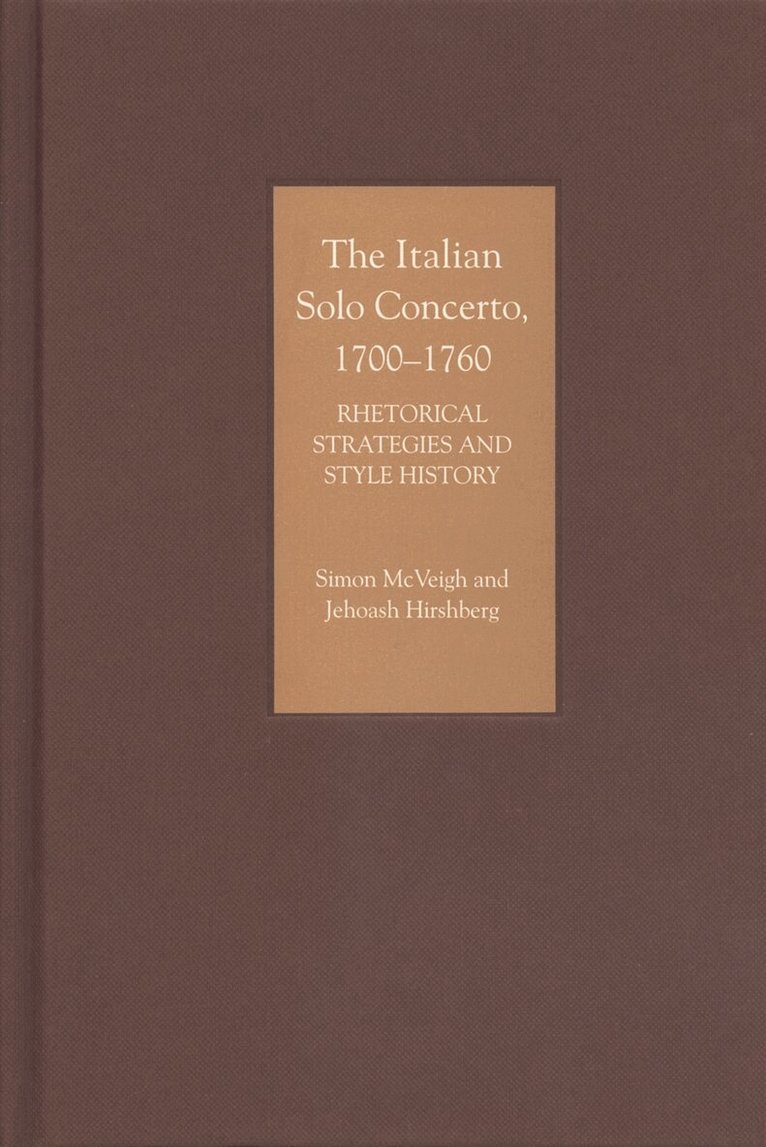
The composition of the solo concerto studied as an evolving debate (rather than a static technique), and for its stylistic features.The solo concerto, a vast and important repertory of the early to mid eighteenth century, is known generally only through a dozen concertos by Vivaldi and a handful of works by Albinoni and Marcello. The authors aim to bring thisrepertory to greater prominence and have, since 1995, been involved in a research programme of scoring and analysing over nine hundred concertos, representing nearly the entire repertory available in early prints and manuscripts.Drawing on this research, they present a detailed study and analysis of the first-movement ritornello form, the central concept that enabled composers to develop musical thinking on a large scale. Their approach is firstly to present the ritornello form as a rhetorical argument, a musical process that dynamically unfolds in time; and secondly to challenge notions of a linear stylistic development from baroque to classical, instead discovering composers trying out different options, which might themselves become norms against which new experiments could be made.SIMON McVEIGH is Professor of Music, Goldsmiths College, University of London; JEHOASH HIRSHBERG is Professor in the Musicology Department, Hebrew University of Jerusalem.