Simon Morgan - Böcker
Visar alla böcker från författaren Simon Morgan. Handla med fri frakt och snabb leverans.
6 produkter
6 produkter
3 345 kr
Skickas inom 5-8 vardagar
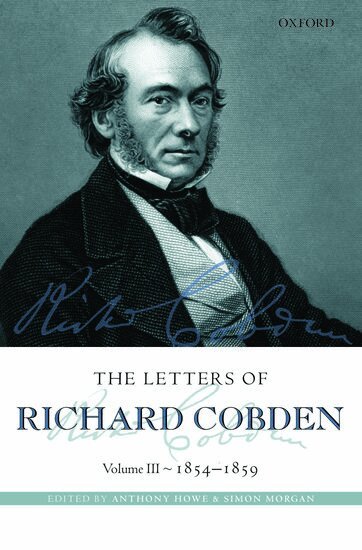
The Letters of Richard Cobden (1804-1865) provides, in four printed volumes, the first critical edition of Cobden's letters, publishing the complete text in as near the original form as possible. The letters are accompanied by full scholarly apparatus, together with an introduction to each volume which re-assesses Cobden's importance in their light. Together, these volumes make available a unique source of the understanding of British liberalism in its European and international contexts, throwing new light on issues such as the repeal of the Corn Laws, British radical movements, the Crimean War, the Indian Mutiny, Anglo-French relations, and the American Civil War.The third volume, drawing on some forty-seven archives worldwide, reveals the tension between public and private life experienced by Cobden from 1854 until 1859. As prospects for reform at home diminished, he became the prototype for the group A. J. P. Taylor famously called the 'Trouble Makers', articulating a wide-ranging critique of British foreign policy with regard to the Crimean War, Anglo-American relations, the Indian 'Mutiny', and British expansion in Asia. An arch antagonist of the Prime Minister Palmerston, in early 1857 he dramatically defeated the government in the House of Commons over British naval intervention in China (the Arrow incident), and in 1858 played a major part in resisting Britain's annexation of Sarawak. Privately, Cobden experienced anguish at the death of his fifteen-year-old son at school in Germany in 1856, heightened by the inconsolability of his wife Catherine. He was also beset by financial worries, prompting a second visit to the United States in 1859 where he was welcomed as a celebrity, though his primary purpose was to investigate the prospects of the Illinois Central Railroad following the 1857 global financial crisis. On return to Britain, he found himself once more at the forefront of British politics, rejecting an unexpected offer of office in Palmerston's new Cabinet: the first 'modern' Liberal government. The volume concludes with Cobden's lengthy stay in Paris. There, with the support of his friend the French economist Michel Chevalier, and against the background of recent war in Italy and growing Anglo-French antagonism, he was on the brink of completing the negotiation of the path-breaking Anglo-French commercial treaty of 1860: his most important achievement since the repeal of the Corn Laws in 1846, and a vital step towards free trade and peace in Europe.
4 316 kr
Skickas inom 5-8 vardagar
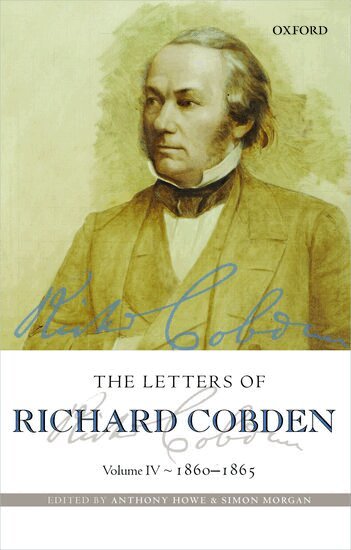
The Letters of Richard Cobden (1804-1865) provides, in four printed volumes, the first critical edition of Cobden's letters, publishing the complete text in as near the original form as possible. The letters are accompanied by full scholarly apparatus, together with an introduction to each volume which re-assesses Cobden's importance in their light. Together, these volumes make available a unique source of the understanding of British liberalism in its European and international contexts, throwing new light on issues such as the repeal of the Corn Laws, British radical movements, the Crimean War, the Indian Mutiny, Anglo-French relations, and the American Civil War.The fourth and final volume, drawing on some forty-six archives worldwide, is dominated by Cobden's search for a permanent political legacy at home and abroad, following the severe check to his health in the autumn of 1859. In January 1860, he succeeded in negotiating the Anglo-French Commercial Treaty, a landmark in Anglo-French relations designed to bind the two nations closer together, and to provide the basis for a Europe united by free trade. Yet the Treaty's benefits were threatened by a continuing naval arms race between Britain and France, fuelled by what Cobden saw as self-interested scare mongering in his tract The Three Panics (1862). By 1862 an even bigger danger was the possibility that British industry's need for cotton might precipitate intervention in the American Civil War. Much of Cobden's correspondence now centred on the necessity of non-intervention and a campaign for the reform of international maritime law, while he played a major part in attempts to alleviate the effects of the 'Cotton Famine' in Lancashire. In addition to Anglo-American relations, Cobden, the 'International Man', continued to monitor the exercise of British power around the globe. He was convinced that the 'gunboat' diplomacy of his prime antagonist, Lord Palmerston, was ultimately harmful to Britain, whose welfare demanded limited military expenditure and the dismantling of the British 'colonial system'. Known for a long time as the 'prophet in the wilderness', in 1864 Cobden welcomed Palmerston's inability to intervene in the Schleswig-Holstein crisis as a key turning-point in Britain's foreign policy, which, together with the imminent end of the American Civil War, opened up the prospect of a new reform movement at home. Disappointed with the growing apathy of the entrepreneurs he had once mobilised in the Anti-Corn Law League, Cobden now promoted the enfranchisement of the working classes as necessary and desirable in order to achieve the reform of the aristocratic state for which he had campaigned since the 1830s.
2 235 kr
Skickas inom 10-15 vardagar
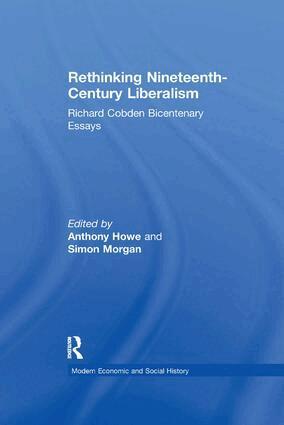
Richard Cobden (1804-65) rose from humble beginnings to become the leading advocate of nineteenth-century free-trade and liberalism. As a fierce opponent of the Corn Laws and promoter of international trade he rapidly became an influential figure on the national stage, whose name became a byword for political and economic reform. Yet despite the familiarity with which contemporaries and historians refer to 'Cobdenism' his ideals and beliefs are not always easy to identify and classify in a coherent way. Indeed, as this volume makes clear, the variety, diversity and malleability of the 'Cobdenite project' attest to the lack of a strict dogma and highlight Cobden's underlying pragmatism. Divided into five sections, this collection of essays offers a timely reassessment of Cobden's career, its impact and legacy in the two hundred years since his birth. Beginning with an investigation into the intellectual and cultural background to his emergence as a national political figure, the volume then looks at Cobden's impact on the making of Victorian liberal politics. The third section examines Cobden's wider influence in Europe, particularly the impact of his tour of 1846-47 which was in many ways a defining moment not only in the making of Cobden's liberalism but in the making of liberal Europe. Section four broadens the theme of Cobden's contemporary impact, including his contribution to the debate on peace, internationalism and the American Civil War; whilst the final section opens up the theme of Cobden's contested legacy, the variety of interpretations of Cobden's ideas and their influence on late nineteenth- and twentieth-century politics. Offering a broad yet coherent investigation of the 'Cobdenite project' by leading international scholars, this volume provides a fascinating insight into one of the nineteenth century's most important figures whose ideas still resonate today.
826 kr
Skickas inom 10-15 vardagar
Richard Cobden (1804-65) rose from humble beginnings to become the leading advocate of nineteenth-century free-trade and liberalism. As a fierce opponent of the Corn Laws and promoter of international trade he rapidly became an influential figure on the national stage, whose name became a byword for political and economic reform. Yet despite the familiarity with which contemporaries and historians refer to 'Cobdenism' his ideals and beliefs are not always easy to identify and classify in a coherent way. Indeed, as this volume makes clear, the variety, diversity and malleability of the 'Cobdenite project' attest to the lack of a strict dogma and highlight Cobden's underlying pragmatism. Divided into five sections, this collection of essays offers a timely reassessment of Cobden's career, its impact and legacy in the two hundred years since his birth. Beginning with an investigation into the intellectual and cultural background to his emergence as a national political figure, the volume then looks at Cobden's impact on the making of Victorian liberal politics. The third section examines Cobden's wider influence in Europe, particularly the impact of his tour of 1846-47 which was in many ways a defining moment not only in the making of Cobden's liberalism but in the making of liberal Europe. Section four broadens the theme of Cobden's contemporary impact, including his contribution to the debate on peace, internationalism and the American Civil War; whilst the final section opens up the theme of Cobden's contested legacy, the variety of interpretations of Cobden's ideas and their influence on late nineteenth- and twentieth-century politics. Offering a broad yet coherent investigation of the 'Cobdenite project' by leading international scholars, this volume provides a fascinating insight into one of the nineteenth century's most important figures whose ideas still resonate today.
475 kr
Skickas inom 10-15 vardagar
While the image of bourgeois Victorian women as 'angels in the house' isolated from the world in private domesticity has long been dismissed as an unrealistic ideal, women have remained marginalised in many recent accounts of the public culture of the middle class. Simon Morgan aims to redress the balance. By drawing on a variety of sources including private documents, he argues that women actually played an important role in the formation of the public identity of the Victorian middle class. Through their support for cultural and philanthropic associations and their engagement in political campaigns, women developed a nascent civic identity, which for some informed their later demands for political rights. "Middle Class Women and Victorian Public Culture" offers numerous insights for the reader into the public lives of women in this fascinating period.
1 888 kr
Skickas inom 10-15 vardagar
While the image of bourgeois Victorian women as 'angels in the house' isolated from the world in private domesticity has long been dismissed as an unrealistic ideal, women have remained marginalised in many recent accounts of the public culture of the middle class. Simon Morgan aims to redress the balance, by drawing on a variety of sources including private documents, he argues that women actually played an important role in the formation of the public identity of the Victorian middle class. Through their support for cultural and philanthropic associations and their engagement in political campaigns, women developed a nascent civic identity, which for some informed their later demands for political rights. "Middle Class Women and Victorian Public Culture" offers numerous insights for the reader into the public lives of women in this fascinating period.