Simon Park - Böcker
Visar alla böcker från författaren Simon Park. Handla med fri frakt och snabb leverans.
5 produkter
5 produkter
1 255 kr
Skickas inom 5-8 vardagar
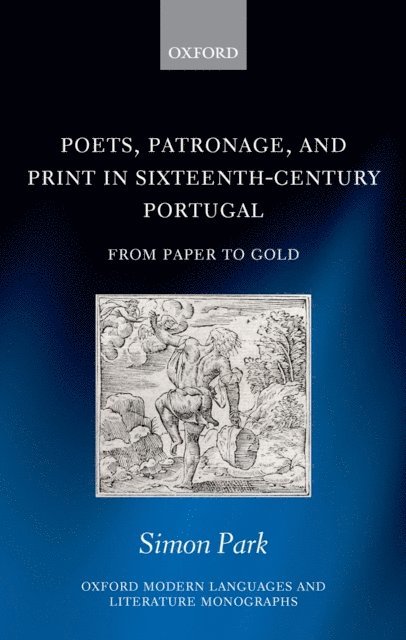
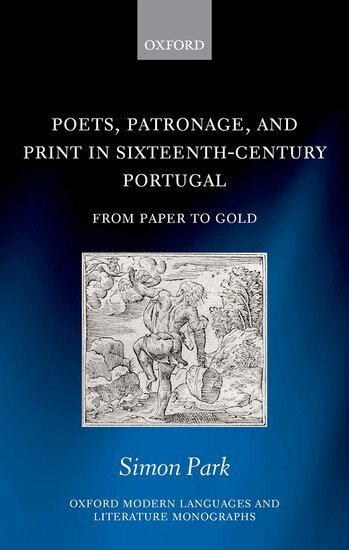
Portugal was not always the best place for poets in the sixteenth century. Against the backdrop of an expanding empire, the country's annexation by Spain in 1580, and ongoing religious controversy, poets struggled to articulate their worth to rulers and patrons. This did not prevent them, however, from persisting in their craft. Indeed, many of their works reflected precisely on the question of what poetry could do and what, ultimately, its value was. The answers that poets like Luís de Camões, Francisco de Sá de Miranda, António Ferreira, and Diogo Bernardes offered to these questions, and which are explored in this book, ranged from lofty ideals to the more practical concerns of making ends meet when one depended on the whims of the powerful. This volume articulates a 'pragmatics of poetry' that combines literary analysis and book history with methods from sociology (network analysis, sociology of professions, valuation studies) to explore how poets thought about themselves and negotiated the value of their verse in the court, with patrons, or in the marketplace for books. It reveals how poets compared their work to that of lawyers and doctors and tried to set themselves apart as a special group of professionals. It shows how they threatened their patrons as well as flattered them and tried to turn their poetry from a gift into something like a commodity or service that had to be paid for. While poets set out to write in the most ambitious genres and to better their European rivals, they sometimes refused to spend months composing an epic without the prospect of reward. Their books of verse, when printed, were framed as linguistic propaganda as well as objects of material and aesthetic worth at a time when many said that non-devotional poetry was a sinful waste of time. This is a book about the various ways in which poets, metaphorically and more literally, tried to turn poetry and the paper it was written on into gold.
266 kr
Skickas
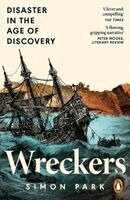
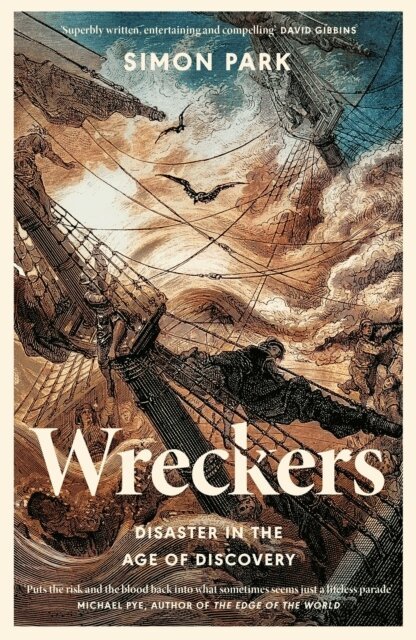
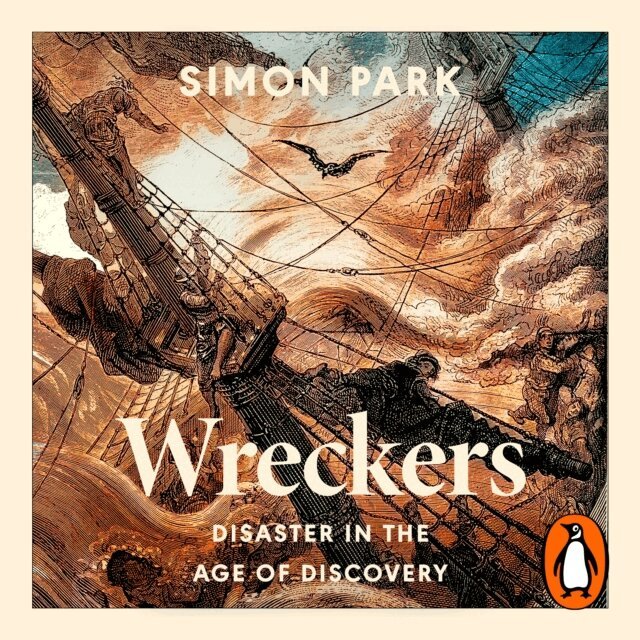
Wreckers sinks the old narratives of imperialism, revealing the violent, chaotic and improvised reality of empire-building from the fifteenth to seventeenth centuries.'Clever and compelling book. The storytelling and the scholarship fairly spark off each other. It could be a model for how academics should write history for a general audience' The Times‘a flowing, gripping narrative, Wreckers is distinguished by enchanting stories’ Peter Moore, Literary Review While figures such as Christopher Columbus, Vasco da Gama and Ferdinand Magellan are celebrated for their maritime achievements – reaching the Americas, India, and circumnavigating the globe – focusing solely on these voyages distorts our perspective on the past. Many explorers ended up as castaways, clinging to the splintered timbers of their wrecked ships, while those who survived often faced resistance and ridicule from indigenous communities across the globe.Drawing on maritime stories from various languages and continents – from Brazil and Southeast Africa to India and the Philippines – Wreckers shares dramatic tales of the sea and the events on land that followed. This offers an alternative timeline for the century after Columbus’ 1492 voyage and sheds light on the fractures and fault lines that accompanied the increasing geographical range of European ships.Simon Park argues that even when Europeans arrogantly claimed their own superiority, the truth was that they were often driven by a profound sense of greed and envy, and their actions included numerous mishaps. For example, in his hunt for gold, Martin Frobisher – who fancied himself England’s Columbus and Cortés combined – transported worthless rocks across the Atlantic by the tonne. In the search for spices, Captain and profiteer Manuel de Sousa de Sepúlveda’s ship was so overladen, it spewed its fragrant cargo when it crashed off the coast of South Africa. Moreover, in every place they went, Europeans depended on local know-how and goodwill – relying on indigenous knowledge of languages, geography, food and medicines.Wreckers reveals the precarious balance between imperious European powers, cunning locals who colluded to further their own agendas, and others who showed great tenacity in their resistance to European incursions. By focusing on stories of failure, defiance and comeuppance, Wreckers – a term Park uses to refer both to those who were wrecked and those involved in wrecking – offers a gripping and original account of a tumultuous period. It challenges the notion of unstoppable European dominance and enables a reimagining of history as a space of possibilities then, now and in the future.
141 kr
Kommande
Wreckers sinks the old narratives of imperialism, revealing the violent, chaotic and improvised reality of empire-building from the fifteenth to seventeenth centuries.'Clever and compelling book. The storytelling and the scholarship fairly spark off each other. It could be a model for how academics should write history for a general audience' The Times‘A flowing, gripping narrative, Wreckers is distinguished by enchanting stories’ Peter Moore, Literary ReviewWhile figures such as Christopher Columbus, Vasco da Gama and Ferdinand Magellan are celebrated for their maritime achievements – reaching the Americas, India, and circumnavigating the globe – focusing solely on these voyages distorts our perspective on the past. Many explorers ended up as castaways, clinging to the splintered timbers of their wrecked ships, while those who survived often faced resistance and ridicule from indigenous communities across the globe.Drawing on maritime stories from various languages and continents – from Brazil and Southeast Africa to India and the Philippines – Wreckers shares dramatic tales of the sea and the events on land that followed. This offers an alternative timeline for the century after Columbus’ 1492 voyage and sheds light on the fractures and fault lines that accompanied the increasing geographical range of European ships.Simon Park argues that even when Europeans arrogantly claimed their own superiority, the truth was that they were often driven by a profound sense of greed and envy, and their actions included numerous mishaps. For example, in his hunt for gold, Martin Frobisher – who fancied himself England’s Columbus and Cortés combined – transported worthless rocks across the Atlantic by the tonne. In the search for spices, Captain and profiteer Manuel de Sousa de Sepúlveda’s ship was so overladen, it spewed its fragrant cargo when it crashed off the coast of South Africa. Moreover, in every place they went, Europeans depended on local know-how and goodwill – relying on indigenous knowledge of languages, geography, food and medicines.Wreckers reveals the precarious balance between imperious European powers, cunning locals who colluded to further their own agendas, and others who showed great tenacity in their resistance to European incursions. By focusing on stories of failure, defiance and comeuppance, Wreckers – a term Park uses to refer both to those who were wrecked and those involved in wrecking – offers a gripping and original account of a tumultuous period. It challenges the notion of unstoppable European dominance and enables a reimagining of history as a space of possibilities then, now and in the future.
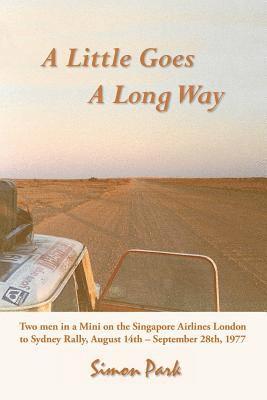
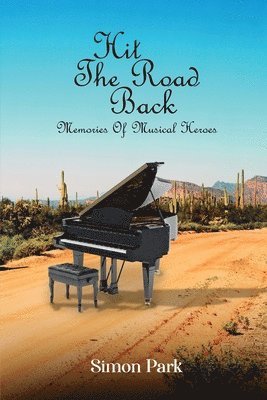
Little Goes a Long Way
Reminiscences of the Singapore Airlines London to Sydney Rally, August 14Th - September 28Th, 1977
Häftad, Engelska, 2009
203 kr
Skickas inom 5-8 vardagar
Del 6 - Reconfiguring Identities in the Portuguese-speaking World
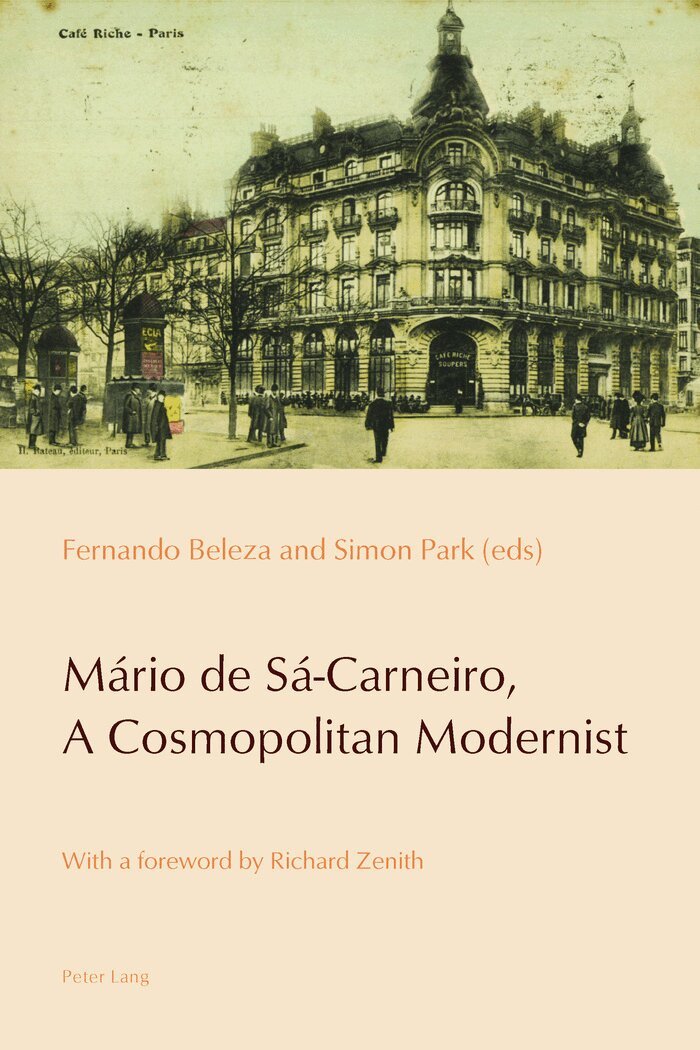
Mário de Sá-Carneiro, A Cosmopolitan Modernist
Häftad, Engelska, 2016
783 kr
Skickas inom 5-8 vardagar
Although he committed suicide at the age of twenty-five, Mário de Sá-Carneiro left behind a rich corpus of texts that is inventive, playful, even daring. The first collection in English to be dedicated to his work, this volume brings together scholars from Portugal, Brazil, and the USA to reassess Sá-Carneiro’s contribution to Portuguese and European Modernism(s). In the book, established researchers and younger scholars delve into the complexities and paradoxes of his work, exploring not only the acclaimed novella Lucio’s Confession, but also his poetry, short fiction, and correspondence. Each essay engages in the necessary task of placing Sá-Carneiro’s work in a wider literary and artistic context, bringing back to his texts the creative energy of early twentieth-century Europe. Plural in their methods, the essays propose multiple lenses through which to tackle key aspects of Sá-Carneiro’s œuvre: his aesthetic and artistic influences and preoccupations; his negotiations/performances of identity; and the ways in which his work emerges in dialogue with other Modernist authors and how they in turn engage with his work. Though he is sometimes overshadowed by his more famous friend and artistic comrade, Fernando Pessoa, this collection shows just how much one misses, if one overlooks Sá-Carneiro and other writers of the Orpheu generation.