Simon St Laurent – författare
86 kr
Skickas inom 5-8 vardagar
100 kr
Läs direkt efter köp
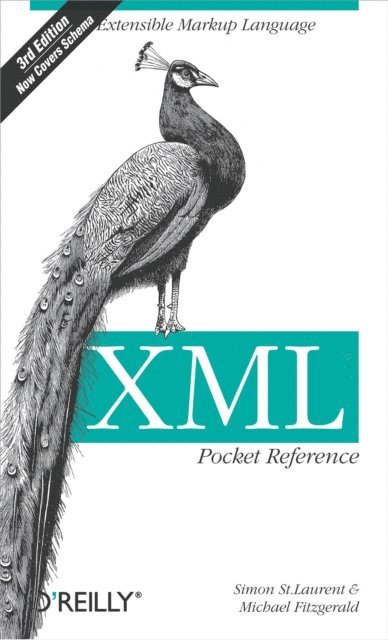
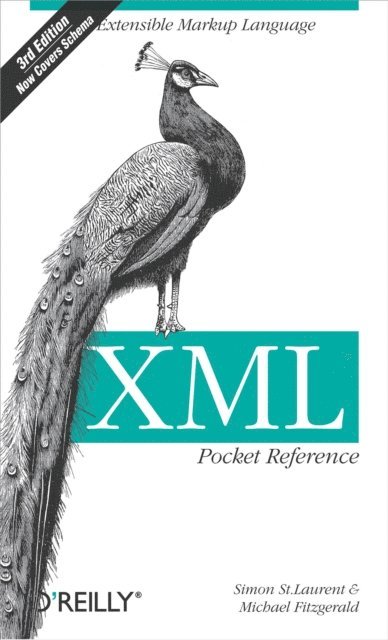
XML, the Extensible Markup Language, is everywhere: the syntax of choice for newly designed document formats across almost all computer applications. Now used daily by developers, XML is living up to its reputation as one of the most important developments in document interchange in the history of computing.
A perennial bestseller, the handy XML Pocket Reference from O''Reilly has been revised once again to give you quick access to the latest goods. In addition to its comprehensive look at XML, this third edition has been updated with new material on Namespaces and XML Schema--considered among the most important elements in current XML use--along with RELAX NG and Schematron, additional powerful tools for describing XML document structures.
Like other titles in O''Reilly''s Pocket Reference series, the XML Pocket Reference, 3rd Edition features a well-organized format that gets right to the point. As a result, it''s already won over the allegiance of developers everywhere. If you need XML answers quick and on the fly, this compact book is most definitely the book for you.
306 kr
Läs direkt efter köp
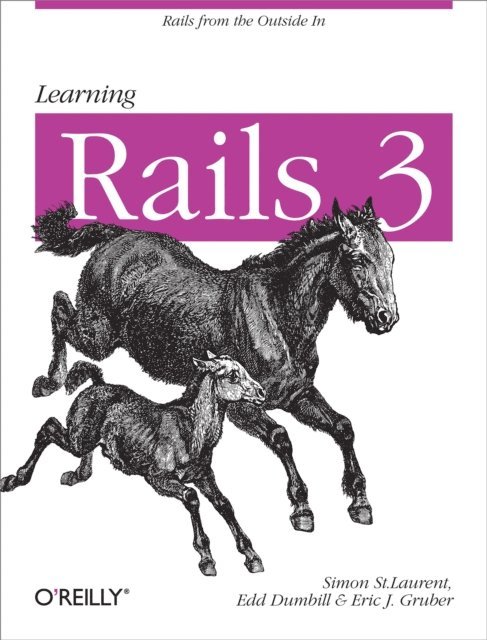
While most books written about Rails cater to programmers looking for information on data structures, Learning Rails targets web developers whose programming experience is tied directly to the Web.Rather than begin with the inner layers of a Rails web application--the models and controllers--this unique book approaches Rails development from the outer layer: the application interface. You''ll learn how to create something visible with Rails before reaching the more difficult database models and controller code. With Learning Rails, you can start from the foundations of web design you already know, and then move more deeply into Ruby, objects, and database structures. This book will help you:
Present web content by building an application with a basic view and a simple controller, while learning Ruby along the wayBuild forms and process their results, progressing from the simple to the more complexConnect forms to models by setting up a database, and use Rails'' ActiveRecord to create code that maps to database structuresUse Rails scaffolding to build applications from a view-centric perspectiveAdd common web application elements such as sessions, cookies, and authenticationBuild applications that combine data from multiple tablesCreate simple but dynamic interfaces with Rails and AjaxOnce you complete Learning Rails, you''ll be comfortable working with the Rails web framework, and you''ll be well on your way to becoming a Rails guru.
306 kr
Läs direkt efter köp
While most books written about Rails cater to programmers looking for information on data structures, Learning Rails targets web developers whose programming experience is tied directly to the Web.Rather than begin with the inner layers of a Rails web application--the models and controllers--this unique book approaches Rails development from the outer layer: the application interface. You''ll learn how to create something visible with Rails before reaching the more difficult database models and controller code. With Learning Rails, you can start from the foundations of web design you already know, and then move more deeply into Ruby, objects, and database structures. This book will help you:
Present web content by building an application with a basic view and a simple controller, while learning Ruby along the wayBuild forms and process their results, progressing from the simple to the more complexConnect forms to models by setting up a database, and use Rails'' ActiveRecord to create code that maps to database structuresUse Rails scaffolding to build applications from a view-centric perspectiveAdd common web application elements such as sessions, cookies, and authenticationBuild applications that combine data from multiple tablesCreate simple but dynamic interfaces with Rails and AjaxOnce you complete Learning Rails, you''ll be comfortable working with the Rails web framework, and you''ll be well on your way to becoming a Rails guru.
267 kr
Skickas inom 5-8 vardagar
367 kr
Läs direkt efter köp
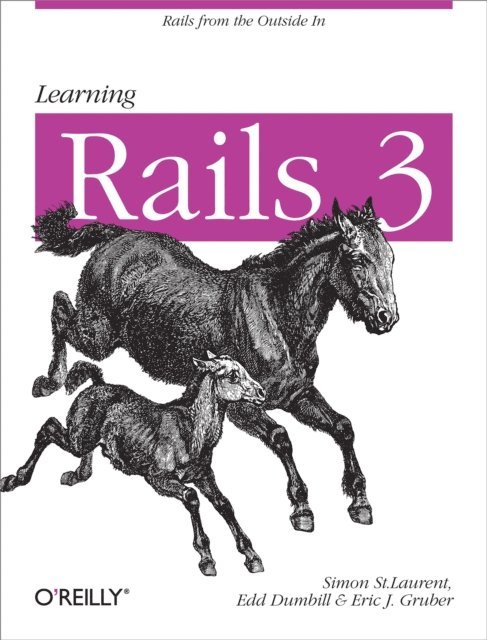
If you’re a web developer or designer ready to learn Rails, this unique book is the ideal way to start.
Rather than throw you into the middle of the framework’s Model-View-Controller architecture, Learning Rails 3 works from the outside in. You’ll begin with the foundations of the Web you already know, and learn how to create something visible with Rails’ view layer. Then you’ll tackle the more difficult inner layers: the database models and controller code.
All you need to get started is HTML experience. Each chapter includes exercises and review questions to test your understanding as you go.
Present content by building an application with a basic view and a simple controllerBuild forms and process their results, progressing from simple to more complexConnect forms to models by setting up a database, and create code that maps to database structuresUse Rails scaffolding to build applications from a view-centric perspectiveAdd common web application elements such as sessions, cookies, and authenticationBuild applications that combine data from multiple tablesSend and receive email messages from your applications"Learning Rails 3 feels like a brisk pair programming session with professionals who know how to use Ruby on Rails to get things done, and get them done well."-Alan Harris, author of Sinatra: Up and Running
367 kr
Läs direkt efter köp
If you’re a web developer or designer ready to learn Rails, this unique book is the ideal way to start.
Rather than throw you into the middle of the framework’s Model-View-Controller architecture, Learning Rails 3 works from the outside in. You’ll begin with the foundations of the Web you already know, and learn how to create something visible with Rails’ view layer. Then you’ll tackle the more difficult inner layers: the database models and controller code.
All you need to get started is HTML experience. Each chapter includes exercises and review questions to test your understanding as you go.
Present content by building an application with a basic view and a simple controllerBuild forms and process their results, progressing from simple to more complexConnect forms to models by setting up a database, and create code that maps to database structuresUse Rails scaffolding to build applications from a view-centric perspectiveAdd common web application elements such as sessions, cookies, and authenticationBuild applications that combine data from multiple tablesSend and receive email messages from your applications"Learning Rails 3 feels like a brisk pair programming session with professionals who know how to use Ruby on Rails to get things done, and get them done well."-Alan Harris, author of Sinatra: Up and Running
85 kr
Läs direkt efter köp
XML, the Extensible Markup Language, is everywhere: the syntax of choice for newly designed document formats across almost all computer applications. Now used daily by developers, XML is living up to its reputation as one of the most important developments in document interchange in the history of computing.
A perennial bestseller, the handy XML Pocket Reference from O''Reilly has been revised once again to give you quick access to the latest goods. In addition to its comprehensive look at XML, this third edition has been updated with new material on Namespaces and XML Schema--considered among the most important elements in current XML use--along with RELAX NG and Schematron, additional powerful tools for describing XML document structures.
Like other titles in O''Reilly''s Pocket Reference series, the XML Pocket Reference, 3rd Edition features a well-organized format that gets right to the point. As a result, it''s already won over the allegiance of developers everywhere. If you need XML answers quick and on the fly, this compact book is most definitely the book for you.
332 kr
Läs direkt efter köp
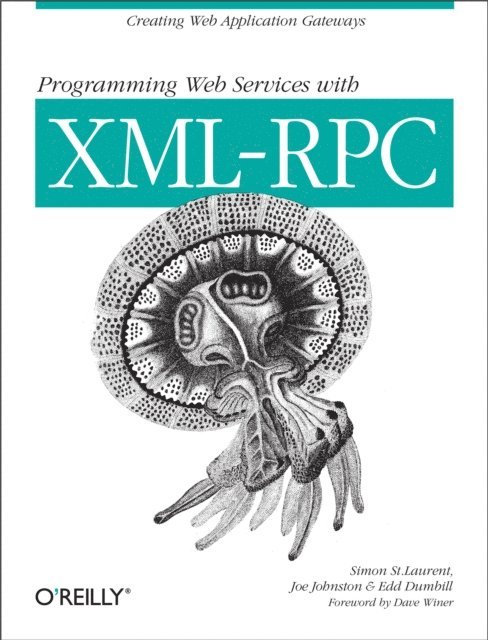
Have you ever needed to share processing between two or more computers running programs written in different languages on different operating systems? Or have you ever wanted to publish information on the Web so that programs other than browsers could work with it? XML-RPC, a system for remote procedure calls built on XML and the ubiquitous HTTP protocol, is the solution you''ve been looking for.Programming Web Services with XML-RPC introduces the simple but powerful capabilities of XML-RPC, which lets you connect programs running on different computers with a minimum of fuss, by wrapping procedure calls in XML and establishing simple pathways for calling functions. With XML-RPC, Java programs can talk to Perl scripts, which can talk to Python programs, ASP applications, and so on. You can provide access to procedure calls without having to worry about the system on the other end, so it''s easy to create services that are available on the Web.XML-RPC isn''t the only solution for web services; the Simple Object Access Protocol (SOAP) is another much-hyped protocol for implementing web services. While XML-RPC provides fewer capabilities than SOAP, it also has far fewer interoperability problems and its capabilities and limitations are much better understood. XML-RPC is also stable, with over 30 implementations on a wide variety of platforms, so you can start doing real work with it immediately.Programming Web Services with XML-RPC covers the details of five XML-RPC implementations, so you can get started developing distributed applications in Java, Perl, Python, ASP, or PHP. The chapters on these implementations contain code examples that you can use as the basis for your own work. This book also provides in-depth coverage of the XML-RPC specification, which is helpful for low-level debugging of XML-RPC clients and servers. And if you want to build your own XML-RPC implementation for another environment, the detailed explanations in this book will serve as a foundation for that work.
344 kr
Läs direkt efter köp
Have you ever needed to share processing between two or more computers running programs written in different languages on different operating systems? Or have you ever wanted to publish information on the Web so that programs other than browsers could work with it? XML-RPC, a system for remote procedure calls built on XML and the ubiquitous HTTP protocol, is the solution you''ve been looking for.Programming Web Services with XML-RPC introduces the simple but powerful capabilities of XML-RPC, which lets you connect programs running on different computers with a minimum of fuss, by wrapping procedure calls in XML and establishing simple pathways for calling functions. With XML-RPC, Java programs can talk to Perl scripts, which can talk to Python programs, ASP applications, and so on. You can provide access to procedure calls without having to worry about the system on the other end, so it''s easy to create services that are available on the Web.XML-RPC isn''t the only solution for web services; the Simple Object Access Protocol (SOAP) is another much-hyped protocol for implementing web services. While XML-RPC provides fewer capabilities than SOAP, it also has far fewer interoperability problems and its capabilities and limitations are much better understood. XML-RPC is also stable, with over 30 implementations on a wide variety of platforms, so you can start doing real work with it immediately.Programming Web Services with XML-RPC covers the details of five XML-RPC implementations, so you can get started developing distributed applications in Java, Perl, Python, ASP, or PHP. The chapters on these implementations contain code examples that you can use as the basis for your own work. This book also provides in-depth coverage of the XML-RPC specification, which is helpful for low-level debugging of XML-RPC clients and servers. And if you want to build your own XML-RPC implementation for another environment, the detailed explanations in this book will serve as a foundation for that work.
193 kr
Skickas inom 5-8 vardagar
229 kr
Läs direkt efter köp
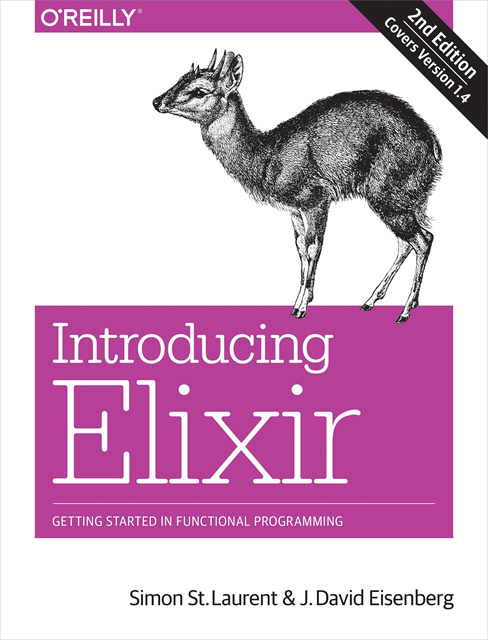
Smooth, powerful, and small, Elixir is an excellent language for learning functional programming, and with this hands-on introduction, you’ll discover just how powerful Elixir can be. Authors Simon St. Laurent and J. David Eisenberg show you how Elixir combines the robust functional programming of Erlang with an approach that looks more like Ruby, and includes powerful macro features for metaprogramming.
Updated to cover Elixir 1.4, the second edition of this practical book helps you write simple Elixir programs by teaching one skill at a time. Once you pick up pattern matching, process-oriented programming, and other concepts, you’ll understand why Elixir makes it easier to build concurrent and resilient programs that scale up and down with ease.
Get comfortable with IEx, Elixir’s command line interfaceLearn Elixir’s basic structures by working with numbersDiscover atoms, pattern matching, and guards: the foundations of your program structureDelve into the heart of Elixir processing with recursion, strings, lists, and higher-order functionsCreate Elixir processes and send messages among themStore and manipulate structured data with Erlang Term Storage and the Mnesia databaseBuild resilient applications with the Open Telecom Platform237 kr
Läs direkt efter köp
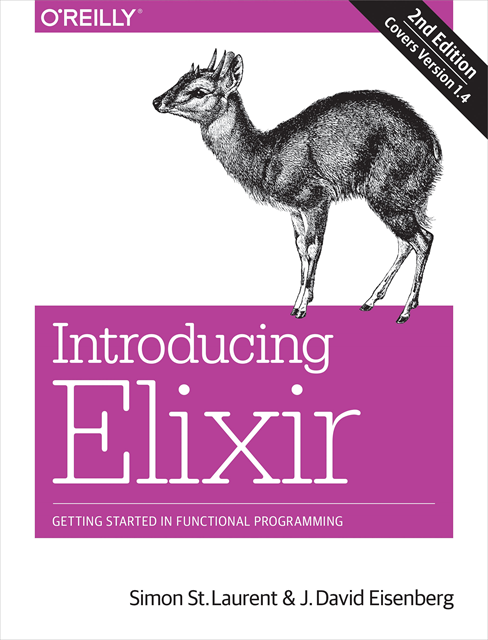
Smooth, powerful, and small, Elixir is an excellent language for learning functional programming, and with this hands-on introduction, you’ll discover just how powerful Elixir can be. Authors Simon St. Laurent and J. David Eisenberg show you how Elixir combines the robust functional programming of Erlang with an approach that looks more like Ruby, and includes powerful macro features for metaprogramming.
Updated to cover Elixir 1.4, the second edition of this practical book helps you write simple Elixir programs by teaching one skill at a time. Once you pick up pattern matching, process-oriented programming, and other concepts, you’ll understand why Elixir makes it easier to build concurrent and resilient programs that scale up and down with ease.
Get comfortable with IEx, Elixir’s command line interfaceLearn Elixir’s basic structures by working with numbersDiscover atoms, pattern matching, and guards: the foundations of your program structureDelve into the heart of Elixir processing with recursion, strings, lists, and higher-order functionsCreate Elixir processes and send messages among themStore and manipulate structured data with Erlang Term Storage and the Mnesia databaseBuild resilient applications with the Open Telecom Platform207 kr
Läs direkt efter köp
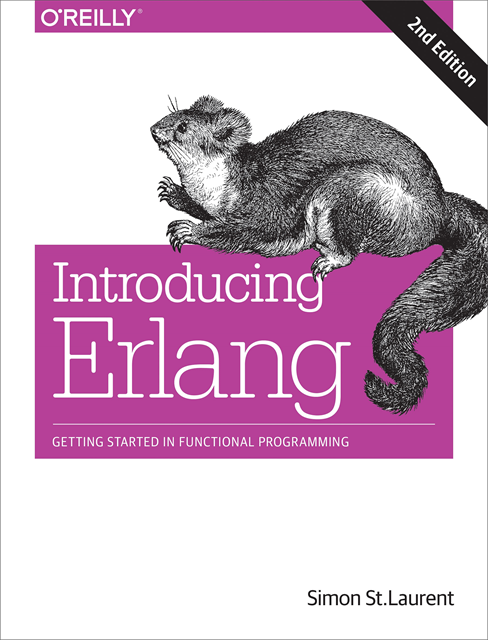
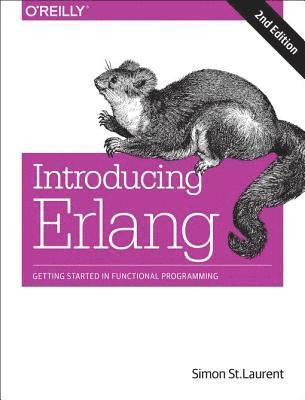
If you’re new to Erlang, its functional style can seem difficult, but with help from this hands-on introduction, you’ll scale the learning curve and discover how enjoyable, powerful, and fun this language can be.
In this updated second edition, author Simon St.Laurent shows you how to write simple Erlang programs by teaching you one skill at a time. You’ll learn about pattern matching, recursion, message passing, process-oriented programming, and establishing pathways for data rather than telling it where to go. By the end of your journey, you’ll understand why Erlang is ideal for concurrency and resilience.
Get cozy with Erlang’s shell, its command line interfaceDefine functions, using the fun tool, to represent repeated calculationsDiscover atoms, pattern matching, and guards: the foundations of your program structureDelve into the heart of Erlang processing with recursion, strings, lists, and higher-order functionsCreate processes, send messages among them, and apply pattern matching to incoming messagesStore and manipulate structured data with Erlang Term Storage and the Mnesia databaseLearn about Open Telecom Platform, Erlang’s open source libraries and tools207 kr
Läs direkt efter köp
If you’re new to Erlang, its functional style can seem difficult, but with help from this hands-on introduction, you’ll scale the learning curve and discover how enjoyable, powerful, and fun this language can be.
In this updated second edition, author Simon St.Laurent shows you how to write simple Erlang programs by teaching you one skill at a time. You’ll learn about pattern matching, recursion, message passing, process-oriented programming, and establishing pathways for data rather than telling it where to go. By the end of your journey, you’ll understand why Erlang is ideal for concurrency and resilience.
Get cozy with Erlang’s shell, its command line interfaceDefine functions, using the fun tool, to represent repeated calculationsDiscover atoms, pattern matching, and guards: the foundations of your program structureDelve into the heart of Erlang processing with recursion, strings, lists, and higher-order functionsCreate processes, send messages among them, and apply pattern matching to incoming messagesStore and manipulate structured data with Erlang Term Storage and the Mnesia databaseLearn about Open Telecom Platform, Erlang’s open source libraries and tools304 kr
Skickas inom 5-8 vardagar
340 kr
Skickas inom 5-8 vardagar
314 kr
Läs direkt efter köp
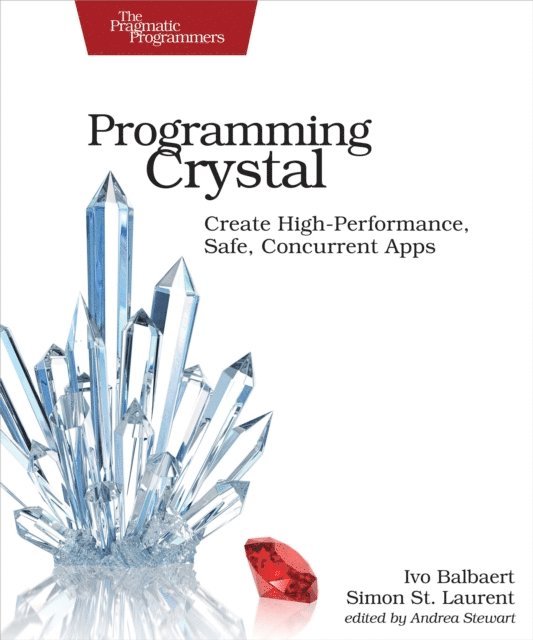
Crystal is for Ruby programmers who want more performance, or for developers who enjoy working in a high-level scripting environment. Crystal combines native execution speed and concurrency with Ruby-like syntax, so you will feel right at home. This book, the first available on Crystal, shows you how to write applications that have the beauty and elegance of a modern language, combined with the power of types and modern concurrency tooling. Now you can write beautiful code that runs faster, scales better, and is a breeze to deploy.
Crystal is elegant to read and easy to program like Ruby, allowing full object-oriented development. Its compiler is powerful enough to nearly always infer the type of your variables. So you get the benefits of a statically typed language: more robust code, safety and execution speed, while still reaching high productivity in development. Null pointer exceptions as in JavaScript, Java or C#, are a thing of the past: Crystal annihilates them, just like Rust.
Explore the building blocks and design of the language, and how you can use the Crystal tool-chain to build and manage powerful applications. Harness the power of the macro system, as well as how to work with fibers and channels, making concurrency as easy as possible. Learn how to use the Kemal web framework and access databases, and how to tap the potential of existing Crystal libraries. Find the spot that Crystal fills in today''s software world with real-world examples.
With Crystal, you can combine the best of both worlds: the high-level coding of dynamic languages, and the safety and blazing performance of a natively compiled language.
What You Need:
To develop in Crystal, you only need Crystal v 0.26 the latest version, a common text editor and a browser.
314 kr
Läs direkt efter köp
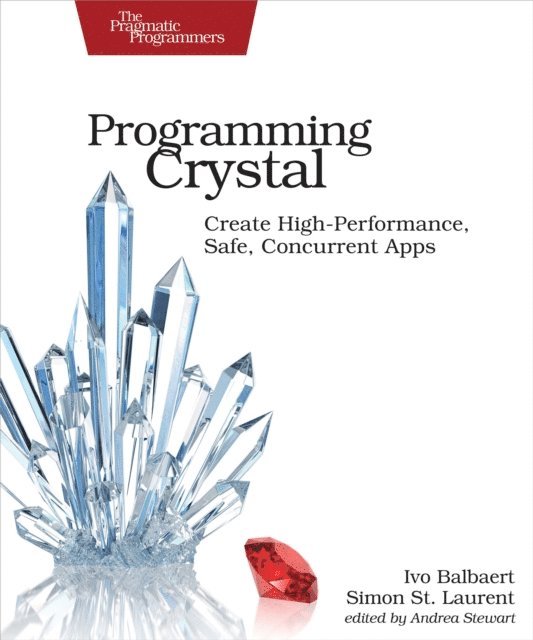
Crystal is for Ruby programmers who want more performance, or for developers who enjoy working in a high-level scripting environment. Crystal combines native execution speed and concurrency with Ruby-like syntax, so you will feel right at home. This book, the first available on Crystal, shows you how to write applications that have the beauty and elegance of a modern language, combined with the power of types and modern concurrency tooling. Now you can write beautiful code that runs faster, scales better, and is a breeze to deploy.
Crystal is elegant to read and easy to program like Ruby, allowing full object-oriented development. Its compiler is powerful enough to nearly always infer the type of your variables. So you get the benefits of a statically typed language: more robust code, safety and execution speed, while still reaching high productivity in development. Null pointer exceptions as in JavaScript, Java or C#, are a thing of the past: Crystal annihilates them, just like Rust.
Explore the building blocks and design of the language, and how you can use the Crystal tool-chain to build and manage powerful applications. Harness the power of the macro system, as well as how to work with fibers and channels, making concurrency as easy as possible. Learn how to use the Kemal web framework and access databases, and how to tap the potential of existing Crystal libraries. Find the spot that Crystal fills in today''s software world with real-world examples.
With Crystal, you can combine the best of both worlds: the high-level coding of dynamic languages, and the safety and blazing performance of a natively compiled language.
What You Need:
To develop in Crystal, you only need Crystal v 0.26 the latest version, a common text editor and a browser.