Simone Ghelli - Böcker
Visar alla böcker från författaren Simone Ghelli. Handla med fri frakt och snabb leverans.
4 produkter
4 produkter
Del 10 - Transnational Italian Cultures
Levi Beyond Levi
Postcritical Engagements with Primo Levi’s Works
Inbunden, Engelska, 2026
2 280 kr
Kommande
What do Primo Levi’s works tell about our world? How can they help us to think about today’s global challenges? Levi Beyond Levi invites readers to rediscover Primo Levi as a thinker whose ideas continue to resonate far beyond the historical conditions in which they were written. Emphasising reading as a dialogic and creative practice, the volume shows how Levi’s reflections on violence, memory, ethics, science, and political responsibility speak directly to the world we inhabit today.Rather than treating Levi’s work as something fixed in the past, the contributors explore how his writings travel across time and culture, opening new perspectives on urgent issues such as rising authoritarianism, the ecological crisis, and the genocide in Palestine. They highlight how contemporary writers, artists, and theorists have drawn creatively on Levi’s insights, expanding and reimagining his questions for the twenty-first century.Through innovative and thought-provoking essays, Levi Beyond Levi positions Levi as a companion for thinking through moral and political challenges that remain unresolved. The volume invites readers to consider Levi not only as a survivor and witness, but also as a classic whose works continue to generate meaning, spark debate, and offer tools for navigating our ‘moment of danger’.
1 795 kr
Skickas inom 10-15 vardagar
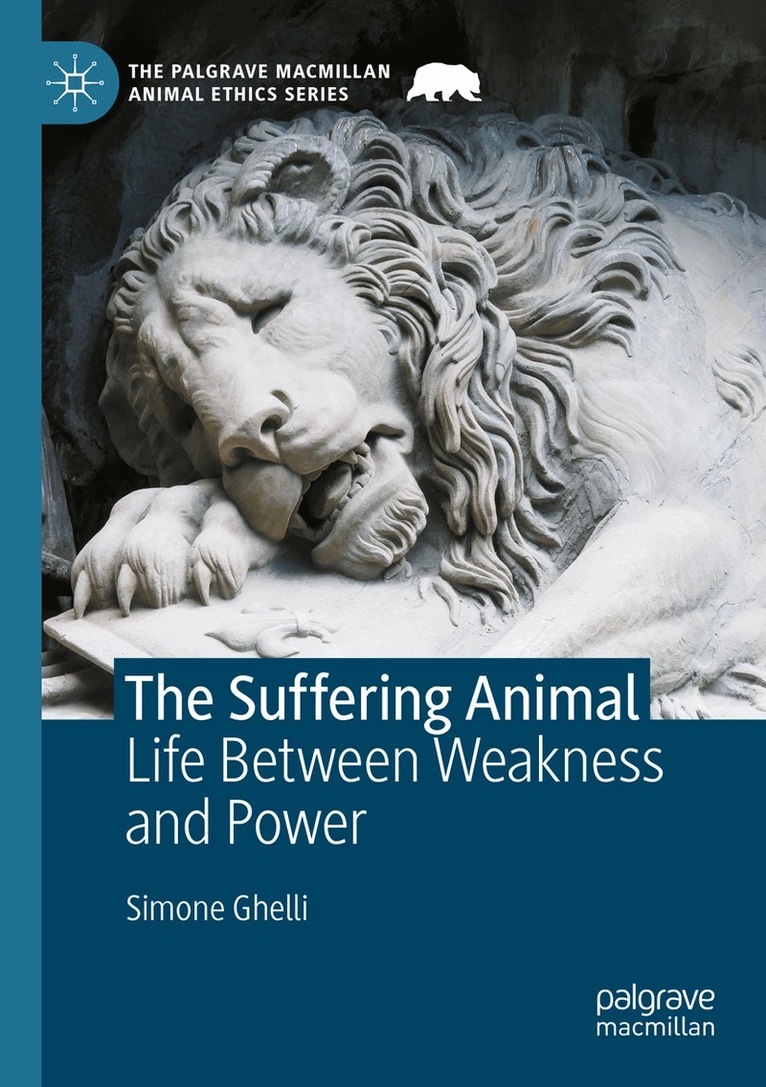
This book provides a critical and innovative reassessment of contemporary debate on the human-animal relationship. Starting with a critique of the “official philosophical narration” of animal studies, and then a reassessment of Descartes' animal-machine paradigm, Simone Ghelli tracks down the conceptual coordinates of what he calls “the paradigm of the suffering animal.” The suffering animal is a materialist thesis on the condition of the living, which, while contesting the metaphysical and anthropocentric structure of western axiology, eventually redefines and re-establishes ethics on the experience of suffering, that is on the mutual compassion sentient beings feel before the unjust sight of their finitude. The suffering animal paradigm shows how, within our philosophical tradition, the animal question has been always intertwined with the questions of atheism and of materialism. The ultimate aim of this research is to define the “ethical equilibrium” between aspects of the living,such as weakness and power, joy and suffering, life and death, which our philosophical tradition largely tends to consider as mutually excluding. To overcome such oppositions means avoiding opposing, in our ethical and political discourse, the defense of the vulnerability of the weak and the freedom of the powerful.
634 kr
Skickas inom 5-8 vardagar
1 795 kr
Skickas inom 10-15 vardagar
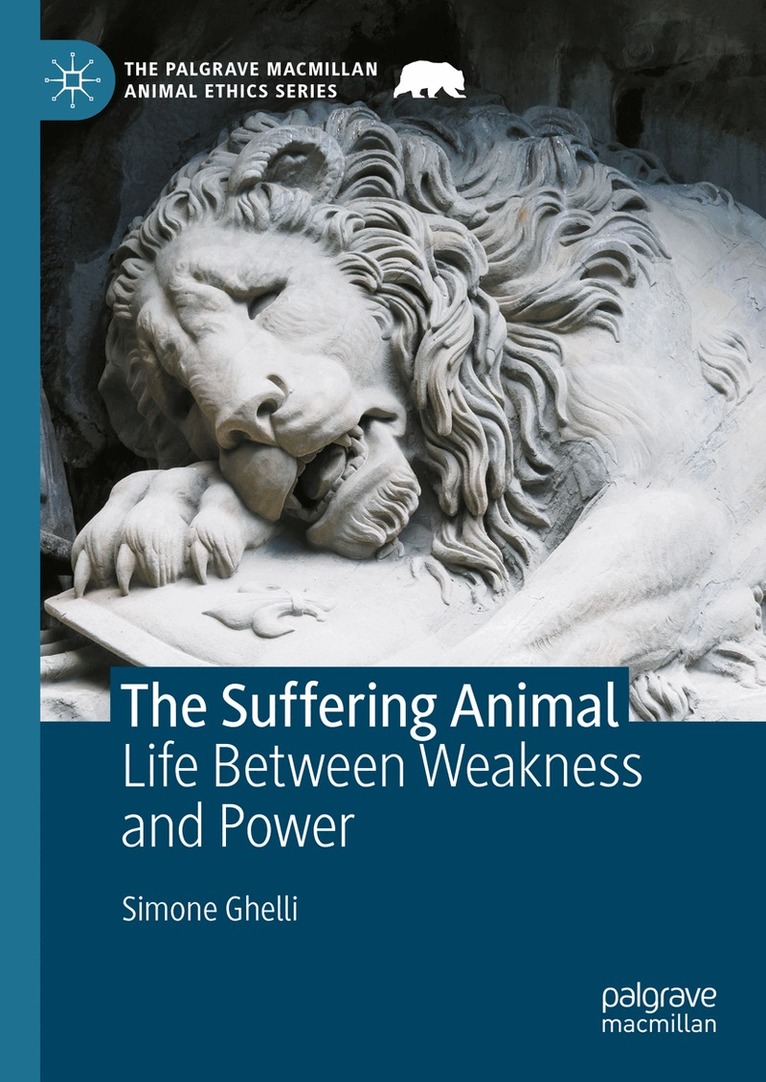
This book provides a critical and innovative reassessment of contemporary debate on the human-animal relationship. Starting with a critique of the “official philosophical narration” of animal studies, and then a reassessment of Descartes' animal-machine paradigm, Simone Ghelli tracks down the conceptual coordinates of what he calls “the paradigm of the suffering animal.” The suffering animal is a materialist thesis on the condition of the living, which, while contesting the metaphysical and anthropocentric structure of western axiology, eventually redefines and re-establishes ethics on the experience of suffering, that is on the mutual compassion sentient beings feel before the unjust sight of their finitude. The suffering animal paradigm shows how, within our philosophical tradition, the animal question has been always intertwined with the questions of atheism and of materialism. The ultimate aim of this research is to define the “ethical equilibrium” between aspects of the living,such as weakness and power, joy and suffering, life and death, which our philosophical tradition largely tends to consider as mutually excluding. To overcome such oppositions means avoiding opposing, in our ethical and political discourse, the defense of the vulnerability of the weak and the freedom of the powerful.