
Sing C. Chew – författare
Visar alla böcker från författaren Sing C. Chew. Handla med fri frakt och snabb leverans.
12 produkter
12 produkter
Inbunden, Engelska, 1992
1 021 kr
Skickas inom 10-15 vardagar
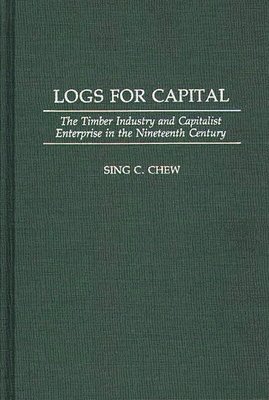
This study examines the process of capital accumulation at the level of the business firm, linking it to the macro-level of the world-economy as explicated by Hopkins and Wallerstein. Focusing upon the timber industry in the nineteenth century, and using primary archival material, the work analyzes how capital operates in the resource sector in the world-economy. The purpose is to refine further our understanding of capitalism as a mode of social organization and production, and in the process, refine contemporary theories of social change.In terms of coverage, the book addresses the timber industry over the course of the nineteenth century and provides an historical reconstruction of that industry. Its primary focus, however, is on the main features of timber and lumber production as a process of capital accumulation. The study will be of interest to scholars of social change and economic transformation, economic history, and political sociology.
Häftad, Engelska, 2001
588 kr
Skickas inom 10-15 vardagar
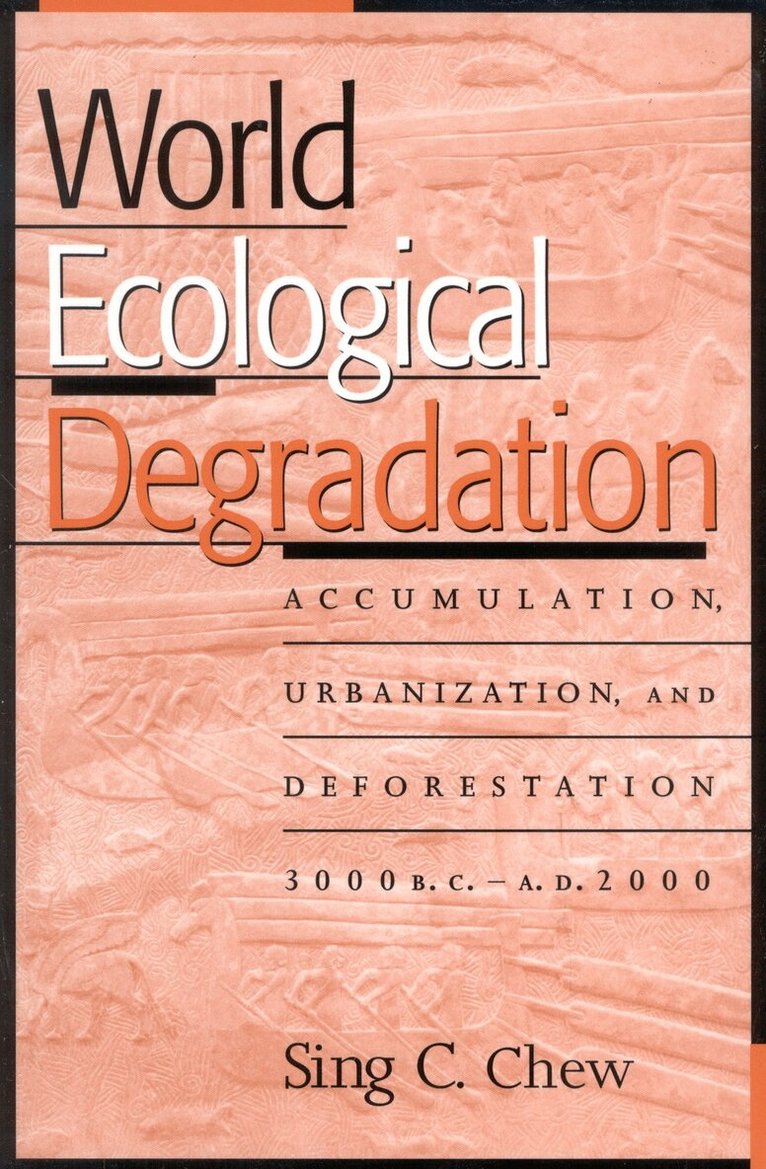
Deforestation, soil runoff, salination, pollution. While recurrent themes of the contemporary world, they are not new to us. In this broad sweeping review of the environmental impacts of human settlement and development worldwide over the past 5,000 years, Sing C. Chew shows that these processes are as old as civilization itself. With examples ranging from Ancient Mesopotamia to Malaya, Mycenaean Greece to Ming China, Chew shows that the processes of population growth, intensive resource accumulation, and urbanization in ancient and modern societies almost universally bring on ecological disaster, which often contributes to the decline and fall of that society. He then turns his eye to the development of the modern European world-system and its impact on the environment. Challenging us to change these long-term trends, Chew also traces the existence of environmental conservation ideas and movements over the span of 5,000 years. Can we do it? Look at Chew's evidence of the past five millennia and decide. Ideal for courses in environmental history, anthropology, and sociology, and world-systems theory.
Inbunden, Engelska, 2006
1 494 kr
Skickas inom 10-15 vardagar
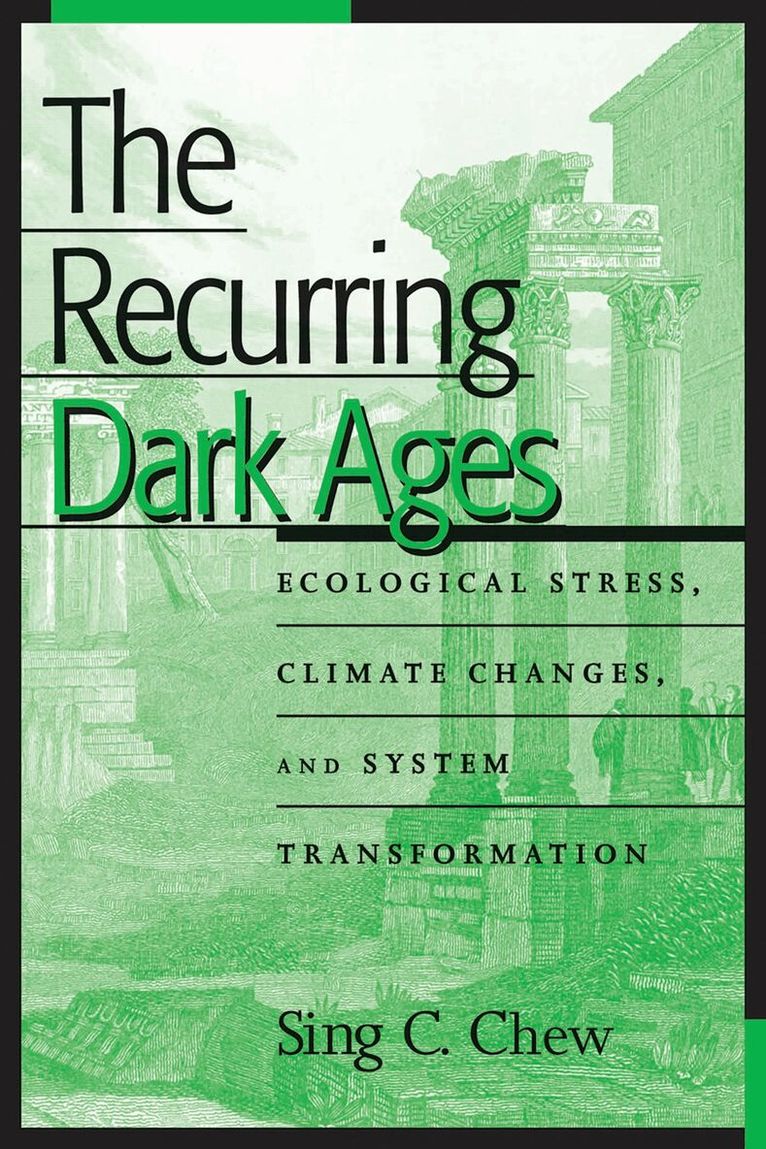
In this modern era of global environmental crisis, Sing Chew provides a convincing analysis of the recurring human and environmental crises identified as Dark Ages. In this, his second of a three-volume series concerning world ecological degradation, Chew reviews the past 5,000-year history of structural conditions and processes that define the relationship between nature and culture. Chew's message about the coming Dark Ages, as human communities continue to reorganize to meet the contingencies of ecological scarcity and climate changes, is a must-read for those concerned with human interactions and environmental changes, including environmental anthropologists and historians, world historians, geographers, archaeologists, and environmental scientists.
Häftad, Engelska, 2006
683 kr
Skickas inom 10-15 vardagar
In this modern era of global environmental crisis, Sing Chew provides a convincing analysis of the recurring human and environmental crises identified as Dark Ages. In this, his second of a three-volume series concerning world ecological degradation, Chew reviews the past 5,000-year history of structural conditions and processes that define the relationship between nature and culture. Chew's message about the coming Dark Ages, as human communities continue to reorganize to meet the contingencies of ecological scarcity and climate changes, is a must-read for those concerned with human interactions and environmental changes, including environmental anthropologists and historians, world historians, geographers, archaeologists, and environmental scientists.
Inbunden, Engelska, 2008
1 276 kr
Skickas
Ecological Futures, the final book in Sing C. Chew's trilogy on world ecological degradation, proposes that our own era exhibits ecological conditions similar to those of the past. The climate changes, environmental crises, mass population migrations, and socioeconomic disorganization we find in our globalized world also characterized the Late Bronze Age and the period following the fall of the Roman Empire. Given such historical parallels, can history tell us what to expect? Analyzing past trends, Chew identifies a set of long-term structural changes common to previous systemic crises and suggests possible outcomes. These 'possible futures' include the collapse of systems, territories, informational technologies, and communities in an era of scarce resources, political reorganization, and globalization.
Häftad, Engelska, 2008
575 kr
Skickas inom 10-15 vardagar
Ecological Futures, the final book in Sing C. Chew's trilogy on world ecological degradation, proposes that our own era exhibits ecological conditions similar to those of the past. The climate changes, environmental crises, mass population migrations, and socioeconomic disorganization we find in our globalized world also characterized the Late Bronze Age and the period following the fall of the Roman Empire. Given such historical parallels, can history tell us what to expect? Analyzing past trends, Chew identifies a set of long-term structural changes common to previous systemic crises and suggests possible outcomes. These 'possible futures' include the collapse of systems, territories, informational technologies, and communities in an era of scarce resources, political reorganization, and globalization.
Inbunden, Engelska, 2018
1 960 kr
Skickas inom 3-6 vardagar
The contribution of Southeast Asia to the world economy (during the late prehistoric and early historic periods) has not received much attention. It has often been viewed as a region of peripheral entrepôts, especially in the early centuries of the current era. Recent archaeological evidence revealed the existence of established and productive polities in Southeast Asia in the early parts of the historic period and earlier. This book recalibrates these interactions of Southeast Asia with other parts of the world economy, and gives the region its due instead of treating it as little more than of marginal interest.
Inbunden, Engelska, 2020
1 087 kr
Skickas inom 10-15 vardagar
Living Deep Ecology: A Bioregional Journey is an exploration of our evolving relationship with a specific bioregion. It is set in Humboldt County in northwestern California, in the Klamath-Siskiyou bioregion. By focusing on a specific bioregion and reflecting on anthropogenic changes in this bioregion over three decades, Bill Devall engages the reader in asking deeper questions about the meaning we find in Nature. He addresses questions such as how do we relate the facts and theories presented by science with our feelings, our intimacy, and our sense of Place as we dwell in a specific bioregion. This book engages the reader to consider our place in Nature. Devall approaches the bioregion not from the perspective of agencies and government, but from the perspective of the landscape itself.
Inbunden, Engelska, 2021
1 019 kr
Skickas inom 10-15 vardagar
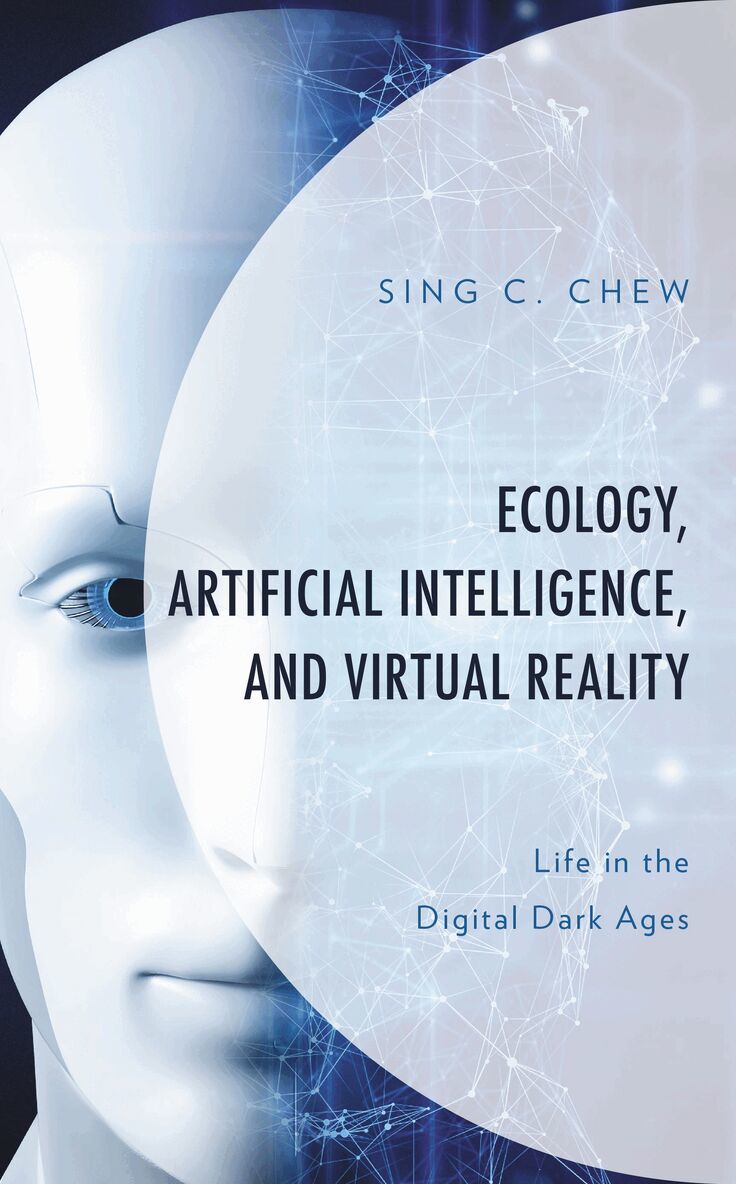
We live in a digitalized world that is experiencing environmental changes, scarcity of natural resources, global pandemics, mass migrations, and burgeoning global populations. In Ecology, Artificial Intelligence, and Virtual Reality, Sing C. Chew proposes that we meet these challenges by examining the connected global world we live in and by considering the advances that have been made in digitalization, miniaturization, dematerialization, artificial intelligence, virtual and augmented realities, and machine learning, which have increased our socioeconomic and political productivity. Chew outlines potential structural avenues to address these challenges, suggests pragmatic choices to ease living during these chaotic crisis conditions, and outlines solutions that will enable us to traverse systemic crises.
Häftad, Engelska, 2025
499 kr
Skickas inom 3-6 vardagar
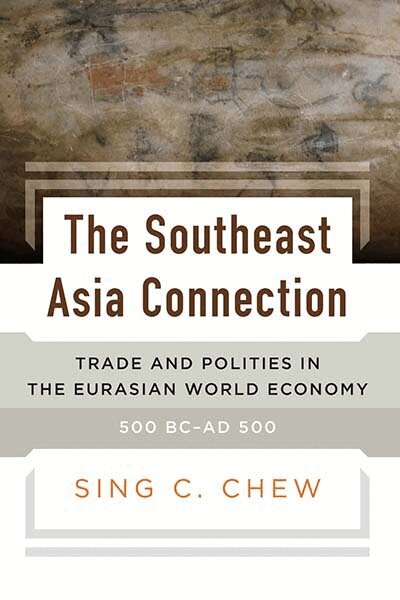
The contribution of Southeast Asia to the world economy (during the late prehistoric and early historic periods) has not received much attention. It has often been viewed as a region of peripheral entrepôts, especially in the early centuries of the current era. Recent archaeological evidence revealed the existence of established and productive polities in Southeast Asia in the early parts of the historic period and earlier. This book recalibrates these interactions of Southeast Asia with other parts of the world economy, and gives the region its due instead of treating it as little more than of marginal interest.
Inbunden, Engelska, 2001
833 kr
Tillfälligt slut
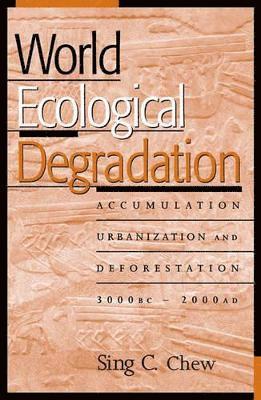
Deforestation, soil runoff, salination, pollution. While recurrent themes of the contemporary world, they are not new to us. In this broad sweeping review of the environmental impacts of human settlement and development worldwide over the past 5,000 years, Sing C. Chew shows that these processes are as old as civilization itself. With examples ranging from Ancient Mesopotamia to Malaya, Mycenaean Greece to Ming China, Chew shows that the processes of population growth, intensive resource accumulation, and urbanization in ancient and modern societies almost universally bring on ecological disaster, which often contributes to the decline and fall of that society. He then turns his eye to the development of the modern European world-system and its impact on the environment. Challenging us to change these long-term trends, Chew also traces the existence of environmental conservation ideas and movements over the span of 5,000 years. Can we do it? Look at Chew's evidence of the past five millennia and decide. Ideal for courses in environmental history, anthropology, and sociology, and world-systems theory.

1 602 kr
Tillfälligt slut
In his trilogy of environmental studies—World Ecological Degradation, The Recurring Dark Ages, and Ecological Futures—Sing Chew surveys 5,000 years of human history and finds a distinctive, recurring pattern: Civilizations that amass vast wealth do so by exhausting their environment, thus sowing the seeds of their collapse. Again and again, Chew observes, periods of over-accumulation are followed by extreme environmental degradation, the collapse of social systems, and a Dark Age. Today, at the beginning of the third millennium A.D., we are in the midst of a period of unprecedented accumulation, this time on a global scale, and we are experiencing worldwide environmental degradation, from the ozone layer to the rain forest. If past is prologue, Chew warns, then modern mankind may face a broad collapse of social systems and an unsettling future.