Singh Swaran - Böcker
Visar alla böcker från författaren Singh Swaran. Handla med fri frakt och snabb leverans.
2 produkter
2 produkter
1 370 kr
Skickas inom 3-6 vardagar
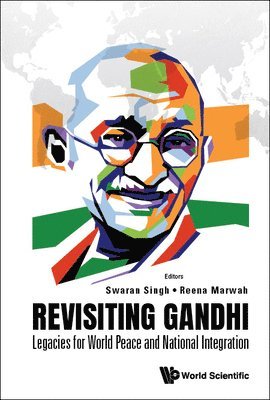
This book interrogates several strands of Gandhian design, articulations, methods and ideals, through five sections. These include Theoretical Perspectives, Peace and World Order, Revolutionary Experiments, National Integration and Gandhi in Chinese Discourses. The authors seek to provide answers to questions as: Were Gandhian ideas utopian? What is the contemporary relevance of Gandhi? Do his ideas share convergence with theory in world politics and international relations? What was his role in forging national integration? How did his ideologies and experiments with truth resonate with countries as China?The writings also underline that being averse to individualism, for Gandhi it was the realm of societal interests which were significant, encompassing the good of humanity, dignity of labor and village-centric development. Development paradigms and health related challenges are articulated in the book to underline the significance of Gandhi's vision of 'Leave no one behind' to create an egalitarian society with respect and tolerance. The book presents the essential humility and simplicity of Gandhi.This book is a must read for those who seek to understand Gandhi in a way that is candid and inclusive. It's a book that conceals nothing and does not shy away from presenting debates on Gandhi. Moreover, it is a factual account, with contributors having relied extensively on archival materials, essays and an extensive review of literature. Hence, the book is replete with pertinent documentation and scholarship and makes a significant value-addition in the literature on Gandhi.
1 370 kr
Skickas inom 3-6 vardagar
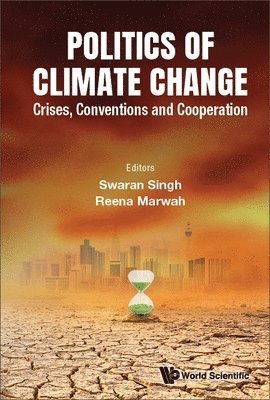
The year 2020 was a watershed event in the history of climate change politics. It marked the end of the second commitment period of the Kyoto Protocol and the beginning of the ambitious Paris Agreement. It was also the year of the pandemic, where the disruption caused severe implications on a global scale. The pandemic also brought before the world the severity and scale of the transboundary challenges in a globally interconnected world. It exposed the weaknesses of the global institutions and governance structures in tackling the complex and imminent threat of climate change.As states prepare for the future of global climate change negotiations post the COP26 event of 2021, there has been a significant shift in the politics of climate change at all levels. The negotiations took place in the shadows of the pandemic, which has challenged the political lethargy and non-committal attitudes of states on the climate change question.Unlike in the past, climate change is now a hot issue on the political high tables. It has also spilled outside these negotiating spaces and into the public sphere. Whether it is the school strikes led by children or the indigenous struggles of marginalized populations, the politics of climate change today is far more diverse, representative, and active. At the same time, we can witness the shifts in the state's understanding of the problem, which is actively inquiring about its security and geopolitical dimensions. The boundaries between traditional and non-traditional threats to security are getting blurred as climate change, and its myriad impacts wreak havoc on ecosystem resilience, the state's welfare capacity, and people's everyday lives.Hence, this volume seeks to decipher the nature of global climate change politics in the post-pandemic and climate insecure world. Who will be its main actors, main stakeholders, and losers? How will questions of equity, sustainability, and finance interplay at the COP26 event and thereafter? How will developing and poor countries engage with the issue in the next phase of climate politics? Finally, how will the ambition of the Paris Agreement, which is reflected in the language of net-zero targets and the two degrees Celsius temperature goals, be brought into action?