Slava Kalyuga - Böcker
Visar alla böcker från författaren Slava Kalyuga. Handla med fri frakt och snabb leverans.
5 produkter
5 produkter
850 kr
Skickas inom 5-8 vardagar
Cognitive load theory (CLT) considers instructional implications of characteristics of human cognition, such as processing limitations of working memory and the size and organization of the learner's knowledge base in long-term memory. CLT traditionally described how the limited capacity of working memory may cause cognitive overload and inhibit learning. Rethinking Cognitive Load Theory reflects on recent developments of this theory and proposes some essential modifications to improve its effectiveness in designing modern, technology-based, complex learning environments. The book describes a way of reconceptualizing the theory so that it can better account for the multifaceted nature of learner cognition that has emerged in recent research. It considers complex learning tasks as involving various goals of learner activities that need combining cognitive, motivational, and affective perspectives.The book starts with a review of basic tenets of the current understanding of CLT, including major components of human cognitive architecture, their characteristics and effects on cognitive load. It summarizes the modifications that have been made to CLT to date, including redefining types of cognitive load and applying an evolutionary approach. The criticisms of the theory that have been expressed over the years are reviewed and possible modifications to CLT that could enhance its usability are explored. The book considers existing instructional theories (e.g., problem-first, productive failure or invention learning) as evidence for the goal-driven approach, and offers examples of specific learning tasks and related motivational and affective goals of learner activities to illustrate the goal-driven approach to CLT using simulation- and game-based learning environments. Finally, the book provides theoretical and practical implications of the proposed new approach. This reframing of CLT is expected to result in a more learner-cantered framework in accordance with recent trends in instructional science and educational technology.
1 748 kr
Skickas inom 10-15 vardagar
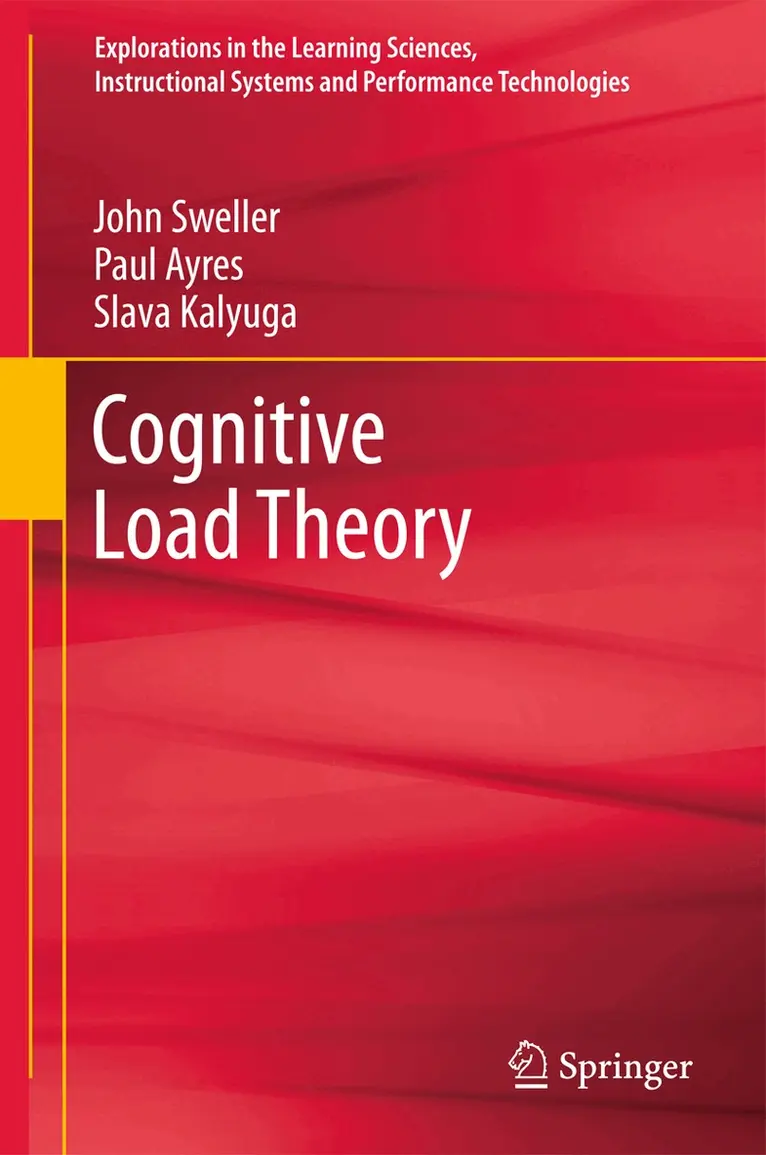
Over the last 25 years, cognitive load theory has become one of the world’s leading theories of instructional design. It is heavily researched by many educational and psychological researchers and is familiar to most practicing instructional designers, especially designers using computer and related technologies.The theory can be divided into two aspects that closely inter-relate and influence each other: human cognitive architecture and the instructional designs and prescriptions that flow from that architecture. The cognitive architecture is based on biological evolution. The resulting description of human cognitive architecture is novel and accordingly, the instructional designs that flow from the architecture also are novel. All instructional procedures are routinely tested using randomized, controlled experiments.Roughly 1/3 of the book will be devoted to cognitive architecture and its evolutionary base with 2/3 devoted to the instructional implications that follow, including technology-based instruction. Researchers, teachers and instructional designers need the book because of the explosion of interest in cognitive load theory over the last few years. The theory is represented in countless journal articles but a detailed, modern overview presenting the theory and its implications in one location is not available.
2 001 kr
Skickas inom 5-8 vardagar
580 kr
Skickas inom 7-10 vardagar
The book explores a cognitive load perspective on instructional guidance. Cognitive load theory is focused on instructional design implications and prescriptions that flow from human cognitive architecture, and it has become one of the leading theories of instructional design. According to this theoretical perspective, the purpose of instructional guidance is to reduce learner potential cognitive overload by providing appropriate information in the right time and in a suitable format. As the learner’s level of prior knowledge is considered as the main factor influencing this decision, the effect of learner prior knowledge on effectiveness of instructional methods (the expertise reversal effect in cognitive load theory) provides the basic framework for the book.The fully-guided direct instruction and minimally-guided inquiry (discovery or exploratory) learning are often discussed in instructional psychology literature as examples of approaches with opposed degrees of guidance provided to the learners. This book considers the whole range of the levels of guidance (including intermediate levels) and approaches the problem of balancing learner guidance from a cognitive load perspective. The significance of this approach is in applying our current knowledge of human cognitive architecture to develop an integrated instructional approach bringing together the best features and advantages of direct instruction and inquiry learning.Both direct instruction and inquiry learning approaches have been around for long time, and their proponents can produce evidence of their effectiveness. This evidence needs to be treated within the context of appropriate learning goals in specific instructional settings for specific types of learners. This book provides an unbiased theoretical framework for managing learner instructional guidance and working principles for selecting appropriate levels and methods of instructional guidance (e.g., sequences of exploratory problems and explicit instruction; forms and levels of embedded guidance; and adapting methodologies) optimal for learners at different levels of prior knowledge.
1 025 kr
Skickas inom 7-10 vardagar
The book explores a cognitive load perspective on instructional guidance. Cognitive load theory is focused on instructional design implications and prescriptions that flow from human cognitive architecture, and it has become one of the leading theories of instructional design. According to this theoretical perspective, the purpose of instructional guidance is to reduce learner potential cognitive overload by providing appropriate information in the right time and in a suitable format. As the learner’s level of prior knowledge is considered as the main factor influencing this decision, the effect of learner prior knowledge on effectiveness of instructional methods (the expertise reversal effect in cognitive load theory) provides the basic framework for the book.The fully-guided direct instruction and minimally-guided inquiry (discovery or exploratory) learning are often discussed in instructional psychology literature as examples of approaches with opposed degrees of guidance provided to the learners. This book considers the whole range of the levels of guidance (including intermediate levels) and approaches the problem of balancing learner guidance from a cognitive load perspective. The significance of this approach is in applying our current knowledge of human cognitive architecture to develop an integrated instructional approach bringing together the best features and advantages of direct instruction and inquiry learning.Both direct instruction and inquiry learning approaches have been around for long time, and their proponents can produce evidence of their effectiveness. This evidence needs to be treated within the context of appropriate learning goals in specific instructional settings for specific types of learners. This book provides an unbiased theoretical framework for managing learner instructional guidance and working principles for selecting appropriate levels and methods of instructional guidance (e.g., sequences of exploratory problems and explicit instruction; forms and levels of embedded guidance; and adapting methodologies) optimal for learners at different levels of prior knowledge.