Solomos Solomou - Böcker
Visar alla böcker från författaren Solomos Solomou. Handla med fri frakt och snabb leverans.
5 produkter
5 produkter
550 kr
Skickas inom 7-10 vardagar
The impact of protectionism is currently a contentious policy issue. This book evaluates the effects of protectionism on the British interwar economy. In contrast to most studies of the period and the conclusions of orthodox economic theory, Kitson and Solomou show that the introduction of the General Tariff in 1932 provided a substantial stimulus to the domestic economy - a stimulus which can help to explain the trend improvement in British economic growth in the 1930s. The authors show that the tariff made encouraging import substitution and macroeconomic expansion. The empirical evidence is examined at two levels. First, a sectoral study shows that the newly protected sector of the 1930s saw an improvement in performance following the introduction of the tariff. Secondly, the large fall in manufacturing imports generated favourable effects on macroeconomic performance by helping to reduce the import propensity of the economy. The policy implication of this study is that trade policies should be constructed in the context of prevailing economic conditions and not solely with reference to sometimes inappropriate theoretical perspectives.
1 417 kr
Skickas inom 7-10 vardagar
The impact of protectionism is currently a contentious policy issue. This book evaluates the effects of protectionism on the British interwar economy. In contrast to most studies of the period and the conclusions of orthodox economic theory, Kitson and Solomou show that the introduction of the General Tariff in 1932 provided a substantial stimulus to the domestic economy - a stimulus which can help to explain the trend improvement in British economic growth in the 1930s. The authors show that the tariff made encouraging import substitution and macroeconomic expansion. The empirical evidence is examined at two levels. First, a sectoral study shows that the newly protected sector of the 1930s saw an improvement in performance following the introduction of the tariff. Secondly, the large fall in manufacturing imports generated favourable effects on macroeconomic performance by helping to reduce the import propensity of the economy. The policy implication of this study is that trade policies should be constructed in the context of prevailing economic conditions and not solely with reference to sometimes inappropriate theoretical perspectives.
441 kr
Skickas inom 7-10 vardagar
Solomos Solomou presents a clear and systematic examination of the evidence for long-term patterns of economic growth. Using data on Britain, France, Germany, the USA and the world economy between 1850 and 1973 he refutes the existence of long (Kondratieff) waves in the course of economic development. Instead he presents persuasive evidence for a growth pattern characterised by shock-induced, long-term variations in growth at the level of the world economy. The findings show that national patterns of growth did not necessarily coincide with those of the world economy, but followed episodic long swing fluctuations of twenty to thirty years before the Second World War and trend-accelerated growth in the post-war period. The author provides new historical perspectives on the pre-1913 era, the inter-war years and the post-war boom.
1 417 kr
Skickas inom 7-10 vardagar
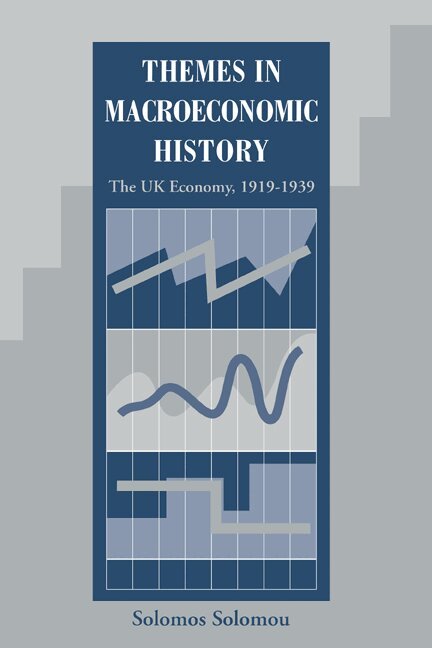
The period between the two World Wars was remarkable; mass unemployment, protectionism, diverse exchange rate regimes, the disintegration of world trade, poor growth prospects and high business cycle volatility. This comprehensive textbook surveys key questions arising from the British economy from 1919 to 1939: Why was unemployment so high? Did a fast transition to the pre-1913 gold parity lead to a low growth equilibrium? Why were interwar business cycles so volatile? Did tariffs stimulate economic recovery in the 1930s? A comparative approach is adopted throughout. For example, the question of gold parity is contrasted with countries that allowed their currencies to depreciate. The book is aimed primarily at students studying economic history. The book continually applies economic theory to historical examples enabling students to evaluate the relevance of competing theoretical frameworks.
577 kr
Skickas inom 7-10 vardagar
The period between the two World Wars was remarkable; mass unemployment, protectionism, diverse exchange rate regimes, the disintegration of world trade, poor growth prospects and high business cycle volatility. This comprehensive textbook surveys key questions arising from the British economy from 1919 to 1939: Why was unemployment so high? Did a fast transition to the pre-1913 gold parity lead to a low growth equilibrium? Why were interwar business cycles so volatile? Did tariffs stimulate economic recovery in the 1930s? A comparative approach is adopted throughout. For example, the question of gold parity is contrasted with countries that allowed their currencies to depreciate. The book is aimed primarily at students studying economic history. The book continually applies economic theory to historical examples enabling students to evaluate the relevance of competing theoretical frameworks.