Sonia Alconini – författare
Visar alla böcker från författaren Sonia Alconini. Handla med fri frakt och snabb leverans.
8 produkter
The Oxford Handbook of the Incas
Av Sonia Alconini, Sonia Alconini m. fl.
Häftad, 2022
1058 kr
Lägg i varukorg
When Spaniards invaded their realm in 1532, the Incas ruled the largest empire of the pre-Columbian Americas. Just over a century earlier, military campaigns began to extend power across a broad swath of the Andean region, bringing local societies into new relationships with colonists and officials …
The Oxford Handbook of the Incas
Av Sonia Alconini, R. Alan Covey
Inbunden, 2018
3225 kr
Lägg i varukorg
When Spaniards invaded their realm in 1532, the Incas ruled the largest empire of the pre-Columbian Americas. Just over a century earlier, military campaigns began to extend power across a broad swath of the Andean region, bringing local societies into new relationships with colonists and officials …
Oxford Handbook of the Incas
Av R. Alan Covey, Sonia Alconini
E-bok, 2018
604 kr
Lägg i varukorg
When Spaniards invaded their realm in 1532, the Incas ruled the largest empire of the pre-Columbian Americas. Just over a century earlier, military campaigns began to extend power across a broad swath of the Andean region, bringing local societies into new relationships with colonists and officials …
Oxford Handbook of the Incas
Av R. Alan Covey, Sonia Alconini
E-bok, 2018
604 kr
Lägg i varukorg
When Spaniards invaded their realm in 1532, the Incas ruled the largest empire of the pre-Columbian Americas. Just over a century earlier, military campaigns began to extend power across a broad swath of the Andean region, bringing local societies into new relationships with colonists and officials …
Southeast Inka Frontiers
Boundaries and Interactions
E-bok, 2016
1426 kr
Lägg i varukorg
Imperial frontiers are a fascinating stage for studying the interactions of people, institutions, and their environments. In one of the first books to explore the Inka frontier through archaeology, Sonia Alconini examines part of present-day Bolivia that was once a territory at the edge of the Inka …
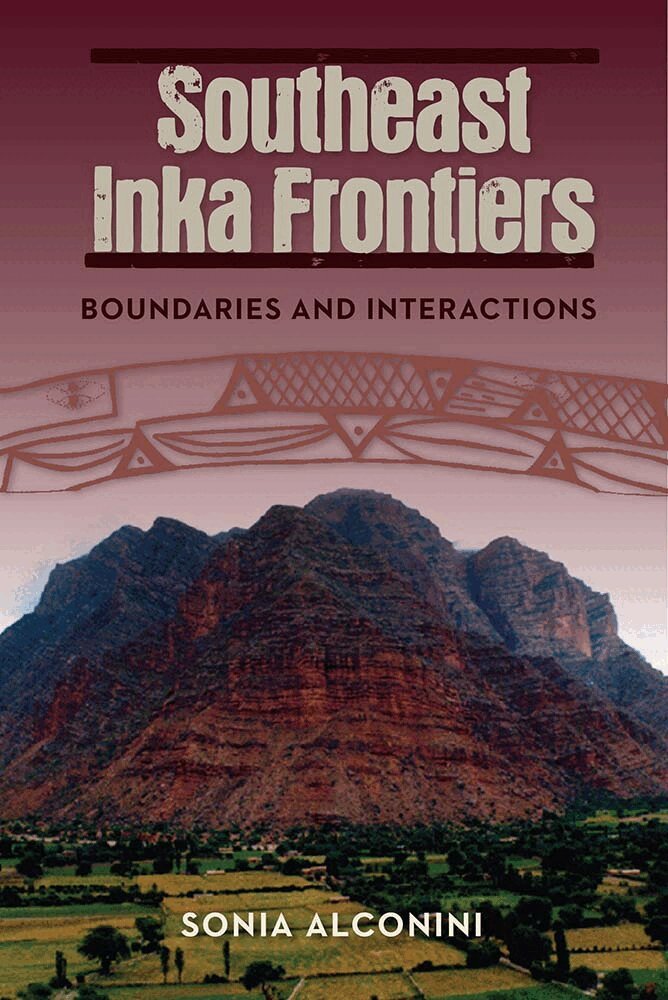
Southeast Inka Frontiers
Boundaries and Interactions
Inbunden, 2016
935 kr
Lägg i varukorg
Imperial frontiers are a fascinating stage for studying the interactions of people, institutions, and their environments. In one of the first books to explore the Inka frontier through archaeology, Sonia Alconini examines part of present-day Bolivia that was once a territory at the edge of the Inka …
inkario en los valles del sur andino boliviano
Los Yamparas entre la arqueología y etnohistoria
Häftad, 2008
399 kr
Lägg i varukorg
Distant Provinces in the Inka Empire
Toward a Deeper Understanding of Inka Imperialism
Av Michael A. Malpass, Sonia Alconini
Häftad, 2010
608 kr
Tillfälligt slut
Who was in charge of the widespread provinces of the great Inka Empire of the fifteenth and sixteenth centuries: Inka from the imperial heartland or local leaders who took on the trappings of their conquerors, either by coercion or acceptance? By focusing on provinces far from the capital of Cuzco, …