Sonja Dieterich – författare
Visar alla böcker från författaren Sonja Dieterich. Handla med fri frakt och snabb leverans.
6 produkter
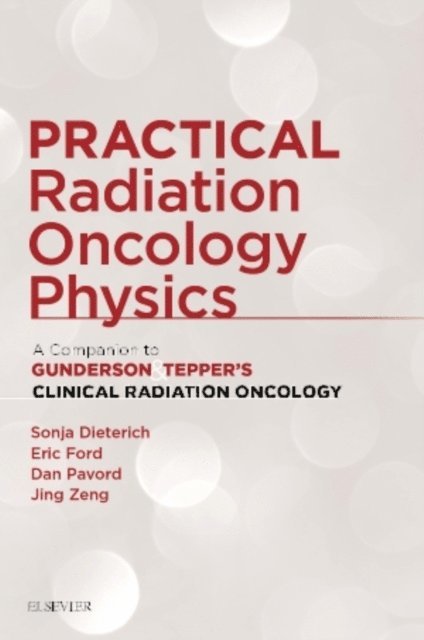
Practical Radiation Oncology Physics
A Companion to Gunderson & Tepper's Clinical Radiation Oncology
Av Sonja Dieterich, Eric Ford m. fl.
Häftad, 2015
1117 kr
Lägg i varukorg
Perfect for radiation oncologists , medical physicists , and residents in both fields, Practical Radiation Oncology Physics provides a concise and practical summary of the current practice standards in therapeutic medical physics. A companion to the fourth edition of Clinical Radiation Oncology, by …
Practical Radiation Oncology Physics E-Book
A Companion to Gunderson & Tepper''s Clinical Radiation Oncology
Av Jing Zeng, Daniel Pavord m. fl.
E-bok, 2015
1239 kr
Lägg i varukorg
Perfect for radiation oncologists, medical physicists, and residents in both fields, Practical Radiation Oncology Physics provides a concise and practical summary of the current practice standards in therapeutic medical physics. A companion to the fourth edition of Clinical Radiation Oncology, by …
Radiation Oncology Physics
Av Sonja Dieterich, Eric Ford m. fl.
Häftad, 2027
1276 kr
Kommande
As modern radiation therapy grows more complex and precision is even more critical, clinicians and physicists need a clear, accessible resource that translates current best practices into actionable guidance . Radiation Oncology Physics, 2nd Edition , offers concise, practice-focused information on …
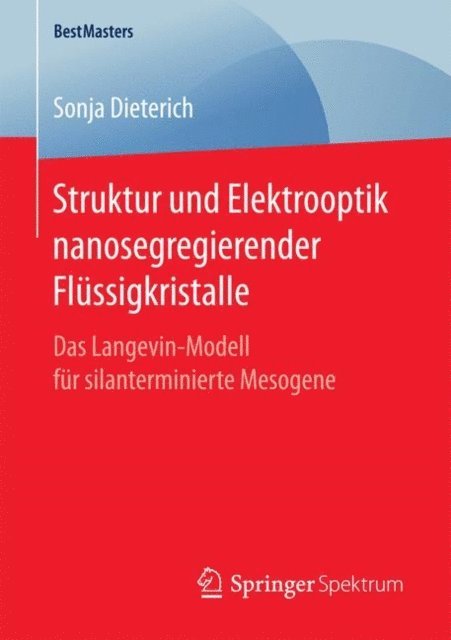
Struktur und Elektrooptik nanosegregierender Flüssigkristalle
Das Langevin-Modell für silanterminierte Mesogene
Häftad, 2017
515 kr
Lägg i varukorg
Sonja Dieterich zeigt, dass die Natur der Phasenumwandlung von der smektischen A- in die smektische C‑Phase ein wichtiges Kriterium für die Anwendbarkeit des Langevin-Modells ist, welches das elektrooptische Verhalten von Flüssigkristallen vom de Vries-Typ beschreibt. Dagegen spielt die genaue …
Struktur und Elektrooptik nanosegregierender Flüssigkristalle
Das Langevin-Modell für silanterminierte Mesogene
E-bok, 2017
522 kr
Lägg i varukorg
Sonja Dieterich zeigt, dass die Natur der Phasenumwandlung von der smektischen A- in die smektische C‑Phase ein wichtiges Kriterium für die Anwendbarkeit des Langevin-Modells ist, welches das elektrooptische Verhalten von Flüssigkristallen vom de Vries-Typ beschreibt. Dagegen spielt die genaue …
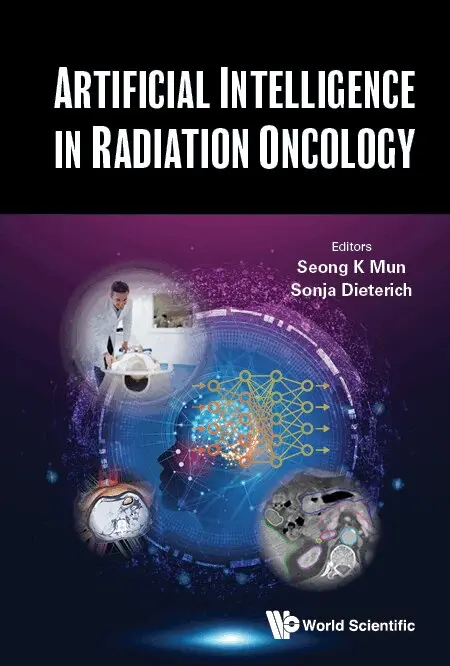
ARTIFICIAL INTELLIGENCE IN RADIATION ONCOLOGY
Av Mun Seong K, Seong K Mun m. fl.
Inbunden, 2023
2038 kr
Lägg i varukorg
The clinical use of Artificial Intelligence (AI) in radiation oncology is in its infancy. However, it is certain that AI is capable of making radiation oncology more precise and personalized with improved outcomes. Radiation oncology deploys an array of state-of-the-art technologies for imaging, …