Sonwabile Mnwana – författare
Visar alla böcker från författaren Sonwabile Mnwana. Handla med fri frakt och snabb leverans.
7 produkter
7 produkter
Inbunden, Engelska, 2022
980 kr
Skickas
The idea of public sociology, as introduced by Michael Burawoy, was inspired by the sociological practice in South Africa known as ‘critical engagement’. This volume explores the evolution of critical engagement before and after Burawoy’s visit to South Africa in the 1990s and offers a Southern critique of his model of public sociology.Involving four generations of researchers from the Global South, the authors provide a multifaceted exploration of the formation of new knowledge through research practices of co-production.Tracing the historical development of ‘critical engagement’ from a Global South perspective, the book deftly weaves a bridge between the debates on public sociology and decolonial frameworks.
Häftad, Engelska, 2024
392 kr
Skickas
The idea of public sociology, as introduced by Michael Burawoy, was inspired by the sociological practice in South Africa known as ‘critical engagement’. This volume explores the evolution of critical engagement before and after Burawoy’s visit to South Africa in the 1990s and offers a Southern critique of his model of public sociology.Involving four generations of researchers from the Global South, the authors provide a multifaceted exploration of the formation of new knowledge through research practices of co-production.Tracing the historical development of ‘critical engagement’ from a Global South perspective, the book deftly weaves a bridge between the debates on public sociology and decolonial frameworks.
E-bok
PDF, Engelska, 2018430 kr
Läs direkt efter köp
Despite the transition from apartheid to democracy, South Africa is the most unequal country in the world. Its extremes of wealth and poverty undermine intensifying struggles for a better life for all. The wide-ranging essays in this sixth volume of the New South African Review demonstrate how the consequences of inequality extend throughout society and the political economy, crippling the quest for social justice, polarising the politics, skewing economic outcomes and bringing devastating environmental consequences in their wake. Contributors survey the extent and consequences of inequality across fields as diverse as education, disability, agrarian reform, nuclear geography and small towns, and tackle some of the most difficult social, political and economic issues. How has the quest for greater equality affected progressive political discourse? How has inequality reproduced itself, despite best intentions in social policy, to the detriment of the poor and the historically disadvantaged? How have shifts in mining and the financialisation of the economy reshaped the contours of inequality? How does inequality reach into the daily social life of South Africans, and shape the way in which they interact? How does the extent and shape of inequality in South Africa compare with that of other major countries of the global South which themselves are notorious for their extremes of wealth and poverty? South African extremes of inequality reflect increasing inequality globally, and The Crisis of Inequality will speak to all those – general readers, policy makers, researchers and students – who are demanding a more equal world.
E-bok
Engelska, 2018430 kr
Läs direkt efter köp
Despite the transition from apartheid to democracy, South Africa is the most unequal country in the world. Its extremes of wealth and poverty undermine intensifying struggles for a better life for all. The wide-ranging essays in this sixth volume of the New South African Review demonstrate how the consequences of inequality extend throughout society and the political economy, crippling the quest for social justice, polarising the politics, skewing economic outcomes and bringing devastating environmental consequences in their wake. Contributors survey the extent and consequences of inequality across fields as diverse as education, disability, agrarian reform, nuclear geography and small towns, and tackle some of the most difficult social, political and economic issues. How has the quest for greater equality affected progressive political discourse? How has inequality reproduced itself, despite best intentions in social policy, to the detriment of the poor and the historically disadvantaged? How have shifts in mining and the financialisation of the economy reshaped the contours of inequality? How does inequality reach into the daily social life of South Africans, and shape the way in which they interact? How does the extent and shape of inequality in South Africa compare with that of other major countries of the global South which themselves are notorious for their extremes of wealth and poverty? South African extremes of inequality reflect increasing inequality globally, and The Crisis of Inequality will speak to all those – general readers, policy makers, researchers and students – who are demanding a more equal world.
Häftad, Engelska, 2021
341 kr
Skickas inom 5-8 vardagar
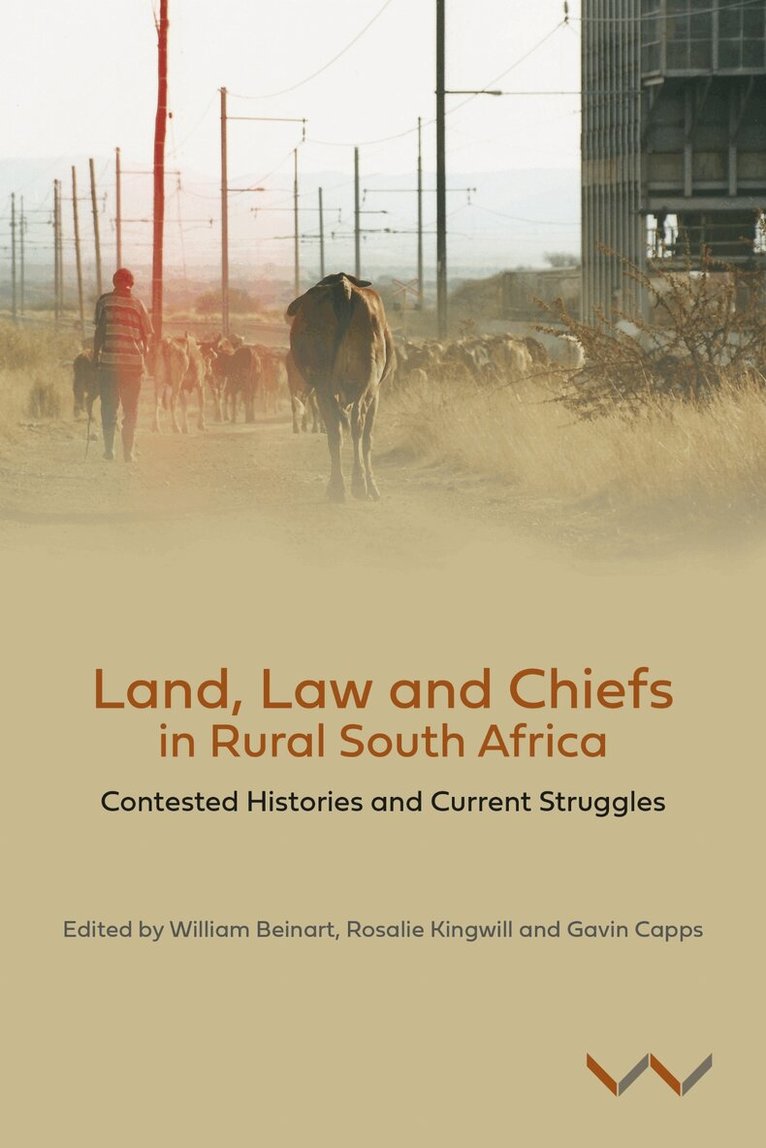
This edited collection illustrates contestations over land and political authority in South Africa's rural areas, focusing on threats to popular rights and how they are being supported.Who controls the land and minerals in the former Bantustans of South Africa - chiefs, the state or landholders? Disputes are taking place around the ownership of resources, decisions about their exploitation and who should benefit. With respect to all of these issues, the courts have become increasingly important.The contributors to Land, Law and Chiefs in Rural South Africa capture some of these intense contestations over land, law and political authority, focussing on threats to the rights of ordinary people. History and customary law feature strongly in most disputes and succession to chieftaincy is also frequently disputed. Judges have to make decisions in a context where rival claimants to property or office assert their own versions of history and custom. The South African constitution recognizes customary law and the courts are attempting to incorporate and develop this branch of jurisprudence as 'living customary law'. Lawyers, community leaders and academics are called on to assist in researching cases around restitution, land rights and customary law. The chapters in this collection discuss legal cases and policy directions that have evolved since 1994. Some chapters analyze the increasing power of chiefs in the South African rural areas, while others suggest that the courts are giving support to popular rights over land and supporting local democratic processes. Contributors record significant pushback from groups that reject traditional authority. These political tensions are a central theme of the collection and thus serve as vital case studies in furthering our understanding of rights and restitution in South Africa.
E-bok
PDF, Engelska, 2021343 kr
Läs direkt efter köp
Who controls the land and minerals in the former Bantustans of South Africa - chiefs, the state or landholders? Disputes are taking place around the ownership of resources, decisions about their exploitation and who should benefit. With respect to all of these issues, the courts have become increasingly important. The contributors to Land, Law and Chiefs in Rural South Africa capture some of these intense contestations over land, law and political authority, focussing on threats to the rights of ordinary people. History and customary law feature strongly in most disputes and succession to chieftaincy is also frequently disputed. Judges have to make decisions in a context where rival claimants to property or office assert their own versions of history and custom. The South African constitution recognises customary law and the courts are attempting to incorporate and develop this branch of jurisprudence as ‘living customary law’. Lawyers, community leaders and academics are called on to assist in researching cases around restitution, land rights and customary law. The chapters in this collection discuss legal cases and policy directions that have evolved since 1994. Some chapters analyse the increasing power of chiefs in the South African rural areas, while others suggest that the courts are giving support to popular rights over land and supporting local democratic processes. Contributors record significant pushback from groups that reject traditional authority. These political tensions are a central theme of the collection and thus serve as vital case studies in furthering our understanding of rights and restitution in South Africa.
E-bok
Engelska, 2021343 kr
Läs direkt efter köp
Who controls the land and minerals in the former Bantustans of South Africa - chiefs, the state or landholders? Disputes are taking place around the ownership of resources, decisions about their exploitation and who should benefit. With respect to all of these issues, the courts have become increasingly important. The contributors to Land, Law and Chiefs in Rural South Africa capture some of these intense contestations over land, law and political authority, focussing on threats to the rights of ordinary people. History and customary law feature strongly in most disputes and succession to chieftaincy is also frequently disputed. Judges have to make decisions in a context where rival claimants to property or office assert their own versions of history and custom. The South African constitution recognises customary law and the courts are attempting to incorporate and develop this branch of jurisprudence as ‘living customary law’. Lawyers, community leaders and academics are called on to assist in researching cases around restitution, land rights and customary law. The chapters in this collection discuss legal cases and policy directions that have evolved since 1994. Some chapters analyse the increasing power of chiefs in the South African rural areas, while others suggest that the courts are giving support to popular rights over land and supporting local democratic processes. Contributors record significant pushback from groups that reject traditional authority. These political tensions are a central theme of the collection and thus serve as vital case studies in furthering our understanding of rights and restitution in South Africa.