Sophie Oldfield - Böcker
Visar alla böcker från författaren Sophie Oldfield. Handla med fri frakt och snabb leverans.
6 produkter
6 produkter
832 kr
Skickas inom 10-15 vardagar
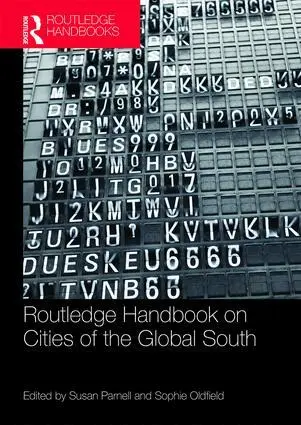
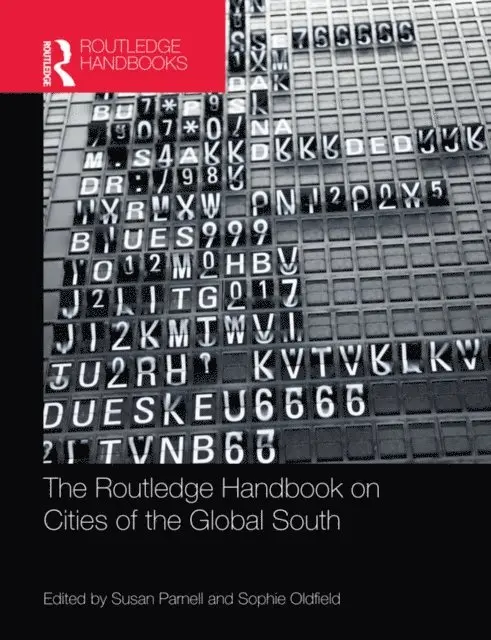
The renaissance in urban theory draws directly from a fresh focus on the neglected realities of cities beyond the west and embraces the global south as the epicentre of urbanism. This Handbook engages the complex ways in which cities of the global south and the global north are rapidly shifting, the imperative for multiple genealogies of knowledge production, as well as a diversity of empirical entry points to understand contemporary urban dynamics.The Handbook works towards a geographical realignment in urban studies, bringing into conversation a wide array of cities across the global south – the ‘ordinary’, ‘mega’, ‘global’ and ‘peripheral’. With interdisciplinary contributions from a range of leading international experts, it profiles an emergent and geographically diverse body of work. The contributions draw on conflicting and divergent debates to open up discussion on the meaning of the city in, or of, the global south; arguments that are fluid and increasingly contested geographically and conceptually. It reflects on critical urbanism, the macro- and micro-scale forces that shape cities, including ideological, demographic and technological shifts, and rapidly changing global and regional economic dynamics. Working with southern reference points, the chapters present themes in urban politics, identity and environment in ways that (re)frame our thinking about cities. The Handbook engages the twenty-first-century city through a ‘southern urban’ lens to stimulate scholarly, professional and activist engagements with the city.
4 063 kr
Skickas inom 10-15 vardagar
The renaissance in urban theory draws directly from a fresh focus on the neglected realities of cities beyond the west and embraces the global south as the epicentre of urbanism. This Handbook engages the complex ways in which cities of the global south and the global north are rapidly shifting, the imperative for multiple genealogies of knowledge production, as well as a diversity of empirical entry points to understand contemporary urban dynamics.The Handbook works towards a geographical realignment in urban studies, bringing into conversation a wide array of cities across the global south – the ‘ordinary’, ‘mega’, ‘global’ and ‘peripheral’. With interdisciplinary contributions from a range of leading international experts, it profiles an emergent and geographically diverse body of work. The contributions draw on conflicting and divergent debates to open up discussion on the meaning of the city in, or of, the global south; arguments that are fluid and increasingly contested geographically and conceptually. It reflects on critical urbanism, the macro- and micro-scale forces that shape cities, including ideological, demographic and technological shifts, and constantly changing global and regional economic dynamics. Working with southern reference points, the chapters present themes in urban politics, identity and environment in ways that (re)frame our thinking about cities. The Handbook engages the twenty-first-century city through a ‘southern urban’ lens to stimulate scholarly, professional and activist engagements with the city.
2 040 kr
Skickas inom 3-6 vardagar
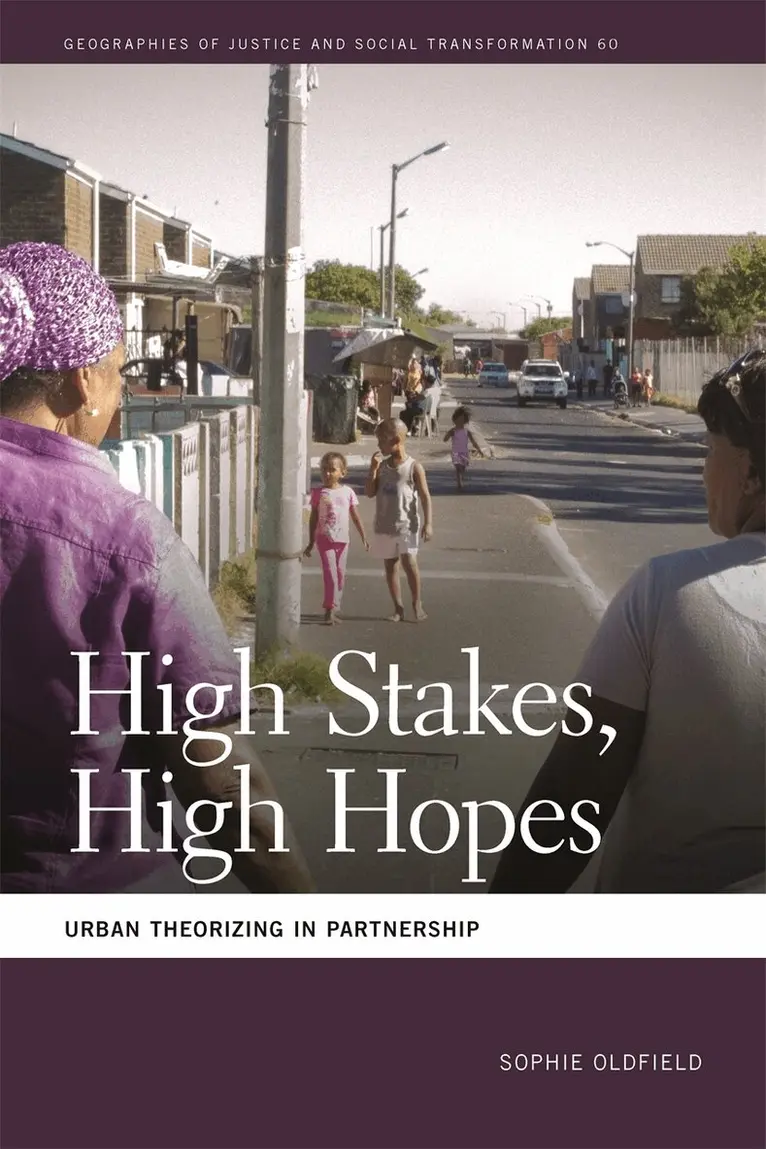
High Stakes, High Hopes tracks the building of urban theorizing in a decade-long urban research and teaching partnership in Cape Town, South Africa. An argument for collaborative urbanism, this book reflects on what was at stake in the partnership and its creative, and at times, conflictive, evolution. High Stakes, High Hopes explores what changed in learning when teaching and assessment occurred in university classrooms, township streets, and ordinary people’s households. Oldfield explores how research and assessment were reshaped when framed in neighbourhood questions and commitments, and what was reoriented in urban theorizing when community activism and township struggles were recognized as sites of valid knowledge-making. Oldfield traces the multiple personal and political relationships at play, exploring the shifting patterns of power in this productive, yet always negotiated, collaboration. This innovative methodology reveals the ways in which activists, residents, students, and the author experienced and reworked the differences between them. High Stakes, High Hopes shares forms of practice, grounded in teaching, to train a next generation of urbanists to engage the city embedded in multiple publics and politics across the city. The book builds upon an archive of alternative kinds of urban knowledges, experiments which work to inspire more varied forms of urban theorizing.
407 kr
Skickas inom 3-6 vardagar
High Stakes, High Hopes tracks the building of urban theorizing in a decade-long urban research and teaching partnership in Cape Town, South Africa. An argument for collaborative urbanism, this book reflects on what was at stake in the partnership and its creative, and at times, conflictive, evolution. High Stakes, High Hopes explores what changed in learning when teaching and assessment occurred in university classrooms, township streets, and ordinary people’s households. Oldfield explores how research and assessment were reshaped when framed in neighbourhood questions and commitments, and what was reoriented in urban theorizing when community activism and township struggles were recognized as sites of valid knowledge-making. Oldfield traces the multiple personal and political relationships at play, exploring the shifting patterns of power in this productive, yet always negotiated, collaboration. This innovative methodology reveals the ways in which activists, residents, students, and the author experienced and reworked the differences between them. High Stakes, High Hopes shares forms of practice, grounded in teaching, to train a next generation of urbanists to engage the city embedded in multiple publics and politics across the city. The book builds upon an archive of alternative kinds of urban knowledges, experiments which work to inspire more varied forms of urban theorizing.
427 kr
Skickas inom 7-10 vardagar
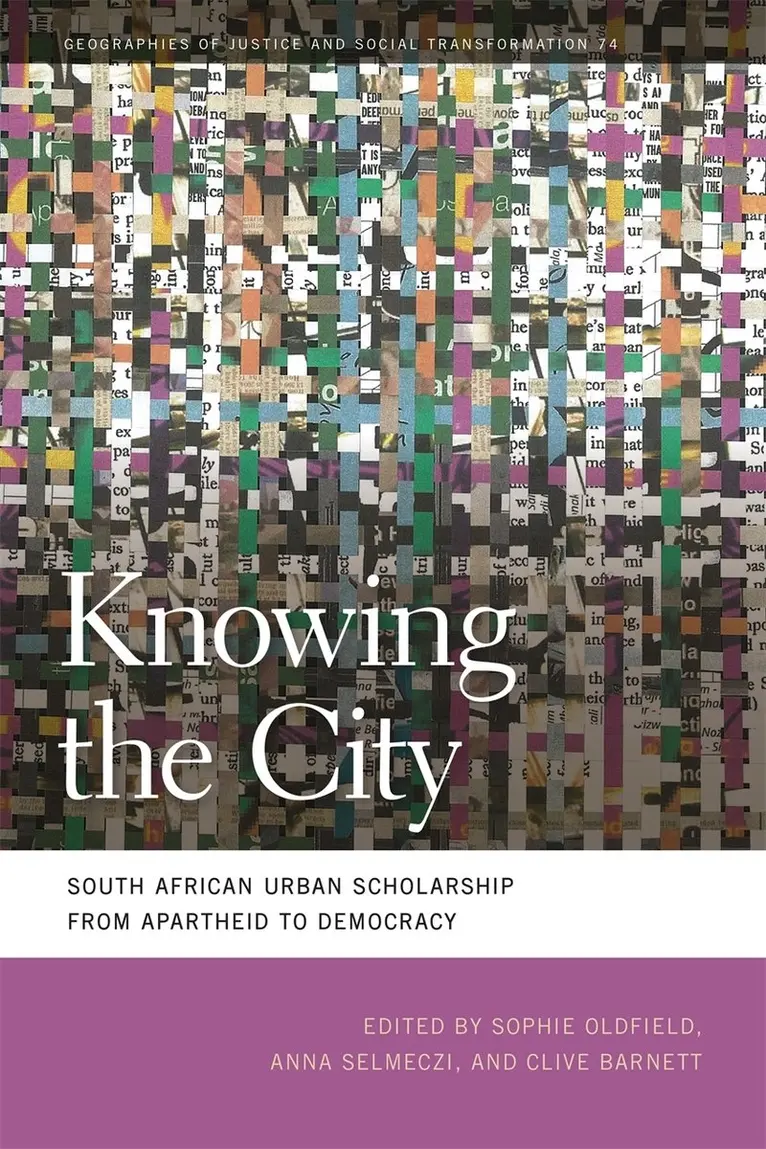
South African cities are marked by the legacies of past practices, inscribed in fixed spatial patterns. They therefore play a pivotal role in shaping the possibilities and limits of changing imperatives of transition, transformation, development and sustainability. From the late 1970s, the ‘urban’ has been presented as both a key scene for visions of the reform of apartheid and as a site for the potentially revolutionary transformation of South African society. Knowing the City departs from this prominence of urban issues, which explains why South African urban scholarship has been a key reference point nationally and in urban studies elsewhere. The book draws together 65 urban scholars of South African cities of different generations, from various regions and from diverse universities. The 76 essays of the volume are products of a series of workshops and interviews; each piece emerges from different modes of dialogue and writing work developed through these interactions. The aim of the collection is not to offer an authoritative historical survey of the field but to (re-)open and facilitate genuine dialogues about the theories and practices of both social inquiry and urban transformation as deeply lived commitments of multiple generations of scholars in South Africa and beyond.There are two guiding premises of Knowing the City. First, in South African and global southern urban scholarship, more conventional registers of scholarly expertise and critique are deeply interwoven with practices of engaging beyond academia in the form of, for instance, activism, consultancy and co-production. Second, knowledge about South Africa has not been and is still not produced only in South Africa but across more stretched-out geographies. Just as importantly, knowledge about and conceptualisations drawn from South Africa have been and continue to be ascribed more general (that is, more-than-local) significance. What the project’s dialogical research process revealed is that, aside from being located geographically, socially and politically, urbanists’ field of practice is embodied, personal and relational. The book reassesses the geographies and commitments of South African urban studies and, paying attention to scholars’ distinctive forms of engagement and the problem spaces that have shaped it, tells a novel story about the generation of ideas and (knowledge) practices in urban studies, and in social sciences more broadly.
398 kr
Skickas inom 5-8 vardagar
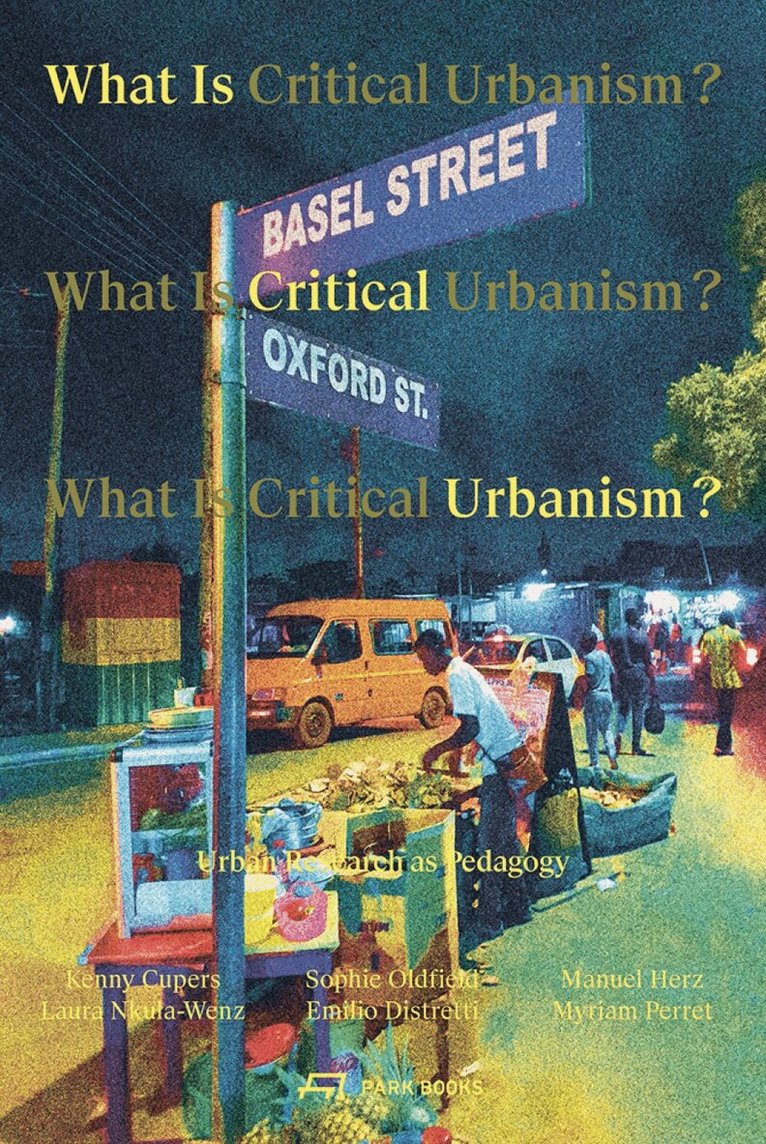
Understanding and managing urban change in our global era demands a high degree of specialised and interdisciplinary knowledge. At the same time, city planners, architects, researchers, policymakers, and activists are deeply immersed in the chaotic and often contradictory urban realities that they are asked to address. What is Critical Urbanism? offers an innovative toolkit for engaging these present realities across disciplinary specialisations and geographic purviews.Central to the book is the research and pedagogy of the Critical Urbanisms MA program at the University of Basel, established in collaboration with the African Centre for Cities at the University of Cape Town. The program’s renowned and emerging urbanists demonstrate the power of working with care and reciprocity across different contexts and institutions, driven by engagement with varied communities of practice. They show how alternative urban futures can be imagined by addressing the historical injustices and global entanglements that shape the urban present. The book is tailored to students, graduates and teachers of urban studies and related disciplines including architecture, urban design, human geography, architectural history, and urban anthropology.