Spencer Case – författare
Visar alla böcker från författaren Spencer Case. Handla med fri frakt och snabb leverans.
4 produkter
4 produkter
431 kr
Skickas inom 10-15 vardagar
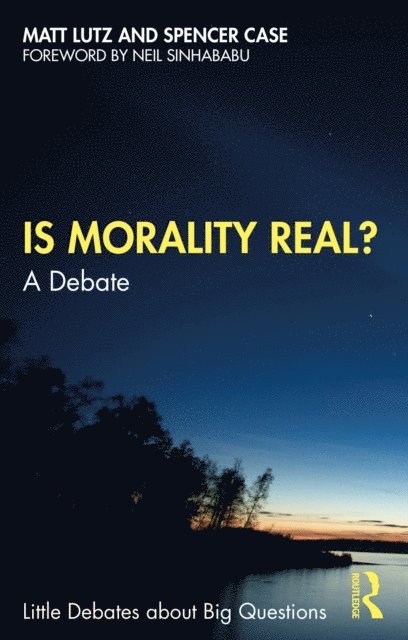
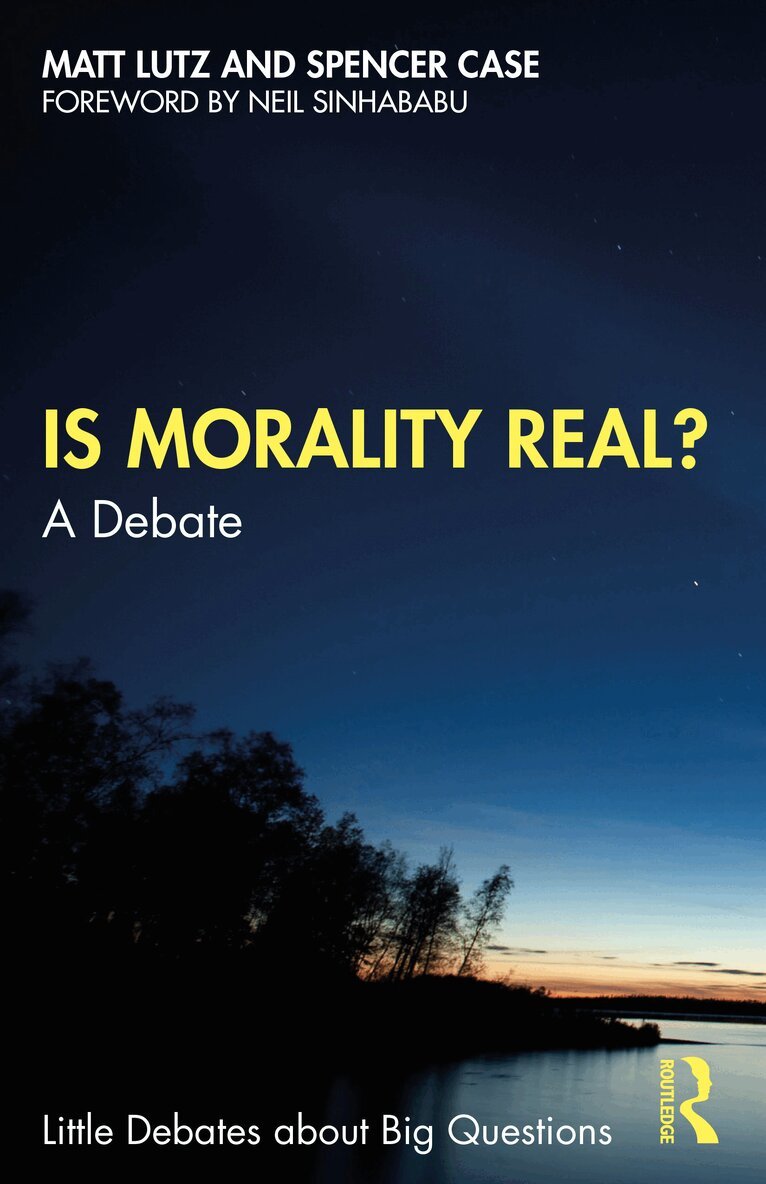
In this book, Spencer Case and Matt Lutz debate whether objective moral facts exist. We often say that actions like murder and institutions like slavery are morally wrong. And sometimes people strenuously disagree about the moral status of actions, as with abortion. But what, if anything, makes statements about morality true? Should we be realists about morality, or anti-realists?After the authors jointly outline the major contemporary positions in the moral realism debate, each author argues for his own preferred views and responds to the other’s constructive arguments and criticisms. Case contends that there are moral truths that don't depend on human beliefs or attitudes. Lutz maintains that there are no moral truths, and even if there were, we wouldn't be in a position to know about them. Along the way, they explore topics like the nature of common sense, the meaning of moral language, and why the realism/anti-realism debate matters. The authors develop their own arguments and responses, but assume no prior knowledge of metaethics. The result is a highly accessible exchange, providing new students with an opinionated gateway to this important area of moral philosophy. But the authors’ originality gives food for thought to seasoned philosophers as well.Key FeaturesGives a comprehensive overview of all the main positions on moral realism, without assuming any prior knowledge on the subjectFeatures both traditional and original arguments for each positionOffers highly accessible language without sacrificing intellectual rigorDraws upon, and builds on, recent literature on the realism/anti-realism debateUses only a limited number of technical terms and defines all of them in the glossary
2 129 kr
Skickas inom 10-15 vardagar
In this book, Spencer Case and Matt Lutz debate whether objective moral facts exist. We often say that actions like murder and institutions like slavery are morally wrong. And sometimes people strenuously disagree about the moral status of actions, as with abortion. But what, if anything, makes statements about morality true? Should we be realists about morality, or anti-realists?After the authors jointly outline the major contemporary positions in the moral realism debate, each author argues for his own preferred views and responds to the other’s constructive arguments and criticisms. Case contends that there are moral truths that don't depend on human beliefs or attitudes. Lutz maintains that there are no moral truths, and even if there were, we wouldn't be in a position to know about them. Along the way, they explore topics like the nature of common sense, the meaning of moral language, and why the realism/anti-realism debate matters. The authors develop their own arguments and responses, but assume no prior knowledge of metaethics. The result is a highly accessible exchange, providing new students with an opinionated gateway to this important area of moral philosophy. But the authors’ originality gives food for thought to seasoned philosophers as well.Key FeaturesGives a comprehensive overview of all the main positions on moral realism, without assuming any prior knowledge on the subjectFeatures both traditional and original arguments for each positionOffers highly accessible language without sacrificing intellectual rigorDraws upon, and builds on, recent literature on the realism/anti-realism debateUses only a limited number of technical terms and defines all of them in the glossary
613 kr
Kommande
The post-9/11 era saw patriotism transform from somber resolve into jingoistic excess, leaving many to wonder whether love of country inevitably corrupts into tribalism and violence. Critics from Leo Tolstoy to George Kateb have argued that patriotism is inherently dangerous, a relic of a less enlightened age. Yet abandoning patriotism entirely may be worse than the disease.Why It's OK to Be Patriotic makes a philosophically rigorous case that patriotism, properly conceived, is neither irrational nor harmful—but essential to democratic life. Case argues that patriotism is best understood as love of country rather than mere loyalty, a love directed toward compatriots as participants in a shared political community. Drawing on Aristotle, contemporary philosophy, and hard-won experience, he defends patriotism as a virtue—a golden mean between tribal excess and cosmopolitan detachment—while articulating the patriotic duties of heart and mind required to maintain the civic commons. He tackles the toughest objections head-on: Does patriotism cause war? Does it rest on irrational bias? Can it be reconciled with universal moral principles?The book culminates in a powerful meditation on America's current crisis. With political violence escalating and talk of "national divorce" gaining traction, Case argues that the only way out is through—not escape from politics, but the difficult practice of loving one's country by learning to love the people in it.Key features:Provides an account of patriotism in terms of love rather than loyalty, distinguishing patriotism from nationalism, jingoism, and tribalism.Confronts arguments from critiques of patriotism from Emma Goldman, Leo Tolstoy, and Albert Einstein, as well as from more recent critics such as Simon Keller and George Kateb, showing that patriotism need not be irrational, harmful, or morally blind.Offers concrete patriotic duties of heart-mind—including resistance to contempt, epistemic civic virtues, and practices for maintaining the civic commons—that can help repair America's fraying social fabric.Draws on Aristotle, contemporary philosophy of love, and virtue ethics while remaining accessible to general readers concerned about their country's future.
2 245 kr
Kommande
The post-9/11 era saw patriotism transform from somber resolve into jingoistic excess, leaving many to wonder whether love of country inevitably corrupts into tribalism and violence. Critics from Leo Tolstoy to George Kateb have argued that patriotism is inherently dangerous, a relic of a less enlightened age. Yet abandoning patriotism entirely may be worse than the disease.Why It's OK to Be Patriotic makes a philosophically rigorous case that patriotism, properly conceived, is neither irrational nor harmful—but essential to democratic life. Case argues that patriotism is best understood as love of country rather than mere loyalty, a love directed toward compatriots as participants in a shared political community. Drawing on Aristotle, contemporary philosophy, and hard-won experience, he defends patriotism as a virtue—a golden mean between tribal excess and cosmopolitan detachment—while articulating the patriotic duties of heart and mind required to maintain the civic commons. He tackles the toughest objections head-on: Does patriotism cause war? Does it rest on irrational bias? Can it be reconciled with universal moral principles?The book culminates in a powerful meditation on America's current crisis. With political violence escalating and talk of "national divorce" gaining traction, Case argues that the only way out is through—not escape from politics, but the difficult practice of loving one's country by learning to love the people in it.Key features:Provides an account of patriotism in terms of love rather than loyalty, distinguishing patriotism from nationalism, jingoism, and tribalism.Confronts arguments from critiques of patriotism from Emma Goldman, Leo Tolstoy, and Albert Einstein, as well as from more recent critics such as Simon Keller and George Kateb, showing that patriotism need not be irrational, harmful, or morally blind.Offers concrete patriotic duties of heart-mind—including resistance to contempt, epistemic civic virtues, and practices for maintaining the civic commons—that can help repair America's fraying social fabric.Draws on Aristotle, contemporary philosophy of love, and virtue ethics while remaining accessible to general readers concerned about their country's future.