
Spencer Mawby – författare
2 327 kr
Skickas inom 10-15 vardagar
1 039 kr
Läs direkt efter köp
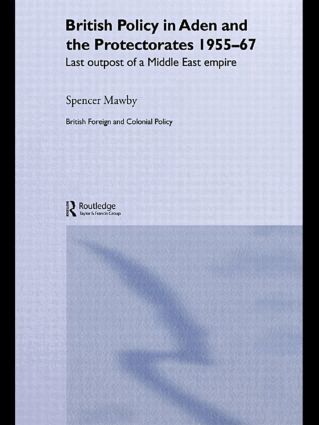
This is the first detailed account of the confrontation between Britain and President Nasser of Egypt over the Colony of Aden and the surrounding protected states, prior to British withdrawal in 1967. Paying particular attention to the conflicting goals of Arab nationalism and British imperialism, it is argued that Britain’s motivation for this campaign was not solely material but was partly derived from a determination to contain Nasser’s influence and to guarantee a continuation of Britain’s role in influencing the politics of the Arabian peninsula.
Mawby argues that a significant problem for the British was the decision to undertake a new imperial adventure in Aden at a time when British economic and military power was on the wane, whilst support for the nationalist struggles in the Middle East and the United Nations was increasing. He goes on to suggest that British policy and the conduct of military campaigns facilitated the emergence of a radical brand of Arab politics in southwest Arabia.
By demonstrating the manner in which the rise and fall of British imperialism was telescoped into a short period in the late 1950s and early 1960s, this volume provides an important insight into the unique and unacknowledged place of Aden in the history of British decolonization.
1 003 kr
Läs direkt efter köp
This is the first detailed account of the confrontation between Britain and President Nasser of Egypt over the Colony of Aden and the surrounding protected states, prior to British withdrawal in 1967. Paying particular attention to the conflicting goals of Arab nationalism and British imperialism, it is argued that Britain’s motivation for this campaign was not solely material but was partly derived from a determination to contain Nasser’s influence and to guarantee a continuation of Britain’s role in influencing the politics of the Arabian peninsula.
Mawby argues that a significant problem for the British was the decision to undertake a new imperial adventure in Aden at a time when British economic and military power was on the wane, whilst support for the nationalist struggles in the Middle East and the United Nations was increasing. He goes on to suggest that British policy and the conduct of military campaigns facilitated the emergence of a radical brand of Arab politics in southwest Arabia.
By demonstrating the manner in which the rise and fall of British imperialism was telescoped into a short period in the late 1950s and early 1960s, this volume provides an important insight into the unique and unacknowledged place of Aden in the history of British decolonization.
395 kr
Skickas inom 10-15 vardagar
421 kr
Läs direkt efter köp
878 kr
Skickas inom 10-15 vardagar
1 586 kr
Skickas inom 10-15 vardagar
1 714 kr
Läs direkt efter köp
1 714 kr
Läs direkt efter köp
421 kr
Läs direkt efter köp