Srinivas Aravamudan - Böcker
Visar alla böcker från författaren Srinivas Aravamudan. Handla med fri frakt och snabb leverans.
5 produkter
5 produkter
1 137 kr
Skickas inom 7-10 vardagar
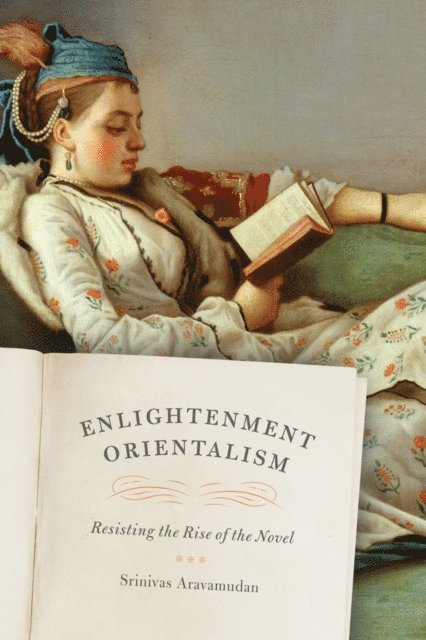
Srinivas Aravamudan here reveals how Oriental tales, pseudo-ethnographies, sexual fantasies, and political satires took Europe by storm during the eighteenth century. Naming this body of fiction Enlightenment Orientalism, he poses a range of urgent questions that uncovers the interdependence of Oriental tales and domestic fiction, thereby challenging standard scholarly narratives about the rise of the novel. More than mere exoticism, Oriental tales fascinated ordinary readers as well as intellectuals, taking the fancy of philosophers such as Voltaire, Montesquieu, and Diderot in France, and writers such as Defoe, Swift, and Goldsmith in Britain. Aravamudan shows that Enlightenment Orientalism was a significant movement that criticized irrational European practices even while sympathetically bridging differences among civilizations. A sophisticated reinterpretation of the history of the novel, "Enlightenment Orientalism" is sure to be welcomed as a landmark work in eighteenth-century studies.
351 kr
Skickas inom 7-10 vardagar
Srinivas Aravamudan here reveals how "Oriental" tales, pseudo-ethnographies, sexual fantasies, and political satires took Europe by storm during the eighteenth century. Naming this body of fiction "Enlightenment Orientalism", he poses a range of urgent questions that uncovers the interdependence of "Oriental" tales and domestic fiction, thereby challenging standard scholarly narratives about the rise of the novel. More than mere exoticism, "Oriental" tales fascinated ordinary readers as well as intellectuals, taking the fancy of philosophers such as Voltaire, Montesquieu, and Diderot in France, and writers such as Defoe, Swift, and Goldsmith in Britain. Aravamudan shows that "Enlightenment Orientalism" was a significant movement that criticized irrational European practices even while sympathetically bridging differences among civilizations. A sophisticated reinterpretation of the history of the novel, "Enlightenment Orientalism" is sure to be welcomed as a landmark work in eighteenth-century studies.
376 kr
Skickas inom 7-10 vardagar
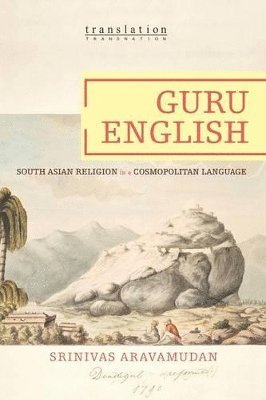
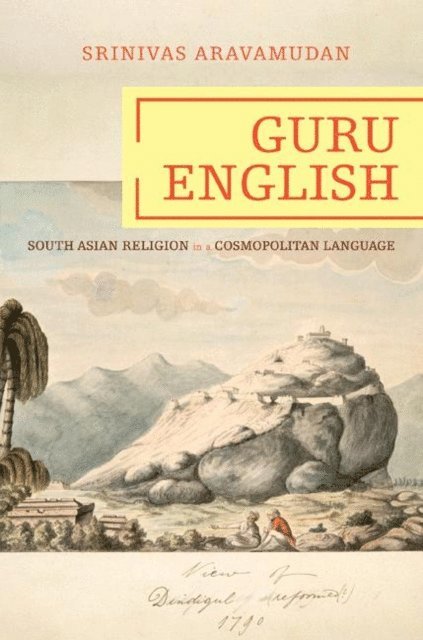
Guru English is a bold reconceptualization of the scope and meaning of cosmopolitanism, examining the language of South Asian religiosity as it has flourished both inside and outside of its original context for the past two hundred years. The book surveys a specific set of religious vocabularies from South Asia that, Aravamudan argues, launches a different kind of cosmopolitanism into global use. Using "Guru English" as a tagline for the globalizing idiom that has grown up around these religions, Aravamudan traces the diffusion and transformation of South Asian religious discourses as they shuttled between East and West through English-language use. The book demonstrates that cosmopolitanism is not just a secular Western "discourse that results from a disenchantment with religion, but something that can also be refashioned from South Asian religion when these materials are put into dialogue with contemporary social move-ments and literary texts.Aravamudan looks at "religious forms of neoclassicism, nationalism, Romanticism, postmodernism, and nuclear millenarianism, bringing together figures such as Swami Vivekananda, Sri Aurobindo, Mahatma Gandhi, and Deepak Chopra with Rudyard Kipling, James Joyce, Robert Oppenheimer, and Salman Rushdie. Guru English analyzes writers and gurus, literary texts and religious movements, and the political uses of religion alongside the literary expressions of religious teachers, showing the cosmopolitan interconnections between the Indian subcontinent, the British Empire, and the American New Age.
1 934 kr
Skickas inom 7-10 vardagar
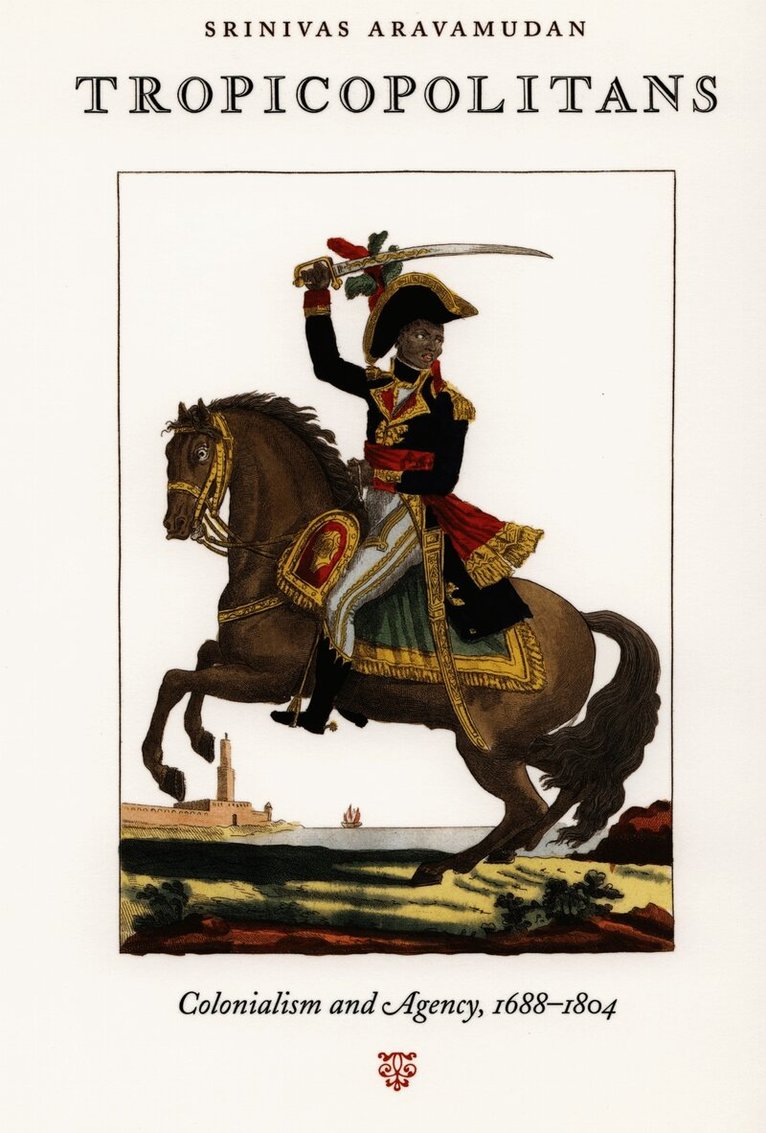
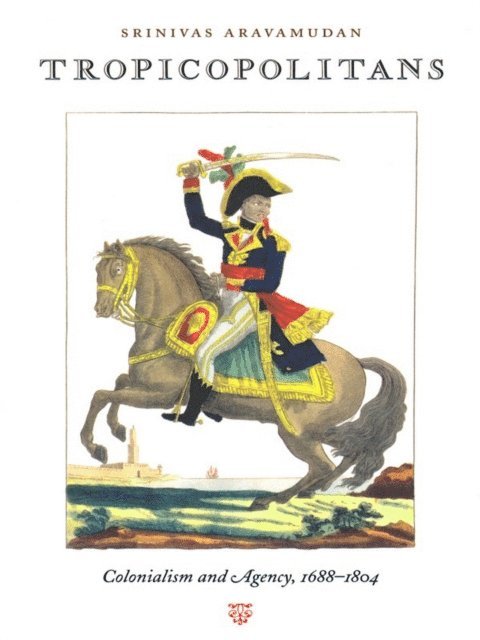
In Tropicopolitans Srinivas Aravamudan reconstructs the colonial imagination of the eighteenth century. By exploring representations of peoples and cultures subjected to colonial discourse, he makes a case for the agency-or the capacity to resist domination-of those oppressed. Aravamudan’s analysis of texts that accompanied European commercial and imperial expansion from the Glorious Revolution through the French Revolution reveals the development of anticolonial consciousness prior to the nineteenth century.“Tropicalization” is the central metaphor of this analysis, a term that incorporates both the construction of various dynamic tropes by which the colonized are viewed and the site of the study, primarily the tropics. Tropicopolitans, then, are those people who bear and resist the representations of colonialist discourse. In readings that expose new relationships between literary representation and colonialism in the eighteenth century, Aravamudan considers such texts as Behn’s Oroonoko, Defoe’s Robinson Crusoe and Captain Singleton, Addison’s Cato, and Swift’s Gulliver’s Travels and The Drapier’s Letters. He extends his argument to include analyses of Johnson’s Rasselas, Beckford’s Vathek, Montagu’s travel letters, Equiano’s autobiography, Burke’s political and aesthetic writings, and AbbÉ de Raynal’s Histoire des deux Indes. Offering a radical approach to literary history, this study provides new mechanisms for understanding the development of anticolonial agency.Introducing eighteenth-century studies to a postcolonial hermeneutics, Tropicopolitans will interest scholars engaged in postcolonial studies, eighteenth-century literature, and literary theory.
479 kr
Skickas inom 7-10 vardagar
In Tropicopolitans Srinivas Aravamudan reconstructs the colonial imagination of the eighteenth century. By exploring representations of peoples and cultures subjected to colonial discourse, he makes a case for the agency-or the capacity to resist domination-of those oppressed. Aravamudan’s analysis of texts that accompanied European commercial and imperial expansion from the Glorious Revolution through the French Revolution reveals the development of anticolonial consciousness prior to the nineteenth century.“Tropicalization” is the central metaphor of this analysis, a term that incorporates both the construction of various dynamic tropes by which the colonized are viewed and the site of the study, primarily the tropics. Tropicopolitans, then, are those people who bear and resist the representations of colonialist discourse. In readings that expose new relationships between literary representation and colonialism in the eighteenth century, Aravamudan considers such texts as Behn’s Oroonoko, Defoe’s Robinson Crusoe and Captain Singleton, Addison’s Cato, and Swift’s Gulliver’s Travels and The Drapier’s Letters. He extends his argument to include analyses of Johnson’s Rasselas, Beckford’s Vathek, Montagu’s travel letters, Equiano’s autobiography, Burke’s political and aesthetic writings, and AbbÉ de Raynal’s Histoire des deux Indes. Offering a radical approach to literary history, this study provides new mechanisms for understanding the development of anticolonial agency.Introducing eighteenth-century studies to a postcolonial hermeneutics, Tropicopolitans will interest scholars engaged in postcolonial studies, eighteenth-century literature, and literary theory.