Stanley C. Jenkins - Böcker
Visar alla böcker från författaren Stanley C. Jenkins. Handla med fri frakt och snabb leverans.
26 produkter
26 produkter
234 kr
Skickas
154 kr
Skickas
274 kr
Skickas
301 kr
Skickas
178 kr
Skickas inom 11-20 vardagar
Witney grew up as the result of deliberate planning on the part of successive Bishops of Winchester, a spacious, wedge-shaped market area being laid out parallel to the river Windrush. The whole area was surrounded by a drainage ditch known as Emma's Dyke. By the end of the Middle Ages it had grown into a populous market town with a developing blanket industry, and 1800 there were five textile mills in and around the town. In 1951 Smiths Industries established a large factory on Witney Aerodrome, so the local economy was no longer dependent upon the woollen industry. But the town remained famous as a centre of the blanket manufacturing industry until the closure of the last mill in 2002. This fully illustrated narrative brings the fascinating history of Witney to life and will be enjoyed by all those keen to know this Cotswold town a little better.
178 kr
Skickas inom 11-20 vardagar
The city of Oxford has a long and prosperous history. First mentioned by name in 912 as one of the 'burghs' or fortified places that King Alfred and his descendants had constructed to protect Wessex from the Vikings, Oxford has played a significant part in many of the great historical events that have shaped the country. In the twelfth century the University of Oxford began to take shape, establishing the city as a centre of learning, which remains today. Join the author on a nostalgic trip around historic Oxford, showcasing some of the finest buildings and streets in this quintessentially English university city. Arranged geographically, starting in Carfax, the reader journeys through the streets of Oxford to the rivers Cherwell and Thames. City of Oxford Through Time is sure to reawaken nostalgic memories for many.
168 kr
Skickas
The Witney Railway was opened from Yarnton Junction to Witney in 1861. The railway was single track throughout, with intermediate stations at Eynsham and South Leigh. In 1873, the East Gloucestershire Railway opened an extension from Witney to Fairford, and the two railways formed a single branch line, with trains running from Oxford to Fairford. The line was closed to passengers in 1962, but the original Witney Railway survived as a goods-only route until 1970. The Witney & East Gloucestershire Railway was a classic rural branch line, which followed the tranquil upper Thames Valley for much of its length and served attractive Cotswold towns and villages such as Eynsham, Witney and Lechlade. This fascinating collection of photographs tells the story of the Witney line on a station-by-station basis, starting amid the bustle and activity of Oxford, and ending in a field near the historic town of Fairford.
Del 1 - The Great Western Railway ...
Great Western Railway Volume One Paddington to Bristol
Häftad, Engelska, 2014
189 kr
Tillfälligt slut
Incorporated by Act of Parliament in 1835 and completed just six years later, the Great Western Railway was a stupendous technical achievement. Extending for 118 miles from London to Bristol, this magnificently engineered line spanned Southern England from the Thames to the Bristol Channel, and was regarded as the first link in a chain of railways that would ultimately reach Cornwall, Wales and (via steamship) the south of Ireland. The railway, which is virtually flat and has no appreciable curves, has remained in use to the present day, carrying trains that travel from London to Bristol in just 13/4 hours. This present study examines the line from London to Bristol Temple Meads. Around fifty different locations have been included - some of these are busy traffic centres such as Paddington, Southall and Reading, while others are wayside stations such as Pangbourne, Tilehurst and Wantage Road.
Del 2 - The Great Western Railway ...
Great Western Railway Volume Two Bristol to Plymouth
Häftad, Engelska, 2014
189 kr
Tillfälligt slut
As authorised in 1835, the Great Western Railway extended from London to Bristol, but from the very earliest days, ambitious promoters were planning a whole series of extensions to destinations such as Birmingham, Wolverhampton, Cornwall and South Wales. These extensions were, in most cases, built by allied or subsidiary companies such as the Bristol & Exeter Railway, which, as its name suggested, ran from Bristol to Exeter, and the South Devon Railway, which continued the West of England main line from Exeter to Plymouth.Both of these companies were subsequently absorbed into the parent GWR company, becoming, as far as ordinary travellers were concerned, an integral part of the Great Western system. Although the B&ER is an unspectacular line, the South Devon Railway runs beside estuaries and along the seashore for several miles, the waterside section between Exeter and Teignmouth being one of the most iconic parts of the British railway system.
Del 3 - The Great Western Railway ...
Great Western Railway Volume Three Plymouth To Penzance
Häftad, Engelska, 2014
189 kr
Tillfälligt slut
The Cornwall Railway was authorised on 3 August 1846 with the aim of constructing a broad gauge rail link between Plymouth, Truro and Falmouth. After many vicissitudes, the railway was ceremonially opened between Plymouth and Truro on 2 May 1859. Meanwhile, further to the west, an entirely separate undertaking known as the West Cornwall Railway had been sanctioned with powers for the construction of a standard gauge railway between Truro and Penzance, which would incorporate parts of the earlier Hayle Railway.The WCR was completed in 1852, although there was no connection with the Cornwall Railway until 1859. Despite the ‘break-of-gauge’ at Truro, these two railways formed part of a through route between Paddington and Penzance and, as such, they were subsequently absorbed into the GWR system as part of the present-day West of England main line.
168 kr
Tillfälligt slut
Situated in Wiltshire on the banks of the River Kennett, the picturesque market town of Marlborough is a place of considerable antiquity, with a history dating back to prehistoric times. Marlborough was once a famous coaching town, but the development of railways during the early Victorian period brought economic decline, which was mitigated, to some extent, by opening of Marlborough College in 1843. The ‘Castle Mound’ in the college grounds was constructed as long ago as 2400 BC, and it was once said to have been Merlin’s burial place.The countryside around Marlborough and Avebury is particularly rich in archaeological remains, and indeed it could be argued that this part of Wessex is the very heart of prehistoric Britain. There are several important prehistoric monuments within the area, including Avebury Henge, West Kennet Long Barrow and the mysterious artificial mound known as Silbury Hill.
Del 6 - The Great Western Railway ...
Great Western Railway Volume Six South Wales Main Line
Häftad, Engelska, 2016
189 kr
Skickas inom 11-20 vardagar
The South Wales Railway was promoted in the 1840s with the aim of completing a rail link between England, Wales and Ireland. As such, the proposed railway was seen as ‘a great national undertaking to connect the South of Ireland as well as South Wales and the Metropolis’, with many perceived benefits in terms of mutual trading opportunities and greater political integration. Branch lines would serve Pembroke Dock and other destinations, the length of the proposed scheme being around 210 miles. The SWR was intimately connected with the Great Western Railway, and with I. K. Brunel as its engineer, the line was built to the GWR broad gauge of 7 feet 0¼ inch.Although the SWR main line skirted most of the South Wales industrial areas, it connected with a variety of coal-carrying Welsh lines, including the Taff Vale, Cardiff and Barry Railways – all of which eventually passed into Great Western hands as a result of the 1923 grouping. The SWR main line had, in the meantime, been extended to Fishguard Harbour, and this historic line continues to serve as an important rail link between England, Wales and the South of Ireland.
Del 4 - The Great Western Railway ...
Great Western Railway Volume Four North & West Route
Häftad, Engelska, 2015
189 kr
Tillfälligt slut
The ‘North & West Route’, which, in recent years, has become known as the ‘Welsh Marches Line’, extends from Newport to Chester. Historically, this 137-mile route is an amalgam of three distinct railways: the Shrewsbury & Chester Railway, the Shrewsbury & Hereford Railway and the Newport, Abergavenny & Hereford Railway. All three lines came under Great Western control at a relatively early date, although the Shrewsbury & Hereford section became a joint undertaking, which was owned by the GWR and the London & North Western Railway companies.The line runs through attractive and sometimes spectacular scenery via Abergavenny, Pontrilas, Hereford, Leominster, Ludlow, Craven Arms, Shrewsbury and Ruabon, thereby providing a useful transport link between North and South Wales, while some services run north-eastwards from Shrewsbury to Crewe over a former London & North Western line that forms part of a direct link between South Wales and the Manchester conurbation.
Del 3 - The London, Midland and Scottish Railway
London, Midland and Scottish Railway Volume Three Leeds to Carlisle
Häftad, Engelska, 2016
189 kr
Tillfälligt slut
LEEDS to CARLISLE – The line from Leeds to Carlisle furnished the Midland Railway with an independent route to Scotland, in opposition to the rival London & North Western line. The railway extends for 113 miles, the easternmost sections having been constructed by the Leeds & Bradford and ‘Little’ North Western railways, while the spectacular northwards continuation from Settle to Carlisle was built by the Midland.Opened in 1875, the Settle & Carlisle line was built at a relatively late date by an imperial nation at the height of its power, and the infrastructure exemplifies Victorian construction techniques at their most confident. There are no less than 25 viaducts, together with 85 overbridges, 130 underbridges and 13 tunnels – the massive arched viaducts having an imperial grandeur that echoes the splendours of ancient Rome. Although it has been threatened with closure at various times, the Settle & Carlisle route remains in operation as part of the national rail system, and it is now regarded as a tourist attraction in its own right.
Del 2 - The London, Midland and Scottish Railway
London, Midland and Scottish Railway Volume Two Preston to Carlisle
Häftad, Engelska, 2015
189 kr
Tillfälligt slut
The obvious success of the Liverpool & Manchester Railway demonstrated that steam railways were a safe, fast and efficient form of transport, and by the end of the 1830s ambitious entrepreneurs were planning a multiplicity of railways up, down and across the land. At first, the new railways were of purely local importance, but the need to connect important cities such as London, Birmingham, Manchester and Glasgow led to the promotion of major trunk routes, one of the first of these being the Lancaster & Carlisle Railway, which was authorised on 6 June 1844 as a northwards extension of the Lancaster & Preston Junction Railway.In its original form the Lancaster & Preston line was little more than a branch, but the establishment of railway communication between London and Scotland was regarded as a matter of national importance, and the L&PJ and L&CR lines thereby became vital parts of the West Coast Main Line. Building work was soon under way, and this important main line was opened as far as Kendal on 21 September 1846 and completed throughout to Carlisle on 15 December. The new railway, which ran through difficult terrain on its way to Carlisle, was a major feat of civil engineering, and its bridges, viaducts and other infrastructure stand to this day as tangible monuments of the early days of railway construction.
Del 4 - The London, Midland and Scottish Railway
London, Midland and Scottish Railway Volume Four Manchester to Leeds
Häftad, Engelska, 2016
189 kr
Skickas inom 11-20 vardagar
The Manchester & Leeds Railway was sanctioned by Parliament in 1836 as a railway commencing at Manchester and terminating at Normanton, from where trains would reach Leeds via the North Midland Railway. Although Leeds is only 35 miles from Manchester, the hilly nature of the surrounding terrain meant that the company engineers adopted a circuitous route through Rochdale, Todmorden, Hebden Bridge and the sinuous and steep-sided Calder Valley. The ‘Calder Valley’ line was opened between Manchester and Littleborough on 3 July 1839, and further sections were brought into use on 5 October 1840 and 3 January 1841. The railway was completed throughout on 1 March 1841.The completed railway was heavily engineered, the Summit Tunnel between Littleborough and Walsden being the longest in the world at the time of its construction. This highly scenic line still forms part of an important rail link between Manchester and Leeds, although trains now travel on a shorter route via Halifax and Bradford. The eastern half of the route also forms part of separate Trans-Pennine route via Todmorden, Burnley and Blackburn.
Del 1 - The London, Midland and Scottish Railway
London, Midland and Scottish Railway Volume One Chester to Holyhead
Häftad, Engelska, 2015
189 kr
Tillfälligt slut
The Chester & Holyhead Railway was incorporated by an Act of Parliament in 1844, and the promoters were thereby empowered to build an 85-mile line along the North Wales coast, the engineer for the line being Robert Stephenson. The C&HR was, from its inception, intended to form part of a rail link between London and Dublin – the assumption being that such a line would improve the economic position of Ireland, while at the same time binding it ever more closely to the rest of the United Kingdom. In engineering terms, the C&HR presented huge challenges. The first 45 miles would follow an easy route alongside the Dee Estuary, but at Conwy the railway would have to cross a tidal river. The line would then be carried past the great towering headland at Penmaenmawr, while to the west of Bangor, the Menai Straits would have to be spanned by a bridge large enough to clear the masts of the largest vessels. The railway was completed by 1850 and, since that time, it has fulfilled its primary role as an artery of communication between England, Wales and Ireland.
113 kr
Skickas inom 11-20 vardagar
Bicester History Tour is a unique insight into the illustrious history of this famous Oxfordshire town, its well-known streets and famous places, and explains what they meant to local people throughout the nineteenth and into the twentieth century. Readers are invited to follow a timeline of events and watch the changing face of Bicester as the author guides us through its streets.
Del 5 - The London, Midland and Scottish Railway
London, Midland and Scottish Railway Volume Five The London and Birmingham Railway
Häftad, Engelska, 2017
168 kr
Skickas inom 11-20 vardagar
Authorised on 8 May 1833, the London & Birmingham Railway was one of Britain’s first great trunk lines. Engineered by Robert Stephenson (1803-1859), the L&BR line was regarded at the time of its construction as ‘the Eighth Wonder of the World’. The route was opened in stages; the first section from Euston to Boxmoor was brought into use on 20 June 1837. The route was extended to Tring on 16 October 1837, and on 9 April 1838 further sections were opened from Tring to Denbigh Hall and between Rugby, Coventry and Birmingham. Finally, on 17 September 1838, the L&BR route was completed throughout its 112-mile length.In its original form, the L&BR functioned as a transport link between London and Birmingham, but the establishment of long-distance railway communication between London and Scotland was regarded as a matter of national importance, and further companies such as the Grand Junction Railway and the Lancaster & Carlisle line were brought into existence to facilitate this ambitious aspiration. Although the L&BR was, at first, suspicious of these new companies, the London & Birmingham directors eventually decided to co-operate, and by 1846 the major west coast companies had amalgamated to form the ‘London & North Western Railway’ with the West Coast Main Line from Euston to Glasgow being one of the busiest railways in Britain, if not the world.
Del 6 - The London, Midland and Scottish Railway
London, Midland and Scottish Railway Volume Six The Grand Junction and North Union Railways
Häftad, Engelska, 2017
168 kr
Skickas inom 11-20 vardagar
Approved in May 1833 at the same time as the London & Birmingham Railway, the Grand Junction Railway was intended to act as a link between the London & Birmingham and the Liverpool & Manchester Railway. Built under the guidance of Joseph Locke, the Grand Junction was opened along its complete length on 4 July 1837. From 19 August 1839, through coaches were able to run for 218 miles from London through Birmingham to Preston. Preston had been connected to the railway network through the North Union Railway, which had been laid out by Irish engineer Charles Blacker Vignoles and opened to the public on 31 October 1838.Brought into existence to facilitate the ambitious aspiration of long-distance railway communications between London and Scotland, these lines would be among those that amalgamated in 1846 to form the London & North Western Railway, the forerunner of today’s West Coast Main Line.This book, the last in a six-part series, will examine these lines along with the Trent Valley Railway, all vital links in the network of railways that became the West Coast Main Line, one of the busiest railways in Britain, if not the world.
111 kr
Skickas
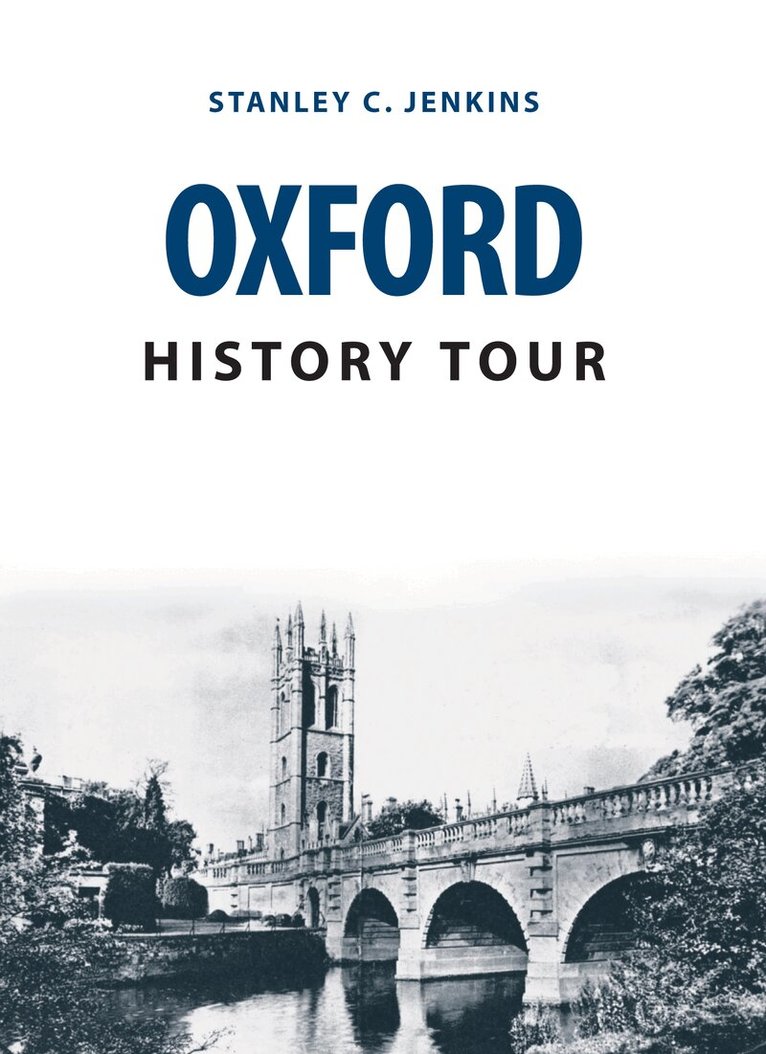
Oxford History Tour is a unique insight into the illustrious history of this venerable old university city. Local author Stanley C. Jenkins guides us around the streets and alleyways, parks and buildings, showing how its famous landmarks used to look and how they’ve changed over the years as well as exploring its lesser-known sights and hidden corners. With the help of a handy location map, readers are invited to follow a timeline of events and discover for themselves the changing face of Oxford.
111 kr
Skickas inom 11-20 vardagar
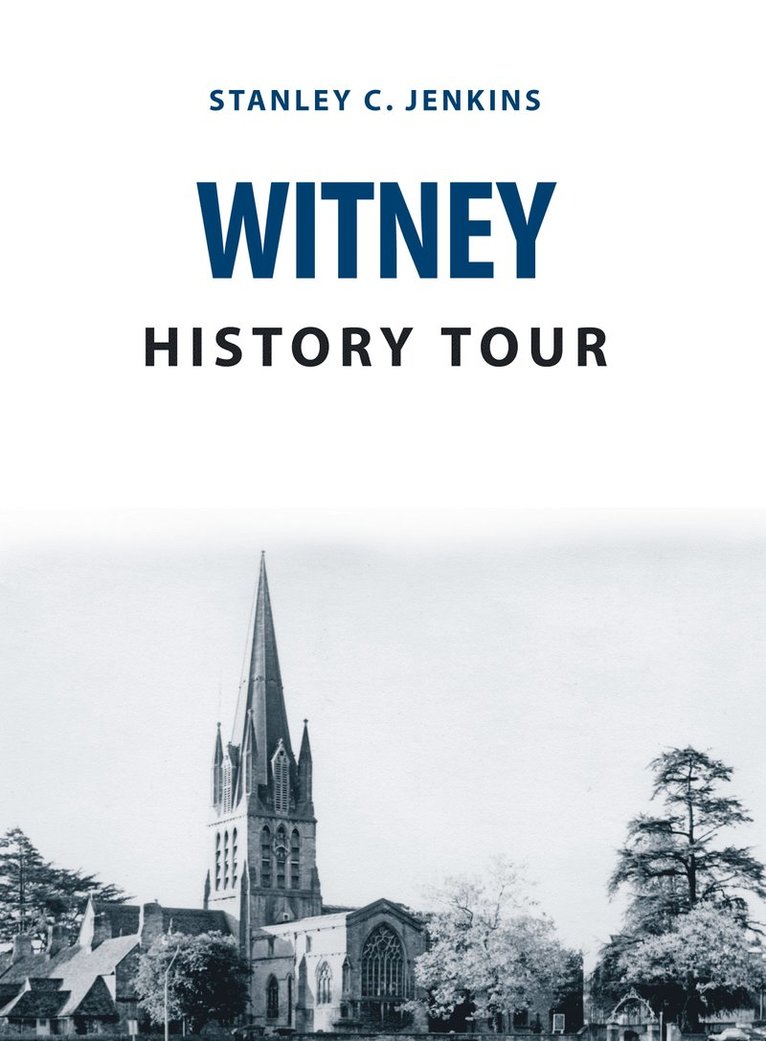
Witney History Tour is a unique insight into the illustrious history of this Oxfordshire town, its well-known streets and famous places, and explains what they meant to local people throughout the nineteenth and early twentieth centuries. Readers are invited to follow a timeline of events and watch the changing face of Witney as author Stanley C. Jenkins guides us through the local streets.
168 kr
Skickas inom 11-20 vardagar
This illustrated history portrays one of England’s finest cities. It provides a nostalgic look at Oxford’s past and highlights the special character of some of its most important historic sites.The photographs are taken from the Historic England Archive, a unique collection of over 12 million photographs, drawings, plans and documents covering England’s archaeology, architecture, social and local history. Pictures date from the earliest days of photography to the present and cover subjects from Bronze Age burials and medieval churches to cinemas and seaside resorts.Historic England: Oxford shows the city as it once was, from its streets and alleys to the buildings of its world-renowned colleges. This ‘City of Dreaming Spires’ still retains much of its medieval character and is still a city of international importance today.
163 kr
Skickas inom 11-20 vardagar
The city of Oxford has a long and prosperous history. First mentioned by name in the early tenth century as one of the burhs, or fortified places, that King Alfred and his descendants had constructed to protect Wessex from the Vikings, Oxford has played a significant part in many of the great historical events that have shaped the country. In the twelfth century the University of Oxford began to take shape, establishing the city as a centre of learning, which it remains today.Oxford at Work explores the life of this ‘City of Dreaming Spires’ and its people. It takes us from the founding of St Frideswide’s nunnery in the eighth century and the emergence of its university in the late twelfth century – the first in the English-speaking world – through its growth and development as one of the country’s leading centres of education, science, publishing and motor manufacturing, to its current status as one of the fastest growing and ethnically diverse cities in the UK.
173 kr
Skickas inom 11-20 vardagar
Today service industries predominate in Chester such as tourism, retail, public administration and financial services. This was not always the case, given the city’s location on the River Dee and its strategic military position. Chester was a port with ancillary industries from Roman times. In he mid-eighteenth century the port declined due to silting of the Dee and the rise of Liverpool. However, some port-related industries remained and a reduced amount of shipping continued into the twentieth century. The 1770s saw the opening of the Chester Canal and, in 1799, the lead works was developed. The arrival of the railways saw Chester become a transport hub with three locomotive depots and an LNWR wagon works. Other industries that subsequently developed included the Hydraulic Engineering Company, the Westminster Coach and Motor Works, the aluminium manufacturer Williams & Williams and Brookhurst Switchgear Ltd.In Chester at Work Stanley Jenkins and Stewart Shuttleworth trace the changes in the city’s working life from its pre-industrial beginnings, through the Industrial Revolution and right up to the present day. This book will be of interest to those who know the city and want to discover more about its rich heritage from an industrial and social perspective.
Del 7 - The London, Midland and Scottish Railway
London, Midland and Scottish Railway Volume Seven From St Pancras to Sheffield
Häftad, Engelska, 2020
168 kr
Skickas inom 11-20 vardagar
The Midland main line from London St Pancras to the north of England is one of Britain’s most important trunk routes. With its various loops and branches, this major artery of communication links busy centres of population such as Leicester, Derby, Nottingham, Sheffield, Manchester and Leeds. Notwithstanding its obvious importance as a busy main line, the Midland route was built in piecemeal fashion, the various sections (from London northwards) being the Midland Railway London Extension (opened 1868); the Leicester & Hitchen Railway (1857); the Midland Counties Railway (1840); and the North Midland Railway (1840).In recent years the Midland line has been regarded primarily as a link between London and Sheffield, although a number of services have continued to run through to Leeds, Manchester and other destinations in the north of England. However, during the Midland Railway period the best trains had run northward beyond Leeds, and thence along the spectacular Settle & Carlisle route which, in turn, provided a direct link to Scotland via the Glasgow & South Western Railway. Prestigious Anglo-Scottish trains no longer run on the Midland main line, but this historic route remains in operation as a vital part of the national railway system.