Stanley Corkin - Böcker
Visar alla böcker från författaren Stanley Corkin. Handla med fri frakt och snabb leverans.
6 produkter
6 produkter
903 kr
Skickas inom 5-8 vardagar
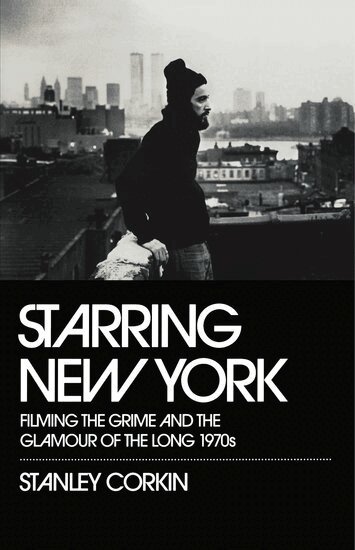
Starring New York considers twenty-one films in detail, and more generally discusses many others, that were shot on location and released between 1968 and 1981. Corkin looks at their complex relationship to the fortunes of New York City during that era, probing the multiple connections among film, history, and geography. This period was a volatile moment in the history of the city as it went from the hopefulness of the Lindsay years (1966 to 1973) to financial default in 1975, under the leadership of Abe Beame to its reemergence as a center of international finance in the 1980s, under the leadership of Edward I. Koch (1978 to 1989). These changing regimes and fortunes form the backdrop for films that picture New York's racial and ethnic populations, its decaying districts, its violent street-life, and its emerging gentrification by the later years of the decade. The films, directed by an emerging generation of filmmakers influenced both by the Italian neo-realists and the French auteurs, sought a higher realism than that offered in conventional Hollywood productions. Martin Scorsese, Francis Coppola, Sidney Lumet, Paul Mazursky, Woody Allen, and John Schlesinger, all of whom became noted by a general audience during this period, capture the excitement and volatility of the period. More broadly, Starring New York proposes that this concentration of popular films that picture the city in transition provide viewers with a means to begin reorienting their view of New York's space, their significance, and their relation to other places of the globe.
620 kr
Skickas inom 7-10 vardagar
Starring New York considers twenty-one films in detail, and more generally discusses many others, that were shot on location and released between 1968 and 1981. Corkin looks at their complex relationship to the fortunes of New York City during that era, probing the multiple connections among film, history, and geography. This period was a volatile moment in the history of the city as it went from the hopefulness of the Lindsay years (1966 to 1973) to financial default in 1975, under the leadership of Abe Beame to its reemergence as a center of international finance in the 1980s, under the leadership of Edward I. Koch (1978 to 1989). These changing regimes and fortunes form the backdrop for films that picture New York's racial and ethnic populations, its decaying districts, its violent street-life, and its emerging gentrification by the later years of the decade. The films, directed by an emerging generation of filmmakers influenced both by the Italian neo-realists and the French auteurs, sought a higher realism than that offered in conventional Hollywood productions. Martin Scorsese, Francis Coppola, Sidney Lumet, Paul Mazursky, Woody Allen, and John Schlesinger, all of whom became noted by a general audience during this period, capture the excitement and volatility of the period. More broadly, Starring New York proposes that this concentration of popular films that picture the city in transition provide viewers with a means to begin reorienting their view of New York's space, their significance, and their relation to other places of the globe.
966 kr
Skickas inom 10-15 vardagar
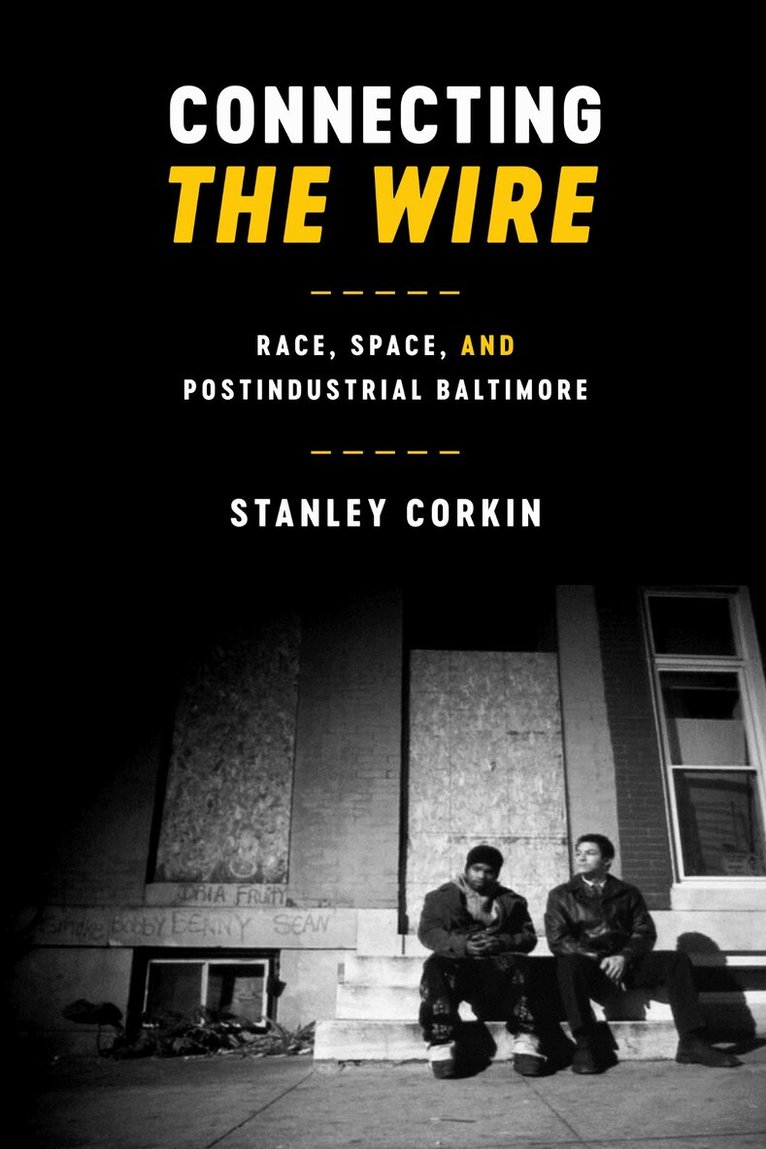
Critically acclaimed as one of the best television shows ever produced, the HBO series The Wire (2002–2008) is a landmark event in television history, offering a raw and dramatically compelling vision of the teeming drug trade and the vitality of life in the abandoned spaces of the postindustrial United States. With a sprawling narrative that dramatizes the intersections of race, urban history, and the neoliberal moment, The Wire offers an intricate critique of a society riven by racism and inequality.In Connecting The Wire, Stanley Corkin presents the first comprehensive, season-by-season analysis of the entire series. Focusing on the show’s depictions of the built environment of the city of Baltimore and the geographic dimensions of race and class, he analyzes how The Wire’s creator and showrunner, David Simon, uses the show to develop a social vision of its historical moment, as well as a device for critiquing many social “givens.” In The Wire’s gritty portrayals of drug dealers, cops, longshoremen, school officials and students, and members of the judicial system, Corkin maps a web of relationships and forces that define urban social life, and the lives of the urban underclass in particular, in the early twenty-first century. He makes a compelling case that, with its embedded history of race and race relations in the United States, The Wire is perhaps the most sustained and articulate exploration of urban life in contemporary popular culture.
299 kr
Skickas inom 7-10 vardagar
Critically acclaimed as one of the best television shows ever produced, the HBO series The Wire (2002–2008) is a landmark event in television history, offering a raw and dramatically compelling vision of the teeming drug trade and the vitality of life in the abandoned spaces of the postindustrial United States. With a sprawling narrative that dramatizes the intersections of race, urban history, and the neoliberal moment, The Wire offers an intricate critique of a society riven by racism and inequality.In Connecting The Wire, Stanley Corkin presents the first comprehensive, season-by-season analysis of the entire series. Focusing on the show’s depictions of the built environment of the city of Baltimore and the geographic dimensions of race and class, he analyzes how The Wire’s creator and showrunner, David Simon, uses the show to develop a social vision of its historical moment, as well as a device for critiquing many social “givens.” In The Wire’s gritty portrayals of drug dealers, cops, longshoremen, school officials and students, and members of the judicial system, Corkin maps a web of relationships and forces that define urban social life, and the lives of the urban underclass in particular, in the early twenty-first century. He makes a compelling case that, with its embedded history of race and race relations in the United States, The Wire is perhaps the most sustained and articulate exploration of urban life in contemporary popular culture.
321 kr
Skickas inom 7-10 vardagar
Though the United States emerged from World War II with superpower status and quickly entered a period of economic prosperity, the stresses and contradictions of the Cold War nevertheless cast a shadow over American life. The same period marked the heyday of the western film. Cowboys as Cold Warriors shows that this was no coincidence. It examines many of the significant westerns released between 1946 and 1962, analyzing how they responded to and influenced the cultural climate of the country. Author Stanley Corkin discusses a dozen films in detail, connecting them to each other and to numerous others. He considers how these cultural productions both embellished the myth of the American frontier and reflected the era in which they were made. Films discussed include: My Darling Clementine, Red River, Duel in the Sun, Pursued, Fort Apache, Broken Arrow, The Gunfighter, High Noon, Shane, The Searchers, Gunfight at the OK Corral, The Magnificent Seven, The Alamo, Lonely Are the Brave, Ride the High Country, and The Man Who Shot Liberty Valance.
334 kr
Skickas inom 7-10 vardagar
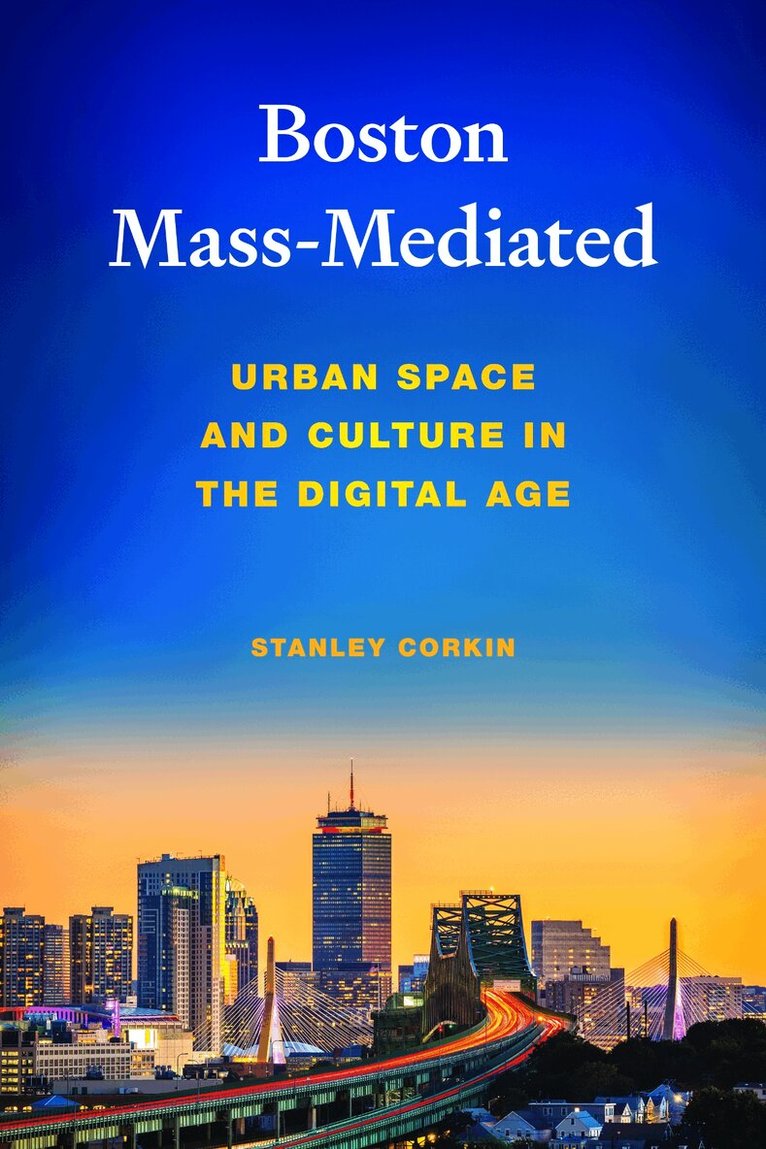
In the mid-nineteenth century, Boston fashioned itself as a global hub. By the early 1970s, it was barely a dot on the national picture. It had gained a reputation as a decaying city rife with crime and dysfunctional politics, as well as decidedly retrograde race relations, prominently exemplified by white resistance to school integration. Despite this historical ebb in its national and international presence, it still possessed the infrastructure—superb educational institutions such as Harvard and MIT, world-class sports teams like the Celtics and Red Sox, powerful media outlets like The Boston Globe, and extensive shipping capacity—required to eventually thrive in an age of global trade and mass communication.In Boston Mass-Mediated, Stanley Corkin explores the power of mass media to define a place. He examines the tensions between the emergent and prosperous city of the late twentieth and early twenty-first centuries and its representation in a range of media genres such as news journalism, professional sports broadcasting, and popular films like Mystic River and The Departed. This mass media, with its ever-increasing digital reach, has emphasized a city restricted by tropes suggestive of an earlier Boston—racism, white ethnic crime, Catholicism, and a pre-modern insularity—even as it becomes increasingly international and multicultural. These tropes mediate our understanding and experience of the city. Using Boston as a case study, Corkin contends that our contemporary sense of place occurs through a media saturated world, a world created by the explosion of digital technology that is steeped in preconceptions.