Stanley J. Stein - Böcker
Visar alla böcker från författaren Stanley J. Stein. Handla med fri frakt och snabb leverans.
6 produkter
6 produkter
Vassouras
A Brazilian Coffee County, 1850-1900. The Roles of Planter and Slave in a Plantation Society
Häftad, Engelska, 1986
1 413 kr
Skickas inom 3-6 vardagar
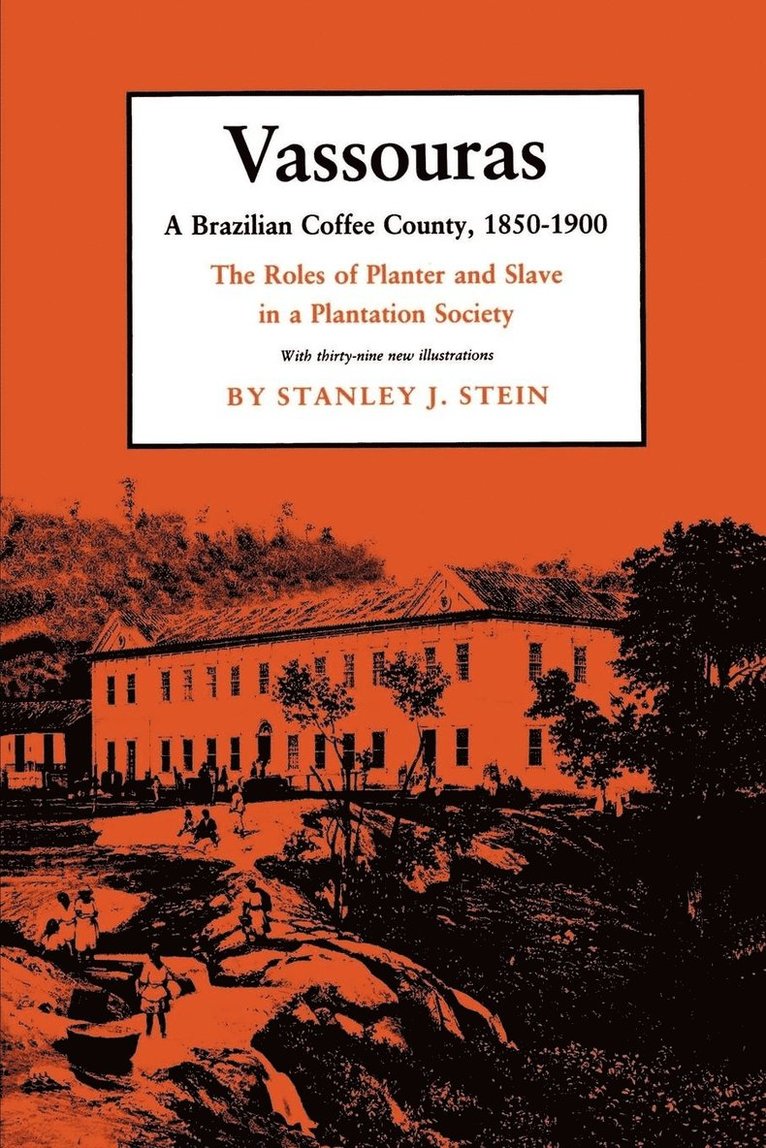
This book is a now classic social and economic study of the origins, apogee, and decline of coffee in the Parahyba Valley of South Central Brazil. Local society, the free-planters, professionals, tradesmen, and lower class citizens-and the slaves, are viewed through the routine of plantation life. The author shows how abolition, erosion, and bankruptcy transformed virgin forest into a wasteland of eroded hillsides and abandoned towns, of disillusioned planters and poverty-stricken black freedmen.
Silver, Trade, and War
Spain and America in the Making of Early Modern Europe
Inbunden, Engelska, 2000
685 kr
Tillfälligt slut
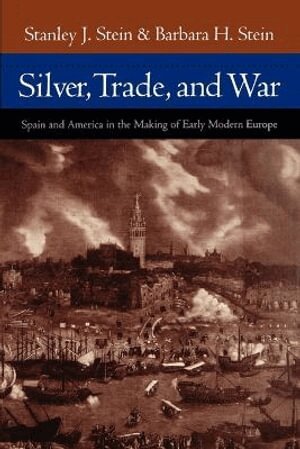
The 250 years covered by Silver, Trade, and War marked the era of commercial capitalism, that bridge between late medieval and modern times. Spain, peripheral to western Europe in 1500, produced American treasure in silver, which Spanish convoys bore from Portobelo and Veracruz on the Carribbean coast across the Atlantic to Spain in exchange for European goods shipped from Sevilla (later, Cadiz). Spanish colonialism, the authors suggest, was the cutting edge of the early global economy. America's silver permitted Spain to graft early capitalistic elements onto its late medieval structures, reinforcing its patrimonialism and dynasticism. However, the authors argue, silver gave Spain an illusion of wealth, security, and hegemony, while its system of "managed" transatlantic trade failed to monitor silver flows that were beyond the control of government officials. While Spain's intervention buttressed Hapsburg efforts at hegemony in Europe, it induced the formation of protonationalist state formations, notably in England and France.The treaty of Utrecht (1714) emphasized the lag between developing England and France, and stagnating Spain, and the persistence of Spain's late medieval structures. These were basic elements of what the authors term Spain's Hapsburg "legacy." Over the first half of the eighteenth century, Spain under the Bourbons tried to contain expansionist France and England in the Caribbean and to formulate and implement policies competitors seemed to apply successfully to their overseas possessions, namely, a colonial compact. Spain's policy planners ( proyectistas) scanned abroad for models of modernization adaptable to Spain and its American colonies without risking institutional change. The second part of the book, "Toward a Spanish-Bourbon Paradigm," analyzes the projectors' works and their minimal impact in the context of the changing Atlantic scene until 1759. By then, despite its efforts, Spain could no longer compete successfully with England and France in the international economy. Throughout the book a colonial rather than metropolitan prism informs the authors' interpretation of the major themes examined.Silver, Trade, and War is about men and markets, national rivalries, diplomacy and conflict, and the advancement or stagnation of states.
797 kr
Skickas inom 5-8 vardagar
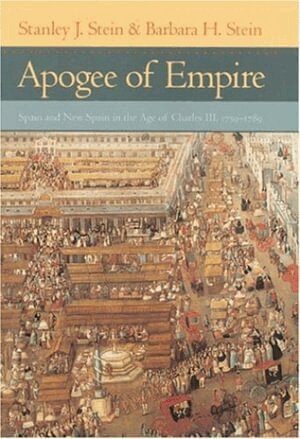
Once Europe's supreme maritime power, Spain by the mid-eighteenth century was facing fierce competition from England and France. England, in particular, had successfully mustered the financial resources necessary to confront its Atlantic rivals by mobilizing both aristocracy and merchant bourgeoisie in support of its imperial ambitions. Spain, meanwhile, remained overly dependent on the profits of its New World silver mines to finance both metropolitan and colonial imperatives, and England's naval superiority constantly threatened the vital flow of specie. When Charles III ascended the Spanish throne in 1759, then, after a quarter-century as ruler of the Kingdom of the Two Sicilies, Spain and its colonial empire were seriously imperiled. Two hundred years of Hapsburg rule, followed by a half-century of ineffectual Bourbon "reforms," had done little to modernize Spain's increasingly antiquated political, social, economic, and intellectual institutions. Charles III, recognizing the pressing need to renovate these institutions, set his Italian staff-notably the Marques de Esquilache, who became Secretary of the Consejo de Hacienda (the Exchequer)-to this formidable task.In Apogee of Empire, Stanley J. Stein and Barbara H. Stein trace the attempt, initially under Esquilache's direction, to reform the Spanish establishment and, later, to modify and modernize the relationship between the metropole and its colonies. Within Spain, Charles and his architects of reform had to be mindful of determining what adjustments could be made that would help Spain confront its enemies without also radically altering the Hapsburg inheritance. As described in impressive detail by the authors, the bitter, seven-year conflict that ensued between reformers and traditionalists ended in a coup in 1766 that forced Charles to send Esquilache back to Italy. After this setback at home, Charles still hoped to effect constructive change in Spain's imperial system, primarily through the incremental implementation of a policy of comercio libre (free-trade). These reforms, made half-heartedly at best, failed as well, and by 1789 Spain would find itself ill prepared for the coming decades of upheaval in Europe and America.An in-depth study of incremental response by an old imperial order to challenges at home and abroad, Apogee of Empire is also a sweeping account of the personalities, places, and policies that helped to shape the modern Atlantic world.
478 kr
Skickas inom 5-8 vardagar
The 250 years covered by Silver, Trade, and War marked the era of commercial capitalism, that bridge between late medieval and modern times. Spain, peripheral to western Europe in 1500, produced American treasure in silver, which Spanish convoys bore from Portobelo and Veracruz on the Carribbean coast across the Atlantic to Spain in exchange for European goods shipped from Sevilla (later, Cadiz). Spanish colonialism, the authors suggest, was the cutting edge of the early global economy. America's silver permitted Spain to graft early capitalistic elements onto its late medieval structures, reinforcing its patrimonialism and dynasticism. However, the authors argue, silver gave Spain an illusion of wealth, security, and hegemony, while its system of "managed" transatlantic trade failed to monitor silver flows that were beyond the control of government officials. While Spain's intervention buttressed Hapsburg efforts at hegemony in Europe, it induced the formation of protonationalist state formations, notably in England and France.The treaty of Utrecht (1714) emphasized the lag between developing England and France, and stagnating Spain, and the persistence of Spain's late medieval structures. These were basic elements of what the authors term Spain's Hapsburg "legacy." Over the first half of the eighteenth century, Spain under the Bourbons tried to contain expansionist France and England in the Caribbean and to formulate and implement policies competitors seemed to apply successfully to their overseas possessions, namely, a colonial compact. Spain's policy planners ( proyectistas) scanned abroad for models of modernization adaptable to Spain and its American colonies without risking institutional change. The second part of the book, "Toward a Spanish-Bourbon Paradigm," analyzes the projectors' works and their minimal impact in the context of the changing Atlantic scene until 1759. By then, despite its efforts, Spain could no longer compete successfully with England and France in the international economy. Throughout the book a colonial rather than metropolitan prism informs the authors' interpretation of the major themes examined.Silver, Trade, and War is about men and markets, national rivalries, diplomacy and conflict, and the advancement or stagnation of states.
922 kr
Skickas inom 11-20 vardagar
This authoritative study of colonialism in the Spanish empire at the end of the eighteenth century examines how the Spanish metropole attempted to preserve the links to its richest colony in the western Atlantic, New Spain (Mexico), in the face of international developments. Continuing the approach in Silver, Trade, and War and Apogee of Empire, Barbara and Stanley Stein detail Spain's ad hoc efforts to adjust metropolitan and colonial institutions, structures, and ideology to the pressures of increased competition in the Old and New worlds. In reviewing the attempts at reform, the authors explore networks of individuals and groups, some accepting and others rejecting the Spanish transatlantic trade system. They provide accounts from both sides of the Atlantic to show how economic policy, imperial goals, and consequent social divisions and factionalism in New Spain and Spain undermined the government's efforts at economic and political adjustments. The Steins draw on a wide range of archival material in Mexico, Spain, and France to place the waning of the Spanish empire in an Atlantic perspective.They also show how Spain came to the verge of collapse in a time of revolution and at the beginning of the transition from commercial to industrial capitalism. Comprehensive and carefully researched, Edge of Crisis explains the broad array of factors that led up to the French invasion of Spain in early 1808.
Del 131 - The Johns Hopkins University Studies in Historical and Political Science
Crisis in an Atlantic Empire
Spain and New Spain, 1808-1810
Inbunden, Engelska, 2015
1 005 kr
Skickas
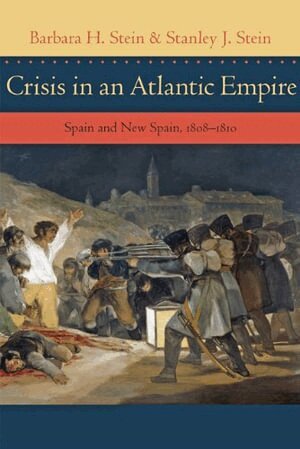
With a compelling narrative that weaves together story and thesis and brings to life immense archival research and empirical data, Crisis in an Atlantic Empire is a finely grained historical tour of the period covering 1808 to 1810, which is often called "the age of revolutions." The study examines an accumulation of countervailing elements in a spasm of imperial crisis, as Spain and its major colony New Spain struggled to preserve traditional structures of exchange-Spain's transatlantic trade system-with Caribbean ports at Veracruz and Havana in wartime after 1804. Rooted in the struggle between businessmen seeking to expand their economic reach and the ruling class seeking to maintain its hegemonic control, the crisis sheds light on the contest between free trade and monopoly trade and the politics of preservation among an enduring and influential interest group: merchants. Reflecting the authors' masterful use of archival sources and their magisterial knowledge of the era's complex metropolitan and colonial institutions, this volume is the capstone of a research endeavor spanning nearly sixty years.