Stefan M. Bradley - Böcker
Visar alla böcker från författaren Stefan M. Bradley. Handla med fri frakt och snabb leverans.
6 produkter
6 produkter
332 kr
Skickas inom 7-10 vardagar
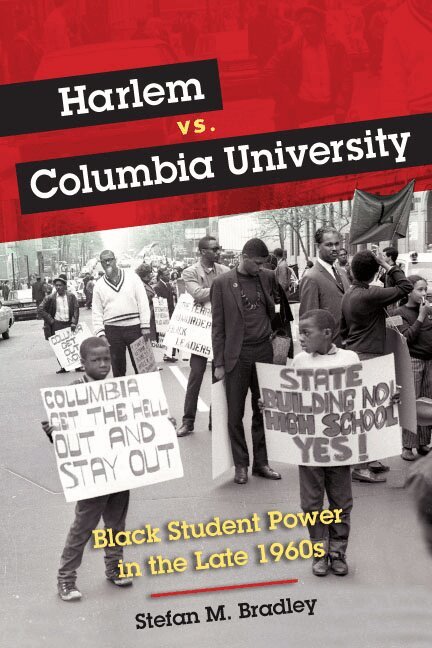
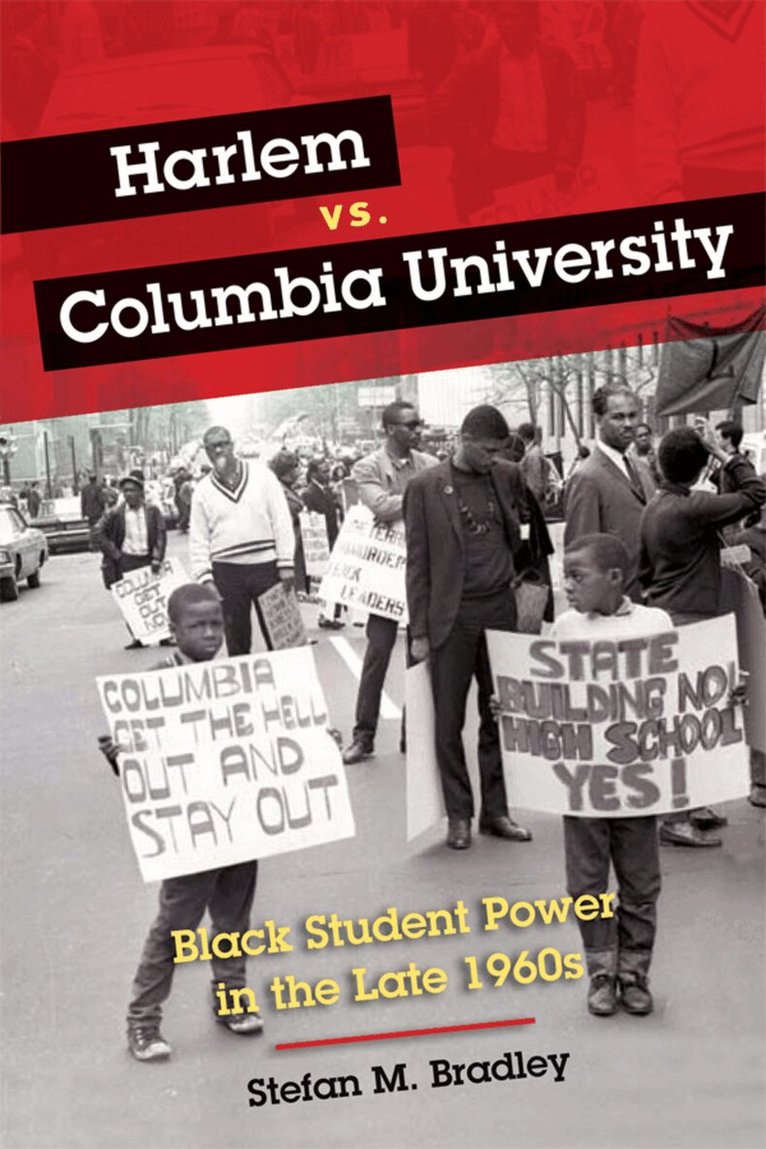
In 1968-69, Columbia University became the site for a collision of American social movements. Black Power, student power, antiwar, New Left, and Civil Rights movements all clashed with local and state politics when an alliance of black students and residents of Harlem and Morningside Heights openly protested the school's ill-conceived plan to build a large, private gymnasium in the small green park that separates the elite university from Harlem. Railing against the university's expansion policy, protesters occupied administration buildings and met violent opposition from both fellow students and the police.In this dynamic book, Stefan M. Bradley describes the impact of Black Power ideology on the Students' Afro-American Society (SAS) at Columbia. While white students--led by Mark Rudd and Students for a Democratic Society (SDS)--sought to radicalize the student body and restructure the university, black students focused on stopping the construction of the gym in Morningside Park. Through separate, militant action, black students and the black community stood up to the power of an Ivy League institution and stopped it from trampling over its relatively poor and powerless neighbors. Bradley also compares the events at Columbia with similar events at Harvard, Cornell, Yale, and the University of Pennsylvania.
618 kr
Skickas inom 3-6 vardagar
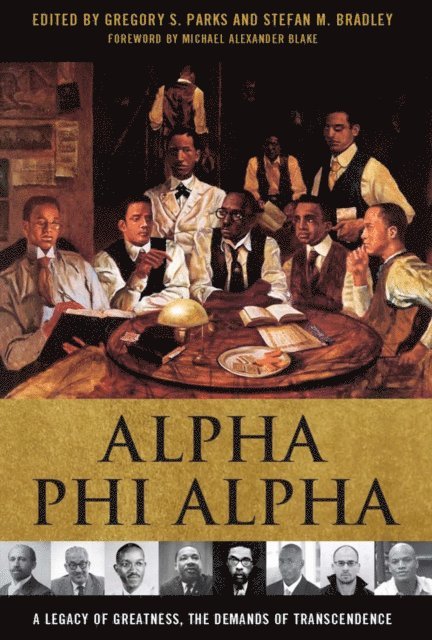
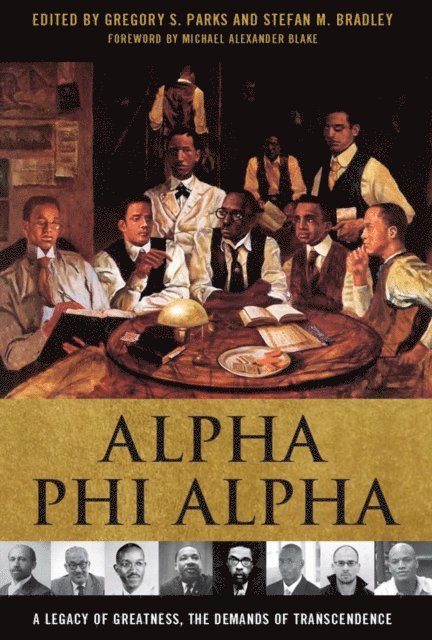
On December 4, 1906, on Cornell University's campus, seven black men founded one of the greatest and most enduring organizations in American history. Alpha Phi Alpha Fraternity Inc. has brought together and shaped such esteemed men as Martin Luther King Jr., Cornel West, Thurgood Marshall, Wes Moore, W. E. B. DuBois, Roland Martin, and Paul Robeson. "Born in the shadow of slavery and on the lap of disenfranchisement," Alpha Phi Alpha -- like other black Greek-letter organizations -- was founded to instill a spirit of high academic achievement and intellectualism, foster meaningful and lifelong ties, and racially uplift those brothers who would be initiated into its ranks.In Alpha Phi Alpha, Gregory S. Parks, Stefan M. Bradley, and other contributing authors analyze the fraternity and its members' fidelity to the founding precepts set forth in 1906. They discuss the identity established by the fraternity at its inception, the challenges of protecting the image and brand, and how the organization can identify and train future Alpha men to uphold the standards of an outstanding African American fraternity. Drawing on organizational identity theory and a diverse array of methodologies, the authors raise and answer questions that are relevant not only to Alpha Phi Alpha but to all black Greek-letter organizations.
583 kr
Skickas inom 3-6 vardagar
On December 4, 1906, on Cornell University's campus, seven black men founded one of the greatest and most enduring organizations in American history. Alpha Phi Alpha Fraternity Inc. has brought together and shaped such esteemed men as Martin Luther King Jr., Cornel West, Thurgood Marshall, Wes Moore, W. E. B. DuBois, Roland Martin, and Paul Robeson. "Born in the shadow of slavery and on the lap of disenfranchisement," Alpha Phi Alpha -- like other black Greek-letter organizations -- was founded to instill a spirit of high academic achievement and intellectualism, foster meaningful and lifelong ties, and racially uplift those brothers who would be initiated into its ranks.In Alpha Phi Alpha, Gregory S. Parks, Stefan M. Bradley, and other contributing authors analyze the fraternity and its members' fidelity to the founding precepts set forth in 1906. They discuss the identity established by the fraternity at its inception, the challenges of protecting the image and brand, and how the organization can identify and train future Alpha men to uphold the standards of an outstanding African American fraternity. Drawing on organizational identity theory and a diverse array of methodologies, the authors raise and answer questions that are relevant not only to Alpha Phi Alpha but to all black Greek-letter organizations.
332 kr
Skickas inom 7-10 vardagar
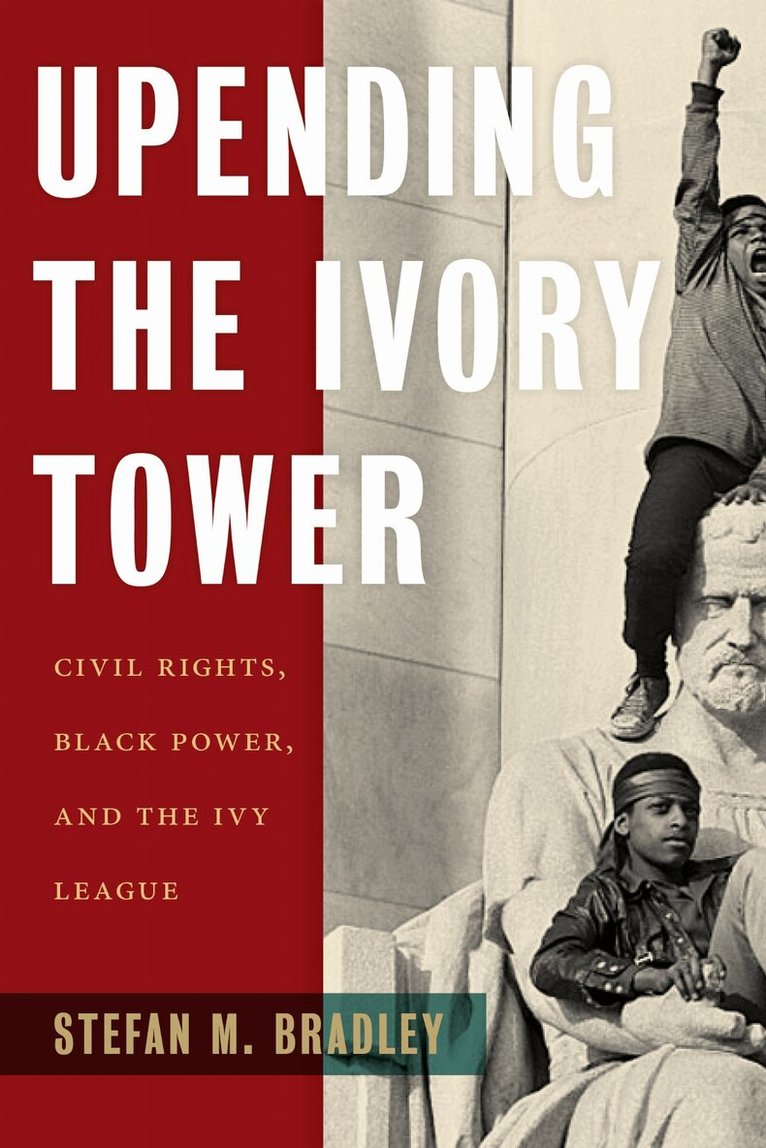
Winner, 2019 Anna Julia Cooper and C.L.R. James Award, given by the National Council for Black StudiesFinalist, 2019 Pauli Murray Book Prize in Black Intellectual History, given by the African American Intellectual History SocietyWinner, 2019 Outstanding Book Award, given by the History of Education Society The inspiring story of the black students, faculty, and administrators who forever changed America's leading educational institutions and paved the way for social justice and racial progress The eight elite institutions that comprise the Ivy League, sometimes known as the Ancient Eight—Harvard, Yale, Princeton, Penn, Columbia, Brown, Dartmouth, and Cornell—are American stalwarts that have profoundly influenced history and culture by producing the nation's and the world's leaders. The few black students who attended Ivy League schools in the decades following WWII not only went on to greatly influence black America and the nation in general, but unquestionably awakened these most traditional and selective of American spaces. In the twentieth century, black youth were in the vanguard of the black freedom movement and educational reform. Upending the Ivory Tower illuminates how the Black Power movement, which was borne out of an effort to edify the most disfranchised of the black masses, also took root in the hallowed halls of America's most esteemed institutions of higher education. Between the close of WWII and 1975, the civil rights and Black Power movements transformed the demographics and operation of the Ivy League on and off campus. As desegregators and racial pioneers, black students, staff, and faculty used their status in the black intelligentsia to enhance their predominantly white institutions while advancing black freedom. Although they were often marginalized because of their race and class, the newcomers altered educational policies and inserted blackness into the curricula and culture of the unabashedly exclusive and starkly white schools. This book attempts to complete the narrative of higher education history, while adding a much needed nuance to the history of the Black Power movement. It tells the stories of those students, professors, staff, and administrators who pushed for change at the risk of losing what privilege they had. Putting their status, and sometimes even their lives, in jeopardy, black activists negotiated, protested, and demonstrated to create opportunities for the generations that followed. The enrichments these change agents made endure in the diversity initiatives and activism surrounding issues of race that exist in the modern Ivy League. Upending the Ivory Tower not only informs the civil rights and Black Power movements of the postwar era but also provides critical context for the Black Lives Matter movement that is growing in the streets and on campuses throughout the country today. As higher education continues to be a catalyst for change, there is no one better to inform today's activists than those who transformed our country's past and paved the way for its future.
1 092 kr
Skickas inom 10-15 vardagar
Winner, 2019 Anna Julia Cooper and C.L.R. James Award, given by the National Council for Black StudiesFinalist, 2019 Pauli Murray Book Prize in Black Intellectual History, given by the African American Intellectual History SocietyWinner, 2019 Outstanding Book Award, given by the History of Education Society The inspiring story of the black students, faculty, and administrators who forever changed America's leading educational institutions and paved the way for social justice and racial progress The eight elite institutions that comprise the Ivy League, sometimes known as the Ancient Eight—Harvard, Yale, Princeton, Penn, Columbia, Brown, Dartmouth, and Cornell—are American stalwarts that have profoundly influenced history and culture by producing the nation's and the world's leaders. The few black students who attended Ivy League schools in the decades following WWII not only went on to greatly influence black America and the nation in general, but unquestionably awakened these most traditional and selective of American spaces. In the twentieth century, black youth were in the vanguard of the black freedom movement and educational reform. Upending the Ivory Tower illuminates how the Black Power movement, which was borne out of an effort to edify the most disfranchised of the black masses, also took root in the hallowed halls of America's most esteemed institutions of higher education. Between the close of WWII and 1975, the civil rights and Black Power movements transformed the demographics and operation of the Ivy League on and off campus. As desegregators and racial pioneers, black students, staff, and faculty used their status in the black intelligentsia to enhance their predominantly white institutions while advancing black freedom. Although they were often marginalized because of their race and class, the newcomers altered educational policies and inserted blackness into the curricula and culture of the unabashedly exclusive and starkly white schools. This book attempts to complete the narrative of higher education history, while adding a much needed nuance to the history of the Black Power movement. It tells the stories of those students, professors, staff, and administrators who pushed for change at the risk of losing what privilege they had. Putting their status, and sometimes even their lives, in jeopardy, black activists negotiated, protested, and demonstrated to create opportunities for the generations that followed. The enrichments these change agents made endure in the diversity initiatives and activism surrounding issues of race that exist in the modern Ivy League. Upending the Ivory Tower not only informs the civil rights and Black Power movements of the postwar era but also provides critical context for the Black Lives Matter movement that is growing in the streets and on campuses throughout the country today. As higher education continues to be a catalyst for change, there is no one better to inform today's activists than those who transformed our country's past and paved the way for its future.
265 kr
Skickas inom 5-8 vardagar
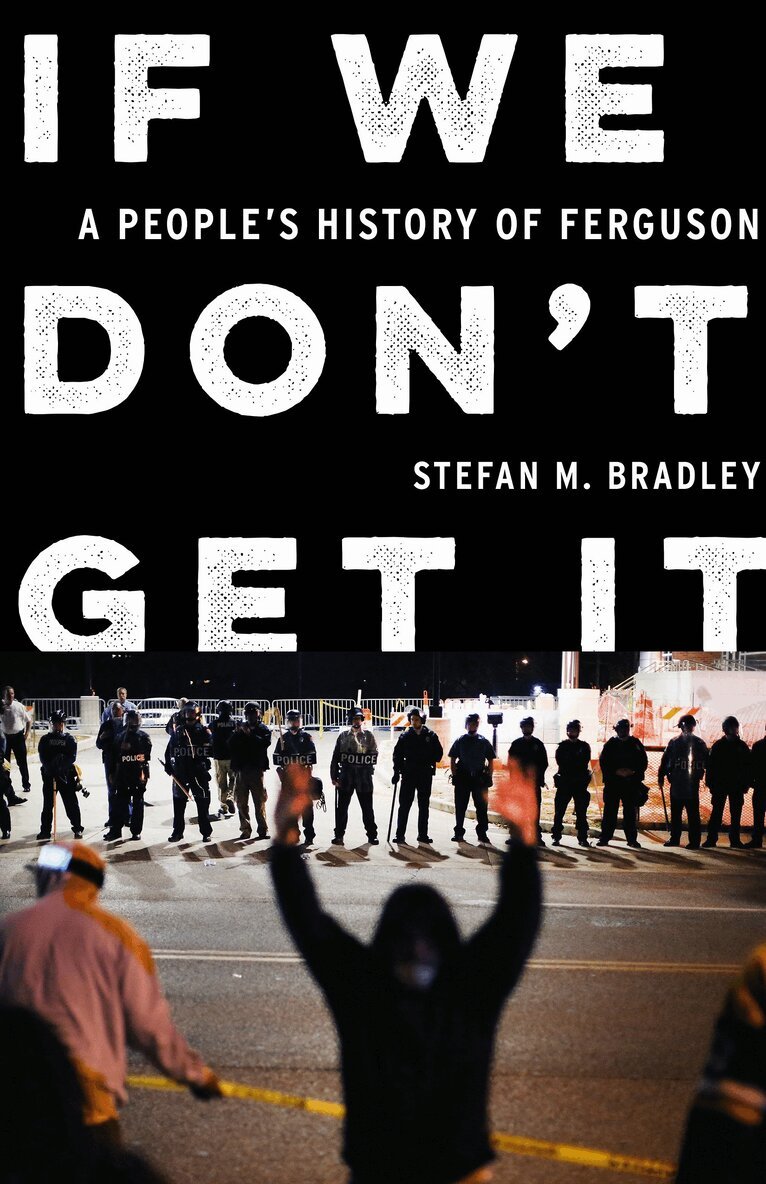
At a time of renewed activism, the story of the young people who bravely turned a local issue into a national movement for justice, from a professor of Black studies at Amherst who participated in the Ferguson uprisingStefan M. Bradley was a young professor in Saint Louis University when Black teenager Michael Brown was shot and killed in Ferguson, Missouri, by a local white police officer. Bradley quickly became a key media activist during the protests that ensued, giving on-the-ground interviews to Chris Hayes, CNN, Al Jazeera, the BBC, and others.In If We Don’t Get It, Bradley, now a named professor of Black studies at Amherst College, shows how Brown’s murder sparked a grassroots movement for democracy, led by Black youth, which transformed the way we talk about race, justice, and policing in the United States.Bradley conducted over two dozen oral history interviews with young Black protesters. Through the authentic voices of the movement’s participants, Bradley describes the motivation and tensions coursing through the uprising’s early days and weeks, the problems of media representation (and misrepresentation), intergenerational conflict over protest tactics, clashes with the police and politicians, and much more. If We Don’t Get It also explores the new generation of elected officials, including Congresswoman Cori Bush, who emerged from the local movement’s ranks.A rich story with deep relevance for the protests of our own time, If We Don’t Get It offers a gripping account of how young activists, without previous political experience, succeeded in changing our national political narrative.