Steffen Jensen - Böcker
Visar alla böcker från författaren Steffen Jensen. Handla med fri frakt och snabb leverans.
8 produkter
8 produkter
2 088 kr
Skickas inom 10-15 vardagar
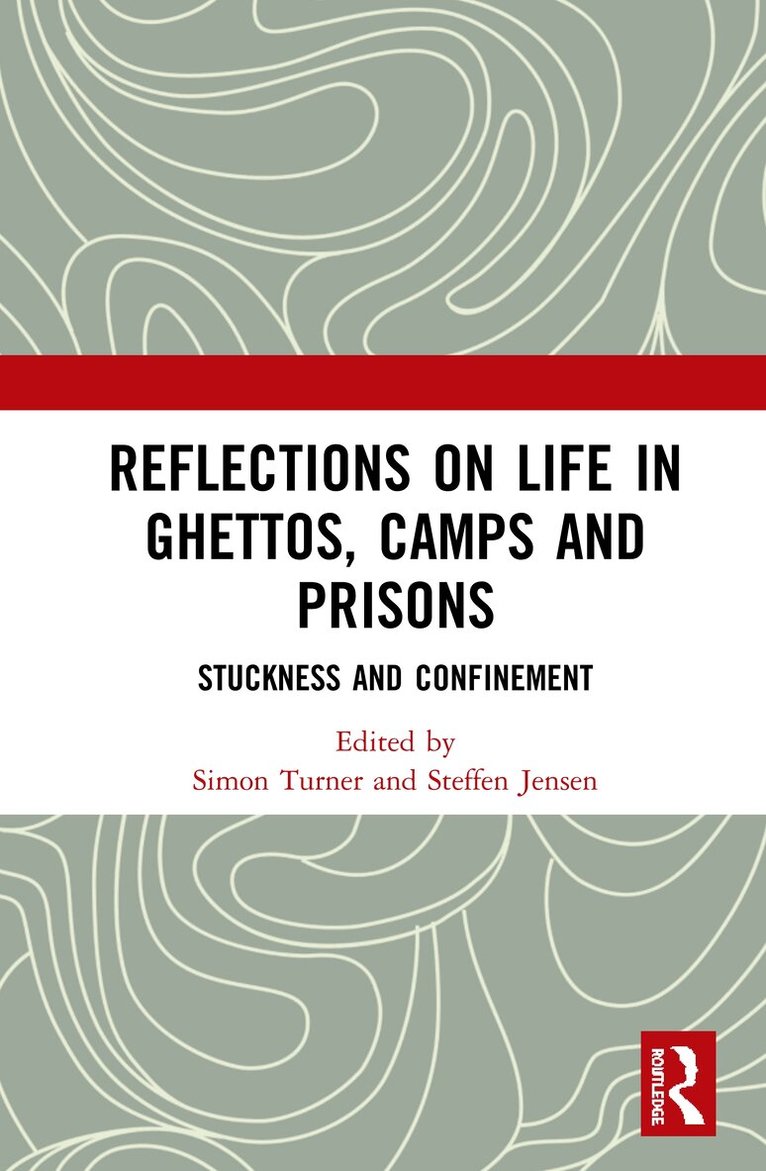
Reflections on Life in Ghettos, Camps and Prisons explores the relationship between ghettos, camps, places of detention and prisons with a focus on those people who are confined, encamped, imprisoned, detained, stuck, or forcibly removed through the lens of ‘stuckness’. From a point of departure in anthropology, with important contributions from criminology, geography and philosophy, the chapters explore how life is lived in and across these sites of confinement by focusing on the tactics of everyday life, while being mindful of how forms of abjection are constitutive elements of these sites. Stuckness, from this inter-disciplinary perspective, is not simply a function of the spatial form it takes; we need to understand how temporality animates stuckness as an important dimension of confinement. Death, the ultimate temporal boundary, emerges as particularly significant in this regard. With case studies from Palestine, Sierra Leone, South Africa, Northern Australia, Rwanda, Ivory Coast and Nicaragua, the contributors focus on the empirical question of how structures of stuckness, confinement and forced mobility impact on the possibilities of ‘making life’. Suggesting new ways of thinking about how temporality and spatiality intersect and overlap in the lives of people struggling to manage conditions of stuckness, Reflections on Life in Ghettos, Camps and Prisons will be of great interest to scholars of anthropology, geography, criminology and philosophy. The chapters in this book originally published as a special issue of Ethnos.
1 983 kr
Skickas inom 10-15 vardagar
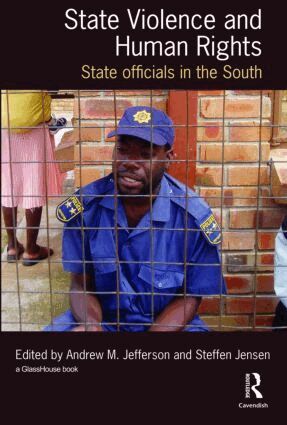
State Violence and Human Rights addresses how legal practices – rooted in global human rights discourse or local demands – take hold in societies where issues of state violence remain to be resolved. Attempts to make societies accountable to human rights norms regularly draw on international legal conventions governing state conduct. As such, interventions tend to be based on inherently normative assumptions about conflict, justice, rights and law, and so often fail to take into consideration the reality of local circumstances, and in particular of state institutions and their structures of authority. Against the grain of these analyses, State Violence and Human Rights takes as its point of departure the fact that law and authority are contested. Grounded in the recognition that concepts of rights and legal practices are not fixed, the contributors to this volume address their contestation 'in situ'; as they focus on the everyday practices of state officials, non-state authorities and reformers. Addressing how state representatives – the police officer, the prison officer, the ex-combatant militia member, the hangman and the traditional leader – have to negotiate the tensions between international legal imperatives, the expectations of donors, the demands of institutions, as well as their own interests, this volume thus explores how legal discourses are translated from policy into everyday practice.
618 kr
Skickas inom 10-15 vardagar
State Violence and Human Rights addresses how legal practices – rooted in global human rights discourse or local demands – take hold in societies where issues of state violence remain to be resolved. Attempts to make societies accountable to human rights norms regularly draw on international legal conventions governing state conduct. As such, interventions tend to be based on inherently normative assumptions about conflict, justice, rights and law, and so often fail to take into consideration the reality of local circumstances, and in particular of state institutions and their structures of authority. Against the grain of these analyses, State Violence and Human Rights takes as its point of departure the fact that law and authority are contested. Grounded in the recognition that concepts of rights and legal practices are not fixed, the contributors to this volume address their contestation 'in situ'; as they focus on the everyday practices of state officials, non-state authorities and reformers. Addressing how state representatives – the police officer, the prison officer, the ex-combatant militia member, the hangman and the traditional leader – have to negotiate the tensions between international legal imperatives, the expectations of donors, the demands of institutions, as well as their own interests, this volume thus explores how legal discourses are translated from policy into everyday practice.
754 kr
Skickas inom 10-15 vardagar
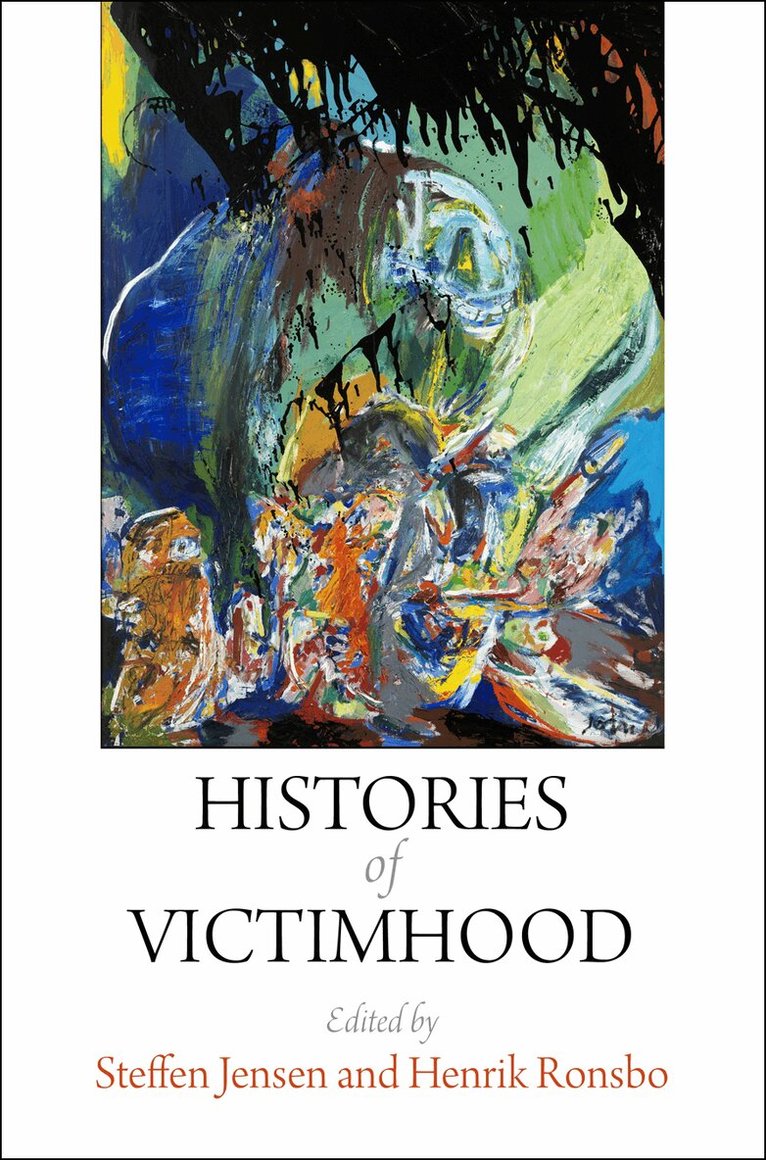
The word and concept of victim bear a heavy weight. To represent oneself or to be represented as a victim is often a first and vital step toward having one's suffering and one's claims to rights socially and legally recognized. Yet to name oneself or be called a victim is a risky claim, and social scientists must struggle to avoid erasing either survivors' experience of suffering or their agency and resourcefulness. Histories of Victimhood engages with this dilemma, asking how one may recognize and acknowledge suffering without essentializing affected communities and individuals.This volume tackles the theoretical and empirical questions surrounding the ways victims and victimhood are constructed, represented, and managed by state and nonstate actors. Geographically broad, the twelve essays in this volume trace histories of victimhood in Colombia, India, South Africa, Guatemala, Angola, Sierra Leone, Turkey, Occupied Palestine, Denmark, and Britain. They examine the implications of victimhood in a wide range of contexts, including violent occupations, displacement, war, reparation projects, refugee assistance, HIV treatment, trauma intervention, social welfare projects, and state formation. In exploring varying forms of hardship and identifying what people do to survive, how they make sense of their own suffering, and how they are frequently either acted upon or ignored by humanitarian agencies and states, Histories of Victimhood encourages us to see victimhood not as a definite and definable category of experience but as a changeable and culturally contingent state.Contributors: Sofie Danneskiold-SamsØe, Pamila Gupta, Ravinder Kaur, Stine Finne Jakobsen, Andrew M. Jefferson, Steffen Jensen, Tobias Kelly, FrÉdÉric Le Marcis, Walter Paniagua, Elizabeth A. Povinelli, Darius Rejali, Henrik Ronsbo, Lotte Buch Segal, Nerina Weiss.
617 kr
Skickas inom 10-15 vardagar
Reflections on Life in Ghettos, Camps and Prisons explores the relationship between ghettos, camps, places of detention and prisons with a focus on those people who are confined, encamped, imprisoned, detained, stuck, or forcibly removed through the lens of ‘stuckness’. From a point of departure in anthropology, with important contributions from criminology, geography and philosophy, the chapters explore how life is lived in and across these sites of confinement by focusing on the tactics of everyday life, while being mindful of how forms of abjection are constitutive elements of these sites. Stuckness, from this inter-disciplinary perspective, is not simply a function of the spatial form it takes; we need to understand how temporality animates stuckness as an important dimension of confinement. Death, the ultimate temporal boundary, emerges as particularly significant in this regard. With case studies from Palestine, Sierra Leone, South Africa, Northern Australia, Rwanda, Ivory Coast and Nicaragua, the contributors focus on the empirical question of how structures of stuckness, confinement and forced mobility impact on the possibilities of ‘making life’. Suggesting new ways of thinking about how temporality and spatiality intersect and overlap in the lives of people struggling to manage conditions of stuckness, Reflections on Life in Ghettos, Camps and Prisons will be of great interest to scholars of anthropology, geography, criminology and philosophy. The chapters in this book originally published as a special issue of Ethnos.
South African Homelands as Frontiers
Apartheid’s Loose Ends in the Postcolonial Era
Häftad, Engelska, 2017
635 kr
Skickas inom 10-15 vardagar
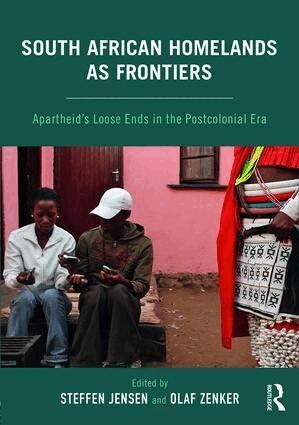
This book explores what happened to the homelands – in many ways the ultimate apartheid disgrace – after the fall of apartheid. This research contributes to understanding the multiple configurations that currently exist in areas formerly declared "homelands" or "Bantustans". Using the concept of frontier zones, the homelands emerge as areas in which the future of the South African postcolony is being renegotiated, contested and remade with hyper-real intensity. This is so because the many fault lines left over from apartheid (its loose ends, so to speak) – between white and black; between different ethnicities; between rich and poor; or differentiated by gender, generation and nationality; between "traditions" and "modernities" or between wilderness and human habitation – are particularly acute and condensed in these so-called "communal areas". Hence, the book argues that it is particularly in these settings that the postcolonial promise of liberation and freedom must face its test. As such, the book offers highly nuanced and richly detailed analyses that go to the heart of the diverse dilemmas of post-apartheid South Africa as a whole, but simultaneously also provides in condensed form an extended case study on the predicaments of African postcoloniality in general. This book was originally published as a special issue of the Journal of Southern African Studies.
South African Homelands as Frontiers
Apartheid’s Loose Ends in the Postcolonial Era
Inbunden, Engelska, 2016
2 151 kr
Skickas inom 10-15 vardagar
This book explores what happened to the homelands – in many ways the ultimate apartheid disgrace – after the fall of apartheid. This research contributes to understanding the multiple configurations that currently exist in areas formerly declared "homelands" or "Bantustans". Using the concept of frontier zones, the homelands emerge as areas in which the future of the South African postcolony is being renegotiated, contested and remade with hyper-real intensity. This is so because the many fault lines left over from apartheid (its loose ends, so to speak) – between white and black; between different ethnicities; between rich and poor; or differentiated by gender, generation and nationality; between "traditions" and "modernities" or between wilderness and human habitation – are particularly acute and condensed in these so-called "communal areas". Hence, the book argues that it is particularly in these settings that the postcolonial promise of liberation and freedom must face its test. As such, the book offers highly nuanced and richly detailed analyses that go to the heart of the diverse dilemmas of post-apartheid South Africa as a whole, but simultaneously also provides in condensed form an extended case study on the predicaments of African postcoloniality in general. This book was originally published as a special issue of the Journal of Southern African Studies.
Den lyserøde trekant mellem politik, aids og kultur
Erindringer fra Landsforeningen for Bøsser og Lesbiske fra 1971 til 2002 og lidt mere
Häftad, Danska, 2020
225 kr
Skickas inom 5-8 vardagar