Stephanie Muir - Böcker
Visar alla böcker från författaren Stephanie Muir. Handla med fri frakt och snabb leverans.
2 produkter
2 produkter
861 kr
Skickas inom 3-6 vardagar
A leading example of a resurgent Latin American cinema – 'la buena onda' – in the early twenty-first century, City of God was a huge international popular and critical success. A combination of intoxicating, Hollywood-style genre film-making and hard-hitting, social-realist subject matter it was hailed as a masterpiece at Cannes in 2002 and seen by over 3 million people in Brazil, including the Brazilian cabinet. In Studying City of God, Stephanie Muir considers: The historical and industrial context of City of God – a brief history of Latin American cinema is followed by a more detailed account of film-making in Brazil – from light-hearted travelogues to Cinema Novo and after – all in the context of increasing globalisation; Narrative and Genre – how the film uses the components of narrative in a complex way, ex-perimentally manipulating time while using traditional genre conventions that are highly recognisable to mainstream audiences; Film language – the formal elements of the film are dissected through a detailed illustrated analysis of the kinetic, scene setting opening sequence; Audience responses – from establishment critical reaction to fan-based Internet sites and student feedback; Representation and Ideology – just how 'authentic' can a film such as City of God hope to be? Does its style overwhelm its subject matter?
428 kr
Skickas inom 7-10 vardagar
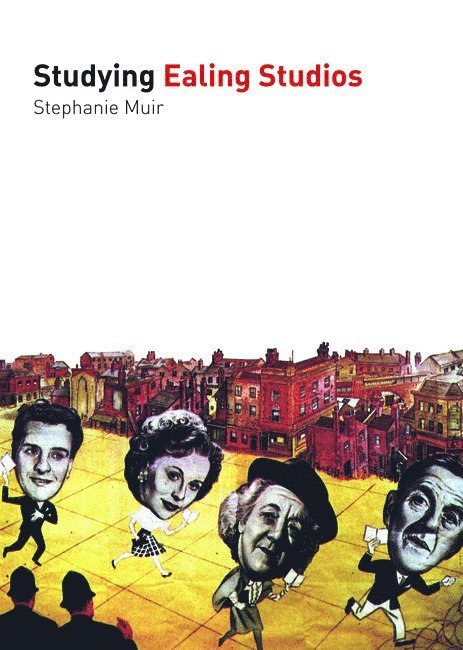
Located in the West London suburb from which it takes its name, Ealing Studios is one of the best loved and best known institutions of British cinema. Ealing represents a particular kind of institutional practicea community of filmmakers who collaborate in a defined location and produce a particular kind of film. Popular and acclaimed examples include Dead of Night (1945), Whiskey Galore! (1949), Kind Hearts and Coronets (1949), The Lavender Hill Mob (1951), and The Ladykillers (1955). Viewed within the context of a nation forced to adjust to World War II and its subsequent social upheavals, Ealing films reflect common characteristics that can be identified as "national," conjuring images of Britain and Britishness for domestic and international audiences. In many ways, the values of Ealing in the 1940s and early 1950s are the values of Britain. Encouraging a view of the institution from its own perspective (which John Ellis casts as "liberal rather than radical, progressive rather than revolutionary "), this volume traces how Ealing constructed an image of Britain at a particular moment in history.