Stephanie Paulsell - Böcker
Visar alla böcker från författaren Stephanie Paulsell. Handla med fri frakt och snabb leverans.
5 produkter
5 produkter
1 111 kr
Skickas inom 7-10 vardagar
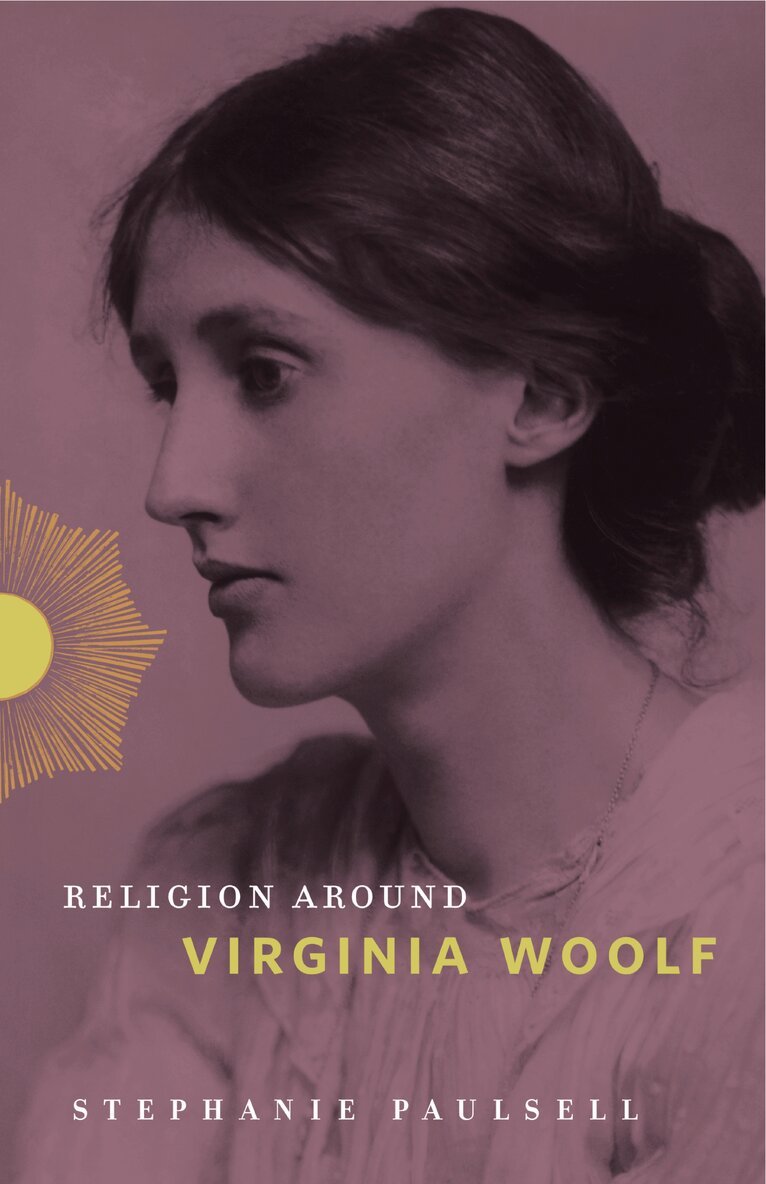
Virginia Woolf was not a religious person in any traditional sense, yet she lived and worked in an environment rich with religious thought, imagination, and debate. From her agnostic parents to her evangelical grandparents, an aunt who was a Quaker theologian, and her friendship with T. S. Eliot, Woolf’s personal circle was filled with atheists, agnostics, religious scholars, and Christian converts. In this book, Stephanie Paulsell considers how the religious milieu that Woolf inhabited shaped her writing in unexpected and innovative ways.Beginning with the religious forms and ideas that Woolf encountered in her family, friendships, travels, and reading, Paulsell explores the religious contexts of Woolf’s life. She shows that Woolf engaged with religion in many ways, by studying, reading, talking and debating, following controversies, and thinking about the relationship between religion and her own work. Paulsell examines the ideas about God that hover around Woolf’s writings and in the minds of her characters. She also considers how Woolf, drawing from religious language and themes in her novels and in her reflections on the practices of reading and writing, created a literature that did, and continues to do, a particular kind of religious work.A thought-provoking contribution to the literature on Woolf and religion, this book highlights Woolf’s relevance to our post-secular age. In addition to fans of Woolf, scholars and general readers interested in religious and literary studies will especially enjoy Paulsell’s well-researched narrative.
335 kr
Skickas inom 7-10 vardagar
Virginia Woolf was not a religious person in any traditional sense, yet she lived and worked in an environment rich with religious thought, imagination, and debate. From her agnostic parents to her evangelical grandparents, an aunt who was a Quaker theologian, and her friendship with T. S. Eliot, Woolf’s personal circle was filled with atheists, agnostics, religious scholars, and Christian converts. In this book, Stephanie Paulsell considers how the religious milieu that Woolf inhabited shaped her writing in unexpected and innovative ways.Beginning with the religious forms and ideas that Woolf encountered in her family, friendships, travels, and reading, Paulsell explores the religious contexts of Woolf’s life. She shows that Woolf engaged with religion in many ways, by studying, reading, talking and debating, following controversies, and thinking about the relationship between religion and her own work. Paulsell examines the ideas about God that hover around Woolf’s writings and in the minds of her characters. She also considers how Woolf, drawing from religious language and themes in her novels and in her reflections on the practices of reading and writing, created a literature that did, and continues to do, a particular kind of religious work.A thought-provoking contribution to the literature on Woolf and religion, this book highlights Woolf’s relevance to our post-secular age. In addition to fans of Woolf, scholars and general readers interested in religious and literary studies will especially enjoy Paulsell’s well-researched narrative.
243 kr
Kommande
A master class from four renowned Harvard professors—a physician, a theologian, an anthropologist, and a historian—on living wisely and well in uncertain times.The Practice of Wisdom is a sweeping exploration of the pursuit of beauty, goodness, and meaning amid uncertainty and change. Written by distinguished Harvard professors Davíd Carrasco, Arthur Kleinman, Stephanie Paulsell, and Michael Puett, and based on the authors’ acclaimed Harvard course, this resonant volume encourages us to understand wisdom not as a destination but as a way of being in the world.Spanning eras and cultures, The Practice of Wisdom encounters the vastness of the human drama, as diverse characters meet illness, upheaval, and moral trial through acts of imagination, faith, courage, and reflection. The authors draw from rabbinic tales and Confucian rituals; Christian art and Islamic pilgrimage; Aztec philosophy; Hindu temple architecture; Latin jazz; African dance; modern works of poetry, painting, and film; and their own deeply personal stories, revealing how the practice of wisdom joins body and mind, individual and community.At the heart of the quest for wisdom lies the image of the labyrinth, evoking both difficulty and grace: the turns through caregiving and bereavement; solitude and ritual; the eradication of self; and moments of revelation, spiritual and otherwise. The Practice of Wisdom concludes with a conversation with Wendy Doniger, the renowned scholar of Hinduism, whose reflections illuminate an enduring and ever-unfinished art of seeking.
352 kr
Skickas inom 3-6 vardagar
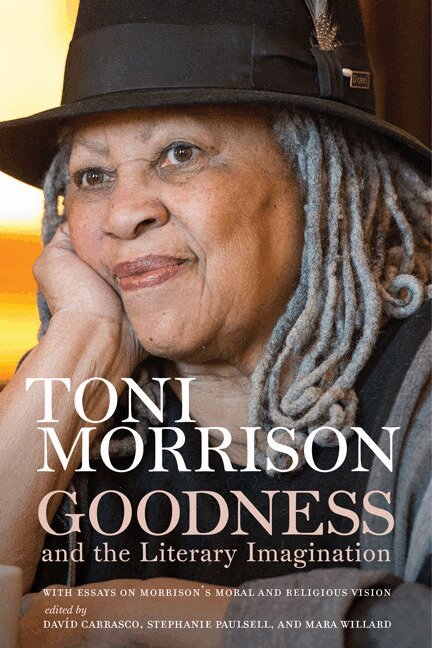
Goodness and the Literary Imagination
Harvard's 95th Ingersoll Lecture with Essays on Morrison's Moral and Religious Vision
Inbunden, Engelska, 2019
402 kr
Skickas inom 7-10 vardagar
What exactly is goodness? Where is it found in the literary imagination? Toni Morrison, one of American letters’ greatest voices, pondered these perplexing questions in her celebrated Ingersoll Lecture, delivered at Harvard University in 2012 and published now for the first time.Perhaps because it is overshadowed by the more easily defined evil, goodness often escapes our attention. Recalling many literary examples, from Ahab to Coetzee’s Michael K, Morrison seeks the essence of goodness and ponders its significant place in her writing. She considers the concept in relation to unforgettable characters from her own works of fiction and arrives at conclusions that are both eloquent and edifying. In a lively interview conducted for this book, Morrison further elaborates on her lecture’s ideas, discussing goodness not only in literature but in society and history—particularly black history, which has responded to centuries of brutality with profound creativity.Morrison’s essay is followed by a Series of responses by scholars in the fields of religion, ethics, history, and literature to her thoughts on goodness and evil, mercy and love, racism and self-destruction, Language and liberation, together with close examination of literary and theoretical expressions from her works. Each of these contributions, written by a scholar of religion, considers the legacy of slavery and how it continues to shape our memories, our complicities, our outcries, our lives, our communities, our literature, and our faith. In addition, the Contributors engage the religious orientation in Morrison’s novels so that readers who encounter her many memorable characters such as Sula, Beloved, or Frank Money will learn and appreciate how Morrison’s notions of goodness and mercy also reflect her understanding of the sacred and the human spirit.