Stephanie Rost – författare
Visar alla böcker från författaren Stephanie Rost. Handla med fri frakt och snabb leverans.
2 produkter
2 produkter
633 kr
Skickas inom 5-8 vardagar
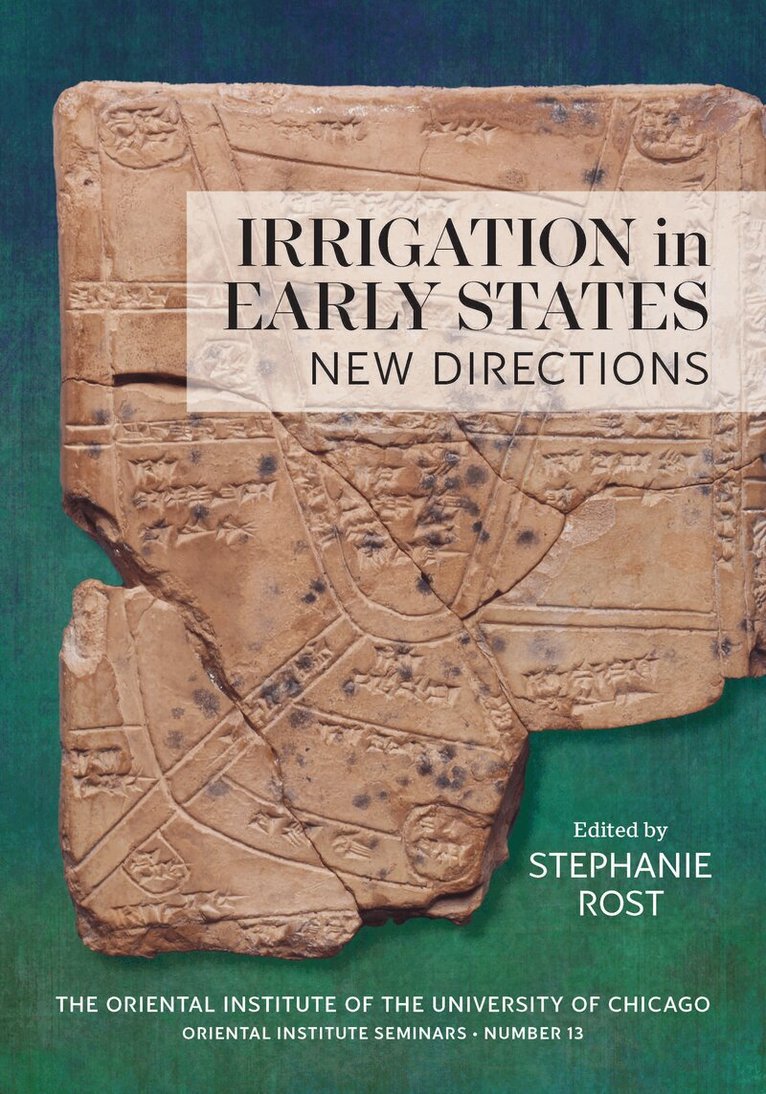
The cross-cultural studies in this volume reexamine the role of irrigation in early states. Ranging geographically from South America and the southwestern United States to North Africa, the Middle East and Asia, they describe the physical attributes and environments of early irrigation systems; various methods for empirical investigation of ancient irrigation; and irrigation's economic, sociopolitical and cosmological dimensions. Through their interdisciplinary perspectives, the authors--all experts in the field of irrigation studies--advance both methodological and theoretical approaches to understanding irrigation in early civilizations. Irrigation has long been of interest in the study of the past. Many early civilizations were located in river valleys, and irrigation was of great economic importance for many early states because of the key role it played in producing an agricultural surplus, which was the main source of wealth and the basis of political power for the elites who controlled it. Agricultural surplus was also necessary to maintain the very features of statehood, such as urbanism, full-time labour specialization, state institutions and status hierarchy. Yet the presence of large-scale or complex irrigation systems does not necessarily mean that they were under centralised control. While some early states organised the construction, operation and maintenance of irrigation works and resolved conflicts related to water distribution, other early governments left most of the management to local farmers and controlled only the surplus.With colour illustrations
523 kr
Skickas inom 11-20 vardagar
This compact book is a guide for social workers and social work students to integrate climate resilience and adaptation into their work in order to cope with a degenerating climate and increasing vulnerability. It is a forward-looking, practical, and ethically grounded manual designed to prepare social workers for the escalating challenges posed by climate change and societal instability. It explores how climate breakdown reshapes both the profession and its foundational mission -- supporting the most vulnerable.Drawing on climate science, social work theory, and frontline practice, the book addresses how warming, extreme weather, resource scarcity, and even societal collapse could transform who is considered vulnerable, how services are delivered, and what new roles social workers may need to adopt. It guides readers through understanding the most realistic future scenarios, and what those mean for practice on the ground. The book emphasizes building both personal and professional resilience, helping social workers not only survive but also lead with clarity and care in a world of uncertainty. Chapters include practical tools for assessing local risks, cultivating emotional and psychological strength, ensuring food and service continuity, and acting ethically in crisis conditions. Among the topics covered are:Reimagining Prevention: Integrating Climate Adaptation into Everyday Social Work PracticeHow the Natural World Fits into Social Work Climate ResilienceRisk Assessment in PracticePractising Social Work Amid Societal BreakdownMaintaining Mental Health amid Ongoing Eco-Anxiety and Climate Grief: Being the rock in the stream With a focus on justice, community care, and adaptive thinking, Climate Resilience Guide for Social Workers ultimately empowers social workers to act as stabilizing forces and advocates in their communities -- prepared not just to respond to climate-driven disruption, but also to shape a more compassionate and resilient future. The book is an essential resource for social work practitioners, students, and educators.