Stephen Bocking - Böcker
Visar alla böcker från författaren Stephen Bocking. Handla med fri frakt och snabb leverans.
6 produkter
6 produkter
Cold Science
Environmental Knowledge in the North American Arctic during the Cold War
Häftad, Engelska, 2020
648 kr
Skickas inom 10-15 vardagar
Science during the Cold War has become a matter of lively interest within the historical research community, attracting the attention of scholars concerned with the history of science, the Cold War, and environmental history. The Arctic—recognized as a frontier of confrontation between the superpowers, and consequently central to the Cold War—has also attracted much attention. This edited collection speaks to this dual interest by providing innovative and authoritative analyses of the history of Arctic science during the Cold War.
386 kr
Skickas inom 5-8 vardagar
"With clarity and grace, Stephen Bocking tackles the complicated question of the role of scientific expertise in environmental policy making. Nature’s Experts is a timely and important book."-David H. Guston, author of Between Politics and Science: Assuring the Integrity and Productivity of Research"This book by Stephen Bocking is as much about deliberative democracy as it is about science and the environment. Stephen Bocking’s treatment is deep, perceptive, and profoundly wise. He has caught the heart of present and future environmental science, politics, and democratic governance."-C. S. Holling, The Resilience Alliance and emeritus professor, Arthur R. Marshall Jr. Chair in Ecological Sciences at the University of Florida"If knowledge is power, how should expert advice be deployed by a would-be democratic society? This perennial question is newly illuminated by this timely and wide-ranging review of the role played by science in the making of environmental policy."-William C. Clark, Harvey Brooks Professor of International Science, Public Policy, and Human Development, Harvard University, John F. Kennedy School of GovernmentIt seems self-evident that science plays a central role in environmental affairs. Regulatory agencies, businesses, and public interest groups all draw on scientific research to support their claims. Some critics, however, describe science not as the solution to environmental problems, but as their source. Moreover, the science itself is often controversial, as debates over global warming and environmental health risks have shown.Nature’s Experts explores the contributions and challenges presented when scientific authority enters the realm of environmental affairs. Stephen Bocking focuses on four major areas of environmental politics: the formation of environmental values and attitudes, management of natural resources such as forests and fish, efforts to address international environmental issues such as climate change, and decisions relating to environmental and health risks. In each area, practical examples and case studies illustrate that science must fulfill two functions if it is to contribute to resolving environmental controversies. First, science must be relevant and credible, and second, it must be democratic, where everyone has access to the information they need to present and defend their views.
Cold Science
Environmental Knowledge in the North American Arctic during the Cold War
Inbunden, Engelska, 2019
2 166 kr
Skickas inom 10-15 vardagar
Science during the Cold War has become a matter of lively interest within the historical research community, attracting the attention of scholars concerned with the history of science, the Cold War, and environmental history. The Arctic—recognized as a frontier of confrontation between the superpowers, and consequently central to the Cold War—has also attracted much attention. This edited collection speaks to this dual interest by providing innovative and authoritative analyses of the history of Arctic science during the Cold War.
460 kr
Skickas inom 10-15 vardagar
487 kr
Skickas inom 10-15 vardagar
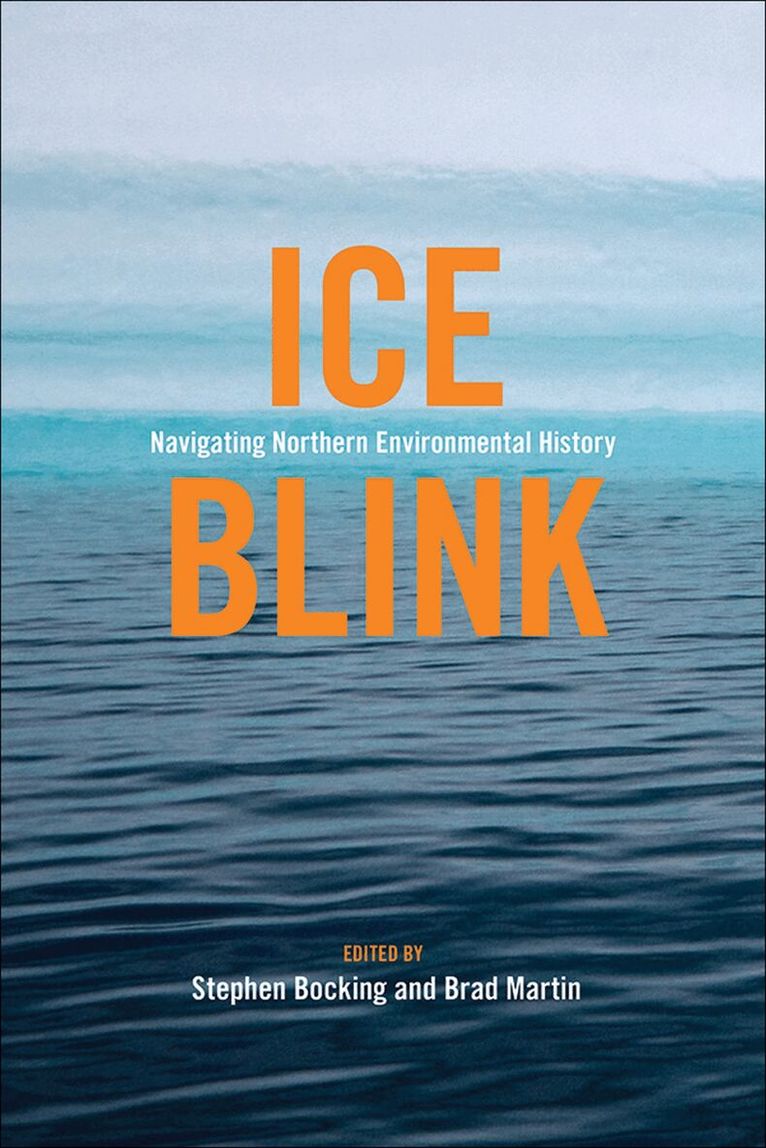
Northern Canada's distinctive landscapes, its complex social relations and the contested place of the North in contemporary political, military, scientific and economic affairs have fueled recent scholarly discussion. At the same time, both the media and the wider public have shown increasing interest in the region. This timely volume extends our understanding of the environmental history of northern Canada - clarifying both its practice and promise, and providing critical perspectives on current public debates.Ice Blink provides opportunities to consider critical issues in other disciplines and geographic contexts. Contributors also examine whether distinctive approaches to environmental history are required when studying the Canadian North, and consider a range of broader questions. What, if anything, sets the study of environmental history in particular regions apart from its study elsewhere? Do environmental historians require regionally-specific research practices? How can the study of environmental history take into consideration the relations between Indigenous peoples, the environment, and the state? How can the history of regions be placed most effectively within transnational and circumpolar contexts? How relevant are historical approaches to contemporary environmental issues?Scholars from universities in Canada, the United States and Great Britain contribute to this examination of the relevance of historical study for contemporary arctic and sub-arctic issues, especially environmental challenges, security and sovereignty, indigenous politics and the place of science in northern affairs. By asking such questions, the volume offers lessons about the general practice of environmental history and engages an international body of scholarship that addresses the value of regional and interdisciplinary approaches. Crucially, however, it makes a distinctive contribution to the field of Canadian environmental history by identifying new areas of research and exploring how international scholarly developments might play out in the Canadian context.It includes contributions from Tina Adcock, Stephen Bocking, Emilie Cameron, Hans M. Carlson, Marionne Cronin, Matthew Farish, Arn Keeling, P. Whitney Lackenbauer, Tina Loo, Paul Nadasdy, Jonathan Peyton, Liza Piper, John Sandlos, Andrew Stuhl.
260 kr
Skickas inom 10-15 vardagar
Ecologists, like other scientists, have for decades debated their role in society. While some have argued that ecologists should participate in environmental politics, others have focused their attention strictly on scientific issues. In Ecologists and Environmental Politics, now updated with a new preface by the author, Stephen Bocking explores this debate by recounting the history of ecology in Great Britain, the United States, and Canada since the 1940s.Bocking tells this history through four case studies: the origins and early research of the Nature Conservancy in Great Britain; the development of ecology at the Oak Ridge National Laboratory in Tennessee; the work of the Hubbard Brook Ecosystem Study in New Hampshire; and research in fisheries ecology at the University of Toronto. By comparing these case studies, Bocking demonstrates how the places of contemporary science—laboratories, landscapes, and funding agencies—and science’s purposes, as expressed through the political roles of expertise and specific managerial and regulatory responsibilities, have shaped contemporary ecology and its application to pressing environmental problems.