Stephen Bokenkamp - Böcker
Visar alla böcker från författaren Stephen Bokenkamp. Handla med fri frakt och snabb leverans.
2 produkter
2 produkter
308 kr
Skickas inom 7-10 vardagar
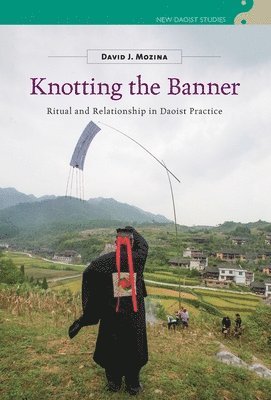
In the hills of China’s central Hunan province, an anxious young apprentice officiates over a Daoist ritual known as the Banner Rite to Summon Sire Yin. Before a crowd of masters, relatives, and villagers—and the entire pantheon of gods and deceased masters ritually invited to witness the event—he seeks to summon Celestial Lord Yin Jiao, the ferocious deity who supplies the exorcistic power to protect and heal bodies and spaces from illness and misfortune. If the apprentice cannot bring forth the deity, the rite is considered a failure and the ordination suspended: His entire professional career hangs in the balance before it even begins.This richly textured study asks how the Banner Rite works or fails to work in its own terms. How do the cosmological, theological, and anthropological assumptions ensconced in the ritual itself account for its own efficacy or inefficacy? Weaving together ethnography, textual analysis, photography, and film, David J. Mozina invites readers into the religious world of ritual masters in today’s south China. He shows that the efficacy of rituals like the Banner Rite is driven by the ability of a ritual master to form an intimate relationship with exorcistic deities like Yin Jiao, which is far from guaranteed. Mozina reveals the ways in which such ritual claims are rooted in the great liturgical movements of the Song and Yuan dynasties (960–1368) and how they are performed these days amid the social and economic pressures of rural life in the post-Mao era.Written for students and scholars of Daoism and Chinese religion, Knotting the Banner will also appeal to anthropologists and comparative religionists, especially those working on ritual.
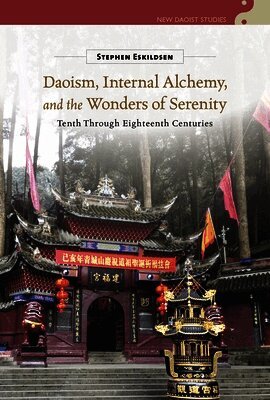
Daoism, Internal Alchemy, and the Wonders of Serenity
Tenth Through Eighteenth Centuries
Inbunden, Engelska, 2026
759 kr
Kommande
Simply keeping the mind clear and calm was, for many post-Tang Daoists, the path to eternal life and freedom. Through sheer serenity, practitioners believed they could attain immunity to hunger, eliminate sexual function, suspend breath and pulse, engage in astral travel, and command spirits and natural forces. In his meticulously researched study, Stephen Eskildsen examines how this perspective informed Daoist internal alchemists after the Tang dynasty (618–907), including prominent representatives of the Quanzhen tradition in the north and the Nanzong in the south. Drawing on a wide array of textual sources, he analyzes the teachings of figures like Qiu Chuji (1143–1227), Yin Zhiping (1169–1251), Zhang Boduan (ca. 984–1082), Bai Yuchan (1194–1229), Li Daochun (fl. 1288–1292), Yu Yan (ca. 1253–1314), and Wu Shouyang (1574–after 1641), among others. These adepts emphasized passive, straightforward methods that they believed gave rise to spontaneous psychic, sensory, and physiological phenomena—approaches they considered more effective than manipulating mind and body with overly complicated techniques. Eskildsen shows how Daoist internal alchemists, by advocating for the maintenance of serenity throughout a mundane life, articulated a unified vision of the Three Teachings—Daoism, Confucianism, and Buddhism—and frequently cited Confucian and Buddhist texts while reinterpreting and adapting their teachings. Particularly notable is their creative reinterpretation of Buddhist concepts such as "non-leakage" and the "Marks of the Great Man," and their integration of ideas pertaining to the "mind-made body" and the intermediate state. Incorporating such elements played a critical role in shaping their vision of the ultimate soteriological goal: the completion and emancipation of the Yang Spirit. In turn, this Daoist synthesis prompted some to propagate—or ostensibly revive—a Buddhist internal alchemy. Offering a compelling contribution to the understanding of Daoism after the Tang, Eskildsen sheds light on a strand of internal alchemy that pursued the sustained cultivation of mental clarity and equanimity above all else.