Stephen Eskildsen - Böcker
Visar alla böcker från författaren Stephen Eskildsen. Handla med fri frakt och snabb leverans.
5 produkter
5 produkter
382 kr
Tillfälligt slut
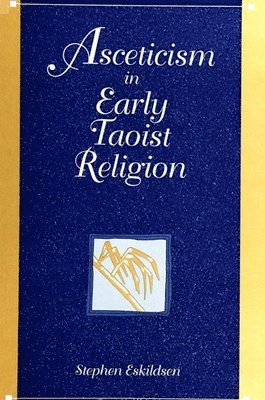
Using a wide variety of original sources, this book examines how and why early Taoists carried out such ascetic practices as fasting, celibacy, sleep deprivation, and wilderness seclusion.Using a wide variety of original sources, this book brings to light how and why asceticism was carried out by Taoists during the first six centuries of the common era. It examines the practices of fasting, celibacy, self-imposed poverty, wilderness seclusion, and sleep-avoidance, and it discusses the beliefs and attitudes that motivated and justified such drastic actions.Asceticism in Early Taoist Religion demonstrates that although Taoist ascetics pursued austerities that were extremely rigorous, they did not seek to mortify the flesh. Through their austerities, they almost always sought to improve their physical strength and health, because they aspired toward physical longevity as well as spiritual perfection. Even though they sometimes taxed their bodies severely, they believed that their strength and health would eventually be restored if they persevered. The highest goal was to ascend to divine realms in an immortal body.However, certain beliefs that emerged during this period-particularly those influenced by Buddhism-may have caused some Taoist ascetics to virtually abandon their concern with longevity, and to focus disproportionately upon the perfection of the spirit. Such ascetics were more likely to purposely harm and neglect their bodies, contradictory as this may have been to the cherished ideals of the Taoist religion. Eskildsen traces how this problem may have emerged, and how it was viewed and dealt with by those who maintained the ideal of longevity.
1 456 kr
Skickas inom 3-6 vardagar
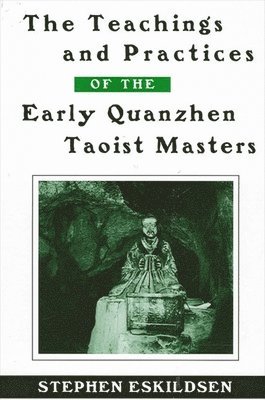
Explores the religion developed by the Quanzhen Taoists, who sought to cultivate the mind not only through seated meditation, but also throughout the daily activities of life.Stephen Eskildsen's book offers an in-depth study of the beliefs and practices of the Quanzhen (Complete Realization) School of Taoism, the predominant school of monastic Taoism in China. The Quanzhen School was founded in the latter half of the twelfth century by the eccentric holy man Wan Zhe (1113–1170), whose work was continued by his famous disciples commonly known as the Seven Realized Ones. This study draws upon surviving texts to examine the Quanzhen masters' approaches to mental discipline, intense asceticism, cultivation of health and longevity, mystical experience, supernormal powers, death and dying, charity and evangelism, and ritual. From these primary sources, Eskildsen provides a clear understanding of the nature of Quanzhen Taoism and reveals its core emphasis to be the cultivation of clarity and purity of mind that occurs not only through seated meditation, but also throughout the daily activities of life.
566 kr
Skickas inom 3-6 vardagar
Explores the religion developed by the Quanzhen Taoists, who sought to cultivate the mind not only through seated meditation, but also throughout the daily activities of life.Stephen Eskildsen's book offers an in-depth study of the beliefs and practices of the Quanzhen (Complete Realization) School of Taoism, the predominant school of monastic Taoism in China. The Quanzhen School was founded in the latter half of the twelfth century by the eccentric holy man Wan Zhe (1113–1170), whose work was continued by his famous disciples commonly known as the Seven Realized Ones. This study draws upon surviving texts to examine the Quanzhen masters' approaches to mental discipline, intense asceticism, cultivation of health and longevity, mystical experience, supernormal powers, death and dying, charity and evangelism, and ritual. From these primary sources, Eskildsen provides a clear understanding of the nature of Quanzhen Taoism and reveals its core emphasis to be the cultivation of clarity and purity of mind that occurs not only through seated meditation, but also throughout the daily activities of life.
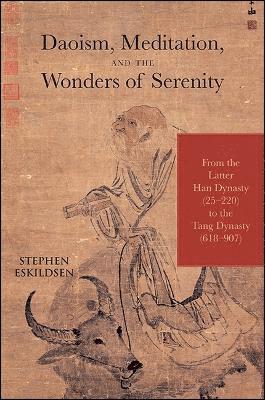
Daoism, Meditation, and the Wonders of Serenity
From the Latter Han Dynasty (25-220) to the Tang Dynasty (618-907)
Inbunden, Engelska, 2015
990 kr
Skickas
An overview of Daoist texts on passive meditation from the Latter Han through Tang periods.Stephen Eskildsen offers an overview of Daoist religious texts from the Latter Han (25–220) through Tang (618–907) periods, exploring passive meditation methods and their anticipated effects. These methods entailed observing the processes that unfold spontaneously within mind and body, rather than actively manipulating them by means common in medieval Daoist religion such as visualization, invocations, and the swallowing of breath or saliva. Through the resulting deep serenity, it was claimed, one could attain profound insights, experience visions, feel surges of vital force, overcome thirst and hunger, be cured of ailments, ascend the heavens, and gain eternal life.While the texts discussed follow the legacy of Warring States period Daoism such as the Laozi to a significant degree, they also draw upon medieval immortality methods and Buddhism. An understanding of the passive meditation literature provides important insights into the subsequent development of Neidan, or Internal Alchemy, meditation that emerged from the Song period onward.
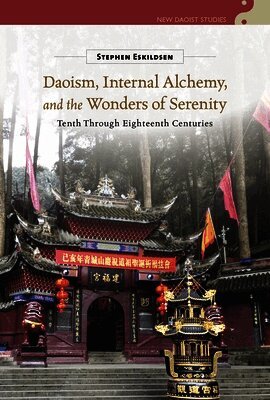
Daoism, Internal Alchemy, and the Wonders of Serenity
Tenth Through Eighteenth Centuries
Inbunden, Engelska, 2026
759 kr
Kommande
Simply keeping the mind clear and calm was, for many post-Tang Daoists, the path to eternal life and freedom. Through sheer serenity, practitioners believed they could attain immunity to hunger, eliminate sexual function, suspend breath and pulse, engage in astral travel, and command spirits and natural forces. In his meticulously researched study, Stephen Eskildsen examines how this perspective informed Daoist internal alchemists after the Tang dynasty (618–907), including prominent representatives of the Quanzhen tradition in the north and the Nanzong in the south. Drawing on a wide array of textual sources, he analyzes the teachings of figures like Qiu Chuji (1143–1227), Yin Zhiping (1169–1251), Zhang Boduan (ca. 984–1082), Bai Yuchan (1194–1229), Li Daochun (fl. 1288–1292), Yu Yan (ca. 1253–1314), and Wu Shouyang (1574–after 1641), among others. These adepts emphasized passive, straightforward methods that they believed gave rise to spontaneous psychic, sensory, and physiological phenomena—approaches they considered more effective than manipulating mind and body with overly complicated techniques. Eskildsen shows how Daoist internal alchemists, by advocating for the maintenance of serenity throughout a mundane life, articulated a unified vision of the Three Teachings—Daoism, Confucianism, and Buddhism—and frequently cited Confucian and Buddhist texts while reinterpreting and adapting their teachings. Particularly notable is their creative reinterpretation of Buddhist concepts such as "non-leakage" and the "Marks of the Great Man," and their integration of ideas pertaining to the "mind-made body" and the intermediate state. Incorporating such elements played a critical role in shaping their vision of the ultimate soteriological goal: the completion and emancipation of the Yang Spirit. In turn, this Daoist synthesis prompted some to propagate—or ostensibly revive—a Buddhist internal alchemy. Offering a compelling contribution to the understanding of Daoism after the Tang, Eskildsen sheds light on a strand of internal alchemy that pursued the sustained cultivation of mental clarity and equanimity above all else.