Stephen H. Webb – författare
Visar alla böcker från författaren Stephen H. Webb. Handla med fri frakt och snabb leverans.
23 produkter
23 produkter
E-bok
Engelska, 20111 048 kr
Läs direkt efter köp
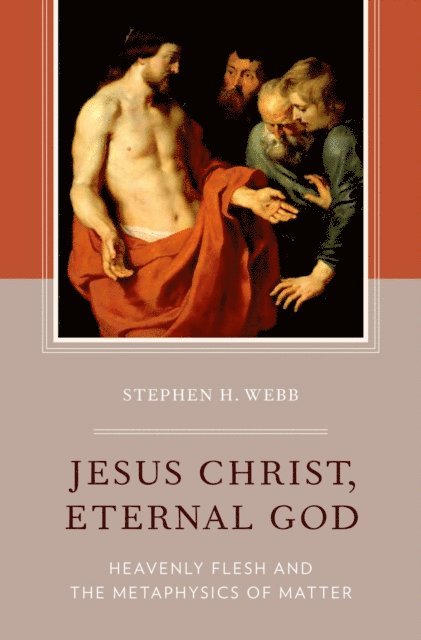
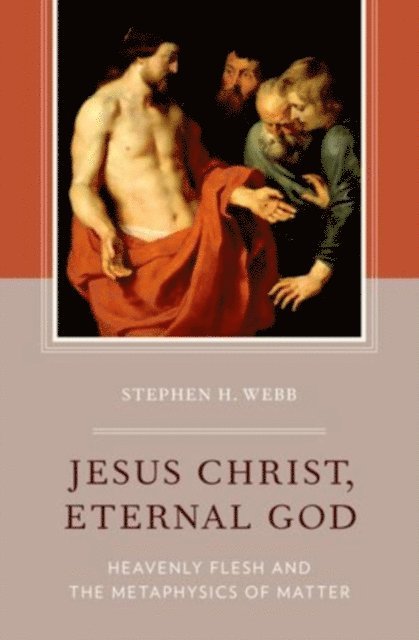
In this groundbreaking study, Stephen H. Webb offers a new theological understanding of the material and spiritual: that, far from being contradictory, they unite in the very stuff of the eternal Jesus Christ. Accepting matter as a perfection (or predicate) of the divine requires a rethinking of the immateriality of God, the doctrine of creation out of nothing, the Chalcedonian formula of the person of Christ, and the analogical nature of religious language. It also requires a careful reconsideration of Augustine''s appropriation of the Neo-Platonic understanding of divine incorporeality as well as Origen''s rejection of anthropomorphism. Webb locates his position in contrast to evolutionary theories of emergent materialism and the popular idea that the world is God''s body. He draws on a little known theological position known as the ''''heavenly flesh'''' Christology, investigates the many misunderstandings of its origins and relation to the Monophysite movement, and supplements it with retrievals of Duns Scotus, Caspar Scwenckfeld and Eastern Orthodox reflections on the transfiguration. Also included in Webb''s study are discussions of classical figures like Barth and Aquinas as well as more recent theological proposals from Bruce McCormack, David Hart, and Colin Gunton. Perhaps most provocatively, the book argues that Mormonism provides the most challenging, urgent, and potentially rewarding source for metaphysical renewal today.Webb''s concept of Christian materialism challenges traditional Christian common sense, and aims to show the way to a more metaphysically sound orthodoxy.
Inbunden, Engelska, 2015
487 kr
Skickas inom 5-8 vardagar
What could Roman Catholicism and Mormonism possibly have to learn from each other? On the surface, they seem to diverge on nearly every point, from their liturgical forms to their understanding of history. With its ancient roots, Catholicism is a continuous tradition, committed to the conservation of the creeds, while Mormonism teaches that the landscape of Christian history is riddled with sin and apostasy and is in need of radical revision and spiritual healing. Moreover, successful proselyting efforts by Mormons in formerly Catholic strongholds have increased opportunities for misunderstanding, polemic, and prejudice. However, in this book a Mormon theologian and a Catholic theologian in conversation address some of the most significant issues that impact Christian identity, including such central doctrines as authority, grace, Jesus, Mary, and revelation, demonstrating that these traditions are much closer to each other than many assume.Both Catholicism and Mormonism have ambitiously universal views of the Christian faith, and readers will be surprised by how close Catholics and Mormons are on a number of topics and how these traditions, probed to their depths, shed light on each other in fascinating and unexpected ways. Catholic-Mormon Dialogue is an invitation to the reader to engage in a discussion that makes understanding the goal, and marks a beginning for a dialogue that will become increasingly important in the years to come.
E-bok
PDF, Engelska, 2015485 kr
Läs direkt efter köp
What could Roman Catholicism and Mormonism possibly have to learn from each other? On the surface, they seem to diverge on nearly every point, from their liturgical forms to their understanding of history. With its ancient roots, Catholicism is a continuous tradition, committed to the conservation of the creeds, while Mormonism teaches that the landscape of Christian history is riddled with errors and apostasy and in need of radical revision and spiritual healing. Additionally, successful proselyting efforts by Mormons in formerly Catholic strongholds have increased opportunities for misunderstanding, polemic, and prejudice between the two faiths. However, as demonstrated in this unique and spirited dialogue between two theologians, one a convert to Catholicism and the other a convert to Mormonism, these two traditions are much closer to each other than many assume, including in their treatment of central doctrines such as authority, grace, Jesus, Mary, and revelation.Both Catholicism and Mormonism have ambitiously universal views of the Christian faith, and readers will be surprised by how close Catholics and Mormons are on a number of topics and how these traditions, probed to their depths, shed light on each other in fascinating and unexpected ways. Catholic and Mormon is an invitation to the reader to engage in a discussion that makes understanding the goal, and marks a beginning for a dialogue that will become increasingly important in the years to come.
E-bok
Engelska, 2015481 kr
Läs direkt efter köp
What could Roman Catholicism and Mormonism possibly have to learn from each other? On the surface, they seem to diverge on nearly every point, from their liturgical forms to their understanding of history. With its ancient roots, Catholicism is a continuous tradition, committed to the conservation of the creeds, while Mormonism teaches that the landscape of Christian history is riddled with errors and apostasy and in need of radical revision and spiritual healing. Additionally, successful proselyting efforts by Mormons in formerly Catholic strongholds have increased opportunities for misunderstanding, polemic, and prejudice between the two faiths. However, as demonstrated in this unique and spirited dialogue between two theologians, one a convert to Catholicism and the other a convert to Mormonism, these two traditions are much closer to each other than many assume, including in their treatment of central doctrines such as authority, grace, Jesus, Mary, and revelation.Both Catholicism and Mormonism have ambitiously universal views of the Christian faith, and readers will be surprised by how close Catholics and Mormons are on a number of topics and how these traditions, probed to their depths, shed light on each other in fascinating and unexpected ways. Catholic and Mormon is an invitation to the reader to engage in a discussion that makes understanding the goal, and marks a beginning for a dialogue that will become increasingly important in the years to come.
E-bok
Engelska, 1998481 kr
Läs direkt efter köp
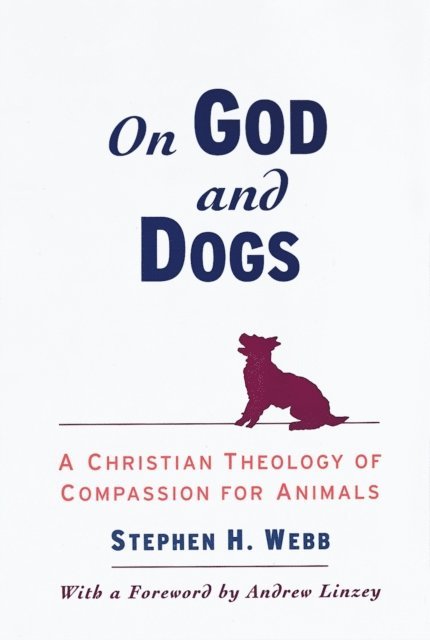
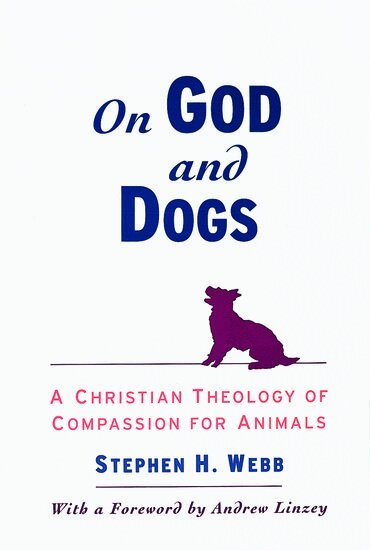
Many of us keep pet animals; we rely on them for companionship and unconditional love. For some people their closest relationships may be with their pets. In the wake of the animal rights movement, some ethicists have started to re-examine this relationship, and to question the rights of humans to "own" other sentient beings in this way. In this engaging and thought-provoking book, Stephen Webb brings a Christian perspective to bear on the subject of our responsibility to animals, looked at through the lens of our relations with pets--especially dogs. Webb argues that the emotional bond with companion animals should play a central role in the way we think about animals in general, and--against the more extreme animal liberationists--defends the intermingling of the human and animal worlds. He tries to imagine what it would be like to treat animals as a gift from God, and indeed argues that not only are animals a gift for us, but they give to us; we need to attend to their giving and return their gifts appropriately. Throughout the book he insists that what Christians call grace is present in our relations with animals just as it is with other humans. Grace is the inclusive and expansive power of God''s love to create and sustain relationships of real mutuality and reciprocity, and Webb unfolds the implications of the recognition that animals too participate in God''s abundant grace. Webb''s thesis affirms and persuasively defends many of the things that pet lovers feel instinctively--that their relationships with their companion animals are meaningful and important, and that their pets have value and worth in themselves in the eyes of God. His book will appeal to a broad audience of thoughtful Christians and animal lovers.
Inbunden, Engelska, 1998
1 664 kr
Skickas inom 5-8 vardagar
Theories of generosity, or gift giving, are becoming increasingly important in recent work in philosophy and religion. Stephen Webb seeks to build on this renewed interest by surveying a distinctively modern and postmodern approach to the issue of generosity, and then developing a theological framework for it. He contends that in many ways society has become suspicious of charity and generosity. This cynicism has led to quick and easy judgments, that, in turn, have led to a new orthodoxy with its own troubling consequences. Webb believes that we need to recover the generosity that our culture obscures behind this monologue on self-interest, and that theology, as a form of critical thought, can play a helpful role. Throughout the book, Webb argues for a theory of giving that is other-oriented without being self-negating. He maintains that the generosity of God's grace, properly understood, can reorient our own idea of the gift and must be correlated to our own practices of exchange and reciprocity.
Häftad, Engelska, 2002
511 kr
Skickas inom 5-8 vardagar
Many of us keep pet animals; we rely on them for companionship and unconditional love. For some people their closest relationships may be with their pets. In the wake of the animal rights movement, some ethicists have started to re-examine this relationship, and to question the rights of humans to "own" other sentient beings in this way. In this engaging and thought-provoking book, Stephen Webb brings a Christian perspective to bear on the subject of our responsibility to animals, looked at through the lens of our relations with pets--especially dogs. Webb argues that the emotional bond with companion animals should play a central role in the way we think about animals in general, and--against the more extreme animal liberationists--defends the intermingling of the human and animal worlds. He tries to imagine what it would be like to treat animals as a gift from God, and indeed argues that not only are animals a gift for us, but they give to us; we need to attend to their giving and return their gifts appropriately. Throughout the book he insists that what Christians call grace is present in our relations with animals just as it is with other humans. Grace is the inclusive and expansive power of God's love to create and sustain relationships of real mutuality and reciprocity, and Webb unfolds the implications of the recognition that animals too participate in God's abundant grace.Webb's thesis affirms and persuasively defends many of the things that pet lovers feel instinctively--that their relationships with their companion animals are meaningful and important, and that their pets have value and worth in themselves in the eyes of God. His book will appeal to a broad audience of thoughtful Christians and animal lovers.
E-bok
PDF, Engelska, 1998481 kr
Läs direkt efter köp
Many of us keep pet animals; we rely on them for companionship and unconditional love. For some people their closest relationships may be with their pets. In the wake of the animal rights movement, some ethicists have started to re-examine this relationship, and to question the rights of humans to "own" other sentient beings in this way. In this engaging and thought-provoking book, Stephen Webb brings a Christian perspective to bear on the subject of our responsibility to animals, looked at through the lens of our relations with pets--especially dogs. Webb argues that the emotional bond with companion animals should play a central role in the way we think about animals in general, and--against the more extreme animal liberationists--defends the intermingling of the human and animal worlds. He tries to imagine what it would be like to treat animals as a gift from God, and indeed argues that not only are animals a gift for us, but they give to us; we need to attend to their giving and return their gifts appropriately. Throughout the book he insists that what Christians call grace is present in our relations with animals just as it is with other humans. Grace is the inclusive and expansive power of God''s love to create and sustain relationships of real mutuality and reciprocity, and Webb unfolds the implications of the recognition that animals too participate in God''s abundant grace. Webb''s thesis affirms and persuasively defends many of the things that pet lovers feel instinctively--that their relationships with their companion animals are meaningful and important, and that their pets have value and worth in themselves in the eyes of God. His book will appeal to a broad audience of thoughtful Christians and animal lovers.
E-bok
PDF, Engelska, 19961 409 kr
Läs direkt efter köp
Theories of generosity, or gift giving, are becoming increasingly important in recent work in philosophy and religion. Stephen Webb seeks to build on this renewed interest by surveying a distinctively modern and postmodern approach to the issue of generosity, and then developing a theological framework for it. He contends that in many ways society has become suspicious of charity and generosity. This cynicism has led to quick and easy judgments, that, in turn, have led to a new orthodoxy with its own troubling consequences. Webb believes that we need to recover the generosity that our culture obscures behind this monologue on self-interest, and that theology, as a form of critical thought, can play a helpful role. Throughout the book, Webb argues for a theory of giving that is other-oriented without being self-negating. He maintains that the generosity of God''s grace, properly understood, can reorient our own idea of the gift and must be correlated to our own practices of exchange and reciprocity.
E-bok
PDF, Engelska, 2013520 kr
Läs direkt efter köp
Mormons are adamant that they are Christian, and eloquent writers within their own faith have tried to make this case, but no theologian outside the LDS church has ever tried to demonstrate just how Christian they are. Stephen H. Webb''s Mormon Christianity: What Other Christians Can Learn from the Latter-day Saints fills this void, as the author writes neither as a critic nor a defender of Mormonism but as a sympathetic observer who is deeply committed to engaging with Mormon ideas.Webb is unique in taking Mormon theology seriously by showing how it provides plausible and in some instances even persuasive alternatives to many traditional Christian doctrines. His book can serve as an introduction to Mormonism, but it goes far beyond that: Webb explains how Mormonism is a branch of the Christian family tree that extends well beyond what most Christians have ever imagined. His account of their creative appropriation of the Christian tradition is meant to inspire more traditional Christians to reconsider the shape of many basic Christian beliefs. Mormon Christianity is not all affirming and celebratory. It ends with a call to Mormons to be more focused on Christian essentials and an invitation to other Christians to be more imaginative in considering Mormon alternatives to traditional doctrines.
516 kr
Läs direkt efter köp
Mormons are adamant that they are Christian, and eloquent writers within their own faith have tried to make this case, but no theologian outside the LDS church has ever tried to demonstrate just how Christian they are. Stephen H. Webb''s Mormon Christianity: What Other Christians Can Learn from the Latter-day Saints fills this void, as the author writes neither as a critic nor a defender of Mormonism but as a sympathetic observer who is deeply committed to engaging with Mormon ideas.Webb is unique in taking Mormon theology seriously by showing how it provides plausible and in some instances even persuasive alternatives to many traditional Christian doctrines. His book can serve as an introduction to Mormonism, but it goes far beyond that: Webb explains how Mormonism is a branch of the Christian family tree that extends well beyond what most Christians have ever imagined. His account of their creative appropriation of the Christian tradition is meant to inspire more traditional Christians to reconsider the shape of many basic Christian beliefs. Mormon Christianity is not all affirming and celebratory. It ends with a call to Mormons to be more focused on Christian essentials and an invitation to other Christians to be more imaginative in considering Mormon alternatives to traditional doctrines.
Inbunden, Engelska, 2012
1 080 kr
Skickas inom 5-8 vardagar
In this groundbreaking study, Stephen H. Webb offers a new theological understanding of the material and spiritual: that, far from being contradictory, they unite in the very stuff of the eternal Jesus Christ. Accepting matter as a perfection (or predicate) of the divine requires a rethinking of the immateriality of God, the doctrine of creation out of nothing, the Chalcedonian formula of the person of Christ, and the analogical nature of religious language. It also requires a careful reconsideration of Augustine's appropriation of the Neo-Platonic understanding of divine incorporeality as well as Origen's rejection of anthropomorphism. Webb locates his position in contrast to evolutionary theories of emergent materialism and the popular idea that the world is God's body. He draws on a little known theological position known as the ''heavenly flesh'' Christology, investigates the many misunderstandings of its origins and relation to the Monophysite movement, and supplements it with retrievals of Duns Scotus, Caspar Scwenckfeld and Eastern Orthodox reflections on the transfiguration. Also included in Webb's study are discussions of classical figures like Barth and Aquinas as well as more recent theological proposals from Bruce McCormack, David Hart, and Colin Gunton. Perhaps most provocatively, the book argues that Mormonism provides the most challenging, urgent, and potentially rewarding source for metaphysical renewal today.Webb's concept of Christian materialism challenges traditional Christian common sense, and aims to show the way to a more metaphysically sound orthodoxy.
E-bok
PDF, Engelska, 20111 048 kr
Läs direkt efter köp
In this groundbreaking study, Stephen H. Webb offers a new theological understanding of the material and spiritual: that, far from being contradictory, they unite in the very stuff of the eternal Jesus Christ. Accepting matter as a perfection (or predicate) of the divine requires a rethinking of the immateriality of God, the doctrine of creation out of nothing, the Chalcedonian formula of the person of Christ, and the analogical nature of religious language. It also requires a careful reconsideration of Augustine''s appropriation of the Neo-Platonic understanding of divine incorporeality as well as Origen''s rejection of anthropomorphism. Webb locates his position in contrast to evolutionary theories of emergent materialism and the popular idea that the world is God''s body. He draws on a little known theological position known as the ''''heavenly flesh'''' Christology, investigates the many misunderstandings of its origins and relation to the Monophysite movement, and supplements it with retrievals of Duns Scotus, Caspar Scwenckfeld and Eastern Orthodox reflections on the transfiguration. Also included in Webb''s study are discussions of classical figures like Barth and Aquinas as well as more recent theological proposals from Bruce McCormack, David Hart, and Colin Gunton. Perhaps most provocatively, the book argues that Mormonism provides the most challenging, urgent, and potentially rewarding source for metaphysical renewal today.Webb''s concept of Christian materialism challenges traditional Christian common sense, and aims to show the way to a more metaphysically sound orthodoxy.
Inbunden, Engelska, 2005
766 kr
Skickas inom 10-15 vardagar
The relationship between America and Christianity has never been so hotly contested as it is today. September 11, 2001 and the war on terror have had an almost schismatic impact on the Church. American Christians have been forced to ask the really hard questions about faith and politics. While some Christians would rather not ask these questions at all, they are unavoidable for a religion that seeks to speak to the whole world, with the expectation of nothing less than global transformation. Like it or not, Christians have to take a stand on the issue of America's alleged imperialism, not only because America is largely a product of the Christian imagination but also because the converse is true - the growth of Christianity worldwide is largely shaped by American values and ideals. American Providence makes the case that American Christianity is not an oxymoron. It also makes the case for a robust doctrine of providence - a doctrine that has been frequently neglected by American theologians due to their reluctance to claim any special status for the United States.Webb goes right to the heart of this reluctance, by defending the idea that American foreign policy should be seen as a vehicle of God's design for history.
Häftad, Engelska, 2006
421 kr
Skickas inom 10-15 vardagar
Häftad, Engelska, 2007
403 kr
Skickas inom 10-15 vardagar
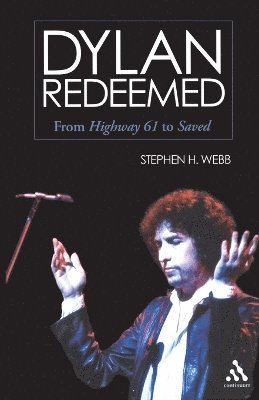
Bob Dylan's earth-shattering performance at Newport in 1965 changed the face of rock and roll and the face of folk music forever. Dylan broke the musical equivalent of the sound barrier. He had to teach his audience how to hear sounds that had never before been heard. Dylan did the same for religion when he converted to Christianity in late 1978. Rock and religion have become intertwined in contemporary culture. Does rock gain its power from the decline of religious authority? Is rock a neutral medium that churches can appropriate with little or no danger to spiritual truths? Do rock and religion have the same ancient roots? Or is rock essentially at odds with Christianity? No contemporary musician presents a better test case than Bob Dylan. He played a key role in the fusion of rock and religion when he converted to Christianity. Dylan was ahead of the contemporary Christian music trend. Although he helped legitimize Christian rock in the late seventies, even his early music had deeply spiritual undertones. From the beginning of his career, Dylan talked about his music in terms of a spiritual calling.He imbued rock with something oracular and otherworldly - a supersonic rendition of the supernatural - which gave popular music enough weight to convey something of the mystery of religious ritual. Webb focuses on Dylan's religious period in this book, but convincingly shows that this religious period cannot be understood apart from a rereading of his entire career. Webb reevaluates Dylan's early career in light of Dylan's Christian period and shows that Dylan's Christian period was a natural development in his musical and spiritual journey.
Inbunden, Engelska, 2010
657 kr
Skickas inom 5-8 vardagar
Häftad, Engelska, 2010
406 kr
Skickas inom 5-8 vardagar
Häftad, Engelska, 2012
298 kr
Skickas inom 5-8 vardagar
E-bok
Engelska, 2010698 kr
Läs direkt efter köp
What would biology look like if it took the problem of natural evil seriously? This book argues that biological descriptions of evolution are inherently moral, just as the biblical story of creation has biological implications. A complete account of evolution will therefore require theological input. The Dome of Eden does not try to harmonize evolution and creation. Harmonizers typically begin with Darwinism and then try to add just enough religion to make evolution more palatable, or they begin with Genesis and pry open the creation account just wide enough to let in a little bit of evolution. By contrast, Stephen Webb provides a theory of how evolution and theology fit together, and he argues that this kind of theory is required by the internal demands of both theology and biology. The Dome of Eden also develops a theological account of evolution that is distinct from the intelligent design movement. Webb shows how intelligent design properly discerns the inescapable dimension of purpose in nature but, like Darwinism itself, fails to make sense of the problem of natural evil. Finally, this book draws on the work of Karl Barth to advance a new reading of the Genesis narrative and the theology of Duns Scotus to provide the necessary metaphysical foundation for evolutionary thought.
E-bok
PDF, Engelska, 2012471 kr
Läs direkt efter köp
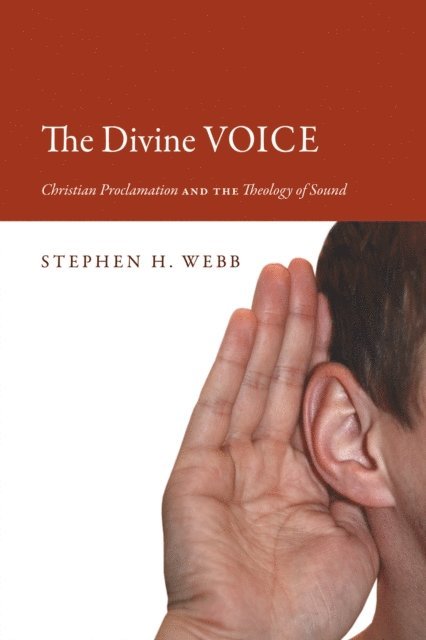
"e;Webb offers a carefully and creatively wrought phenomenology of sound, showing its relation to the proclamation of God's Word. His keen insights on the primordial nature of sound, speech, and hearing will force theologians to examine, once again, what it means to be a 'hearer of the Word.' Webb masterfully displays the intrinsic relationship between dynamic listening and speech--how intent hearing and confident proclamation are intimately conjoined. He has the rare gift of combining acute theological insight with a mellifluous, readable style. The nature of God's own Word here becomes clearer: vibrant and tensile, life-giving in tone and texture. Whether examining Jesus as the voice of the Father, the role of voice in innertrinitarian relations, or the relationship between voice and gender, Webb offers the kind of thought-provoking and highly creative reflections rarely found elsewhere. He has a creative and incisive theological mind."e;--Thomas Guarino, Seton Hall University"e;Being appreciative of Webb's earlier work on hyperbolic language in theology and preaching, I welcomed The Divine Voice. How risky to toss a spoken word into a room of silent readers and expect it to be heard! I was reprimanded, instructed, and moved by the sound of this book. Were I still in the seminary classroom, The Divine Voice would be required reading before one word was said about how to preach."e;--Fred B. Craddock, The Craddock Center"e;The Divine Voice is a book of academic theology worthy of the Psalmist who sang 'Day after day the word goes forth, night after night the story is told. Soundless the speech, voiceless the talk, yet the story is echoed throughout the world' (Ps 19:2-3). Stephen Webb is an 'acoustemological' theologian, for whom speech can be prayerful as silence, and silence as instructive as proclamation. When the sounds heard by faith reach Webb's ever-insightful and creative mind, only synthesia could result, and the result is a gift for us all."e;--Peter Ochs, University of Virginia
Häftad, Engelska, 1991
377 kr
Tillfälligt slut
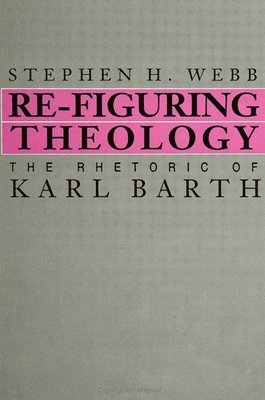
Here is a rhetorical treatment of Karl Barth's early theology. Although scholars have long noted the rhetorical power of Barth's work, calling it volcanic and explosive, this book uses rhetoric to illuminate the peculiar nature of his prose. It displays a Barth whose prose is radically unstable and inseparable from his theological arguments.The author connects Barth's early theology to the Expressionism of the Weimar Republic. He develops an original theory of figures of speech, relying on the philosophies of Paul Ricoeur and Hayden White, to delve more deeply into the particular configurations of Barth's writings. Nietzsche's hyperbole and Kierkegaard's irony are examined as rhetorical precedents of Barth's style. The closing chapter surveys Barth's later, realistic theology and then suggests ways in which his earlier tropes, especially the figures of excess and self-negation, can serve to enable theology to speak today.
Häftad, Engelska, 1993
377 kr
Tillfälligt slut
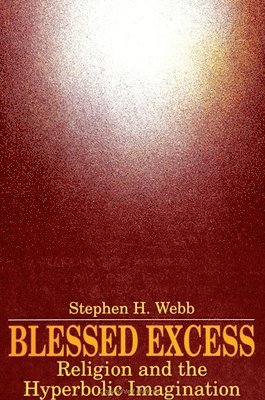
A bold exploration of how hyperbole—language that exceeds limits—reveals religion as an intensified experience of love, sacrifice, and divine meaning.What if the deepest truths of religion are not found in moderation—but in excess?In Blessed Excess, Stephen H. Webb offers a bold and original vision of religion as an intensification of ordinary experience, arguing that hyperbole—language that goes "too far"—is not merely decorative, but essential to theological thinking. Moving beyond traditional studies of metaphor and analogy, Webb reveals how exaggeration, overflow, and surplus shape the way we speak about God, love, sacrifice, and grace.Engaging a rich and diverse range of voices—from the First Epistle of John to Kierkegaard, from Georges Bataille to Flannery O’Connor and G. K. Chesterton—Webb demonstrates how hyperbolic imagination stretches the limits of reason, inviting readers into a more expansive understanding of faith.With intellectual rigor and creative insight, Blessed Excess opens new pathways for exploring both Christian theology and comparative religion. It challenges readers to reconsider the boundaries between logic and paradox, devotion and excess, the finite and the infinite.Provocative, illuminating, and deeply original, Blessed Excess is essential reading for anyone interested in theology, philosophy, and the power of language to transform belief.