Stephen M. Feldman - Böcker
Visar alla böcker från författaren Stephen M. Feldman. Handla med fri frakt och snabb leverans.
14 produkter
14 produkter
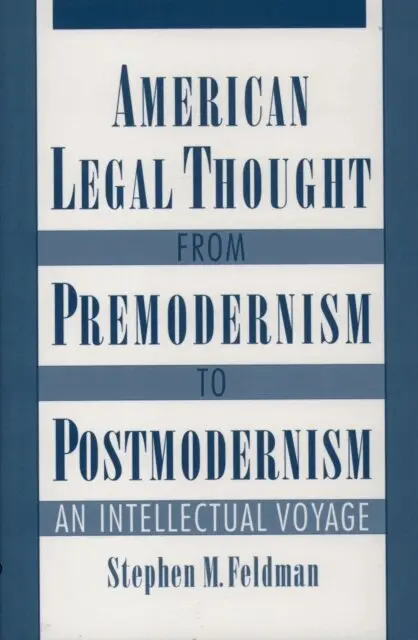
American Legal Thought from Premodernism to Postmodernism
An Intellectual Voyage
Inbunden, Engelska, 2000
1 857 kr
Skickas inom 5-8 vardagar
American legal thought has progressed remarkably quickly from premodernism to modernism and into postmodernism in little over two hundred years, running from the nation's founding through today. This book tells the story of this mercurial journey through jurisprudence by showing the development of legal thought through these three intellectual periods. Feldman's narrative revolves around two broad interrelated themes: jurisprudential foundations and the idea of progress. Comprehensive and accessible, the book draws on significant cases from Supreme Court history to provide a handy one-volume overview for law students, practitioners, and legal scholars.
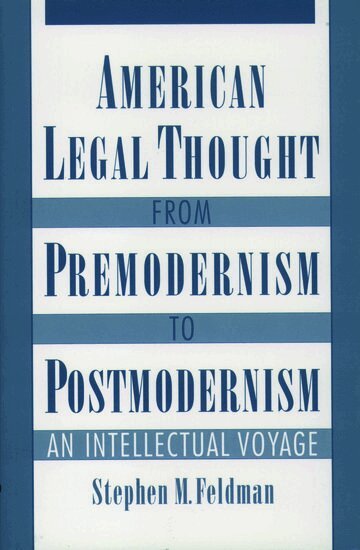
American Legal Thought from Premodernism to Postmodernism
An Intellectual Voyage
Häftad, Engelska, 2000
854 kr
Skickas inom 5-8 vardagar
American legal thought has progressed remarkably quickly from premodernism to modernism and into postmodernism in little over two hundred years, running from the nation's founding through today. This book tells the story of this mercurial journey through jurisprudence by showing the development of legal thought through these three intellectual periods. Feldman's narrative revolves around two broad interrelated themes: jurisprudential foundations and the idea of progress. Comprehensive and accessible, the book draws on significant cases from Supreme Court history to provide a handy one-volume overview for law students, practitioners, and legal scholars.
356 kr
Skickas inom 7-10 vardagar
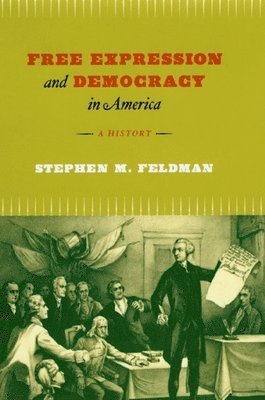
From the 1798 Sedition Act to the war on terror, numerous presidents, members of Congress, Supreme Court justices, and local officials have endorsed the silencing of free expression. If the connection between democracy and the freedom of speech is such a vital one, why would so many governmental leaders seek to quiet their citizens? Free Expression and Democracy in America traces two rival traditions in American culture-suppression of speech and dissent as a form of speech-to provide an unparalleled overview of the law, history, and politics of individual rights in the United States. Charting the course of free expression alongside the nation's political evolution, from the birth of the Constitution to the quagmire of the Vietnam War, Stephen M. Feldman argues that our level of freedom is determined not only by the Supreme Court, but also by cultural, social, and economic forces. Along the way, he pinpoints the struggles of excluded groups-women, African Americans, and laborers-to participate in democratic government as pivotal to the development of free expression.In an age when our freedom of speech is once again at risk, this momentous book will be essential reading for legal historians, political scientists, and history buffs alike.
413 kr
Skickas inom 7-10 vardagar
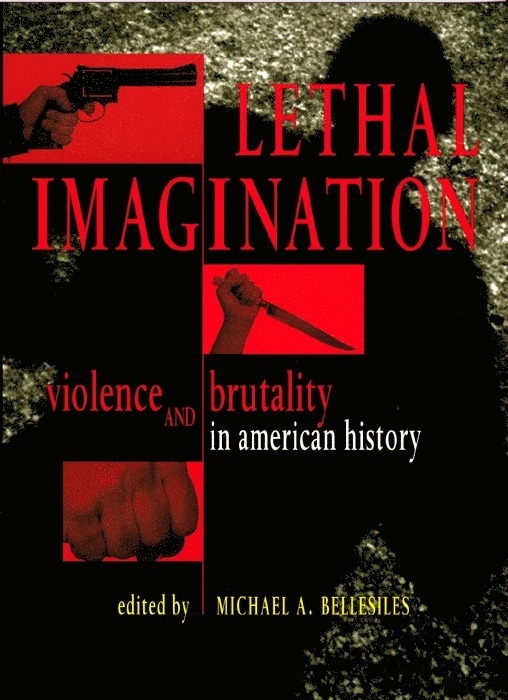
By any standard, the United States is the most violent nation in the industrialized world. To find comparable levels of interpersonal violence, one must look to nations in the midst of civil war.Most observers of modern American violence do not consider the historical roots of current levels of violence, preferring to criticize American liberalism, permissive child-rearing practices, and excessive greed and individualism as the sources of the problem.This collection of original essays examines the role of violence in America's past, exploring its history and development, from slave patrols in the Colonial South to gun ownership in the twentieth century.Contributors examine both individual acts, such as domestic violence, murder, dueling, frontier vigilantism, and rape, and group and state-led acts such as lynchings, slave uprisings, rifle clubs, legal sanctions of heterosexual aggression, and invasive medical experiments on women's bodies.Contributors include Jeff Adler, Bruce Baird, Robert Dykstra, Lee Chambers-Schiller, Philip J. Cook, Laura Edwards, Uche Egemonye, Nicole Etcheson, Evan Haefeli, Sally Hadden, Paula Hinton, Arthur L. Kellermann, Laura McCall, Kate Nickerson, Mary Odem, Craig Pascoe, John C. Pettegrew, Junius P. Rodriguez, and Andrea Tone, Christopher Waldrep.
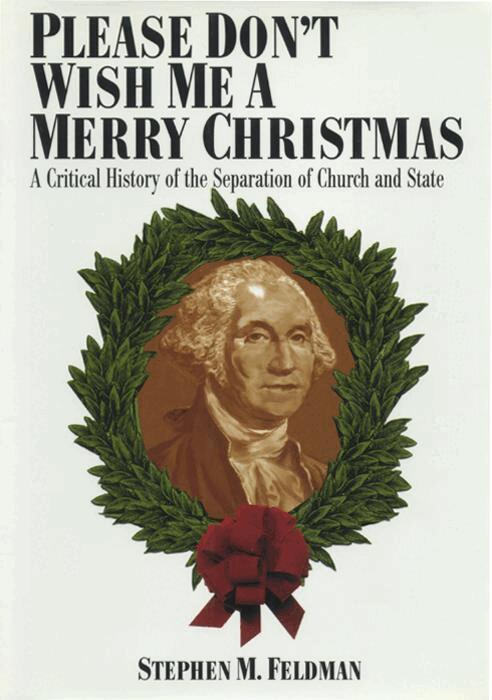
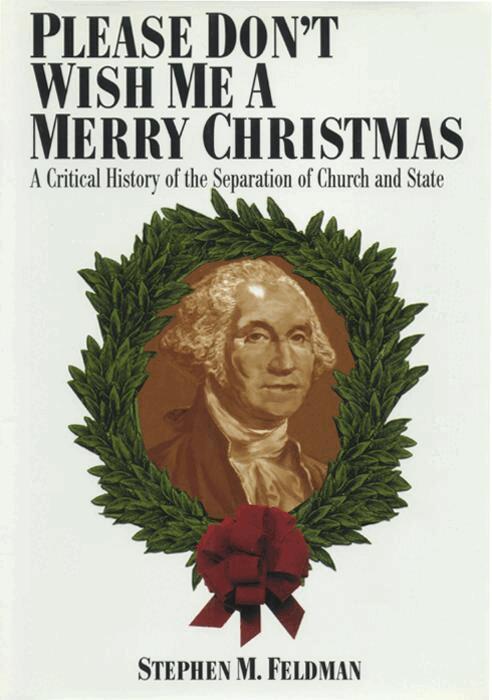
Please Don't Wish Me a Merry Christmas
A Critical History of the Separation of Church and State
Inbunden, Engelska, 1996
1 154 kr
Skickas inom 10-15 vardagar
Whether in the form of Christmas trees in town squares or prayer in school, fierce disputes over the separation of church and state have long bedeviled this country. Both decried and celebrated, this principle is considered by many, for right or wrong, a defining aspect of American national identity.Nearly all discussions regarding the role of religion in American life build on two dominant assumptions: first, the separation of church and state is a constitutional principle that promotes democracy and equally protects the religious freedom of all Americans, especially religious outgroups; and second, this principle emerges as a uniquely American contribution to political theory.In Please Don't Wish Me a Merry Christmas, Stephen M. Feldman challenges both these assumptions. He argues that the separation of church and state primarily manifests and reinforces Christian domination in American society. Furthermore, Feldman reveals that the separation of church and state did not first arise in the United States. Rather, it has slowly evolved as a political and religious development through western history, beginning with the initial appearance of Christianity as it contentiously separated from Judaism.In tracing the historical roots of the separation of church and state within the Western world, Feldman begins with the Roman Empire and names Augustine as the first political theorist to suggest the idea. Feldman next examines how the roles of church and state variously merged and divided throughout history, during the Crusades, the Italian Renaissance, the Protestant Reformation, the British Civil War and Restoration, the early North American colonies, nineteenth-century America, and up to the present day. In challenging the dominant story of the separation of church and state, Feldman interprets the development of Christian social power vis--vis the state and religious minorities, particularly the prototypical religious outgroup, Jews.
467 kr
Skickas inom 7-10 vardagar
Few issues arouse as much passionate debate as the relationship between church and state. Political parties and coalitions have long jockeyed for position in the battle to either keep the two separate, or to unify them in one nation indivisible from God. While the battle has been raging in the political arena, figures from academia, the media, and myriad other vantage points, have commented on the context and constitutionality of laws governing religious expression.In Law and Religion, Stephen M. Feldman brings together the many perspectives that have shaped policy on this important national issue. In giving voice to the political left and right, as well as to cultural, philosophical, sociological and historical perspectives, the book serves as an even-handed treatment of an issue all too often clouded by biases. Contributors ranging from Stanley Fish to Richard John Neuhaus explore issues extending from religious morality and religious freedom, to fundamentalism, the separation of church and state, religion and public schooling, and liberal political theory. Comprehensive in scope, Law and Religion will stand as an important reference for anyone seeking to further understand this complex and highly emotional topic.
Please Don't Wish Me a Merry Christmas
A Critical History of the Separation of Church and State
Häftad, Engelska, 1998
401 kr
Skickas inom 7-10 vardagar
Whether in the form of Christmas trees in town squares or prayer in school, fierce disputes over the separation of church and state have long bedeviled this country. Both decried and celebrated, this principle is considered by many, for right or wrong, a defining aspect of American national identity.Nearly all discussions regarding the role of religion in American life build on two dominant assumptions: first, the separation of church and state is a constitutional principle that promotes democracy and equally protects the religious freedom of all Americans, especially religious outgroups; and second, this principle emerges as a uniquely American contribution to political theory.In Please Don't Wish Me a Merry Christmas, Stephen M. Feldman challenges both these assumptions. He argues that the separation of church and state primarily manifests and reinforces Christian domination in American society. Furthermore, Feldman reveals that the separation of church and state did not first arise in the United States. Rather, it has slowly evolved as a political and religious development through western history, beginning with the initial appearance of Christianity as it contentiously separated from Judaism.In tracing the historical roots of the separation of church and state within the Western world, Feldman begins with the Roman Empire and names Augustine as the first political theorist to suggest the idea. Feldman next examines how the roles of church and state variously merged and divided throughout history, during the Crusades, the Italian Renaissance, the Protestant Reformation, the British Civil War and Restoration, the early North American colonies, nineteenth-century America, and up to the present day. In challenging the dominant story of the separation of church and state, Feldman interprets the development of Christian social power vis--vis the state and religious minorities, particularly the prototypical religious outgroup, Jews.
647 kr
Skickas inom 10-15 vardagar
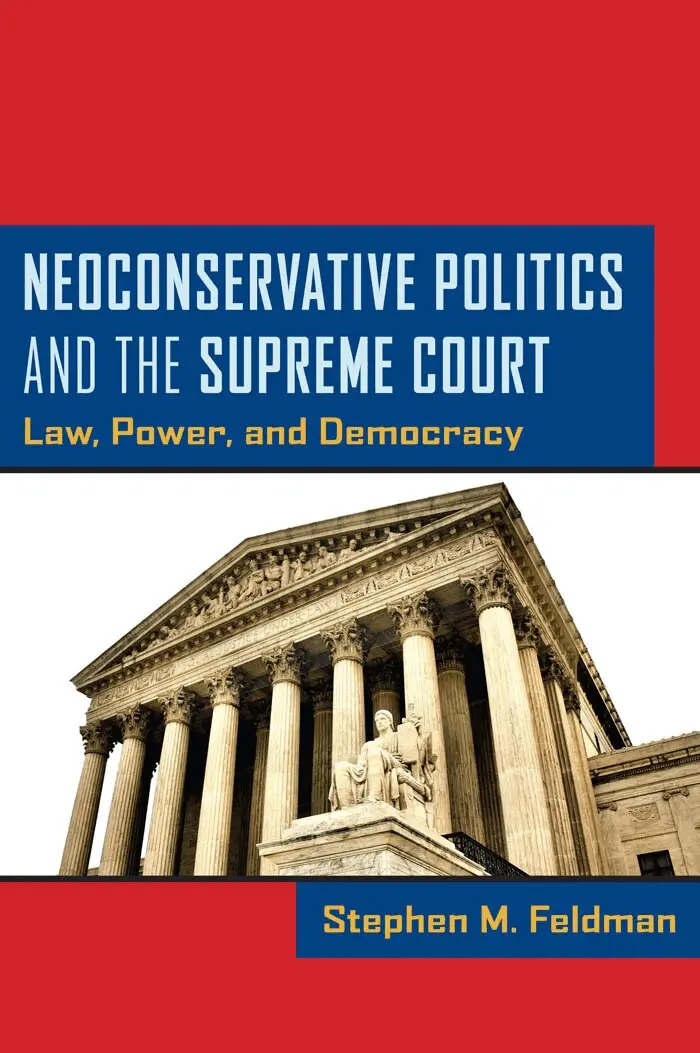
In this concise, timely book, constitutional law expert Stephen M. Feldman draws on neoconservative writings to explore the rise of the neocons and their influence on the Supreme Court. Neocons burst onto the political scene in the early 1980s via their assault on pluralist democracy's ethical relativism, where no pre-existing or higher principles limit the agendas of interest groups. Instead, they advocated for a resurrection of republican democracy, which declares that virtuous citizens and officials pursue the common good. Yet despite their original goals, neocons quickly became an interest group themselves, competing successfully within the pluralist democratic arena. When the political winds shifted in 2008, however, neocons found themselves shorn of power in Congress and the executive branch. But portentously, theystill controlled the Supreme Court. Neoconservative Politics and the Supreme Court explains how and why the neoconservatives criticized but operated within pluralist democracy, and, most important, what the entrenchment of neocons on the Supreme Court means for present and future politics and law.
2 162 kr
Skickas inom 5-8 vardagar
The purpose of this volume is to provide the reader with a broad range of texts which will aid reflection upon issues relating to law and religion. These texts present a diversity of ideological and scholarly responses to the questions related to the relationship of law and religion in modern societies.
1 071 kr
Skickas inom 7-10 vardagar
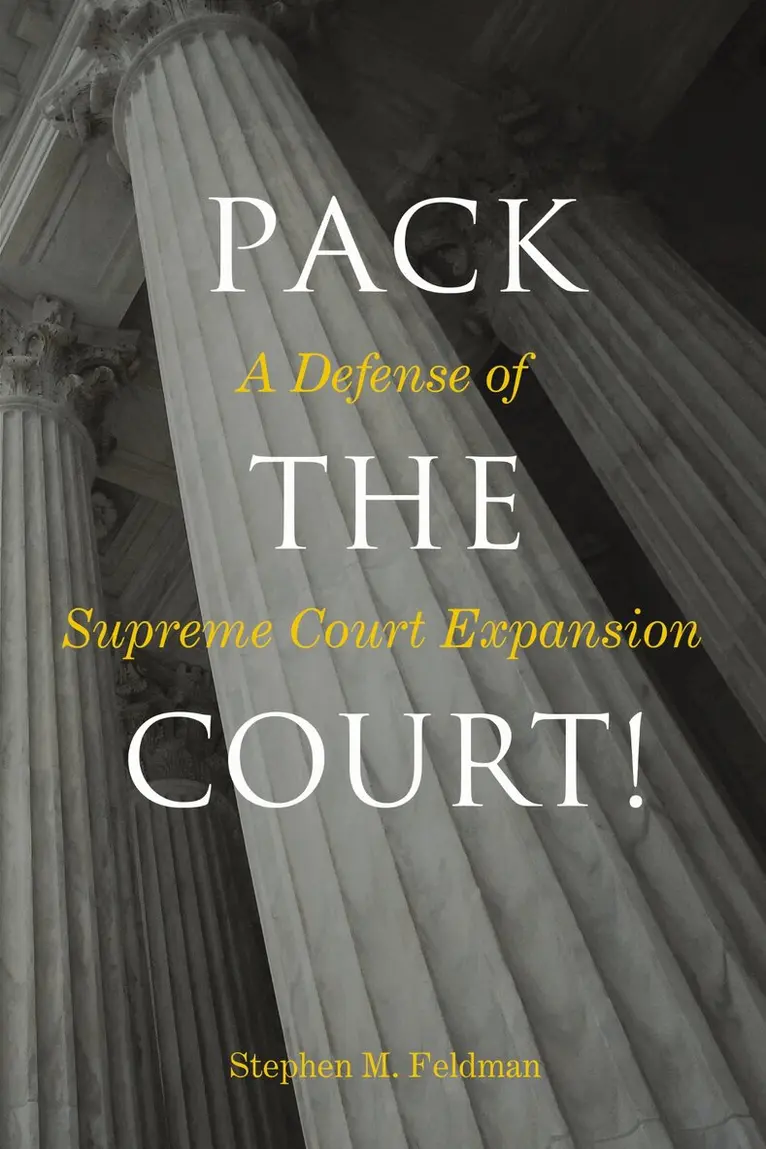
The United States Supreme Court has numbered nine justices for the past 150 years. But that number is not fixed. With the Democrats controlling the House and Senate during the Biden presidency, they could add justices to the Supreme Court. But would court packing destroy the Court as an apolitical judicial institution? This is the crucial question Stephen Feldman addresses in his provocative book, Pack the Court! He uses a historical, analytical, and political argument to justify court-packing in general and Democratic court-packing more specifically.Republicans and Democrats alike profess to worry that court-packing will destroy the legitimacy of the Supreme Court as a judicial institution by injecting politics into a purely legal adjudicative process. But as Feldman’s insightful book shows, law and politics are forever connected in judicial interpretation and decision making. Pack the Court! insists that court packing is not the threat to the Supreme Court’s institutional legitimacy that many fear. Given this, Feldman argues that Democrats should pack the Court while they have the opportunity. Doing so might even strengthen the American people’s faith in the Court.
333 kr
Skickas inom 7-10 vardagar
The United States Supreme Court has numbered nine justices for the past 150 years. But that number is not fixed. With the Democrats controlling the House and Senate during the Biden presidency, they could add justices to the Supreme Court. But would court packing destroy the Court as an apolitical judicial institution? This is the crucial question Stephen Feldman addresses in his provocative book, Pack the Court! He uses a historical, analytical, and political argument to justify court-packing in general and Democratic court-packing more specifically.Republicans and Democrats alike profess to worry that court-packing will destroy the legitimacy of the Supreme Court as a judicial institution by injecting politics into a purely legal adjudicative process. But as Feldman’s insightful book shows, law and politics are forever connected in judicial interpretation and decision making. Pack the Court! insists that court packing is not the threat to the Supreme Court’s institutional legitimacy that many fear. Given this, Feldman argues that Democrats should pack the Court while they have the opportunity. Doing so might even strengthen the American people’s faith in the Court.
976 kr
Skickas inom 10-15 vardagar
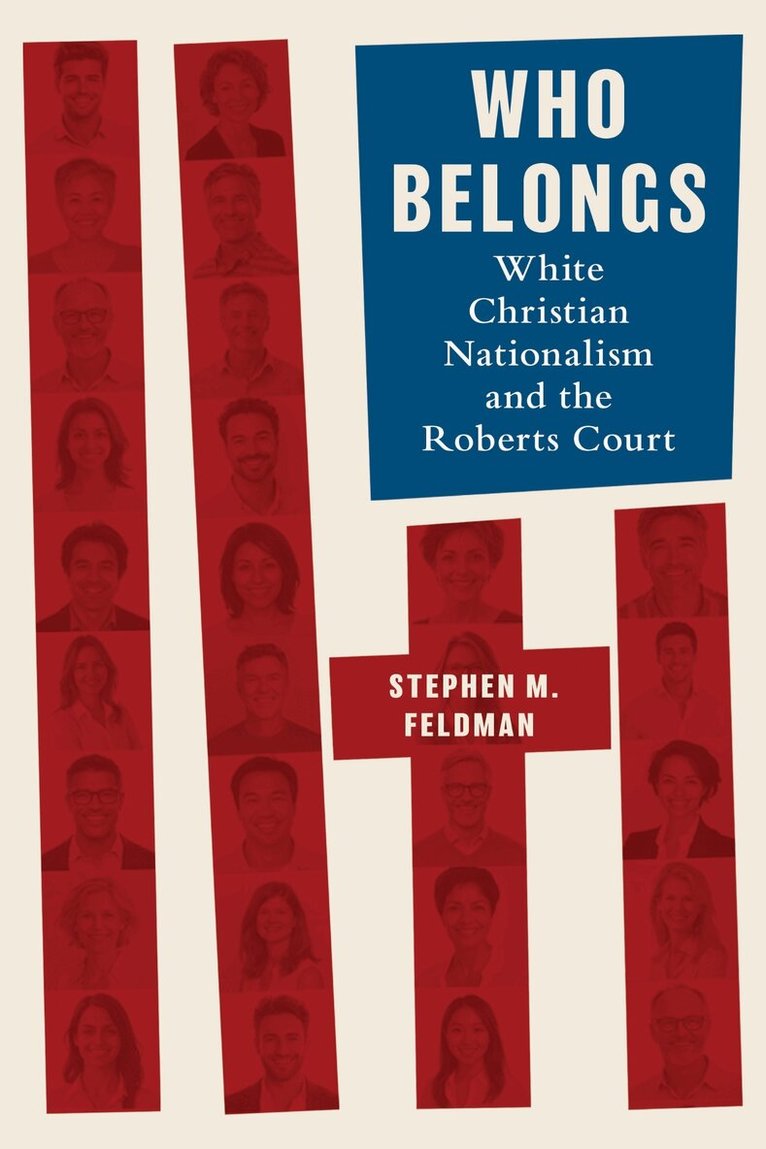
Examines how Roberts Court decisions have reshaped "We the People" to favor a narrow vision of belonging rooted in white Christian nationalism and minority ruleWho belongs to "We the People"? Are "the People" exclusive, inegalitarian, and hierarchical, or inclusive and egalitarian? For much of American history, an exclusionary and inegalitarian republican democracy predominated, but in the 1930s, political forces lifted an egalitarian and participatory pluralist democracy to ascendance. Although a conservative Supreme Court initially resisted this change, the Court acquiesced in 1937 and then subsequently deepened the nation's commitment to pluralist democracy by invigorating constitutional protections for individual rights – religious freedom, free expression, and equal protection. Protection of individual rights facilitated the acceptance of diverse values and the expression of those values in the pluralist democratic arena. Disgruntled with these constitutional developments, conservatives eventually denounced the 1937 transition and urged the Court to restore the original Constitution.In Who Belongs, Stephen M. Feldman assesses how the conservative justices of the Roberts Court seem intent on undoing the 1937 constitutional transformation. Yet, Feldman reveals, they are not returning the nation to pre-1937 republican democratic constitutional principles. Instead, the justices reinterpret the post-1937 rights of religious freedom, free speech, and equal protection to privilege a narrow segment of the American people – white, Christian, heterosexual men. The Roberts Court is limiting who fully belongs to "We the People," narrowing the rights of non-Christians, people of color, women, and LGBTQ individuals. Ultimately, the conservative justices are interpreting individuals' rights to serve minority rule – in harmony with the political agenda of white Christian nationalism.Providing a powerful assessment of white Christian nationalism in American constitutionalism, Who Belongs reminds us that a healthy democracy depends on not only what rights exist but also who enjoys them.
369 kr
Skickas inom 7-10 vardagar
Examines how Roberts Court decisions have reshaped "We the People" to favor a narrow vision of belonging rooted in white Christian nationalism and minority ruleWho belongs to "We the People"? Are "the People" exclusive, inegalitarian, and hierarchical, or inclusive and egalitarian? For much of American history, an exclusionary and inegalitarian republican democracy predominated, but in the 1930s, political forces lifted an egalitarian and participatory pluralist democracy to ascendance. Although a conservative Supreme Court initially resisted this change, the Court acquiesced in 1937 and then subsequently deepened the nation's commitment to pluralist democracy by invigorating constitutional protections for individual rights – religious freedom, free expression, and equal protection. Protection of individual rights facilitated the acceptance of diverse values and the expression of those values in the pluralist democratic arena. Disgruntled with these constitutional developments, conservatives eventually denounced the 1937 transition and urged the Court to restore the original Constitution.In Who Belongs, Stephen M. Feldman assesses how the conservative justices of the Roberts Court seem intent on undoing the 1937 constitutional transformation. Yet, Feldman reveals, they are not returning the nation to pre-1937 republican democratic constitutional principles. Instead, the justices reinterpret the post-1937 rights of religious freedom, free speech, and equal protection to privilege a narrow segment of the American people – white, Christian, heterosexual men. The Roberts Court is limiting who fully belongs to "We the People," narrowing the rights of non-Christians, people of color, women, and LGBTQ individuals. Ultimately, the conservative justices are interpreting individuals' rights to serve minority rule – in harmony with the political agenda of white Christian nationalism.Providing a powerful assessment of white Christian nationalism in American constitutionalism, Who Belongs reminds us that a healthy democracy depends on not only what rights exist but also who enjoys them.
324 kr
Skickas inom 5-8 vardagar
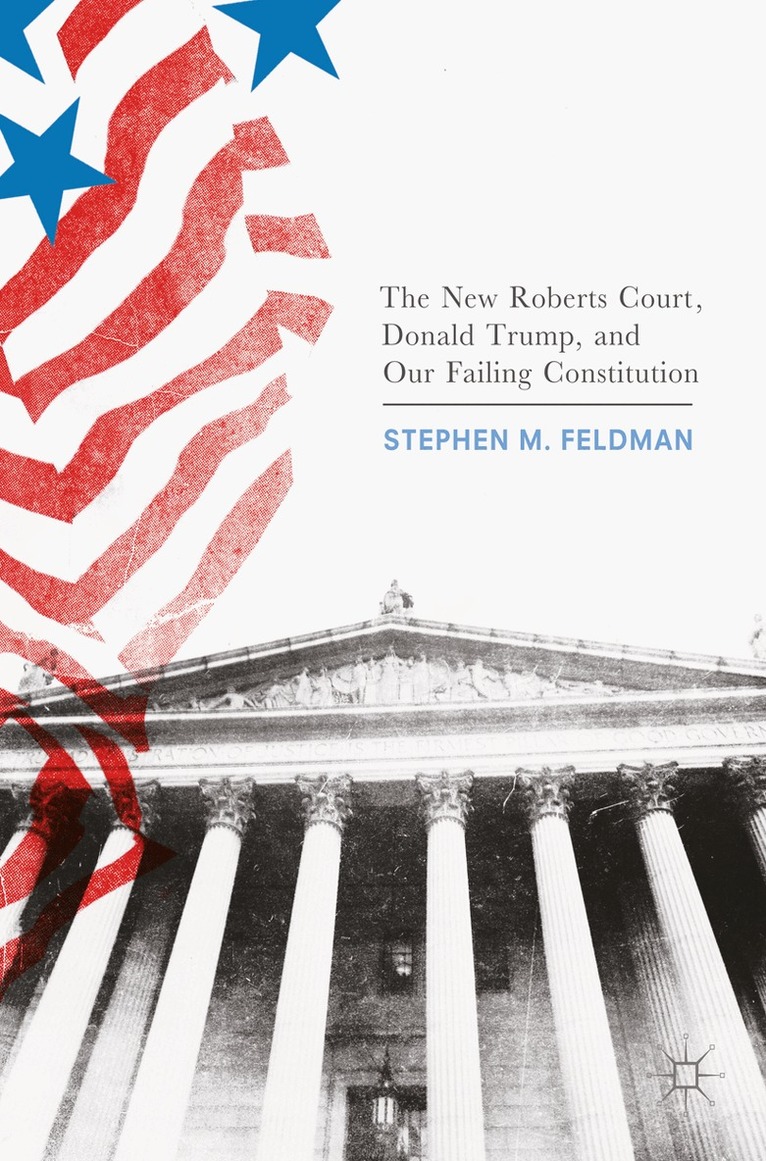
With Neil Gorsuch replacing Scalia, the new Court must choose: Will it follow the early Roberts Court in approving and bolstering Democracy, Inc., or will it restore the crucial balance between the public and private spheres in our constitutional system?