Stephen R. Byrn - Böcker
Visar alla böcker från författaren Stephen R. Byrn. Handla med fri frakt och snabb leverans.
4 produkter
4 produkter
1 789 kr
Tillfälligt slut
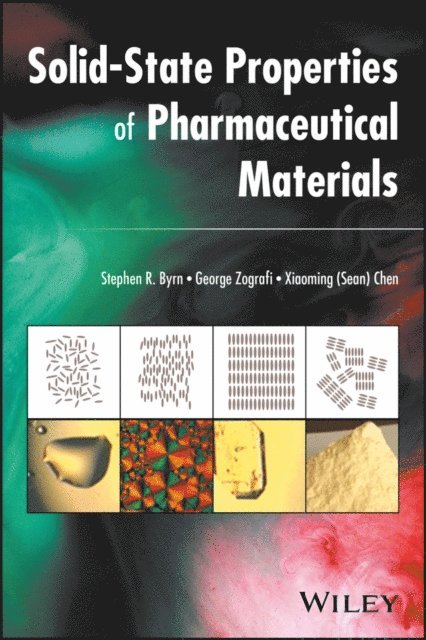
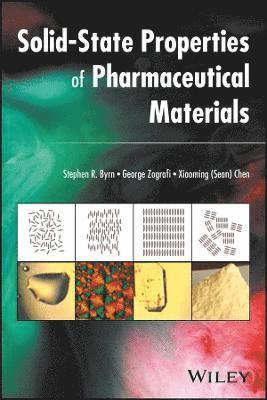
Presents a detailed discussion of important solid-state properties, methods, and applications of solid-state analysis Illustrates the various phases or forms that solids can assume and discussesvarious issues related to the relative stability of solid forms and tendencies to undergo transformationCovers key methods of solid state analysis including X-ray powder diffraction, thermal analysis, microscopy, spectroscopy, and solid state NMRReviews critical physical attributes of pharmaceutical materials, mainly related to drug substances, including particle size/surface area, hygroscopicity, mechanical properties, solubility, and physical and chemical stabilityShowcases the application of solid state material science in rational selection of drug solid forms, analysis of various solid forms within drug substance and the drug product, and pharmaceutical product developmentIntroduces appropriate manufacturing and control procedures using Quality by Design, and other strategies that lead to safe and effective products with a minimum of resources and time
Solid-State Materials in Pharmaceutical Chemistry
Properties, Characterization, and Applications
Inbunden, Engelska, 2025
2 121 kr
Skickas
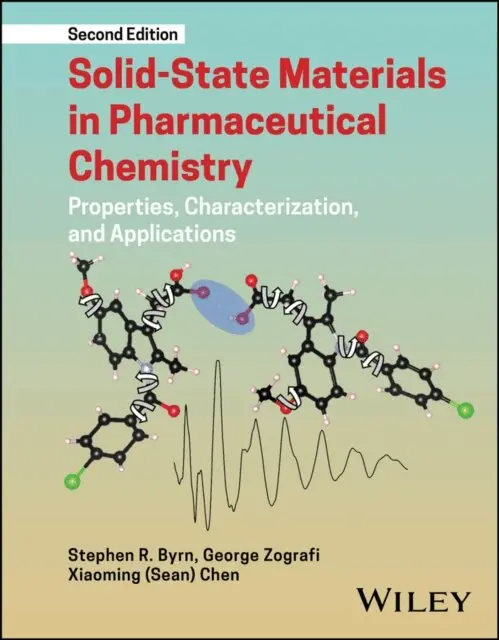
Updated and expanded information on the properties of pharmaceutical solids and their impact on drug product performance, quality, and stability Solid-State Materials in Pharmaceutical Chemistry provides readers with a comprehensive and up-to-date resource for understanding and controlling the solid-state properties of pharmaceutical materials, enabling the development of safe and effective medicines including small molecule compounds, peptides, proteins, and nucleotides. This new edition covers the significant transformations in the landscape of pharmaceutical research, development, and manufacturing since the previous edition was published, presenting both novel challenges and unprecedented opportunities. New chapters in this edition cover physical and chemical properties of RNA therapeutics, a frontier to many life-saving medicines and vaccines including Covid vaccines, and final stage drug substance manufacturing and control, addressing challenges in API process development including impurity purging, chiral separation, final form preparation, particle size reduction, and nitrosamine control. Readers will also find other updated topics including bulk and surface properties of solids, lipid nanoparticles, applications of pharmaceutical solvates in impurity purging and final form preparation, pharmaceutical cocrystal engineering to enable chiral separation, the emerging technique of microcrystal electron diffraction in solid form characterization, poor wettability of APIs, oral delivery of peptides such as semaglutide, injectable drug-device combination products, and N-nitrosamine control in drug product. This updated and revised Second Edition still features: Physical and chemical properties of solid-state pharmaceuticals such as amorphous forms, mesophases, polymorphs, hydrates/solvates, salts, co-crystals, nano-particles, and solid dispersionsCharacterization techniques for solid form identification and physical attribute analysis such as X-Ray powder diffraction, thermal analysis, microscopy, spectroscopy, solid state NMR, particle analysis, water sorption, mechanical property testing, solubility, and dissolutionApplications of pharmaceutical chemistry and physical characterization techniques in developing and testing drug substances and drug products for small molecules and biopharmaceuticalsThis book is an essential resource on the subject for formulation scientists, process chemists, medicinal chemists, and analytical chemists. The book will also appeal to quality control, quality assurance, and regulatory affair specialists and advanced undergraduate and graduate students in pharmaceutical chemistry, drug delivery, material science, crystal engineering, pharmaceutics, and biopharmaceutics.
2 121 kr
Skickas inom 10-15 vardagar
This authoritative volume provides a contemporary view on the latest research in molecules with optimal drug-like properties. It is a valuable source to access current best practices as well as new research techniques and strategies. Written by leading scientists in their fields, the text consists of fourteen chapters with an underlying theme of early collaborative opportunities between pharmaceutical and discovery sciences. The book explores the practical realities of performing physical pharmaceutical and biopharmaceutical research in the context of drug discovery with short timelines and low compound availability. Chapters cover strategies and tactics to enable discovery as well as predictive approaches to establish, understand and communicate risks in early development. It also examines the detection, characterization, and assessment of risks on the solid state properties of advanced discovery and early development candidates, highlighting the link between solid state propertiesand critical development parameters such as solubility and stability. Final chapters center on techniques to improve molecular solubilization and prevent precipitation, with particularly emphasis on linking physiochemical properties of molecules to formulation selection in preclinical and clinical settings.
2 185 kr
Skickas inom 10-15 vardagar
This authoritative volume provides a contemporary view on the latest research in molecules with optimal drug-like properties. It is a valuable source to access current best practices as well as new research techniques and strategies. Written by leading scientists in their fields, the text consists of fourteen chapters with an underlying theme of early collaborative opportunities between pharmaceutical and discovery sciences. The book explores the practical realities of performing physical pharmaceutical and biopharmaceutical research in the context of drug discovery with short timelines and low compound availability. Chapters cover strategies and tactics to enable discovery as well as predictive approaches to establish, understand and communicate risks in early development. It also examines the detection, characterization, and assessment of risks on the solid state properties of advanced discovery and early development candidates, highlighting the link between solid state propertiesand critical development parameters such as solubility and stability. Final chapters center on techniques to improve molecular solubilization and prevent precipitation, with particularly emphasis on linking physiochemical properties of molecules to formulation selection in preclinical and clinical settings.