Stephen R. Shirk - Böcker
Visar alla böcker från författaren Stephen R. Shirk. Handla med fri frakt och snabb leverans.
3 produkter
3 produkter
1 640 kr
Skickas inom 10-15 vardagar
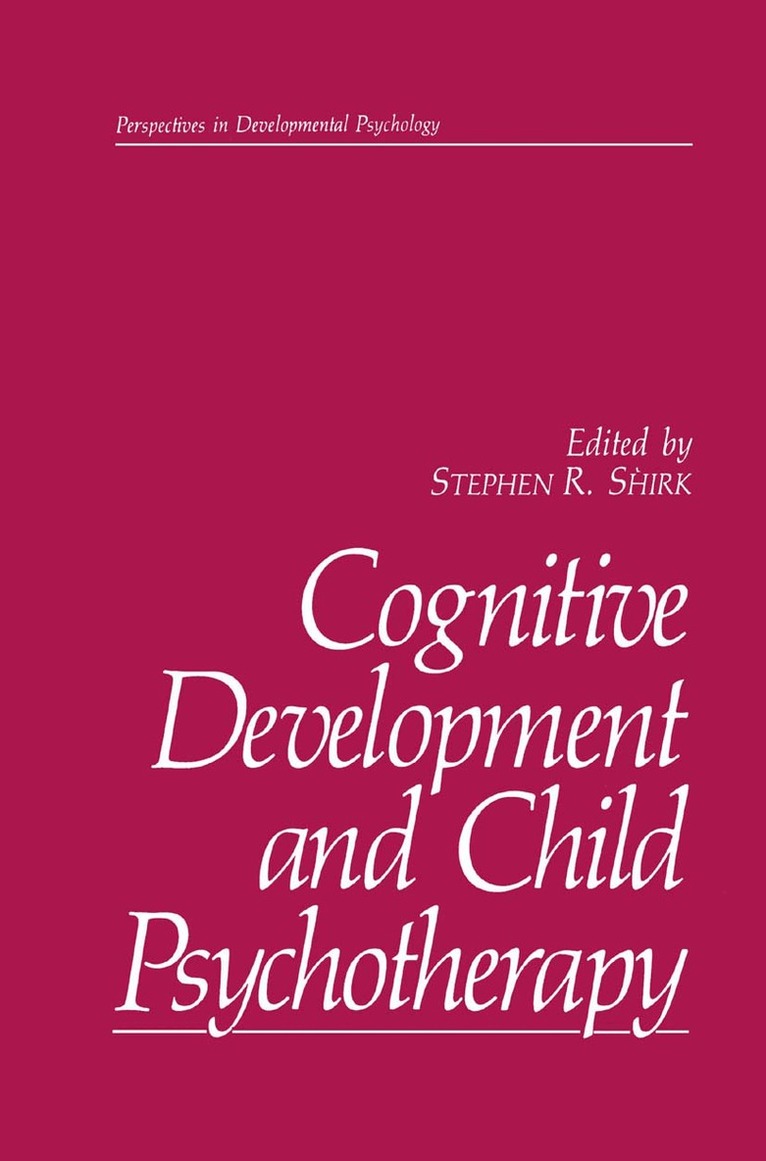
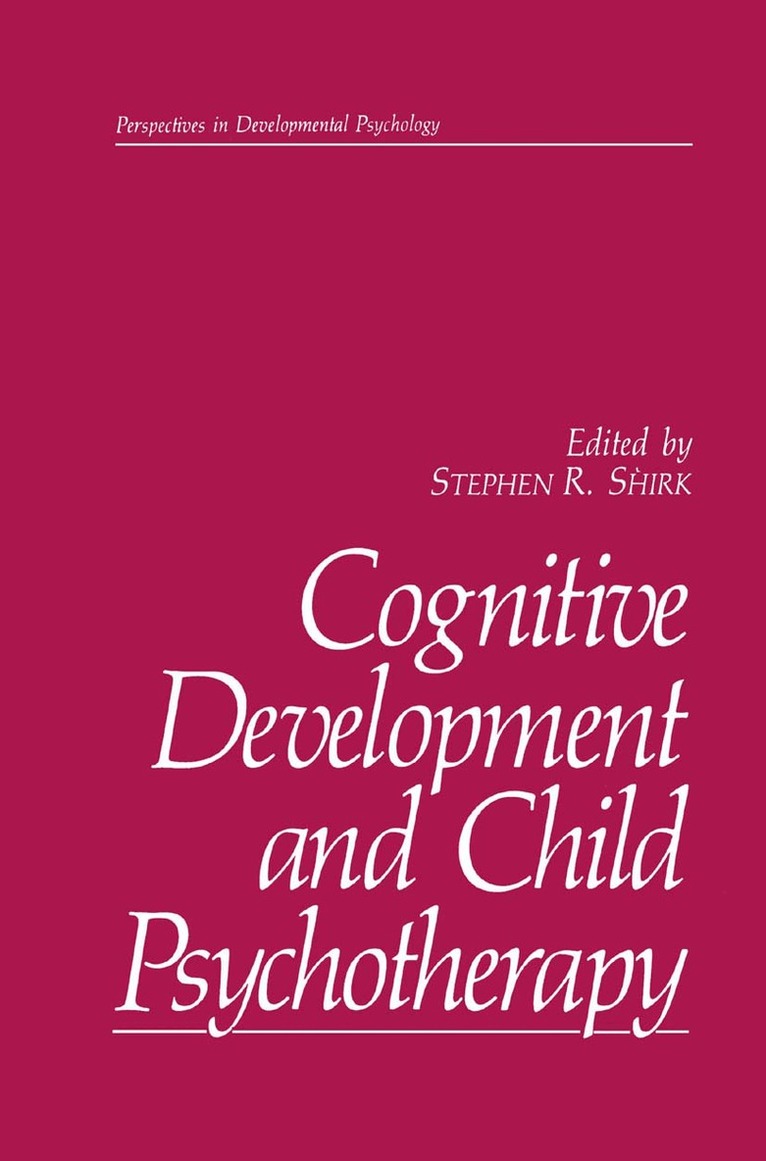
Like hiking off the well-traveled trail, attempting to bridge foreign do mains of research and practice entails certain risks. This volume repre sents an effort to explore the relatively uncharted territory of cognitive and social-cognitive processes embedded in child psychotherapy. The territory is largely uncharted, not because of a lack of interest in children and cognition, but because child psychotherapy has been chronically neglected by clinical researchers. For example, recent meta-analyses of the effectiveness of child psychotherapy draw on less than 30 non behavioral studies of child psychotherapy conducted over a 30-year period. The average of one study per year pales in comparison to the volume of research on adult psychotherapy. Moreover, research exam ining cognitive, affective, and language processes in child psycho therapy is virtually nonexistent. Consequently, the contributions to this volume should not be seen as reviews of an extant, clinical-research literature. Instead, they represent attempts to expand the more familiar and well-researched province of developmental psychology into the rel atively uncharted domain of child psychotherapy process. In addition to bridging the literature on child psychotherapy with research perspectives on children's cognitive and social-cognitive devel opment, this volume attempts to cross a second gap. Recent surveys of the utilization of psychotherapy research by practicing psychotherapists indicate the distance between these two domains is substantial. Only a small minority of practitioners find psychotherapy research to be a useful source of information for their practice.
1 640 kr
Skickas inom 10-15 vardagar
Like hiking off the well-traveled trail, attempting to bridge foreign do mains of research and practice entails certain risks. This volume repre sents an effort to explore the relatively uncharted territory of cognitive and social-cognitive processes embedded in child psychotherapy. The territory is largely uncharted, not because of a lack of interest in children and cognition, but because child psychotherapy has been chronically neglected by clinical researchers. For example, recent meta-analyses of the effectiveness of child psychotherapy draw on less than 30 non behavioral studies of child psychotherapy conducted over a 30-year period. The average of one study per year pales in comparison to the volume of research on adult psychotherapy. Moreover, research exam ining cognitive, affective, and language processes in child psycho therapy is virtually nonexistent. Consequently, the contributions to this volume should not be seen as reviews of an extant, clinical-research literature. Instead, they represent attempts to expand the more familiar and well-researched province of developmental psychology into the rel atively uncharted domain of child psychotherapy process. In addition to bridging the literature on child psychotherapy with research perspectives on children's cognitive and social-cognitive devel opment, this volume attempts to cross a second gap. Recent surveys of the utilization of psychotherapy research by practicing psychotherapists indicate the distance between these two domains is substantial. Only a small minority of practitioners find psychotherapy research to be a useful source of information for their practice.
927 kr
Skickas inom 3-6 vardagar
This groundbreaking work advances a developmental perspective on both the basic processes of therapeutic change and the classification of childhood problems, offering a novel approach to the search for effective treatments for children. Generating a new flow of ideas between clinical practice and empirical research, the volume revitalizes basic modalities such as psychodynamic, play, and cognitive therapies by identifying the core ingredients that enhance and retard the processes of change. The authors also demonstrate the limitations of utilizing diagnostic labels as the basis for assessing treatment efficacy, arguing instead for an integrative approach that links methods of intervention with a case-relevant analysis of the child's emotional, interpersonal, and cognitive development.