Stephen S. Large - Böcker
Visar alla böcker från författaren Stephen S. Large. Handla med fri frakt och snabb leverans.
2 produkter
2 produkter
16 508 kr
Skickas inom 10-15 vardagar
A representative cross-section of works by international scholars in Japanese history have been chosen here for their interpretative thrust and narrative clarity. The articles in this set present a rich variety of perspectives on this vital and controversial period in twentieth-century Japanese history. With a major new introduction by Stephen S. Large, the set provides a comprehensive guide for teachers and students of Showa Japan.The Showa Period covers the reign of Emperor Hirohito (1926-1989), encompassing war and the destruction of the Japanese empire, the Occupation, recovery from the ruins of war and Japan's emergence as an economic superpower. Whereas historians have traditionally approached this question by splitting 'prewar' and 'postwar' Showa, with 1945 marking the beginning of a new era, the emphasis in this anthology is on long-term continuities which were decisive in shaping modern Japan. The readings address such crucial issues as:* the nature of the imperial state* why Japan embarked upon war early in the period* the impact of the Occupation* the dilemmas of Japanese democracy* the social costs and international repercussions of exceptionalism* Japan's evolving world role
441 kr
Skickas inom 7-10 vardagar
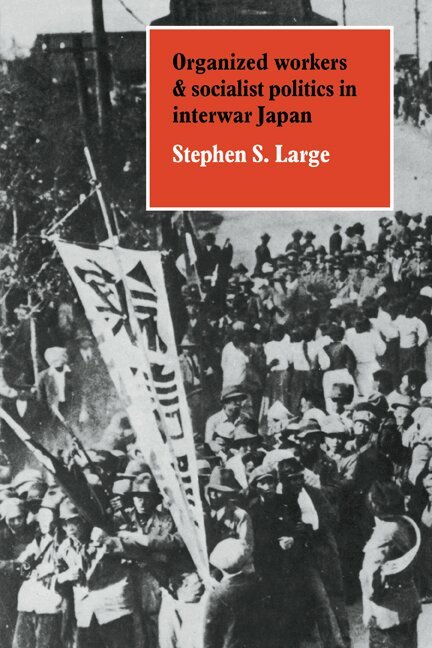
First published in 1981, this book, a political history of organised labour in Japan during the 1920s and 1930s, broke ground in research on the Japanese socialist movement by examining the movement from the perspective of the unions, which then provided the socialist parties with much of their popular support. Focusing on the Japan General Federation of Labour, an important pacesetter for labour politics, the author analyses why a significant cross-section of organised workers began the 1920s with promising vitality and high hopes of contributing to a progressive, socialist reconstruction of Japan, only to abandon this political commitment in the 1930s, with adverse consequences both for the unions and for their political party allies. Throughout, the author assesses Japanese and Western interpretations of Japanese society and politics in seeking a balanced understanding of the dynamics and significance of popular social protest in the critical interwar decades.