Stephen Toulmin - Böcker
Visar alla böcker från författaren Stephen Toulmin. Handla med fri frakt och snabb leverans.
16 produkter
16 produkter
274 kr
Skickas inom 5-8 vardagar
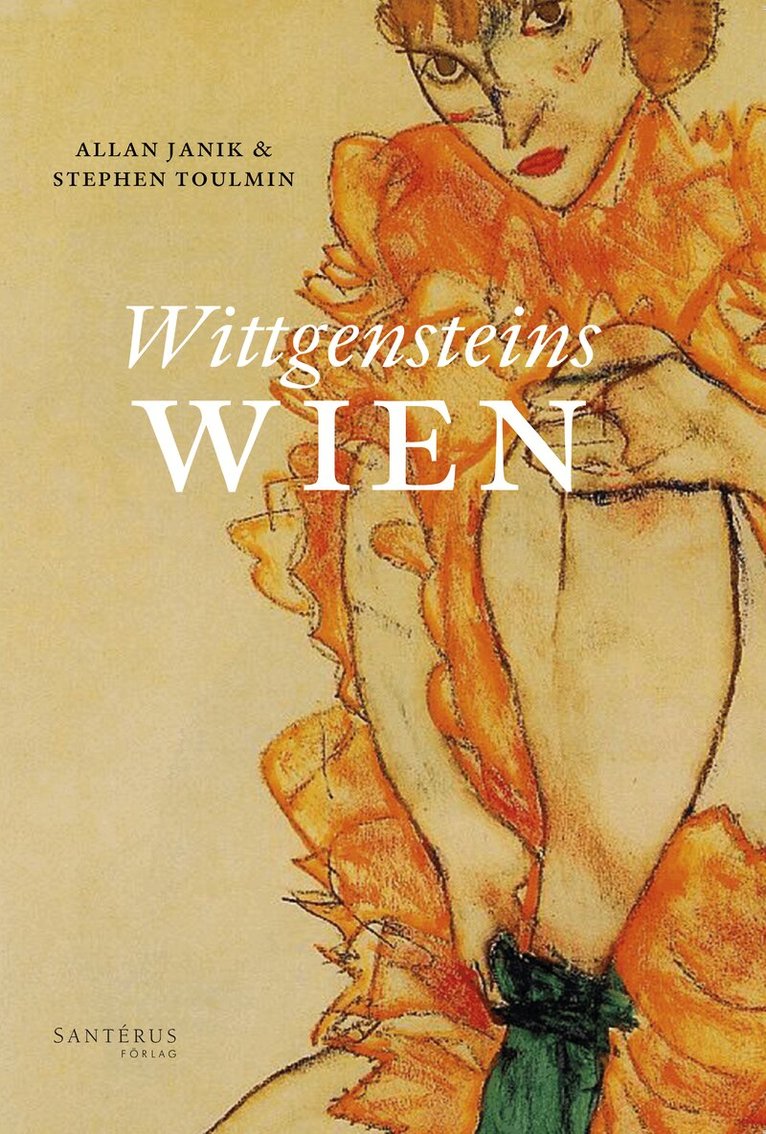
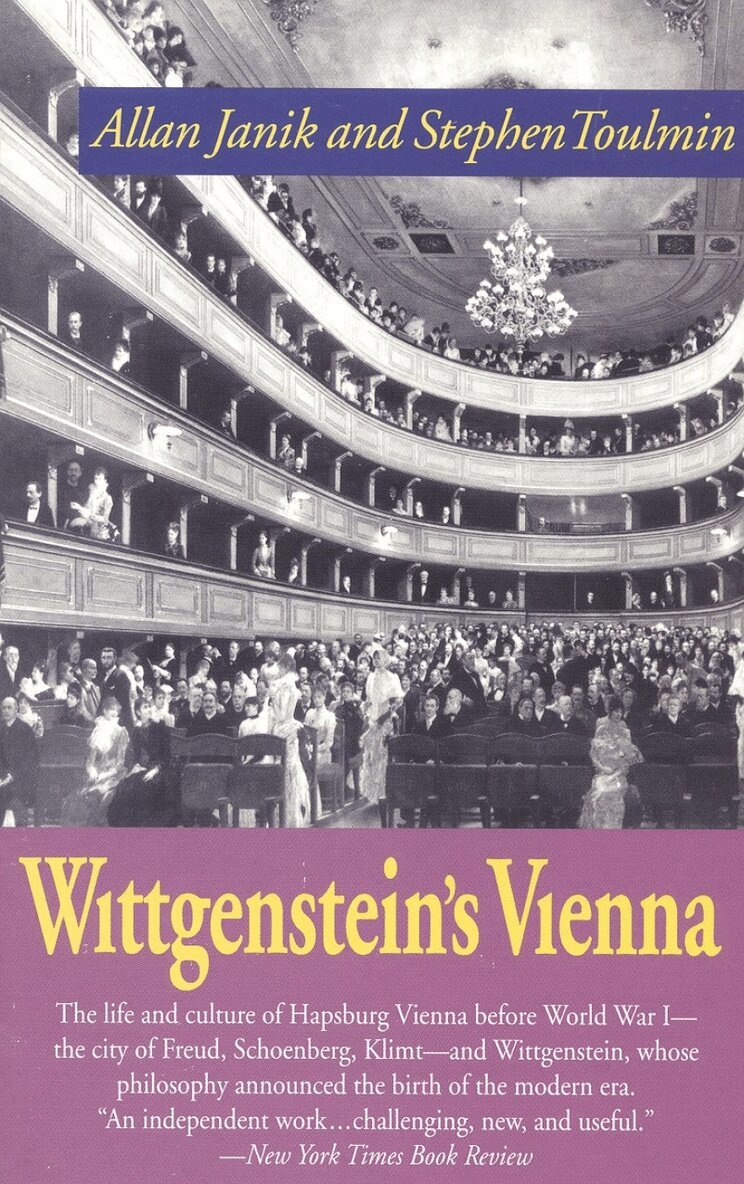
Wien i slutet av 1800-talet och början av 1900-talet var ett myller. Ett myller av tankar och idéer som bröts mot varandra. Allt fler gjorde uppror mot det gamla kejsardömets alltmer förljugna moral. Det var en kreativ och dynamisk tid där många av de tankegångar föddes som sedan, på gott och ont, kom att forma Europa under det kommande århundradet.En av de stora tänkarna som växte upp under denna tid var Ludwig Wittgenstein. I detta mycket prisade verk passerar många kända personer revy och författarna berättar på ett medryckande sätt om Wien vid denna tid. De visar att man inte kan förstå Wittgensteins verk och tankar utan att ställa dem i relation till vad som skedde i Wien.Boken vänder sig lika mycket till dem som vill förstå Wittgenstein som till dem som vill förstå och veta mer om Europas kultur- och idéhistoria"Wittgensteins Wien" är en oundgänglig bok för kunskapen om dagens och gårdagens Europa och för dem som vill tränga in i Wittgensteins tankevärld.
204 kr
Skickas inom 5-8 vardagar
231 kr
Skickas inom 7-10 vardagar
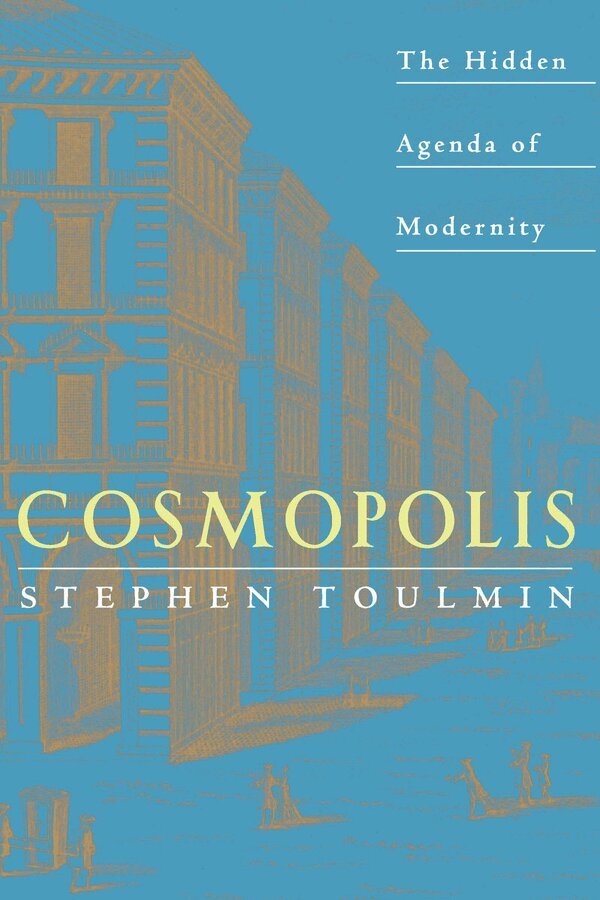
In the 17th century, a vision arose which was to captivate the Western imagination for the next 300 years: the vision of Cosmopolis, a society as rationally ordered as the Newtonian view of nature. While fueling extraordinary advances in all fields of human endeavour, this vision perpetuated a hidden yet persistent agenda: the delusion that human nature and society could be fitted into precise and manageable rational categories. Stephen Toulmin confronts that agenda - its illusions and its consequences for our present and future world.
247 kr
Skickas inom 7-10 vardagar
"Warmly recommended. It is that rare achievement, a lively book which at the same time takes the fullest possible advantage of scholarly knowledge."—Charles C. Gillespie, New York Times Book Review
303 kr
Skickas inom 7-10 vardagar
"A discussion of the historical development of our ideas of time as they relate to nature, human nature and society. . . . The excellence of The Discovery of Time is unquestionable."—Martin Lebowitz, The Kenyon Review
231 kr
Skickas inom 7-10 vardagar
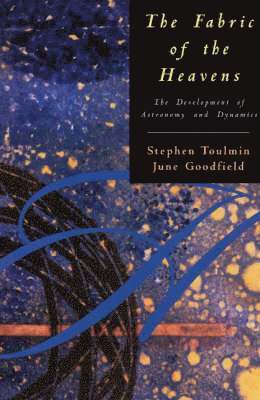
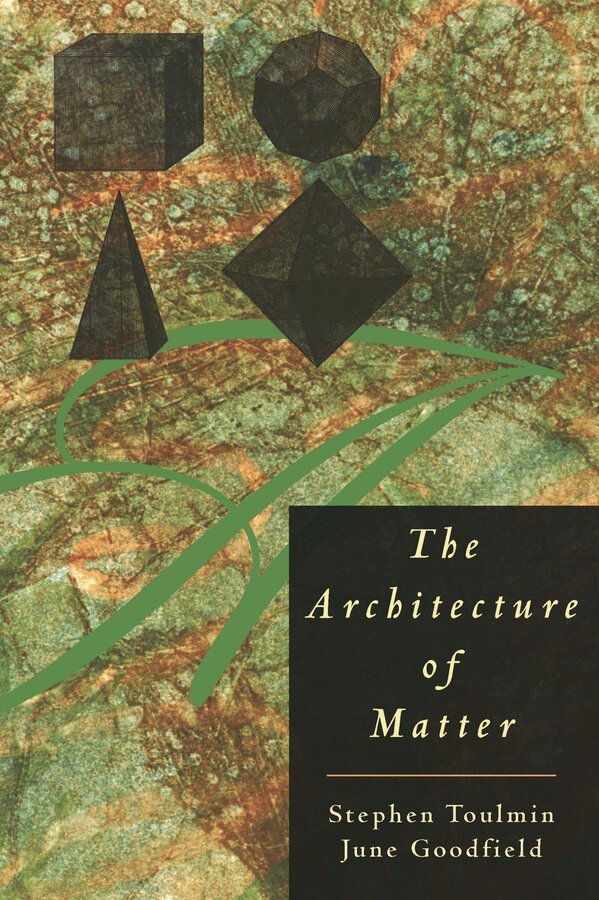
Conceived as three companion volumes that form an introduction to the central ideas of the modern natural sciences, these books--intelligent, informative, and accessible--are an excellent source for those who have no technical knowledge of the subject. Praise for The Fabric of the Heavens: "I cannot remember when I last went through a book, any book, with such all-devouring zest. What is more, even the most complex technicalities are reduced to a positively crystalline clarity: If I can understand them, anyone can. The Fabric of the Heavens is, in every sense of the word, an eye-opener."--Peter Green, The Yorkshire Post "Not until the last chapter of the book is [the reader] allowed to think again wholly as a modern man has become accustomed, by common sense, to think. The discipline is admirably suited to the authors' task, and cunningly devised for the reader's edification--and, indeed, for his delight."--Physics Today Praise for The Architecture of Matter: "The Architecture of Matter is to be warmly recommended. It is that rare achievement, a lively book which at the same time takes the fullest possible advantage of scholarly knowledge."--Charles C.Gillespie, New York Times Book Review "One is impressed by the felicity of the examples and by the lively clarity with which significant experiments and ideas are explained...No other history of science is so consistently challenging."--Scientific American Praise for The Discovery of Time: "A subject of absorbing interest ...is presented not as a history of science, but as a chapter in the history of ideas from the ancient Greeks to our own time."--Times Literary Supplement
311 kr
Skickas inom 5-8 vardagar
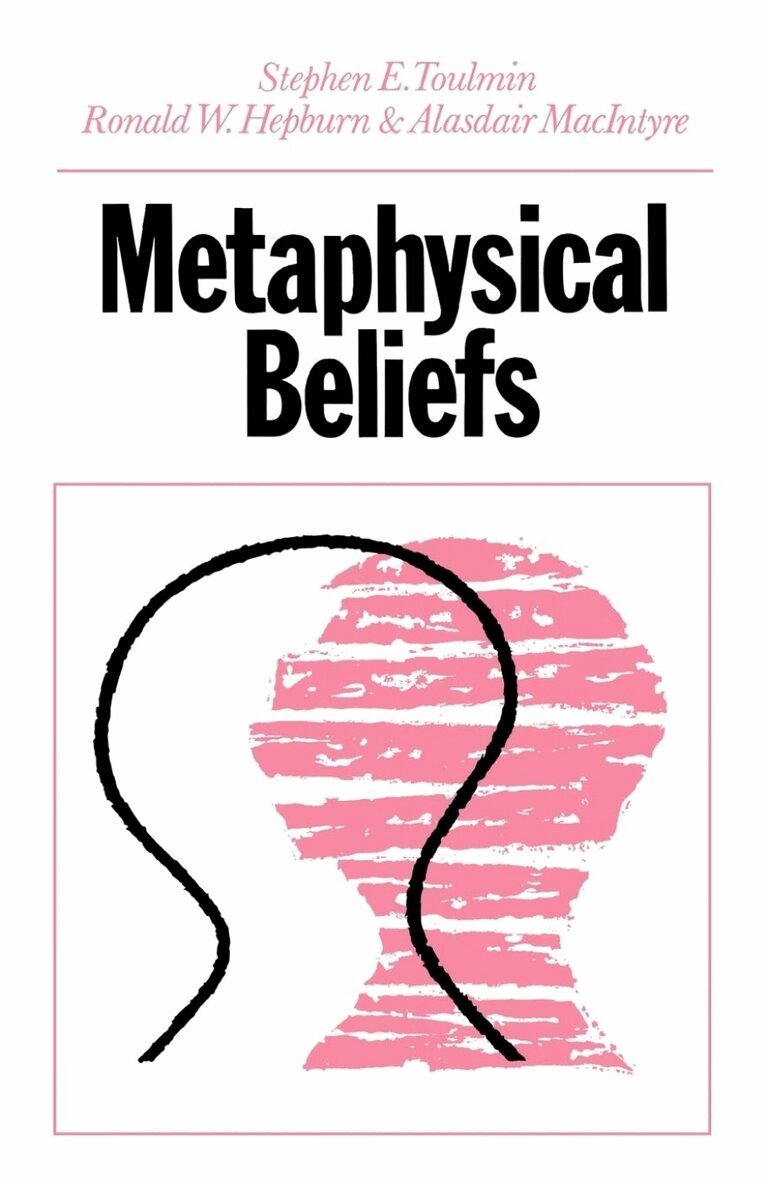
During the mid-1950s, three books appeared which, while theologically unfashionable at the time, can now be seen to have pointed the way forward that theology had to take. New Essays in Philosophical Theology, edited by Antony Flew and Alasdair Maclntyre, has been available ever since, and has been in increasing demand. Religious Language, by Ian T. Ramsey, now Bishop of Durham, was out of print in England for a while, but has been reissued and is in a second new impression. Metaphysical Beliefs, on the other hand, was never reprinted.It consists of three long essays, by Stephen Toulmin on 'Contemporary Scientific Mythology'; by Ronald Hepburn on 'Poetry and Religious Belief'; and by Alasdair Maclntyre on 'The Logical Status of Religious Belief'. When the book first appeared, The Times Literary Supplement commented: 'This volume should be widely read and discussed. It is philosophical thinking at a high level, because it faces live issues, avoids asperity towards opponents, and should provoke the right kind of controversy.' More than ten years later, the same verdict still holds true
577 kr
Skickas inom 3-6 vardagar
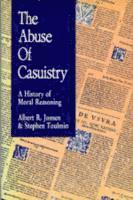
In this engaging study, the authors put casuistry into its historical context, tracing the origin of moral reasoning in antiquity, its peak during the sixteenth and early seventeenth century, and its subsequent fall into disrepute from the mid-seventeenth century.
665 kr
Skickas inom 3-6 vardagar
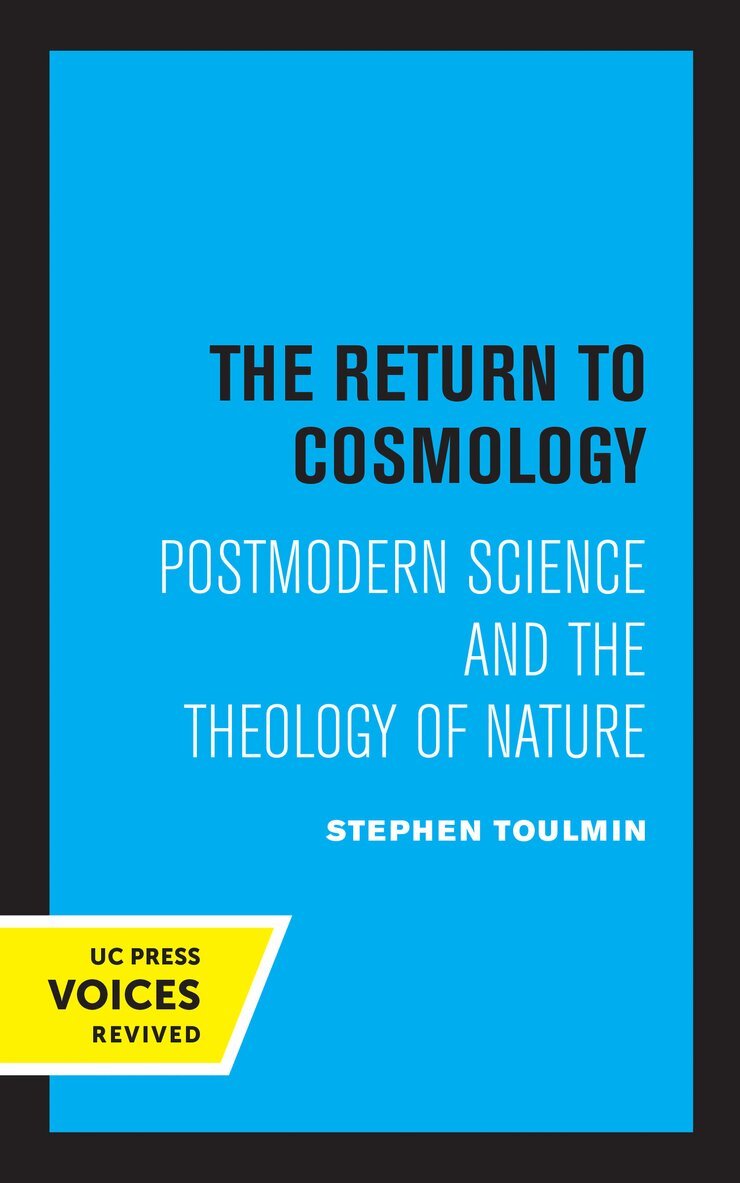
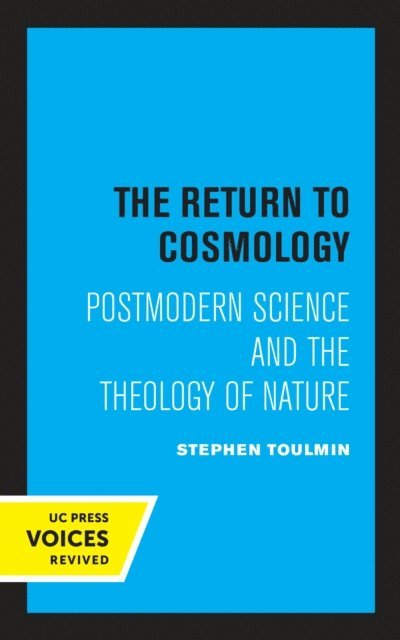
"Can we rely on the discoveries that scientists make about one or another part, or aspect, of the world as a basis for drawing conclusions abou the Universe as a Whole?" Thirty years ago, the separateness of different intellectual disciplines was an unquestioned axiom of intellectual procedure. By the mid-nineteen-seventies, however, even within the natural sciences proper, a shift from narrowly disciplinary preoccupations to more interdisciplinary issues had made it possible to reopen questions about he cosmological significance of the scientific world picture and scarcely possible any longer to rule out all religious cosmology and "unscientific." This book, the product of both a professional and personal quest, follow the debate about cosmology--the theory of the universe--as it has changed from 1945 to 1982. The open essay, "Scientific Mythology" reflects the influence of Stephen Toulmin's postwar study with Ludwig Wittgenstein in its skepticism about the naive extrapolation of scientific concepts into nonscientific contexts. Skepticism gradually gives way to qualified optimism that there may be "still a real chance of working outward from the natural sciences into a larger cosmological realm" in a series of essays on the cosmological speculations of individual scientists, including Arthur Koestler, Jacques Monod, Carl Sagan, and others. In the programmatic concluding essays, Toulmin argues that the classic Newtonian distinction between the observer and the observed was inimical not only to the received religious cosmology but also to any attempt to understand humanity and nature as parts of a single cosmos. In the twentieth century, however, what he calls "the death of the spectator" has forced the postmodern scientist--theoretically, in quantum physics, and practically, in the recognized impact of science-derived technologies on the environment--to include himself in his science. This title is part of UC Press's Voices Revived program, which commemorates University of California Press's mission to seek out and cultivate the brightest minds and give them voice, reach, and impact. Drawing on a backlist dating to 1893, Voices Revived makes high-quality, peer-reviewed scholarship accessible once again using print-on-demand technology. This title was originally published in 1982.
1 469 kr
Skickas inom 3-6 vardagar
"Can we rely on the discoveries that scientists make about one or another part, or aspect, of the world as a basis for drawing conclusions abou the Universe as a Whole?" Thirty years ago, the separateness of different intellectual disciplines was an unquestioned axiom of intellectual procedure. By the mid-nineteen-seventies, however, even within the natural sciences proper, a shift from narrowly disciplinary preoccupations to more interdisciplinary issues had made it possible to reopen questions about he cosmological significance of the scientific world picture and scarcely possible any longer to rule out all religious cosmology and "unscientific." This book, the product of both a professional and personal quest, follow the debate about cosmology--the theory of the universe--as it has changed from 1945 to 1982. The open essay, "Scientific Mythology" reflects the influence of Stephen Toulmin's postwar study with Ludwig Wittgenstein in its skepticism about the naive extrapolation of scientific concepts into nonscientific contexts. Skepticism gradually gives way to qualified optimism that there may be "still a real chance of working outward from the natural sciences into a larger cosmological realm" in a series of essays on the cosmological speculations of individual scientists, including Arthur Koestler, Jacques Monod, Carl Sagan, and others. In the programmatic concluding essays, Toulmin argues that the classic Newtonian distinction between the observer and the observed was inimical not only to the received religious cosmology but also to any attempt to understand humanity and nature as parts of a single cosmos. In the twentieth century, however, what he calls "the death of the spectator" has forced the postmodern scientist--theoretically, in quantum physics, and practically, in the recognized impact of science-derived technologies on the environment--to include himself in his science. This title is part of UC Press's Voices Revived program, which commemorates University of California Press's mission to seek out and cultivate the brightest minds and give them voice, reach, and impact. Drawing on a backlist dating to 1893, Voices Revived makes high-quality, peer-reviewed scholarship accessible once again using print-on-demand technology. This title was originally published in 1982.
321 kr
Skickas inom 10-15 vardagar
The turmoil and brutality of the twentieth century have made it increasingly difficult to maintain faith in the ability of reason to fashion a stable and peaceful world. After the ravages of global conflict and a Cold War that divided the world's loyalties, how are we to master our doubts and face the twenty-first century with hope?In Return to Reason, Stephen Toulmin argues that the potential for reason to improve our lives has been hampered by a serious imbalance in our pursuit of knowledge. The centuries-old dominance of rationality, a mathematical mode of reasoning modeled on theory and universal certainties, has diminished the value of reasonableness, a system of humane judgments based on personal experience and practice. To this day, academic disciplines such as economics and professions such as law and medicine often value expert knowledge and abstract models above the testimony of diverse cultures and the practical experience of individuals.Now, at the beginning of a new century, Toulmin sums up a lifetime of distinguished work and issues a powerful call to redress the balance between rationality and reasonableness. His vision does not reject the valuable fruits of science and technology, but requires awareness of the human consequences of our discoveries. Toulmin argues for the need to confront the challenge of an uncertain and unpredictable world, not with inflexible ideologies and abstract theories, but by returning to a more humane and compassionate form of reason, one that accepts the diversity and complexity that is human nature as an essential beginning for all intellectual inquiry.
353 kr
Skickas inom 5-8 vardagar
454 kr
Skickas inom 3-6 vardagar
302 kr
Skickas inom 3-6 vardagar
207 kr
Skickas inom 10-15 vardagar
This is a remarkable book about a man (perhaps the most important and original philosopher of our age), a society (the corrupt Austro-Hungarian Empire on the eve of dissolution), and a city (Vienna, with its fin-de siècle gaiety and corrosive melancholy). The central figure in this study of a crumbling society that gave birth to the modern world is Wittgenstein, the brilliant and gifted young thinker. With others, including Freud, Viktor Adler, and Arnold Schoenberg, he forged his ideas in a classical revolt against the stuffy, doomed, and moralistic lives of the old regime. As a portrait of Wittgenstein, the book is superbly realized; it is even better as a portrait of the age, with dazzling and unusual parallels to our own confused society. “Allan Janik and Stephen Toulmin have acted on a striking premise: an understanding of prewar Vienna, Wittgenstein’s native city, will make it easier to comprehend both his work and our own problems….This is an independent work containing much that is challenging, new, and useful.”—New York Times Book Review.
1 590 kr
Skickas inom 10-15 vardagar