Steve Goodson - Böcker
Visar alla böcker från författaren Steve Goodson. Handla med fri frakt och snabb leverans.
2 produkter
2 produkter
643 kr
Skickas inom 5-8 vardagar
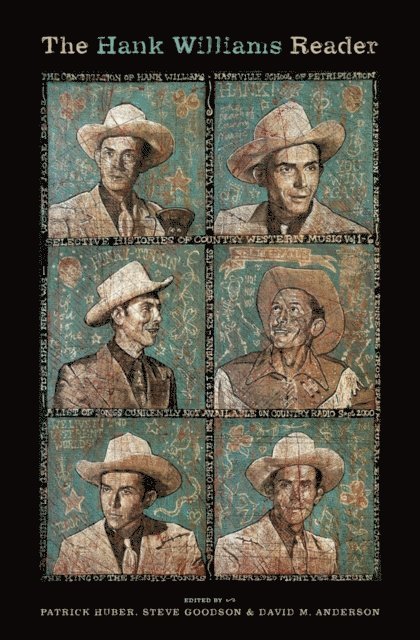
On New Year's Day 1953, Hank Williams--numbed by a deadly combination of whiskey and narcotics--died in the back seat of his Cadillac en route to a performance in Canton, Ohio. He was only twenty nine years old at the time of his death and his passing appeared to bring his rags-to-riches success and destructive lifestyle to an abrupt end. Few figures before or since have cast as long or as broad a shadow over American popular music. Today, Hank Williams is considered by many to be the greatest singer and songwriter in the history of country music, and it is the combination of his remarkable musical achievements, his tumultuous personal life, and his tragic and still-mysterious demise that make him such a compelling historical figure. As volume demonstrates, Williams's death was the beginning of an equally gripping second act: for more than sixty years, an ever-lengthening parade of journalists, family and friends, musical contemporaries, biographers, historians and scholars, fans, and novelists have attempted to capture in words the man, the artist, and the legend. The Hank Williams Reader, the first book of its kind devoted to this giant of American music, collects more than sixty of the most compelling, insightful, and historically significant of these writings. The selections cover a broad assortment of themes and perspectives, ranging from heartfelt reminiscences and shocking tabloid exposés to thoughtful meditations and critical essays. Featured authors include Hank Williams, Jr., Bob Dylan, Steve Earle, David Halberstam, Greil Marcus, Rick Bragg, and Lee Smith, to name but a few. The Hank Williams Reader also features a lengthy interpretive introduction and the most extensive bibliography of Williams-related writings ever published. Over time, writers have sought to explain Williams in a variety of ways, and in tracing these shifting interpretations, this anthology chronicles his cultural transfiguration from star-crossed hillbilly singer to enduring American icon.
Highbrows, Hillbillies, and Hellfire
Public Entertainment in Atlanta, 1880-1930
Häftad, Engelska, 2007
502 kr
Skickas inom 5-8 vardagar
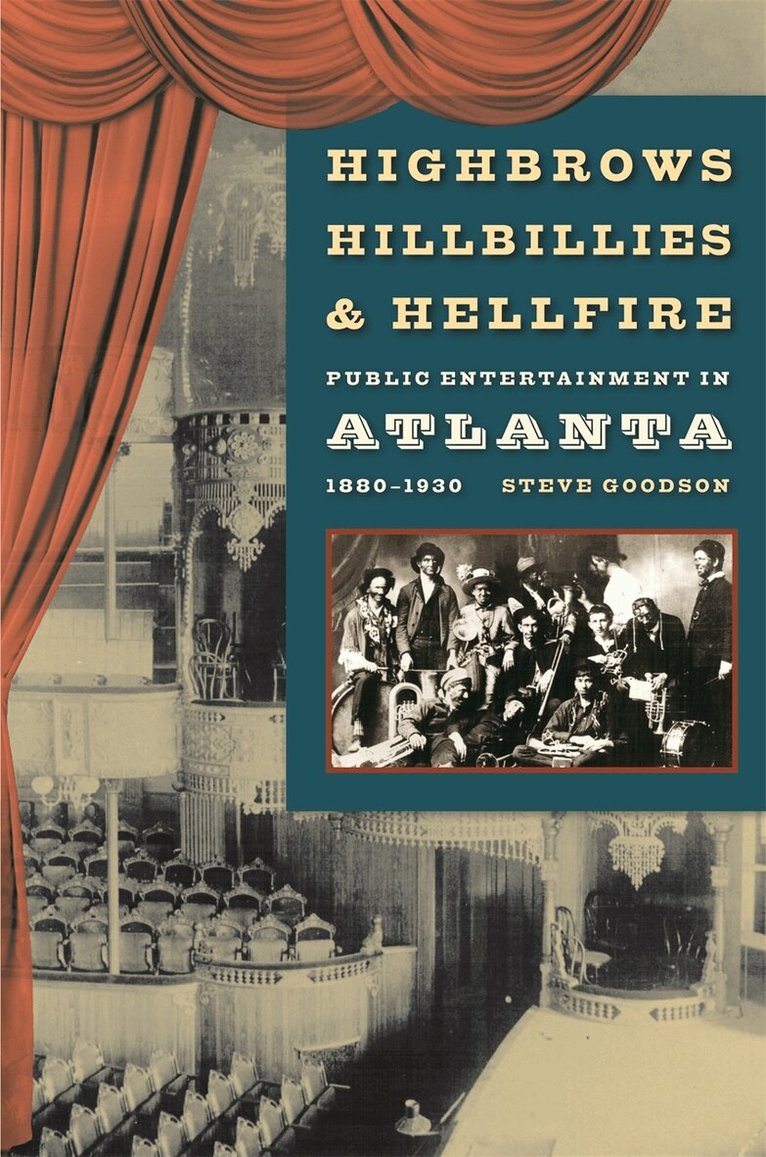
From the end of Reconstruction to the eve of the Great Depression, Atlanta was the New South's "Gate City." Steve Goodson's social and cultural history looks at the variety of public amusements available to Atlantans of the day, including theater, vaudeville, dime museums, movies, radio, and classical, blues, and country music. Revealed in the ways its people embraced or condemned everything from burlesque to opera is an Atlanta unsure of its identity and acutely sensitive of its image in the eyes of the nation.While the general populace hungered for novelty and diversion, middle-class Atlantans, white and black, saw entertainment as a source of—or threat to—status and respectability. Goodson traces the roots of this tension to the city's rapid and problematic growth, its uncomfortably diverse population, and its multiplying ties to national markets. At the same time he portrays some lively individuals who shaped Atlanta's entertainment scene. Among them are impresario Laurent DeGive, tightrope walker Professor Leon, patent-medicine salesman Yellowstone Kit, country music great Fiddlin' John Carson, and blues legends Bessie Smith and Blind Willie McTell. Goodson also brings alive the atmosphere of such venues as DeGive's resplendent Grand Opera House, George Johnson's tacky Museum of Living Wonders, the pioneering Trocadero vaudeville house, and the notorious 81 Theater on Decatur Street, an avenue whose decadent promise rivaled that of Beale in Memphis and Bourbon in New Orleans. Milestone trends and events are also showcased: performances of the play Uncle Tom's Cabin and showings of the film Birth of a Nation, visits by the Metropolitan Opera Company, the debate over Sunday entertainment, the beginning of broadcasts by "The Voice of the South"—radio station WSB—and the rise of Atlanta as the earliest capital of country and blues recording.Accepted historical views of public entertainment in America suggest that ethnicity and class would be the most pronounced forces shaping this aspect of Atlanta's popular culture. Goodson finds, however, that race and evangelical Christianity also heavily influenced the circumstances in which Atlantans went about their fun. With implications for the entire urban South, this is an engaging look at how and why its major city once grasped at sophistication and progress with one hand while pushing it away with the other.