Steve Odin - Böcker
Visar alla böcker från författaren Steve Odin. Handla med fri frakt och snabb leverans.
6 produkter
6 produkter
1 057 kr
Tillfälligt slut
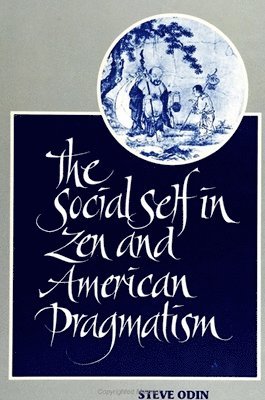
The first book on East-West comparative thought to critically analyze the Zen Buddhist model of self in modern Japanese philosophy from the standpoint of American pragmatismThe thesis of this work is that in both modern Japanese philosophy and American pragmatism there has been a paradigm shift from a monological concept of self as an isolated "I" to a dialogical concept of the social self as an "I-Thou relation," including a communication model of self as an individual-society interaction. It is also shown that for both traditions all aesthetic, moral, and religious values are a function of the social self arising through communicative interaction between the individual and society. However, at the same time this work critically examines major ideological conflicts arising between the social self theories of modern Japanese philosophy and American pragmatism with respect to such problems as individualism versus collectivism, freedom versus determinism, liberalism versus communitarianism, and relativism versus objectivism.
608 kr
Skickas inom 3-6 vardagar
The first book on East-West comparative thought to critically analyze the Zen Buddhist model of self in modern Japanese philosophy from the standpoint of American pragmatismThe thesis of this work is that in both modern Japanese philosophy and American pragmatism there has been a paradigm shift from a monological concept of self as an isolated "I" to a dialogical concept of the social self as an "I-Thou relation," including a communication model of self as an individual-society interaction. It is also shown that for both traditions all aesthetic, moral, and religious values are a function of the social self arising through communicative interaction between the individual and society. However, at the same time this work critically examines major ideological conflicts arising between the social self theories of modern Japanese philosophy and American pragmatism with respect to such problems as individualism versus collectivism, freedom versus determinism, liberalism versus communitarianism, and relativism versus objectivism.
Artistic Detachment in Japan and the West
Psychic Distance in Comparative Aesthetics
Häftad, Engelska, 2001
234 kr
Skickas inom 10-15 vardagar
A study of the notion of artistic detachment, or psychic distance, as an intercultural motif for East-West comparative aesthetics. It opens with an overview of aesthetic theory in the West since the 18th-century empiricists and concludes with a survey of various critiques of psychic distance.
675 kr
Skickas inom 10-15 vardagar
The present volume endeavors to make a contribution to contemporary Whitehead studies by clarifying his axiological process metaphysics, including his theory of values, concept of aesthetic experience, and doctrine of beauty, along with his philosophy of art, literature and poetry. Moreover, it establishes an east-west dialogue focusing on how Alfred North Whitehead’s process aesthetics can be clarified by the traditional Japanese Buddhist sense of evanescent beauty. As this east-west dialogue unfolds it is shown that there are many striking points of convergence between Whitehead’s process aesthetics and the traditional Japanese sense of beauty. However, the work especially focuses on two of Whitehead’s aesthetic categories, including the penumbral beauty of darkness and the tragic beauty of perishability, while further demonstrating parallels with the two Japanese aesthetic categories of yûgen and aware. It is clarified how both Whitehead and the Japanese tradition have articulated a poetics of evanescence that celebrates the transience of aesthetic experience and the ephemerality of beauty. Finally it is argued that both Whitehead and Japanese tradition develop an aesthetics of beauty as perishability culminating in a religio-aesthetic vision of tragic beauty and its reconciliation in the supreme ecstasy of peace or nirvana.
480 kr
Skickas inom 5-8 vardagar
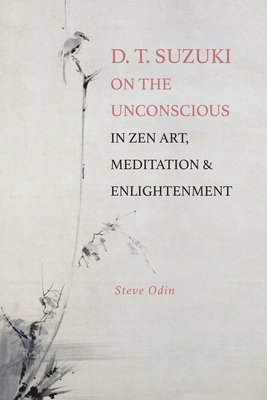
A comprehensive study of D. T. Suzuki's Zen philosophy and philosophical psychology in relation to his Buddhist understanding of the "cosmic Unconscious."This book explores how the Japanese philosopher D. T. Suzuki (1870–1966) developed an integral synthesis of Eastern and Western sources to establish a modern philosophical psychology of the "cosmic Unconscious," which he in turn used as the basis to interpret every aspect of Zen art, meditation, and enlightenment. Beyond Freud's personal unconscious and Jung's collective unconscious, according to Suzuki, is the cosmic Unconscious of Zen, which as absolute nothingness is the fountain of inexhaustible creative potentialities and the source of all Zen-inspired arts. The book demonstrates that, like the Kyoto School of modern Japanese philosophy, Suzuki's Zen endeavors to overcome the existential problem of nihilism or relative nothingness by shifting to the openness of absolute nothingness wherein emptiness is fullness and all things are disclosed in the evanescent beauty of their suchness. Suzuki, however, formulates his scheme in terms of a depth psychology where the cosmic Unconscious is the encompassing locus of absolute nothingness. Ultimately, the book argues that, by integrating both Eastern and Western views of the unconscious psyche, including the different schools of Zen and Mahayana Buddhism, as well as American, French, and German theories of the unconscious, Suzuki's Zen concept of the cosmic Unconscious constitutes a significant original contribution to philosophical psychology.
1 295 kr
Skickas
A comprehensive study of D. T. Suzuki's Zen philosophy and philosophical psychology in relation to his Buddhist understanding of the "cosmic Unconscious."This book explores how the Japanese philosopher D. T. Suzuki (1870–1966) developed an integral synthesis of Eastern and Western sources to establish a modern philosophical psychology of the "cosmic Unconscious," which he in turn used as the basis to interpret every aspect of Zen art, meditation, and enlightenment. Beyond Freud's personal unconscious and Jung's collective unconscious, according to Suzuki, is the cosmic Unconscious of Zen, which as absolute nothingness is the fountain of inexhaustible creative potentialities and the source of all Zen-inspired arts. The book demonstrates that, like the Kyoto School of modern Japanese philosophy, Suzuki's Zen endeavors to overcome the existential problem of nihilism or relative nothingness by shifting to the openness of absolute nothingness wherein emptiness is fullness and all things are disclosed in the evanescent beauty of their suchness. Suzuki, however, formulates his scheme in terms of a depth psychology where the cosmic Unconscious is the encompassing locus of absolute nothingness. Ultimately, the book argues that, by integrating both Eastern and Western views of the unconscious psyche, including the different schools of Zen and Mahayana Buddhism, as well as American, French, and German theories of the unconscious, Suzuki's Zen concept of the cosmic Unconscious constitutes a significant original contribution to philosophical psychology.