Steven C. Hebert – författare
Visar alla böcker från författaren Steven C. Hebert. Handla med fri frakt och snabb leverans.
10 produkter
10 produkter
E-bok
Engelska, 20073 911 kr
Läs direkt efter köp
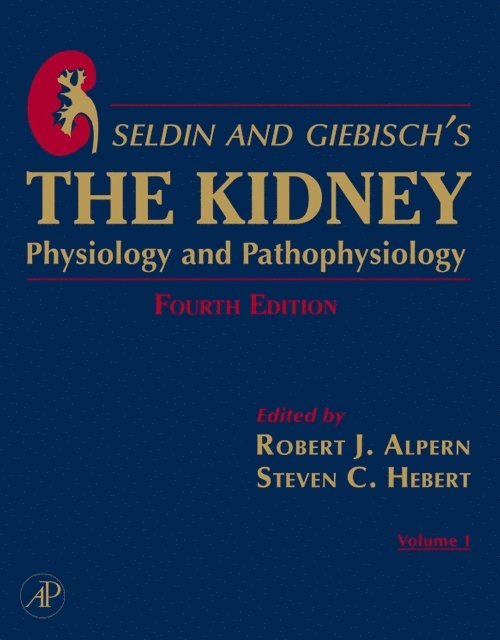
A classic nephrology reference for over 20 years, Seldin & Giebisch''s The Kidney, is the acknowledged authority on renal physiology and pathophysiology. The fourth edition follows the changed focus of nephrology research to the study of how individual molecules work together to affect cellular and organ function, emphasizing the mechanisms of disease. With over 40 new chapters and over 1000 illustrations, this edition offers the most in-depth discussion anywhere of the physiologic and pathophysiologic processes of renal disease. Comprehensive, authoritative coverage progresses from molecular biology and cell physiology to clinical issues regarding renal function and dysfunction. If you research the development of normal renal function or the mechanisms underlying renal disease, Seldin & Giebisch''s The Kidney is your number one source for information.* Offers the most comprehensive coverage of fluid and electrolyte regulation and dysregulation in 51 completely revised chapters unlike Brenner & Rector''s The Kidney which devotes only 7 chapters to this topic.* Includes 3 sections, 31 chapters, devoted to regulation and disorders of acid-base homeostasis, and epithelial and nonepithelial transport regulation. Brenner & Rector''s only devotes 5 chapters to these topics.* Previous three editions edited by Donald Seldin and Gerhard Giebisch, world renowned names in nephrology. The title for the fourth edition has been changed to reflect their considerable work on previous editions and they have also written the forward for this edition. * Over 20 million adults over age 20 have chronic kidney disease with the number of people diagnosed doubling each decade making it America''s ninth leading cause of death.
Inbunden, Engelska, 2005
1 125 kr
Skickas inom 10-15 vardagar
The eukaryotic translation machinery must recognize the site on a messenger RNA (mRNA) where decoding should begin and where it should end. The selection of the translation start site is generally given by the ?rst AUG codon encoding the amino acid methionine. D- ing initiation soluble translation initiation factors (eukaryotic translation initiation factors [eIFs] in eukaryotes and prokaryotic translation initiation factors [IFs] in prokaryotes) bind the mRNA, deliver the initiator Met-tRNA, and assemble to form a complete 80S ribosome from the 40S and 60S subunits. By progressing along the mRNA in the 5 -to-3 direction the ribosome decodes the information and translates it into the polypeptide chain. During this process, repeated delivery of amino-acyl tRNA (aa-tRNA) to the ribosome, peptide bond formation, movement of the mRNA, and the growing peptidyl-tRNA is mediated by both soluble elongation factors (eukaryotic translation elongation factors [eEFs] in euka- otes and prokaryotic translation elongation factors [EFs] in prokaryotes) and the activity of the ribosome. The ?nal step in the translation process occurs when one of the three t- mination codons occupies the ribosomal A-site.Translation comes to an end and soluble release factors (eukaryotic translation termination factors [eRFs] in eukaryotes and proka- otic translation termination factors [RFs] in prokaryotes) facilitate hydrolytical release of the polypeptide chain (for recent reviews, see Inge-Vechtomov et al. 2003; Kisselev et al. 2003; Wilson and Nierhaus 2003; Kapp and Lorsch 2004).
E-bok
PDF, Engelska, 20061 408 kr
Läs direkt efter köp
Del 156 - Reviews of Physiology, Biochemistry and Pharmacology
Reviews of Physiology, Biochemistry and Pharmacology 156
Inbunden, Engelska, 2006
1 125 kr
Skickas inom 10-15 vardagar
Gastric acid plays a primary role in digestion as well as in the sterilization of food and water. Gastric juice contains the most concentrated physiological acid solution (pH~1) as a result + – of H and Cl ion secretion [hydrochloric acid (HCl) production] by parietal cells in the oxyntic mucosa of the stomach. The combined output of the parietal cells leads to the sec- tion of 1–2 l of HCl at a concentration of 150–160 mmol/l into the interior of the stomach. In order to facilitate the production of acid, the parietal cell relies on the generation of a high + concentration of H ions that are transported into the lumen of the gland. This process is fa- + + cilitated by activation of the gastric H ,K -ATPase, which translocates to the apical pole of + – the parietal cell. K as well as ATP hydrolysis and Cl all play critical roles in the activation + + of gastric H ,K -ATPase and are essential for the functioning of the enzyme (Reenstra and Forte 1990). This review will examine the classical proteins that have been linked to acid secretion as well as some recently identi?ed proteins that may modulate gastric acid secretion, in - dition we discuss the known secretagogues, and their receptors including a new receptor, which upon stimulation can lead to acid secretion.
E-bok
PDF, Engelska, 20071 408 kr
Läs direkt efter köp
Gastric acid plays a primary role in digestion as well as in the sterilization of food and water. Gastric juice contains the most concentrated physiological acid solution (pH~1) as a result + – of H and Cl ion secretion [hydrochloric acid (HCl) production] by parietal cells in the oxyntic mucosa of the stomach. The combined output of the parietal cells leads to the sec- tion of 1–2 l of HCl at a concentration of 150–160 mmol/l into the interior of the stomach. In order to facilitate the production of acid, the parietal cell relies on the generation of a high + concentration of H ions that are transported into the lumen of the gland. This process is fa- + + cilitated by activation of the gastric H ,K -ATPase, which translocates to the apical pole of + – the parietal cell. K as well as ATP hydrolysis and Cl all play critical roles in the activation + + of gastric H ,K -ATPase and are essential for the functioning of the enzyme (Reenstra and Forte 1990). This review will examine the classical proteins that have been linked to acid secretion as well as some recently identi?ed proteins that may modulate gastric acid secretion, in - dition we discuss the known secretagogues, and their receptors including a new receptor, which upon stimulation can lead to acid secretion.
Del 160 - Reviews of Physiology, Biochemistry and Pharmacology
Reviews of Physiology, Biochemistry and Pharmacology 160
Inbunden, Engelska, 2008
1 125 kr
Skickas inom 10-15 vardagar
E-bok
PDF, Engelska, 20081 459 kr
Läs direkt efter köp
Del 155 - Reviews of Physiology, Biochemistry and Pharmacology
Reviews of Physiology, Biochemistry and Pharmacology 155
Häftad, Engelska, 2010
1 125 kr
Skickas inom 10-15 vardagar
The eukaryotic translation machinery must recognize the site on a messenger RNA (mRNA) where decoding should begin and where it should end. The selection of the translation start site is generally given by the ?rst AUG codon encoding the amino acid methionine. D- ing initiation soluble translation initiation factors (eukaryotic translation initiation factors [eIFs] in eukaryotes and prokaryotic translation initiation factors [IFs] in prokaryotes) bind the mRNA, deliver the initiator Met-tRNA, and assemble to form a complete 80S ribosome from the 40S and 60S subunits. By progressing along the mRNA in the 5 -to-3 direction the ribosome decodes the information and translates it into the polypeptide chain. During this process, repeated delivery of amino-acyl tRNA (aa-tRNA) to the ribosome, peptide bond formation, movement of the mRNA, and the growing peptidyl-tRNA is mediated by both soluble elongation factors (eukaryotic translation elongation factors [eEFs] in euka- otes and prokaryotic translation elongation factors [EFs] in prokaryotes) and the activity of the ribosome. The ?nal step in the translation process occurs when one of the three t- mination codons occupies the ribosomal A-site.Translation comes to an end and soluble release factors (eukaryotic translation termination factors [eRFs] in eukaryotes and proka- otic translation termination factors [RFs] in prokaryotes) facilitate hydrolytical release of the polypeptide chain (for recent reviews, see Inge-Vechtomov et al. 2003; Kisselev et al. 2003; Wilson and Nierhaus 2003; Kapp and Lorsch 2004).
Del 156 - Reviews of Physiology, Biochemistry and Pharmacology
Reviews of Physiology, Biochemistry and Pharmacology 156
Häftad, Engelska, 2010
1 125 kr
Skickas inom 10-15 vardagar
Gastric acid plays a primary role in digestion as well as in the sterilization of food and water. Gastric juice contains the most concentrated physiological acid solution (pH~1) as a result + – of H and Cl ion secretion [hydrochloric acid (HCl) production] by parietal cells in the oxyntic mucosa of the stomach. The combined output of the parietal cells leads to the sec- tion of 1–2 l of HCl at a concentration of 150–160 mmol/l into the interior of the stomach. In order to facilitate the production of acid, the parietal cell relies on the generation of a high + concentration of H ions that are transported into the lumen of the gland. This process is fa- + + cilitated by activation of the gastric H ,K -ATPase, which translocates to the apical pole of + – the parietal cell. K as well as ATP hydrolysis and Cl all play critical roles in the activation + + of gastric H ,K -ATPase and are essential for the functioning of the enzyme (Reenstra and Forte 1990). This review will examine the classical proteins that have been linked to acid secretion as well as some recently identi?ed proteins that may modulate gastric acid secretion, in - dition we discuss the known secretagogues, and their receptors including a new receptor, which upon stimulation can lead to acid secretion.
Del 160 - Reviews of Physiology, Biochemistry and Pharmacology
Reviews of Physiology, Biochemistry and Pharmacology 160
Häftad, Engelska, 2010
1 125 kr
Skickas inom 10-15 vardagar