G. Schultz – författare
Visar alla böcker från författaren G. Schultz. Handla med fri frakt och snabb leverans.
17 produkter
Reviews of Physiology, Biochemistry and Pharmacology 149
Av S. G. Amara, E. Bamberg m. fl.
Inbunden, 2003
1697 kr
Lägg i varukorg
With contributions by numerous experts
Reviews of Physiology, Biochemistry and Pharmacology 151
Av H. Wegele, Susan G Amara m. fl.
Inbunden, 2004
1130 kr
Lägg i varukorg
H. Wegele, L. Müller, and J. Buchner: Hsp70 and Hsp90 – A Relay Team for Protein Folding R. Schülein: The Early Stages of the Intracellular Transport of Membrane Proteins: Clinical and Pharmacological Implications L. Schild: The Epithelial Sodium Channel: From Molecule to Disease
Reviews of Physiology, Biochemistry and Pharmacology 155
Av Ed Amara S., Susan G. Amara m. fl.
Inbunden, 2005
1130 kr
Lägg i varukorg
The eukaryotic translation machinery must recognize the site on a messenger RNA (mRNA) where decoding should begin and where it should end. The selection of the translation start site is generally given by the ?rst AUG codon encoding the amino acid methionine. D- ing initiation soluble translation …
Reviews of Physiology, Biochemistry and Pharmacology 155
Av M. Schweiger, G. Schultz m. fl.
E-bok, 2006
1502 kr
Lägg i varukorg
Reviews of Physiology, Biochemistry and Pharmacology 156
Av Susan G. Amara, Ernst Bamberg m. fl.
Inbunden, 2006
1130 kr
Lägg i varukorg
Gastric acid plays a primary role in digestion as well as in the sterilization of food and water. Gastric juice contains the most concentrated physiological acid solution (pH~1) as a result + – of H and Cl ion secretion [hydrochloric acid (HCl) production] by parietal cells in the oxyntic mucosa of …
Reviews of Physiology, Biochemistry and Pharmacology 156
Av M. Schweiger, G. Schultz m. fl.
E-bok, 2007
1502 kr
Lägg i varukorg
Gastric acid plays a primary role in digestion as well as in the sterilization of food and water. Gastric juice contains the most concentrated physiological acid solution (pH~1) as a result + – of H and Cl ion secretion [hydrochloric acid (HCl) production] by parietal cells in the oxyntic mucosa of …
Reviews of Physiology, Biochemistry and Pharmacology 151
Av M. Schweiger, G. Schultz m. fl.
E-bok, 2007
1470 kr
Lägg i varukorg
H. Wegele, L. Müller, and J. Buchner: Hsp70 and Hsp90 – A Relay Team for Protein Folding R. Schülein: The Early Stages of the Intracellular Transport of Membrane Proteins: Clinical and Pharmacological Implications L. Schild: The Epithelial Sodium Channel: From Molecule to Disease
Reviews of Physiology, Biochemistry and Pharmacology 149
Av M. Schweiger, G. Schultz m. fl.
E-bok, 2007
2174 kr
Lägg i varukorg
Reviews of Physiology, Biochemistry and Pharmacology 149
Av S. G. Amara, E. Bamberg m. fl.
Häftad, 2010
1692 kr
Lägg i varukorg
With contributions by numerous experts
Reviews of Physiology, Biochemistry and Pharmacology 151
Av Susan G Amara, Ernst Bamberg m. fl.
Häftad, 2010
1130 kr
Lägg i varukorg
H. Wegele, L. Müller, and J. Buchner: Hsp70 and Hsp90 – A Relay Team for Protein Folding R. Schülein: The Early Stages of the Intracellular Transport of Membrane Proteins: Clinical and Pharmacological Implications L. Schild: The Epithelial Sodium Channel: From Molecule to Disease
Reviews of Physiology, Biochemistry and Pharmacology 155
Av Susan G. Amara, Ernst Bamberg m. fl.
Häftad, 2010
1130 kr
Lägg i varukorg
The eukaryotic translation machinery must recognize the site on a messenger RNA (mRNA) where decoding should begin and where it should end. The selection of the translation start site is generally given by the ?rst AUG codon encoding the amino acid methionine. D- ing initiation soluble translation …
Reviews of Physiology, Biochemistry and Pharmacology 156
Av Susan G. Amara, Ernst Bamberg m. fl.
Häftad, 2010
1130 kr
Lägg i varukorg
Gastric acid plays a primary role in digestion as well as in the sterilization of food and water. Gastric juice contains the most concentrated physiological acid solution (pH~1) as a result + – of H and Cl ion secretion [hydrochloric acid (HCl) production] by parietal cells in the oxyntic mucosa of …
Reviews of Physiology, Biochemistry and Pharmacology
Av M. P. Blaustein, H. Grunicke m. fl.
Häftad, 2014
1130 kr
Lägg i varukorg
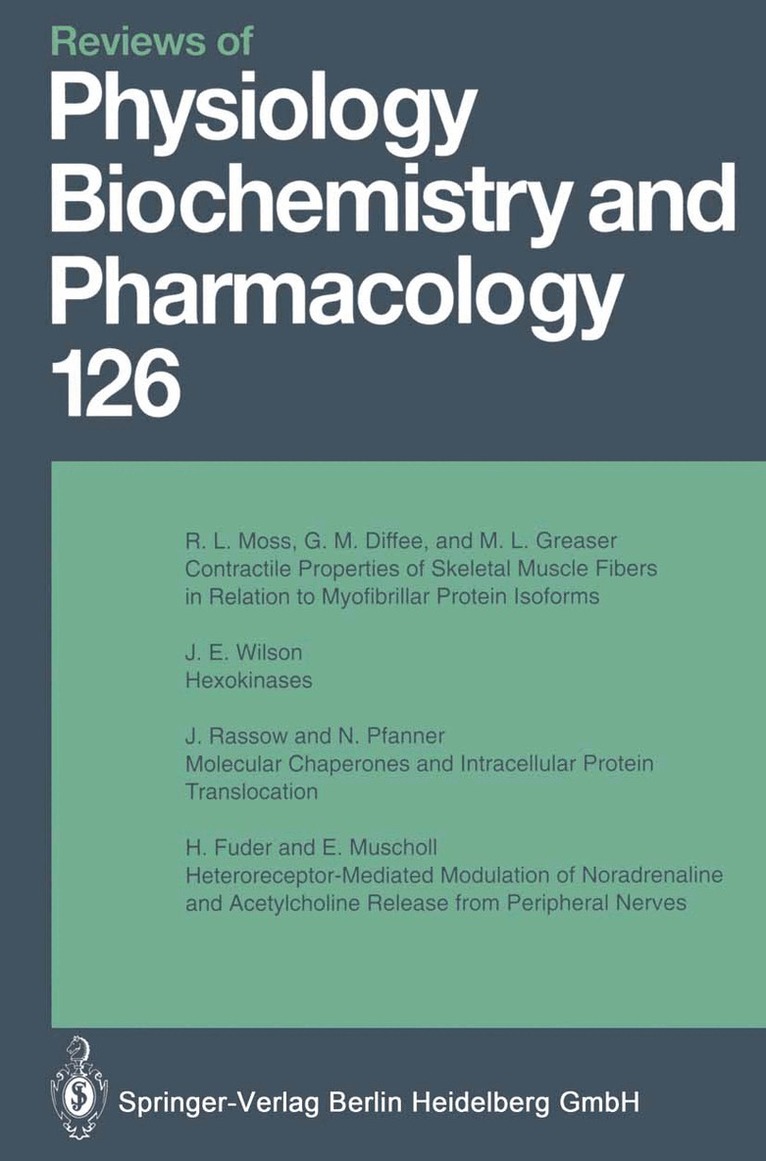
Contents: R.L. Moss, G.M. Diffee, M.L. Greaser: Contractile Properties of Skeletal Muscle Fibers in Relation to Myofibrillar Protein Isoforms.-J.E. Wilson: Hexokinases.-J. Rassow, N. Pfanner: Molecular Chaperones and Intracellular Protein Translocation.- H. Fuder, E. Muscholl: …
Reviews of Physiology, Biochemistry and Pharmacology
Av A. Miyajima, N. Pfanner m. fl.
Häftad, 2014
569 kr
Lägg i varukorg
In the series Reviews of Physiology, Biochemistry and Pharmacology three excellent contributions by Ruth Heidelberger (Houston, TX, USA) with Electrophysiological Approaches to the Study of Neuronal Exocytosis and Synaptic Vesicle Dynamics and Kay Truscott et al. (Freiburg, Germany) with Transport …
Reviews of Physiology Biochemistry and Pharmacology
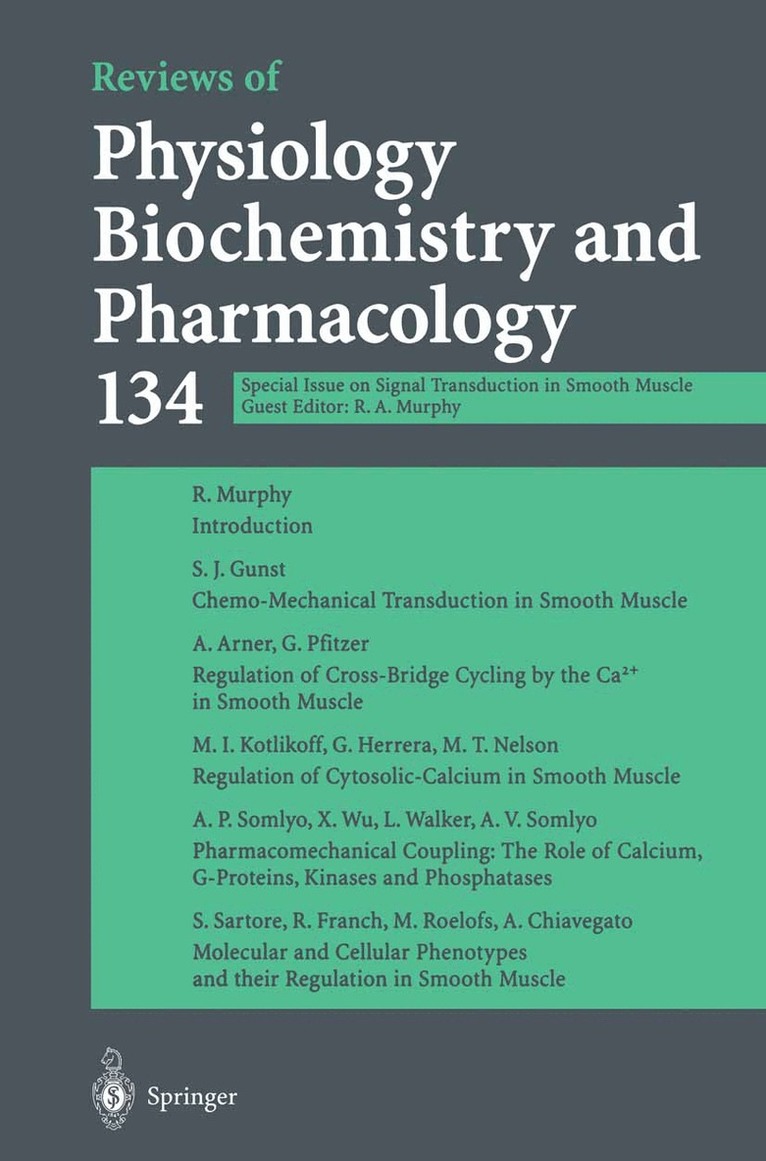
Special Issue on Signal Transduction in Smooth Muscle
Av Dr. Richard A. Murphy, M. P. Blaustein m. fl.
Häftad, 2014
569 kr
Lägg i varukorg
The objectives in this special issue are (1) to critically review current information on the mechanisms coupling extracellular regulatory signals to regulation of cross-bridge cycling and proliferation in smooth muscle, and (2) identify significant gaps or unresolved issues that are important …
Reviews of Physiology, Biochemistry and Pharmacology
Av D. Fürst, M. P. Blaustein m. fl.
Häftad, 2014
569 kr
Lägg i varukorg
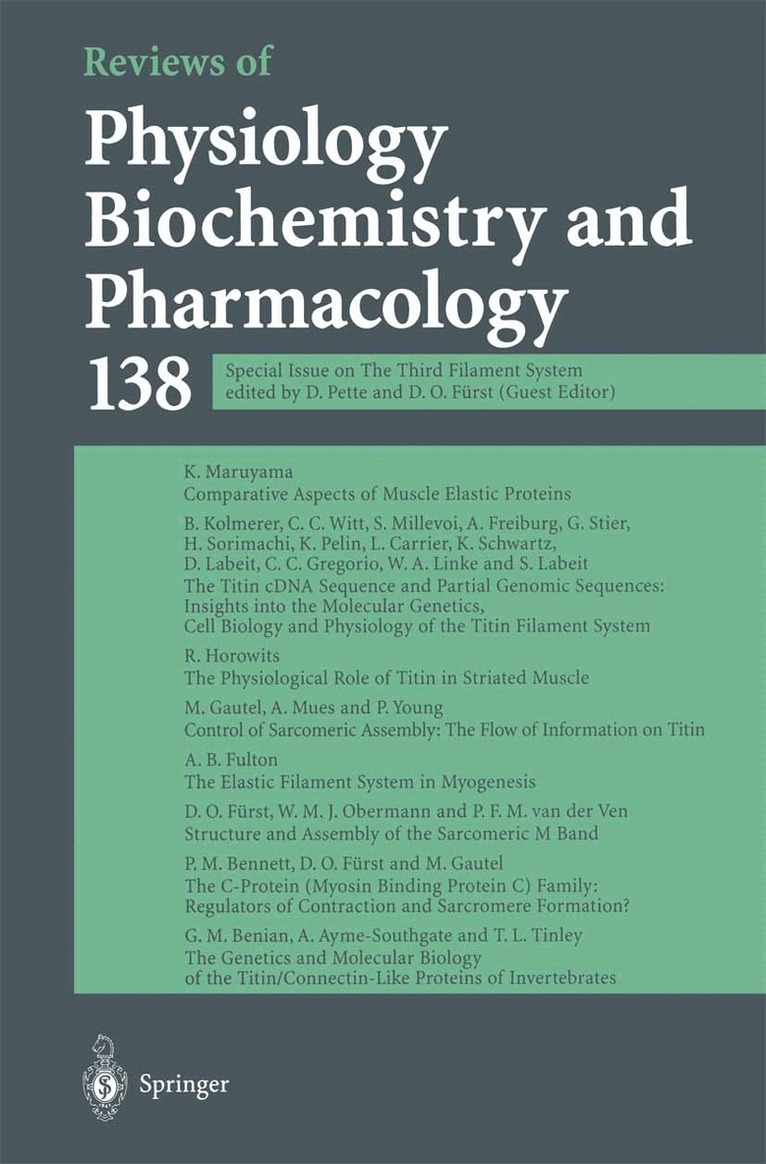
Special Issue on the Tird Filament System
Reviews of Physiology, Biochemistry and Pharmacology
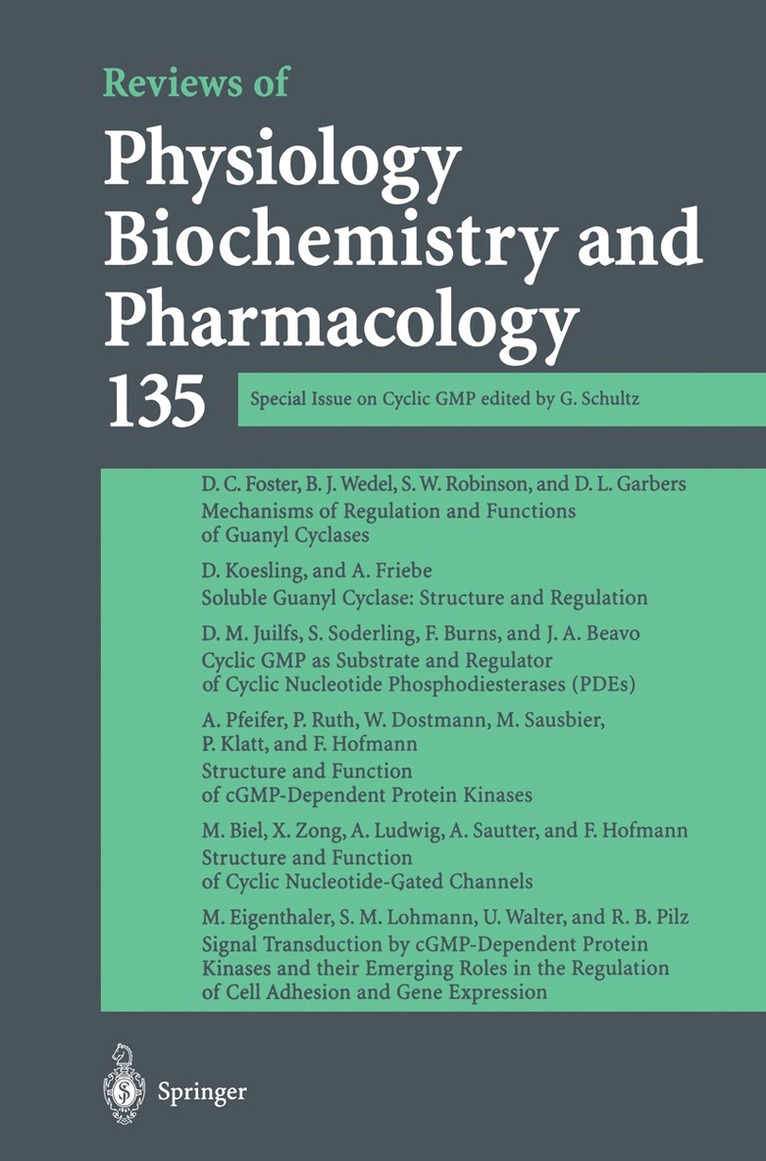
Special Issue on Cyclic GMP
Av G. Schultz, M. P. Blaustein m. fl.
Häftad, 2014
569 kr
Lägg i varukorg
This special volume provides up-to-date information on research dealing with the regulation of the biosynthesis and degradation of cyclic GMP and with the regulation of physiological systems by cyclic GMP. The publication of this volume could not have come at a more appropriate time, with …