Steven Gregory - Böcker
Visar alla böcker från författaren Steven Gregory. Handla med fri frakt och snabb leverans.
5 produkter
5 produkter
518 kr
Skickas inom 3-6 vardagar
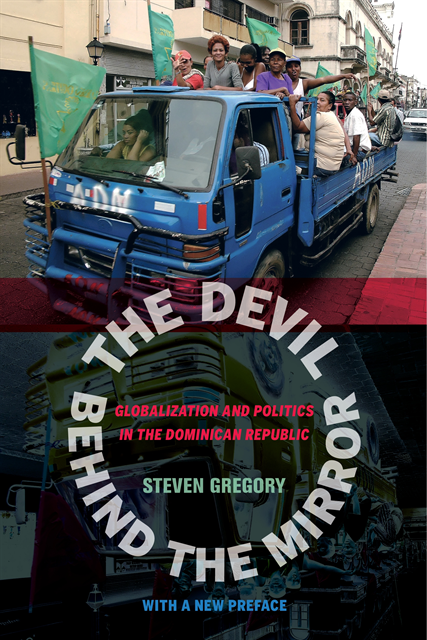
In The Devil behind the Mirror, Steven Gregory provides a compelling and intimate account of the impact that transnational processes associated with globalization are having on the lives and livelihoods of people in the Dominican Republic. Grounded in ethnographic fieldwork conducted in the adjacent towns of Boca Chica and Andres, Gregory's study deftly demonstrates how transnational flows of capital, culture, and people are mediated by contextually specific power relations, politics, and history. He explores such topics as the informal economy, the making of a telenova, sex tourism, and racism and discrimination against Haitians, who occupy the lowest rung on the Dominican economic ladder. Innovative, beautifully written, and now updated with a new preface, The Devil behind the Mirror masterfully situates the analysis of global economic change in everyday lives.
733 kr
Skickas inom 3-6 vardagar
In Black Corona, Steven Gregory examines political culture and activism in an African-American neighborhood in New York City. Using historical and ethnographic research, he challenges the view that black urban communities are "socially disorganized." Gregory demonstrates instead how working-class and middle-class African Americans construct and negotiate complex and deeply historical political identities and institutions through struggles over the built environment and neighborhood quality of life. With its emphasis on the lived experiences of African Americans, Black Corona provides a fresh and innovative contribution to the study of the dynamic interplay of race, class, and space in contemporary urban communities. It questions the accuracy of the widely used trope of the dysfunctional "black ghetto," which, the author asserts, has often been deployed to depoliticize issues of racial and economic inequality in the United States.By contrast, Gregory argues that the urban experience of African Americans is more diverse than is generally acknowledged and that it is only by attending to the history and politics of black identity and community life that we can come to appreciate this complexity. This is the first modern ethnography to focus on black working-class and middle-class life and politics. Unlike books that enumerate the ways in which black communities have been rendered powerless by urban political processes and by changing urban economies, Black Corona demonstrates the range of ways in which African Americans continue to organize and struggle for social justice and community empowerment. Although it discusses the experiences of one community, its implications resonate far more widely.
441 kr
Skickas inom 5-8 vardagar
“What unites these essays is a common focus on the ‘social construction’ of racial categories and a desire to expose the exercise of racism and its intersection with other forms of social domination such as class, gender, and ethnicity . . . Fascinating.”––Multicultural Review“The coming together of theoretical, multiethnic, and ‘on-the-ground’ perspectives makes this book a particularly valuable contribution to the discourse on race.”––Paula Giddings“Timely and thoughtful. . . contributes to our understanding of how race operates as a social process and in the contextualization of power and status.”––Contemporary Sociology“A treasure chest full of gems. Virtually every article is fascinating and important, and as a collection, its impact is tremendous. Neo-conservative myths and fantasies fall like nine-pins before its well-researched and tightly argued papers.”––Martin Bernal, author of Black Athena“A timely antidote to that reaction tome, The Bell Curve.”––Daily News (New York)“Let’s be clear from the start what this book is about,” writes Roger Sanjek. “Race is the framework of ranked categories, segmenting the human population, that was developed by Western Europeans following their global expansion.”To contemporary social scientists, this ranking is baseless, though it has had all-too-real effects.Drawing on anthropology, history, sociology, ethnic studies, and women's studies, this volume explores the role of race in a variety of cultural and historical contexts. The contributors show how racial ideologies intersect with gender, class, nation and sexuality in the formation of complex social identities and hierarchies. The essays address such topics as race and Egyptian nationalism, the construction of “whiteness” in the United States, and the transformation of racial categories in post-colonial Haiti. They demonstrate how social elites and members of subordinated groups construct and rework racial meanings and identities within the context of global political, economic, and cultural change. Race provides a comprehensive and empirically grounded survey of contemporary theoretical approaches to studying the complex interplay of race, power, and identity.
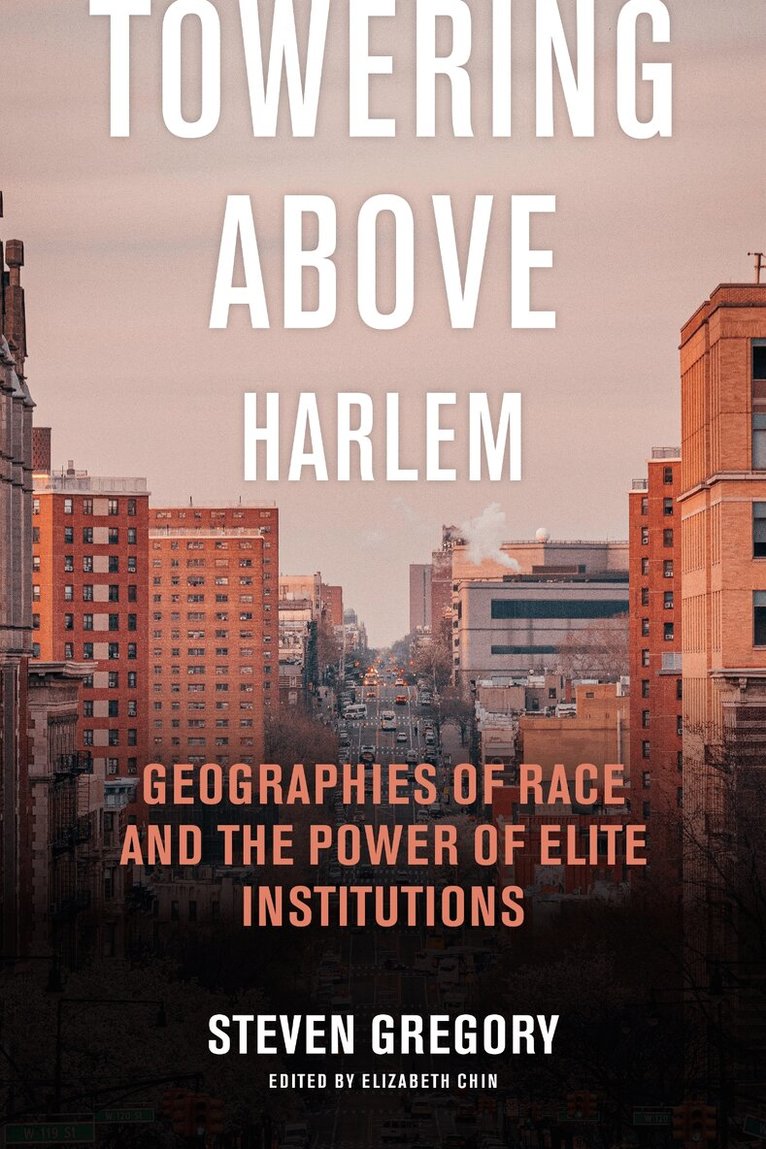
Towering Above Harlem
Geographies of Race and the Power of Elite Institutions
Inbunden, Engelska, 2025
1 068 kr
Skickas inom 10-15 vardagar
Charts racialized and class-based exclusion in Morningside Heights and its surrounding area by elite institutionsNew York City's storied diversity has also been a story of racialized class discrimination. Towering Above Harlem focuses on understudied players in this process: the elite institutions of Morningside Heights - Columbia University, Teachers College and the Riverside Church - to reveal the troubling ways in which they exploited existing geographic features to build a racially and economically exclusive "city on a hill."In his final book-length work, Steven Gregory explores the long history of economic and racial discrimination in Morningside Heights, beginning in the late 19th century and extending into the present day. This exclusion of the surrounding racial minorities and working-class population has been enacted physically, through the acquisition of property by Columbia and others, but it has also been enacted through a variety of discourses and practices aimed at setting apart the so-called "civilization-building" mission of the elites overlooking Harlem from the racialized others in the vicinity. The book shows that the major institutions of Morningside Heights have since the beginning tried to physically secede from the Black and Puerto Rican communities geographically below the Morningside plateau, while also symbolically rising above them as beacons of progress. The volume charts the coordinated effort among elites to use space to naturalize relations of power and prestige, illuminating the past, present, and uncertain future of racial discrimination and exclusivity in Morningside Heights and in New York City at large.
347 kr
Skickas
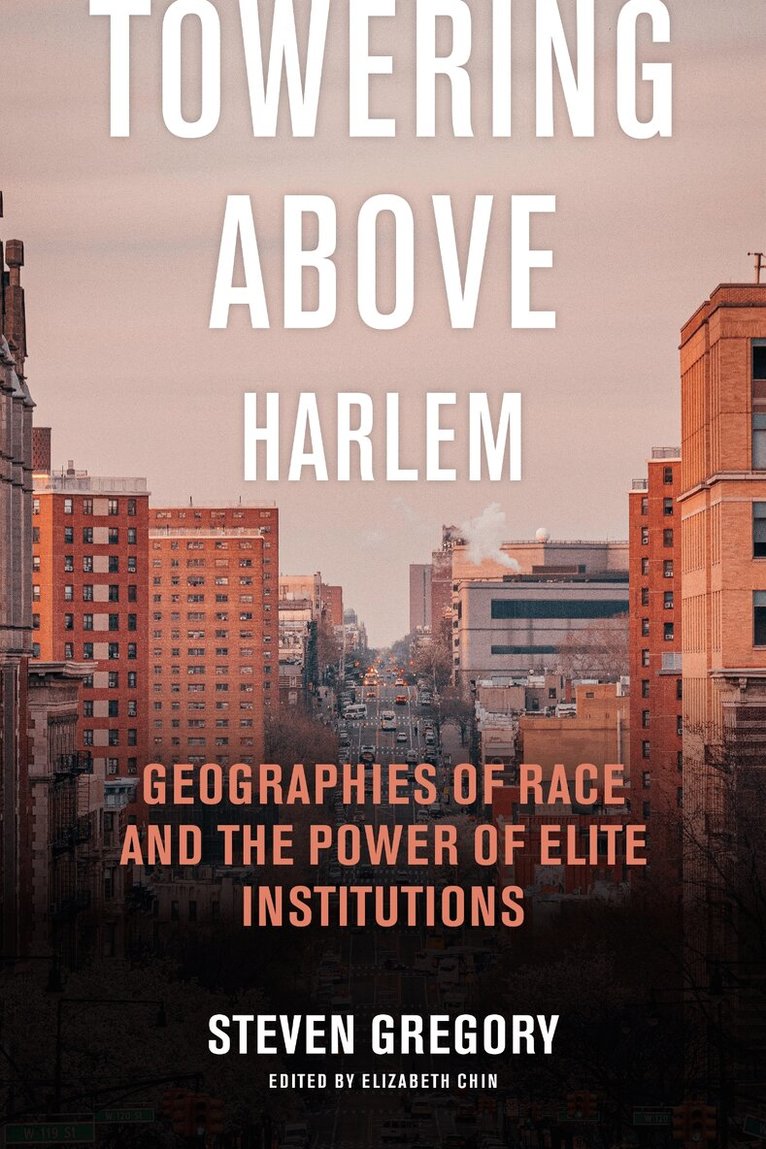
Charts racialized and class-based exclusion in Morningside Heights and its surrounding area by elite institutionsNew York City's storied diversity has also been a story of racialized class discrimination. Towering Above Harlem focuses on understudied players in this process: the elite institutions of Morningside Heights—Columbia University, Teachers College and the Riverside Church—to reveal the troubling ways in which they exploited existing geographic features to build a racially and economically exclusive "city on a hill."In his final book-length work, Steven Gregory explores the long history of economic and racial discrimination in Morningside Heights, beginning in the late 19th century and extending into the present day. This exclusion of the surrounding racial minorities and working-class population has been enacted physically, through the acquisition of property by Columbia and others, but it has also been enacted through a variety of discourses and practices aimed at setting apart the so-called "civilization-building" mission of the elites overlooking Harlem from the racialized others in the vicinity. The book shows that the major institutions of Morningside Heights have since the beginning tried to physically secede from the Black and Puerto Rican communities geographically below the Morningside plateau, while also symbolically rising above them as beacons of progress. The volume charts the coordinated effort among elites to use space to naturalize relations of power and prestige, illuminating the past, present, and uncertain future of racial discrimination and exclusivity in Morningside Heights and in New York City at large.