Steven Laurence Kaplan - Böcker
Visar alla böcker från författaren Steven Laurence Kaplan. Handla med fri frakt och snabb leverans.
11 produkter
11 produkter
Provisioning Paris
Merchants and Millers in the Grain and Flour Trade During the Eighteenth Century
Inbunden, Engelska, 1984
1 296 kr
Skickas inom 10-15 vardagar
Dependence upon grain deeply marked every aspect of life in eighteenth-century France. Steven Kaplan focuses upon this dependence at the point where it placed the greatest strain on the state, the society, and the individual—on the daily supply of grain and flour that furnished the staff of life. He reconstructs the history of provisioning in pre-industrial Paris and provides a comprehensive view of a culture shaped by the subsistence imperative. Who were the agents of the provisioning trade? What were their commercial practices? What sorts of relations did they maintain with each other? How did the authorities regulate their business? To answer these questions, Professor Kaplan combed the archives and libraries of France. He maps out the elementary structures of the trade and shows how they were transformed as a result of cultural and political as well as commercial and technological changes. In rich ethnographic detail he evokes the dayto-day life of merchants, millers, bakers, brokers, and market officials. He shows how flour superseded grain and how the millers overtook the merchants in the provisioning process. He explores the tension between the suppliers' need for freedom and the consumers' need for security. Even as he weaves the intricate patterns of life inside and outside the marketplace he never loses sight of the immense interests at stake: the stability and legitimacy of the government, the durability of the social structure, and the survival of the people.
1 213 kr
Skickas inom 10-15 vardagar
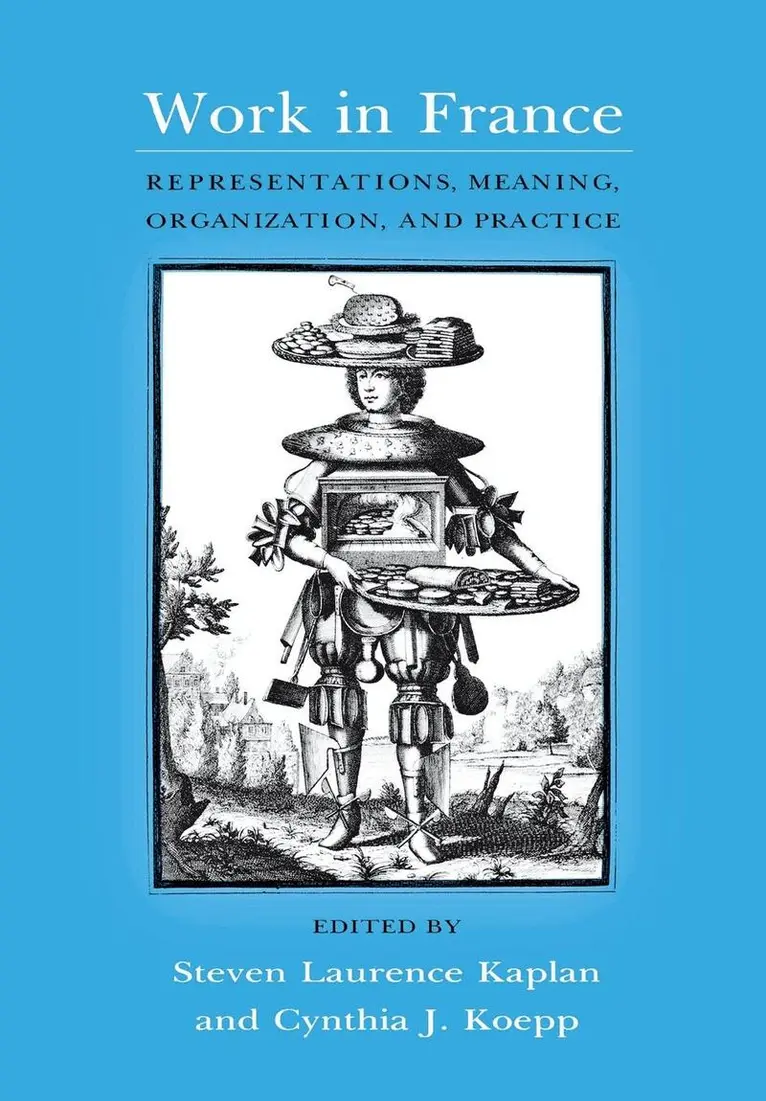
Eighteen scholars from both sides of the Atlantic look at the question of work across three centuries of French history. Representing both younger and older generations, they move beyond traditional disciplinary boundaries in order to consider human labor as it was actually performed and to determine what it has meant to specific groups and individuals at particular historical moments.This book proposes some fundamental revisions in the history of work which will have important implications for our understanding of social, political, economic, and cultural developments not only in France but throughout Europe.
1 186 kr
Skickas inom 10-15 vardagar
The interpretation of the French Revolution has long been the most contentious issue in French history. This fascinating account of the controversies surrounding the Revolution's 200th anniversary will be indispensable for all who wish to understand both France's future and its past.
1 597 kr
Skickas inom 10-15 vardagar
460 kr
Skickas inom 10-15 vardagar
Steven Laurence Kaplan reconstructs and analyzes the loud and bitter arguments over the meaning of the French Revolution which have consumed French intellectuals in recent years. Kaplan recounts the contemporary debates over the meaning of the Revolution, tracing the impact of the historians' bitter quarrel, from Parisian academic circles to the public arenas of the bicentennial celebration. He considers the roles played in those arguments by three of France's most influential historians: François Furet, Pierre Chaunu, and Michel Vovelle.In 1993, Editions Fayard published Steven Laurence Kaplan's controversial history of the bicentennial commemoration of the French Revolution. Here available in English is one of the most polemical parts of that work, Kaplan's account of the contemporary debates over the meaning of the Revolution. Farewell, Revolution: The Historians' Feud, France, 1789/1989 traces the impact of the historians' bitter quarrel, from Parisian academic circles to the public arenas of the bicentennial celebration.Kaplan considers in intimate detail the roles played in those arguments by three of France's most influential historians: François Furet, Pierre Chaunu, and Michel Vovelle. As he reenacts the feud, Kaplan invites a reassessment of the relationship between the writing of history and the practice of politics. His book suggests that the charged relationship between history and politics that enlivened the bicentennial may be the Revolution's most enduring legacy.
1 737 kr
Skickas inom 7-10 vardagar
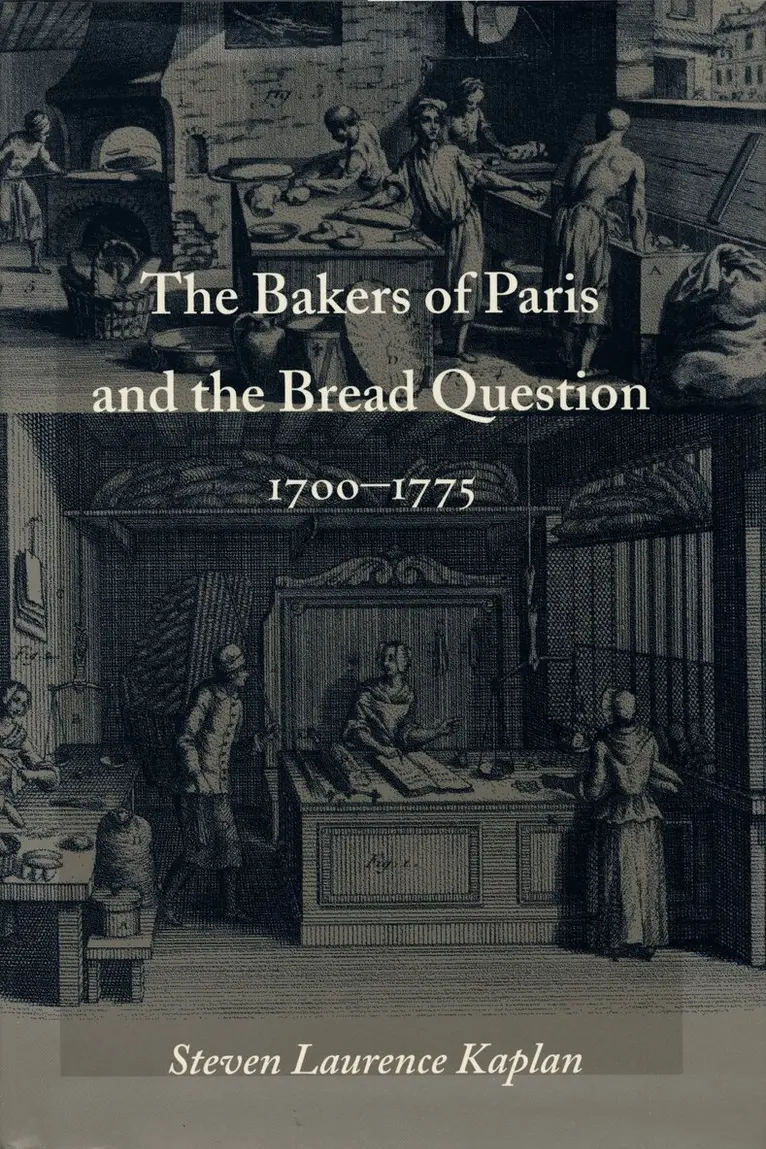
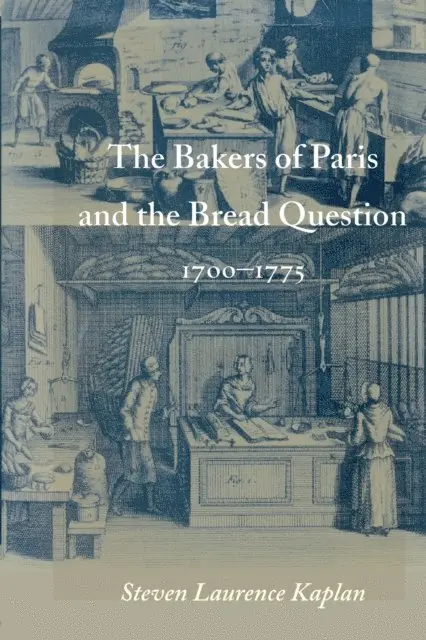
In preindustrial Europe, dependence on grain shaped every phase of life from economic development to spiritual expression, and the problem of subsistence dominated the everyday order of things in a merciless and unremitting way. Steven Laurence Kaplan’s The Bakers of Paris and the Bread Question, 1700–1775 focuses on the production and distribution of France’s most important commodity in the sprawling urban center of eighteenth-century Paris where provisioning needs were most acutely felt and most difficult to satisfy. Kaplan shows how the relentless demand for bread constructed the pattern of daily life in Paris as decisively and subtly as elaborate protocol governed the social life at Versailles.Despite the overpowering salience of bread in public and private life, Kaplan’s is the first inquiry into the ways bread exercised its vast and significant empire. Bread framed dreams as well as nightmares. It was the staff of life, the medium of communion, a topic of common discourse, and a mark of tradition as well as transcendence. In his exploration of bread’s materiality and cultural meaning, Kaplan looks at bread’s fashioning of identity and examines the conditions of supply and demand in the marketplace. He also sets forth a complete history of the bakers and their guild, and unmasks the methods used by the authorities in their efforts to regulate trade. Because the bakers and their bread were central to Parisian daily life, Kaplan’s study is also a comprehensive meditation on an entire society, its government, and its capacity to endure. Long-awaited by French history scholars, The Bakers of Paris and the Bread Question, 1700–1775 is a landmark in eighteenth-century historiography, a book that deeply contextualizes, and thus enriches our understanding of one of the most important eras in European history.
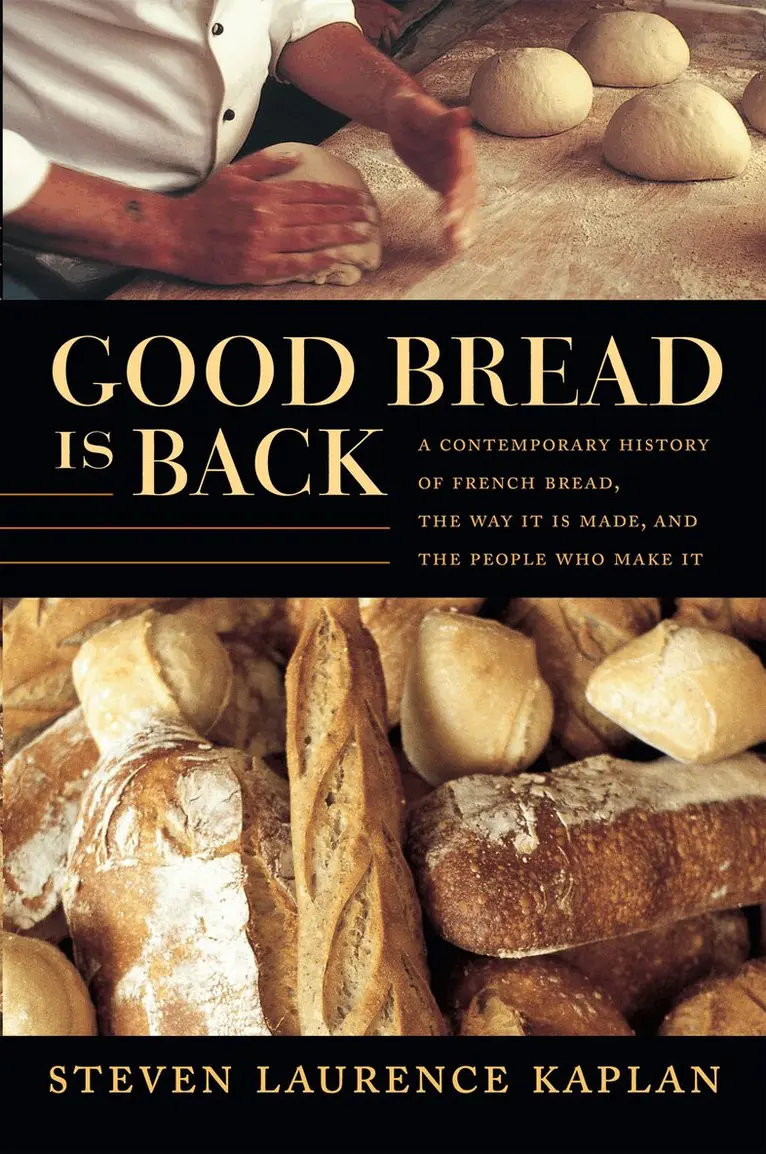
Good Bread Is Back
A Contemporary History of French Bread, the Way It Is Made, and the People Who Make It
Häftad, Engelska, 2015
489 kr
Skickas
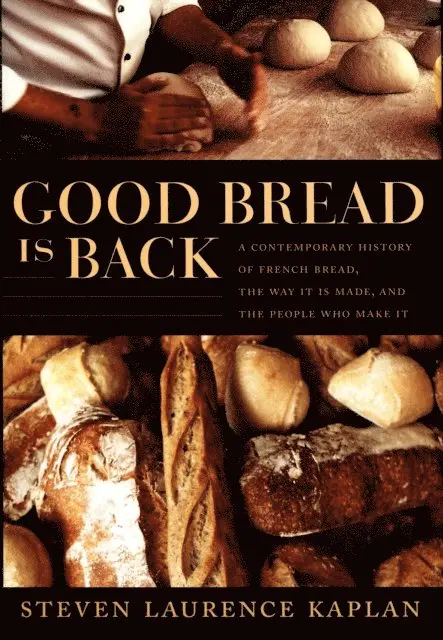
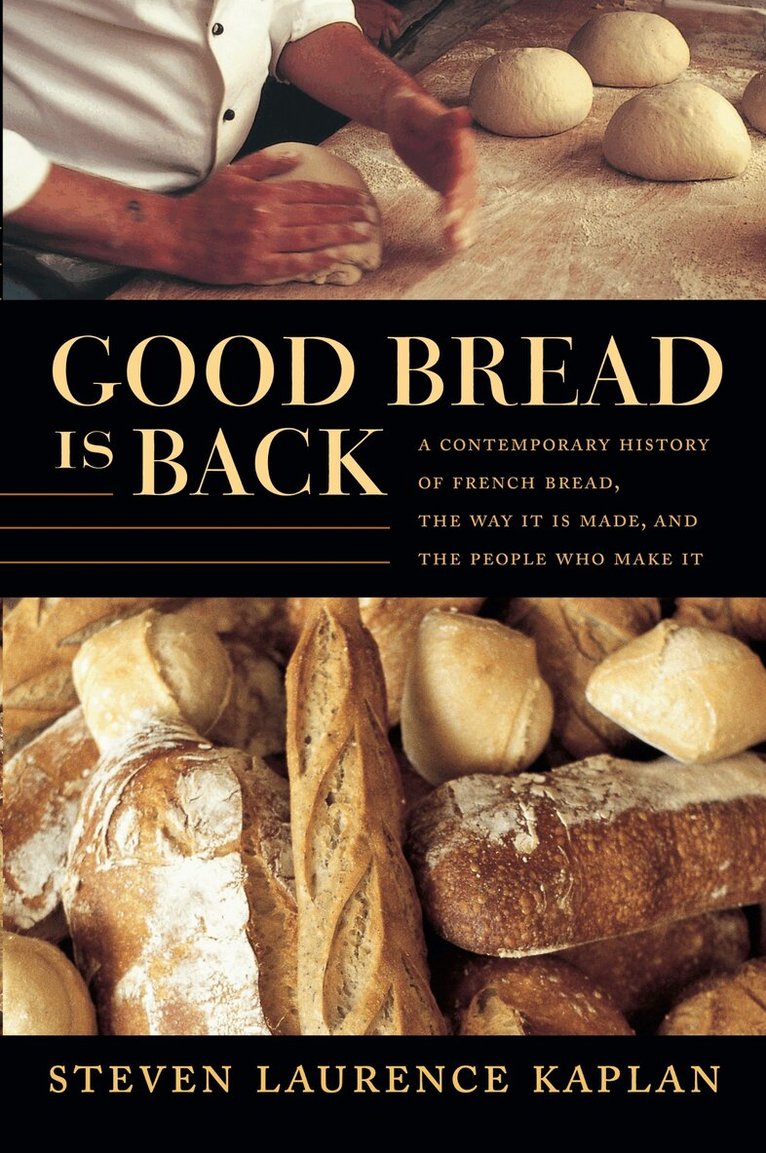
In Good Bread Is Back, historian and leading French bread expert Steven Laurence Kaplan takes readers into aromatic Parisian bakeries as he explains how good bread began to reappear in France in the 1990s, following almost a century of decline in quality. Kaplan describes how, while bread comprised the bulk of the French diet during the eighteenth century, by the twentieth, per capita consumption had dropped off precipitously. This was largely due to social and economic modernization and the availability of a wider choice of foods. But part of the problem was that the bread did not taste good. In a culture in which bread is sacrosanct, bad bread was more than a gastronomical disappointment; it was a threat to France's sense of itself. By the mid-1990s bakers rallied, and bread officially designated as "bread of the French tradition" was in demand throughout Paris. Kaplan meticulously describes good bread's ideal crust and crumb (interior), mouth feel, aroma, and taste. He discusses the breadmaking process in extraordinary detail, from the ingredients to the kneading, shaping, and baking, and even the sound bread should make when it comes out of the oven. Kaplan does more than tell the story of the revival of good bread in France. He makes the reader see, smell, taste, feel, and even hear why it is so very wonderful that good bread is back.
3 748 kr
Skickas inom 10-15 vardagar
I Modern times has invented its own brand of Apocalypse. Famine is no longer one of the familiar outriders. The problems of material life, and their political and psychological implications, have changed drastically in the course of the past two hundred years. Perhaps nothing has more profoundly affected our institutions and our attitudes than the creation of a technology of abundance. - Even the old tropes have given way: neither dollars nor calories can measure the distance which separates gagne-pain from gagne-hi/leek. 1 Yet the concerns of this book seem much less remote today than they did when it was conceived in the late sixties. In the past few years we have begun to worry, with a sort of expiatory zeal, about the state· of our environment, the size of our population, the political economy and the morality of the allocation of goods and jobs, and the future of our resources. While computer projections cast a malthusian pall over our world, we have had a bitter, first-hand tasteof shortages of all kinds. The sempiternal battle between producers and consumers rages with a new ferocity, as high prices provoke anger on the one side and celebration on the other. Even as famines continue to strike the third world in the thermidor of the green revolution, so we have discovered hunger in our own midst.
1 064 kr
Skickas inom 10-15 vardagar
It is my hope that this publication of a "lost" work by Galiani will interest scholars of many nations and disciplines. Few writers could make a more compelling claim upon such a cosmopolitan audience. An Italian with deep roots in his homeland, Galiani achieved celebrity in the salons of Paris. An ecclesiastic, his most notable concerns were worldly, to say the least. An erudite classicist, Galiani was passionately concerned about economics and technology. A philosophe and ostensibly something of a subversive, he was enthralled by power and he served for many years as a government agent and adviser at home and abroad. Galiani embodied many of the preoccupations and paradoxes of the Enlightenment. His torians and literary analysts devoted to the study of the lumie'res through out Europe are bound to find Galiani's work important. In recent years there has been an efflorescence of interest in the history of political economy and its relationship not only to the history of ideas but also to the history of social structure, economic development, admin istrative institutions, collective mentalities, and political mobilization. Galiani's work helps to crystalize many of these connections which scholarly specialization has tended to obscure. Galiani had a leading voice in one of the most significant debates in the eighteenth century on the implications of radical economic, social, and institutional change.
1 096 kr
Skickas inom 10-15 vardagar
It is my hope that this publication of a "lost" work by Galiani will interest scholars of many nations and disciplines. Few writers could make a more compelling claim upon such a cosmopolitan audience. An Italian with deep roots in his homeland, Galiani achieved celebrity in the salons of Paris. An ecclesiastic, his most notable concerns were worldly, to say the least. An erudite classicist, Galiani was passionately concerned about economics and technology. A philosophe and ostensibly something of a subversive, he was enthralled by power and he served for many years as a government agent and adviser at home and abroad. Galiani embodied many of the preoccupations and paradoxes of the Enlightenment. His torians and literary analysts devoted to the study of the lumie'res through out Europe are bound to find Galiani's work important. In recent years there has been an efflorescence of interest in the history of political economy and its relationship not only to the history of ideas but also to the history of social structure, economic development, admin istrative institutions, collective mentalities, and political mobilization. Galiani's work helps to crystalize many of these connections which scholarly specialization has tended to obscure. Galiani had a leading voice in one of the most significant debates in the eighteenth century on the implications of radical economic, social, and institutional change.
3 860 kr
Skickas inom 10-15 vardagar
I Modern times has invented its own brand of Apocalypse. Famine is no longer one of the familiar outriders. The problems of material life, and their political and psychological implications, have changed drastically in the course of the past two hundred years. Perhaps nothing has more profoundly affected our institutions and our attitudes than the creation of a technology of abundance. - Even the old tropes have given way: neither dollars nor calories can measure the distance which separates gagne-pain from gagne-hi/leek. 1 Yet the concerns of this book seem much less remote today than they did when it was conceived in the late sixties. In the past few years we have begun to worry, with a sort of expiatory zeal, about the state· of our environment, the size of our population, the political economy and the morality of the allocation of goods and jobs, and the future of our resources. While computer projections cast a malthusian pall over our world, we have had a bitter, first-hand tasteof shortages of all kinds. The sempiternal battle between producers and consumers rages with a new ferocity, as high prices provoke anger on the one side and celebration on the other. Even as famines continue to strike the third world in the thermidor of the green revolution, so we have discovered hunger in our own midst.