Steven Mailloux - Böcker
Visar alla böcker från författaren Steven Mailloux. Handla med fri frakt och snabb leverans.
10 produkter
10 produkter
Del 4 - RSA Series in Transdisciplinary Rhetoric
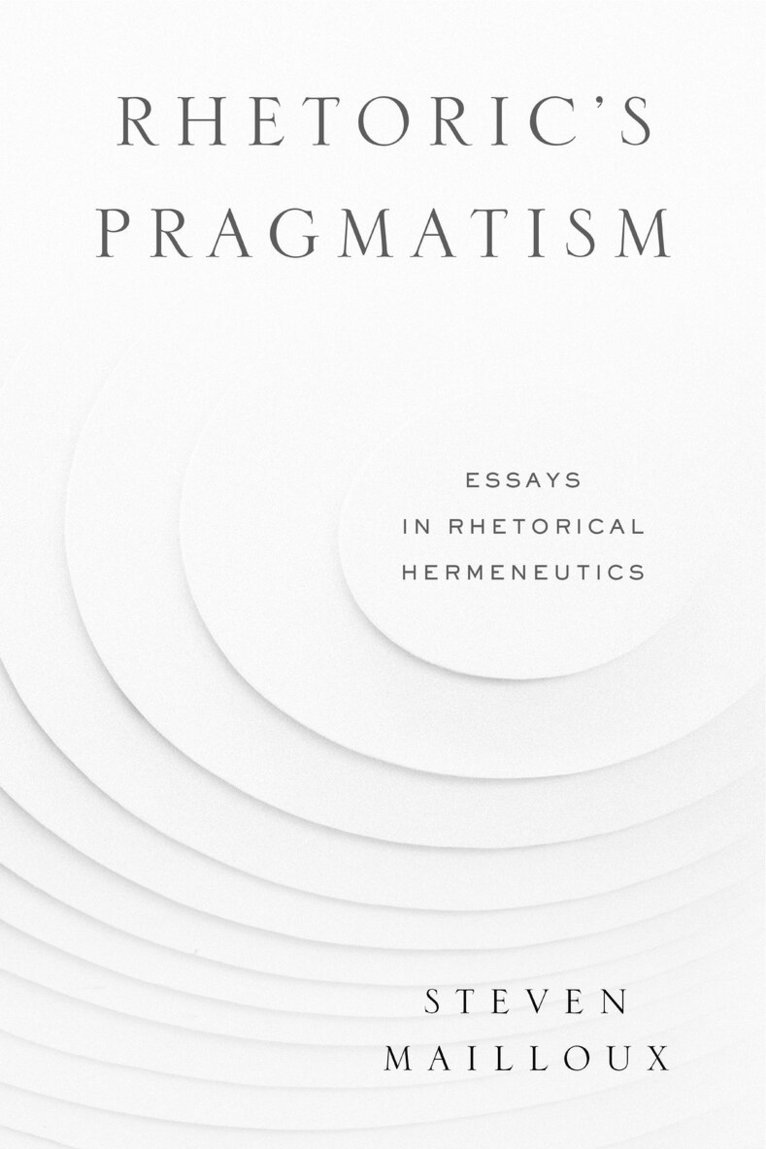
Rhetoric’s Pragmatism
Essays in Rhetorical Hermeneutics
Inbunden, Engelska, 2017
1 433 kr
Skickas inom 5-8 vardagar
For over thirty years, Steven Mailloux has championed and advanced the field of rhetorical hermeneutics, a historically and theoretically informed approach to textual interpretation. This volume collects fourteen of his most recent influential essays on the methodology, plus an interview.Following from the proposition that rhetorical hermeneutics uses rhetoric to practice theory by doing history, this book examines a diverse range of texts from literature, history, law, religion, and cultural studies. Through four sections, Mailloux explores the theoretical writings of Heidegger, Burke, and Rorty, among others; Jesuit educational treatises; and products of popular culture such as Azar Nafisi’s Reading Lolita in Tehran and Star Trek: The Next Generation. In doing so, he shows how rhetorical perspectives and pragmatist traditions work together as two mutually supportive modes of understanding, and he demonstrates how the combination of rhetoric and interpretation works both in theory and in practice. Theoretically, rhetorical hermeneutics can be understood as a form of neopragmatism. Practically, it focuses on the production, circulation, and reception of written and performed communication.A thought-provoking collection from a preeminent literary critic and rhetorician, Rhetoric’s Pragmatism assesses the practice and value of rhetorical hermeneutics today and the directions in which it might head. Scholars and students of rhetoric and communication studies, critical theory, literature, law, religion, and American studies will find Mailloux’s arguments enlightening and essential.
Del 4 - RSA Series in Transdisciplinary Rhetoric
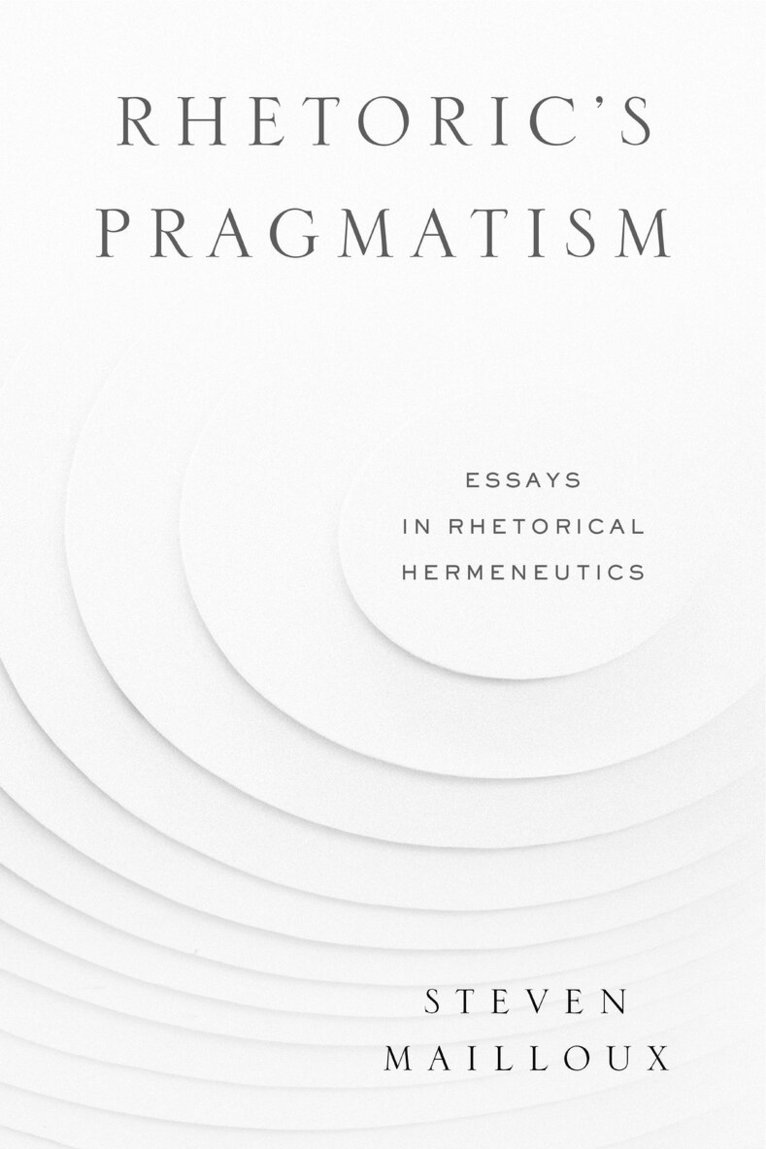
Rhetoric’s Pragmatism
Essays in Rhetorical Hermeneutics
Häftad, Engelska, 2017
363 kr
Skickas inom 7-10 vardagar
For over thirty years, Steven Mailloux has championed and advanced the field of rhetorical hermeneutics, a historically and theoretically informed approach to textual interpretation. This volume collects fourteen of his most recent influential essays on the methodology, plus an interview.Following from the proposition that rhetorical hermeneutics uses rhetoric to practice theory by doing history, this book examines a diverse range of texts from literature, history, law, religion, and cultural studies. Through four sections, Mailloux explores the theoretical writings of Heidegger, Burke, and Rorty, among others; Jesuit educational treatises; and products of popular culture such as Azar Nafisi’s Reading Lolita in Tehran and Star Trek: The Next Generation. In doing so, he shows how rhetorical perspectives and pragmatist traditions work together as two mutually supportive modes of understanding, and he demonstrates how the combination of rhetoric and interpretation works both in theory and in practice. Theoretically, rhetorical hermeneutics can be understood as a form of neopragmatism. Practically, it focuses on the production, circulation, and reception of written and performed communication.A thought-provoking collection from a preeminent literary critic and rhetorician, Rhetoric’s Pragmatism assesses the practice and value of rhetorical hermeneutics today and the directions in which it might head. Scholars and students of rhetoric and communication studies, critical theory, literature, law, religion, and American studies will find Mailloux’s arguments enlightening and essential.
1 371 kr
Skickas inom 7-10 vardagar
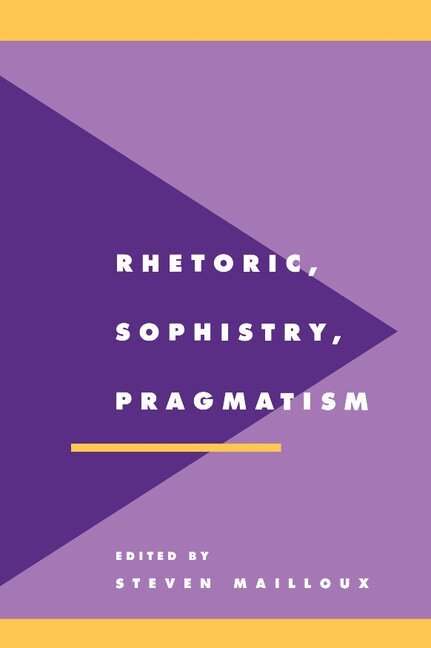
The anti-sceptical relativism and self-conscious rhetoric of the pragmatist tradition, which began with the Older Sophists of Ancient Greece and developed through an American tradition including William James and John Dewey has attracted new attention in the context of late twentieth-century postmodernist thought. At the same time there has been a more general renewal of interest across a wide range of humanistic and social science disciplines in rhetoric itself: language use, writing and speaking, persuasion, figurative language, and the effect of texts. This book, written by leading scholars, explores the various ways in which rhetoric, sophistry and pragmatism overlap in their current theoretical and political implications, and demonstrates how they contribute both to a rethinking of the human sciences within the academy and to larger debates over cultural politics.
538 kr
Skickas inom 7-10 vardagar
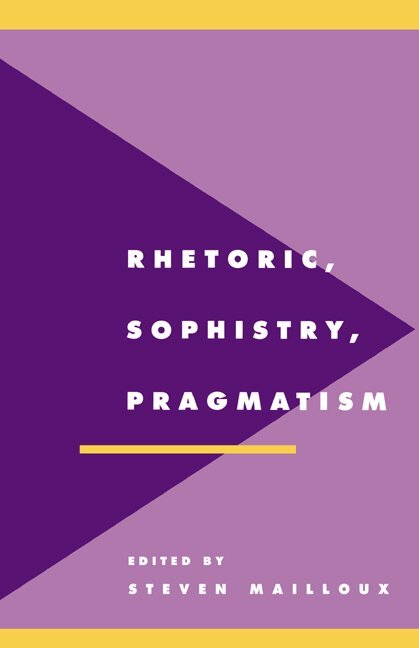
The anti-sceptical relativism and self-conscious rhetoric of the pragmatist tradition, which began with the Older Sophists of Ancient Greece and developed through an American tradition including William James and John Dewey has attracted new attention in the context of late twentieth-century postmodernist thought. At the same time there has been a more general renewal of interest across a wide range of humanistic and social science disciplines in rhetoric itself: language use, writing and speaking, persuasion, figurative language, and the effect of texts. This book, written by leading scholars, explores the various ways in which rhetoric, sophistry and pragmatism overlap in their current theoretical and political implications, and demonstrates how they contribute both to a rethinking of the human sciences within the academy and to larger debates over cultural politics.
727 kr
Skickas inom 10-15 vardagar
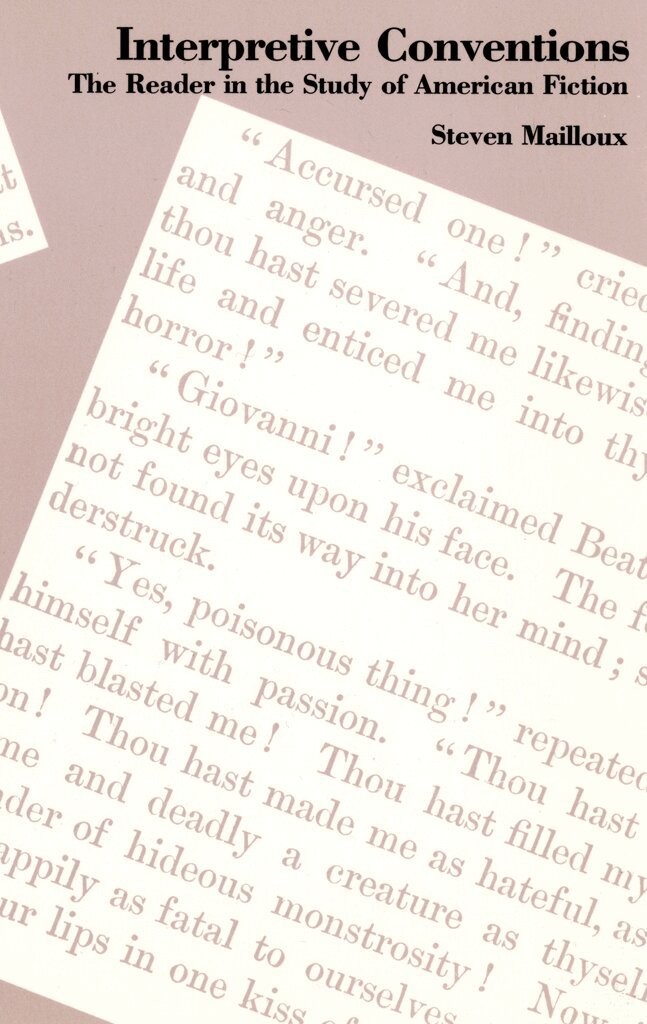
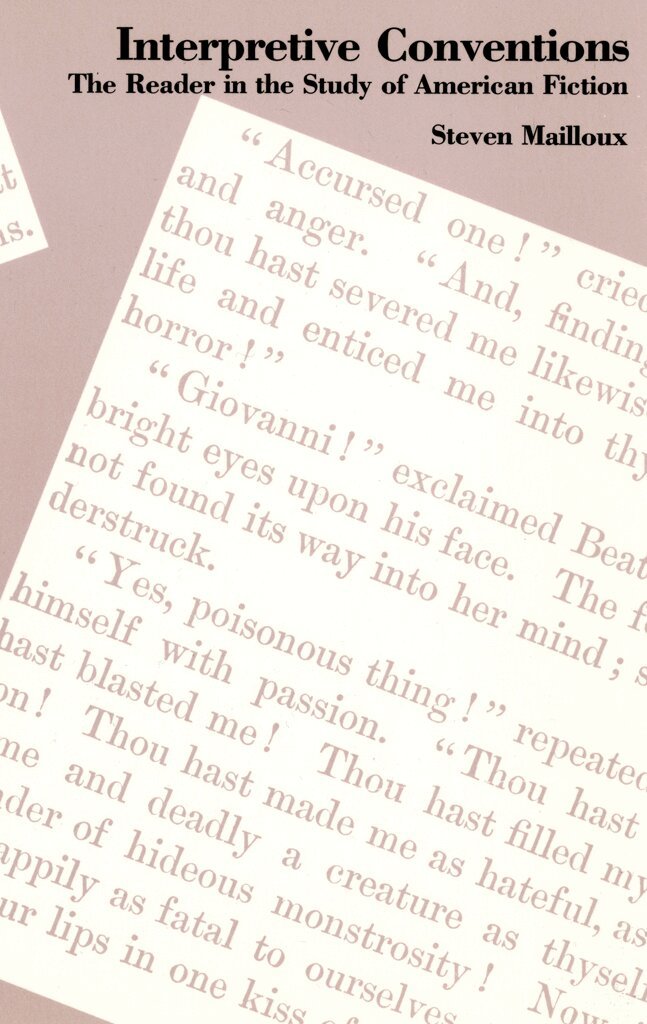
In Interpretive Conventions, Steven Mailloux provides a general introduction to reader-response criticism while developing his own specific reader-oriented approach to literature. He examines five influential theories of the reading process—those of Stanley Fish, Jonathan Culler, Wolfgang Iser, Norman Holland, and David Bleich. He goes on to argue the need for a more comprehensive reader-response criticism based on a consistent social model of reading. He develops such a reading model and also discusses American textual editing and literary history.
1 783 kr
Skickas inom 10-15 vardagar
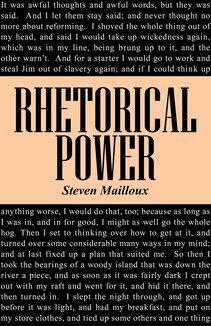
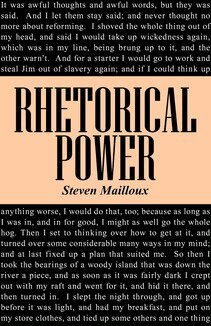
In this provocative and forcefully written book, Steven Mailloux takes issue with the validity of a number of distinctions commonly made in contemporary literary theory and cultural studies—distinctions between theory and history, reader and text, truth and ideology, aesthetics and politics.Mailloux first presents the case for a rhetorical hermeneutics and against foundationalist theories of interpretation. Doing hermeneutic theory, he argues, entails doing rhetorical history. By means of a detailed analysis of reader-response criticism, he highlights the connections between institutional politics and the interpretive rhetoric of academic literary criticism.Mailloux then uses Adventures of Huckleberry Finn as an exemplary text. Relating Mark Twain's rhetoric to the cultural politics of post-Reconstruction debates about racist ideology, he places his reader-oriented interpretation within the rhetorical history of controversies over the meaning and value of Huckleberry Finn. Finally, in a far-ranging study of cultural reception, he juxtaposes the twentieth-century concern about the topic of race in Huckleberry Finn with the nineteenth-century audience's very different concerns about juvenile delinquency and the "bad-boy boom." In the final part of the book, Mailloux restates his critique of foundationalist hermeneutics through readings of Ken Kesey, Michel Foucault, Edward Said, and Richard Rorty, and he concludes by examining the role of rhetoric and theory in a congressional dispute over the Reagan administration's reinterpretation of the Anti-Ballistic Missile Treaty.Rhetorical Power will be welcomed by readers in literary theory and American studies, as well as in such fields as speech communication, the sociology of culture, and social and intellectual history, and by others interested in the politics of persuasion.
1 110 kr
Skickas inom 10-15 vardagar
In his earlier Rhetorical Power, Steven Mailloux presented an innovative and challenging strategy for combining critical theory and cultural studies. That book has stimulated wide-ranging discussion and debate among diverse audiences—students and specialists in American studies, speech communications, rhetoric/composition, law, education, biblical studies, and especially literary theory and cultural criticism. Reception Histories marks a further development of Mailloux's influential critical project, as he demonstrates how rhetorical hermeneutics uses rhetoric to practice theory by doing history. Reception Histories works out in detail what rhetorical hermeneutics means in terms of poststructuralist theory (Part One), nineteenth-century U.S. cultural studies (Part Two), and the contemporary history of curricular reform within the so-called Culture Wars (Part Three). Mailloux situates, defends, and elaborates the theory he first proposed in Rhetorical Power, and he exemplifies it with a new series of provocative reception histories. He also both critiques and reconceptualizes the version of reader response criticism he developed in his first book, Interpretive Conventions. Throughout Reception Histories, Mailloux demonstrates his distinctive blend of neopragmatism and cultural rhetoric study. By tracing the rhetorical paths of thought, this book offers a new way to read the current volatile debates over higher education and contributes its own original proposals for shaping the future of the humanities.
391 kr
Skickas inom 10-15 vardagar
In his earlier Rhetorical Power, Steven Mailloux presented an innovative and challenging strategy for combining critical theory and cultural studies. That book has stimulated wide-ranging discussion and debate among diverse audiences—students and specialists in American studies, speech communications, rhetoric/composition, law, education, biblical studies, and especially literary theory and cultural criticism. Reception Histories marks a further development of Mailloux's influential critical project, as he demonstrates how rhetorical hermeneutics uses rhetoric to practice theory by doing history. Reception Histories works out in detail what rhetorical hermeneutics means in terms of poststructuralist theory (Part One), nineteenth-century U.S. cultural studies (Part Two), and the contemporary history of curricular reform within the so-called Culture Wars (Part Three). Mailloux situates, defends, and elaborates the theory he first proposed in Rhetorical Power, and he exemplifies it with a new series of provocative reception histories. He also both critiques and reconceptualizes the version of reader response criticism he developed in his first book, Interpretive Conventions. Throughout Reception Histories, Mailloux demonstrates his distinctive blend of neopragmatism and cultural rhetoric study. By tracing the rhetorical paths of thought, this book offers a new way to read the current volatile debates over higher education and contributes its own original proposals for shaping the future of the humanities.
375 kr
Skickas inom 10-15 vardagar
In this provocative and forcefully written book, Steven Mailloux takes issue with the validity of a number of distinctions commonly made in contemporary literary theory and cultural studies—distinctions between theory and history, reader and text, truth and ideology, aesthetics and politics.Mailloux first presents the case for a rhetorical hermeneutics and against foundationalist theories of interpretation. Doing hermeneutic theory, he argues, entails doing rhetorical history. By means of a detailed analysis of reader-response criticism, he highlights the connections between institutional politics and the interpretive rhetoric of academic literary criticism.Mailloux then uses Adventures of Huckleberry Finn as an exemplary text. Relating Mark Twain's rhetoric to the cultural politics of post-Reconstruction debates about racist ideology, he places his reader-oriented interpretation within the rhetorical history of controversies over the meaning and value of Huckleberry Finn. Finally, in a far-ranging study of cultural reception, he juxtaposes the twentieth-century concern about the topic of race in Huckleberry Finn with the nineteenth-century audience's very different concerns about juvenile delinquency and the "bad-boy boom." In the final part of the book, Mailloux restates his critique of foundationalist hermeneutics through readings of Ken Kesey, Michel Foucault, Edward Said, and Richard Rorty, and he concludes by examining the role of rhetoric and theory in a congressional dispute over the Reagan administration's reinterpretation of the Anti-Ballistic Missile Treaty.Rhetorical Power will be welcomed by readers in literary theory and American studies, as well as in such fields as speech communication, the sociology of culture, and social and intellectual history, and by others interested in the politics of persuasion.
299 kr
Skickas inom 10-15 vardagar
In Interpretive Conventions, Steven Mailloux provides a general introduction to reader-response criticism while developing his own specific reader-oriented approach to literature. He examines five influential theories of the reading process—those of Stanley Fish, Jonathan Culler, Wolfgang Iser, Norman Holland, and David Bleich. He goes on to argue the need for a more comprehensive reader-response criticism based on a consistent social model of reading. He develops such a reading model and also discusses American textual editing and literary history.