
Steven Travers – författare
Visar alla böcker från författaren Steven Travers. Handla med fri frakt och snabb leverans.
7 produkter
7 produkter
486 kr
Skickas inom 5-8 vardagar
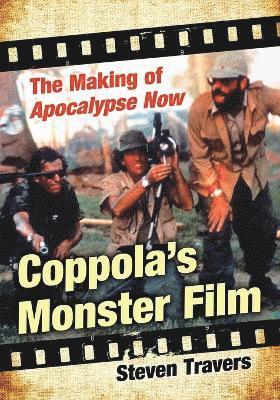
In 1975, after his two Godfather epics, Francis Ford Coppola went to the Philippines to film Apocalypse Now. He scrapped much of the original script, a jingoistic narrative of U.S. Special Forces winning an unwinnable war. Harvey Keitel, originally cast in the lead role, was fired and replaced by Martin Sheen, who had a heart attack. An overweight Marlon Brando, paid a huge salary, did more philosophizing than acting. It rained almost every day and a hurricane wiped out the set. The Philippine government promised the use of helicopters but diverted them at the last minute to fight communist and Muslim separatists.Coppola filmed for four years with no ending in the script. The shoot threatened to be the biggest disaster in movie history. Providing a detailed snapshot of American cinema during the Vietnam War, this book tells the story of how Apocalypse Now became one of the great films of all time.
261 kr
Skickas inom 5-8 vardagar
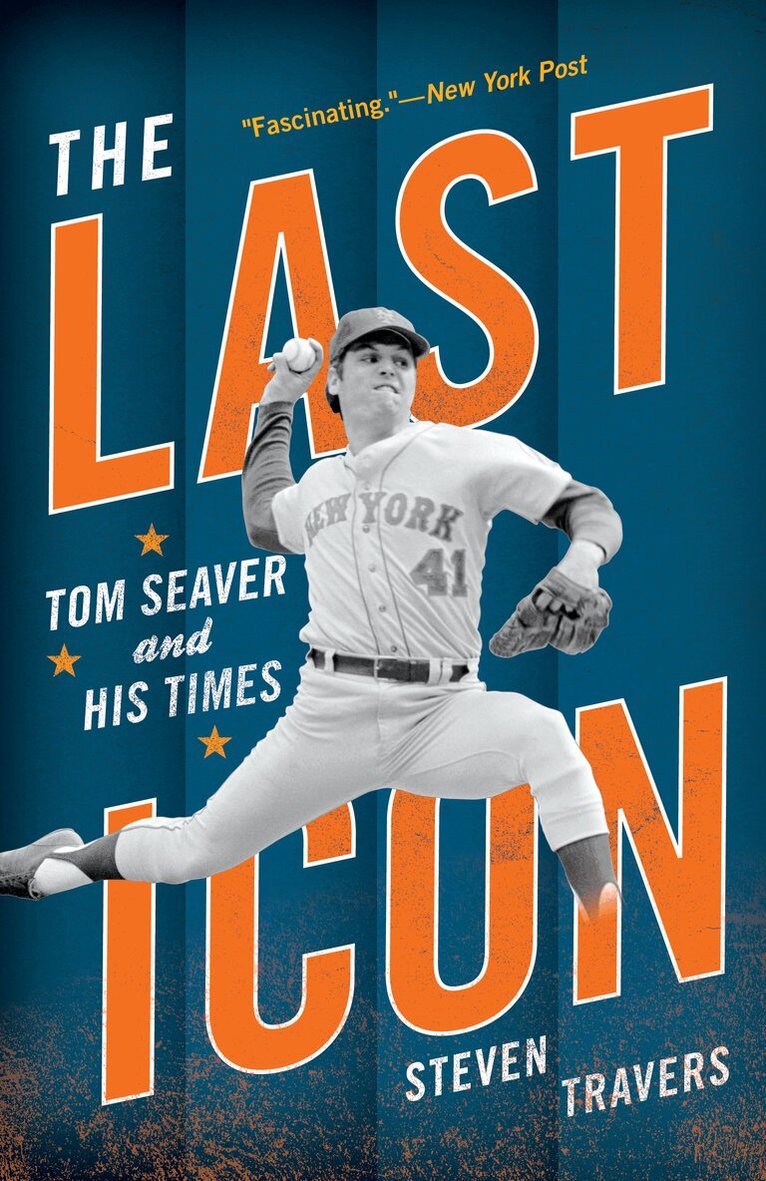
In early 1969, New York City and all it represented was in disarray: politically, criminally, and athletically. But while Simon and Garfunkel lamented the absence of a sports icon like Joe DiMaggio, a modern Lancelot rode forth to lead the New York Mets to heights above and beyond all sports glory. This book tells the complete, unvarnished story of the great Tom Seaver, that rarest of all American heroes, the New York Sports Icon. In a city that produces not mere mortals but sports gods, Seaver represented the last of a breed. His deeds, his times, his town—it was part of a vanishing era, an era of innocence. In 1969, six years after John F. Kennedy’s assassination, Seaver and the Mets were the last gasp of idealism before free agency, Watergate, and cynicism. Here is the story of “Tom Terrific” of the “Amazin’ Mets,” a man worthy of a place alongside DiMaggio, Ruth, Mantle, and Namath in the pantheon of New York idols.
298 kr
Tillfälligt slut
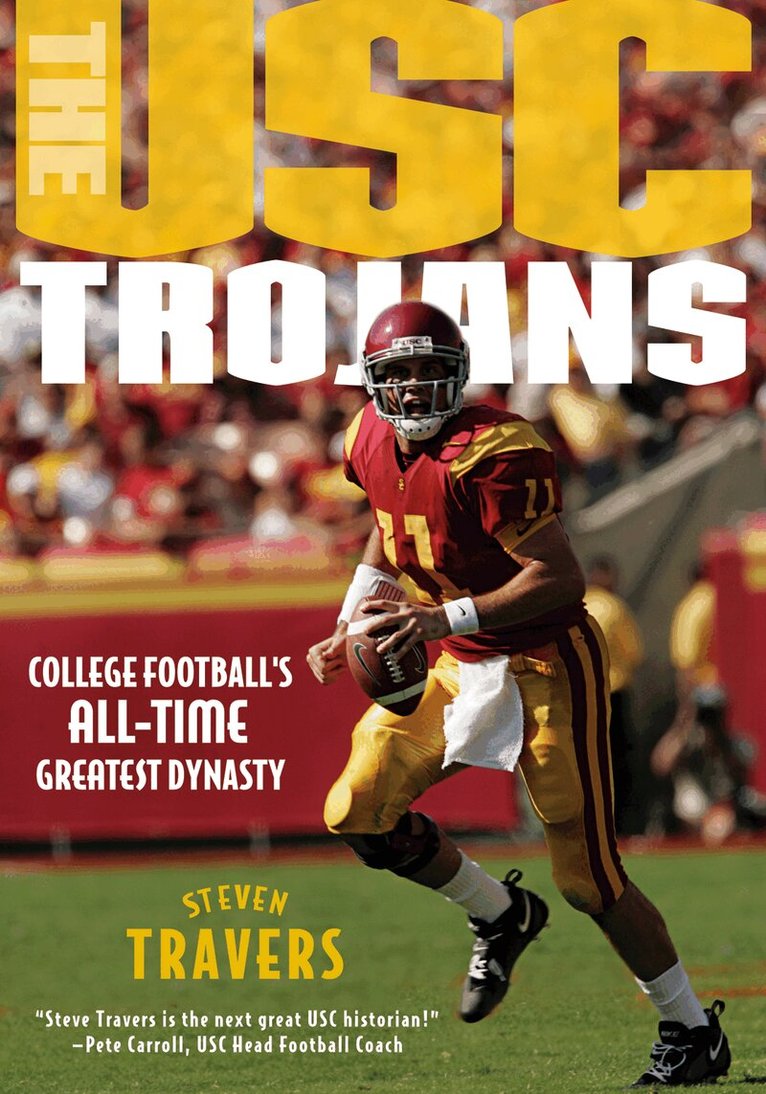
In 2000, the University of Southern California Trojans were named Collegiate Athletic Department of the 20th Century. However, it still seemed that the greatest historical football program was USC's biggest rival, the Notre Dame Fighting Irish. In this lively history of USC football, Travers makes the case that under the guidance of coach Pete Carroll the Trojans have overtaken Notre Dame as the "greatest ever" collegiate tradition. Illustrated with both historic and contemporary photos and containing an extensive appendix listing college football's all-time greatest teams by year, this book celebrates college football's best and provides a blow-by-blow account of perhaps the greatest game ever played: the 2006 USC-Texas Rose Bowl.
304 kr
Skickas inom 3-6 vardagar
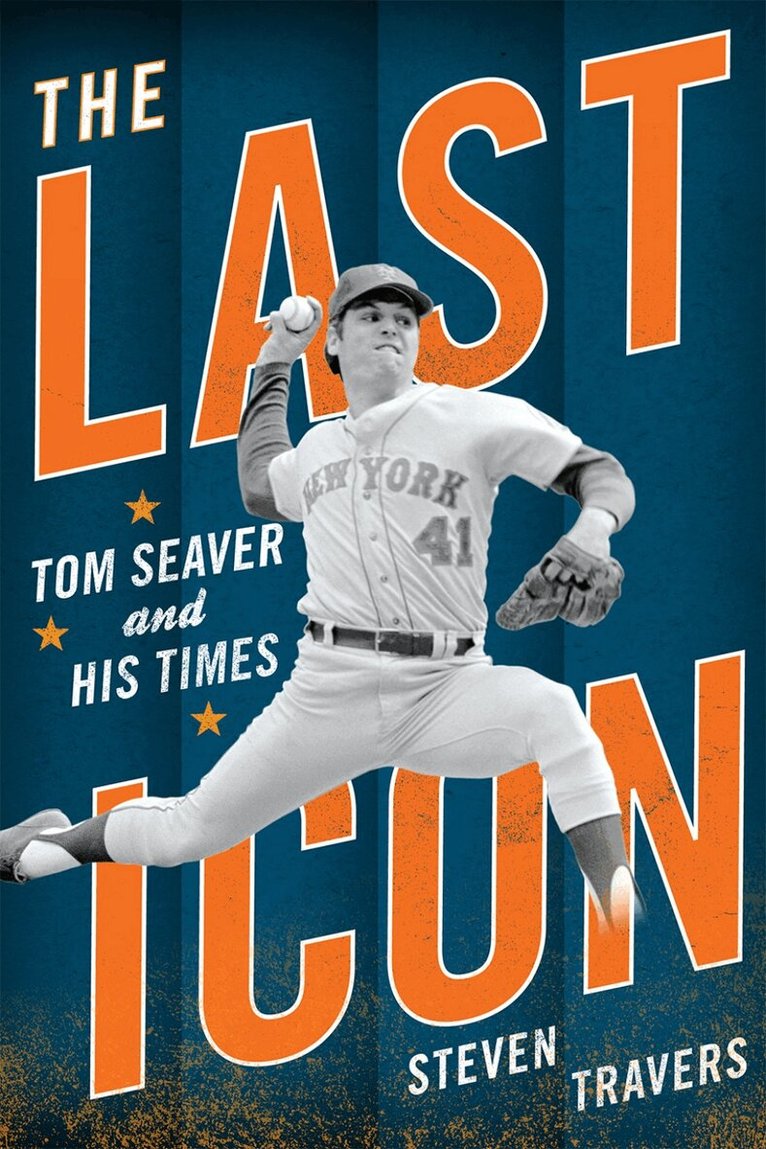
In early 1969, New York City and all it represented was in disarray: politically, criminally, and athletically. But while Simon and Garfunkel lamented the absence of a sports icon like Joe DiMaggio, a modern Lancelot rode forth to lead the New York Mets to heights above and beyond all sports glory. This book tells the complete, unvarnished story of the great Tom Seaver, that rarest of all American heroes, the New York Sports Icon. In a city that produces not mere mortals but sports gods, Seaver represented the last of a breed. His deeds, his times, his town—it was part of a vanishing era, an era of innocence. In 1969, six years after John F. Kennedy’s assassination, Seaver and the Mets were the last gasp of idealism before free agency, Watergate, and cynicism. Here is the story of “Tom Terrific” of the “Amazin’ Mets,” a man worthy of a place alongside DiMaggio, Ruth, Mantle, and Namath in the pantheon of New York idols.
284 kr
Tillfälligt slut
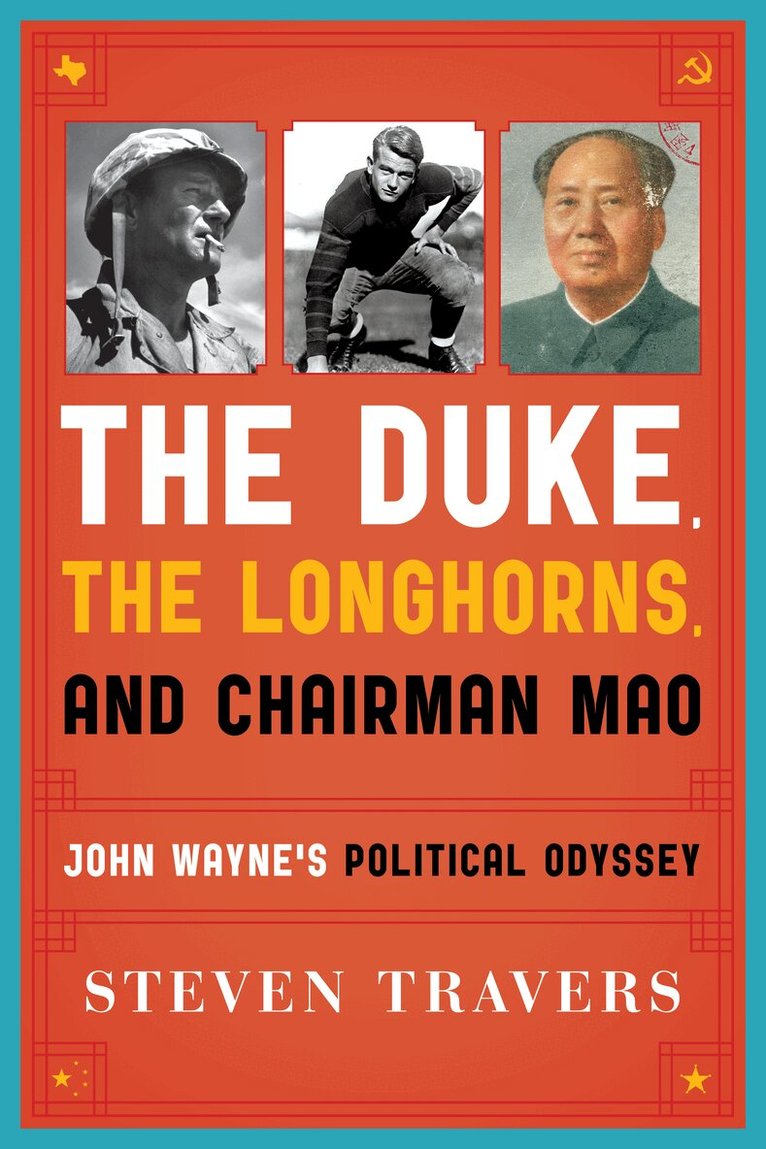
1966. The year of change. The year of division. The middle of the 1960s, the great dividing line between what America had been, and what it became. All of it, in all its color, glory, and ugliness, came symbolically together on a hot, humid weekend in Austin, Texas. The protagonist? None other John “Duke” Wayne, the larger-than-life movie hero of countless Westerns and war dramas; a swashbuckling, ruggedly macho idol of America; the very embodiment of what the United States had become—the new Rome: the most powerful military, political, and cultural empire in the annals of mankind. Wayne, like the nation itself, stood astride the world in Colossus style, talking tough. Taking no prisoners.In September 1966, John Wayne was in Texas filming War Wagon while the integrated Trojans of the University of Southern California arrived in Austin to do battle with a powerhouse of equal stature, the all-white Texas Longhorns. The Duke, a one-time pulling guard for coach Howard Jones at USC, was there, accompanied by sycophants, and according to rumor, with spurs on. Wayne arrived in Austin the night before the game. Dressed to the nines, he immediately repaired to the hotel bar. He had a full entourage who hung on his every word as if uttered from the Burning Bush. So it was when the Duke ordered his first whiskey. Thus surrounded by sycophants, John Wayne bellowed opinions, bromides, and pronouncements. What happened next is subject to interpretation, for this weekend and many other details of the Duke’s “Trojan wars” are revealed and expounded upon by longtime USC historian Steven Travers.This book is a fly-on-the-wall exploration of this wild weekend and an immersion into the John Wayne mythology: his politics, his inspirations, the plots to assassinate him, his connections to Stalin, Khrushchev, and Chairman Mao, and the death of the Western.
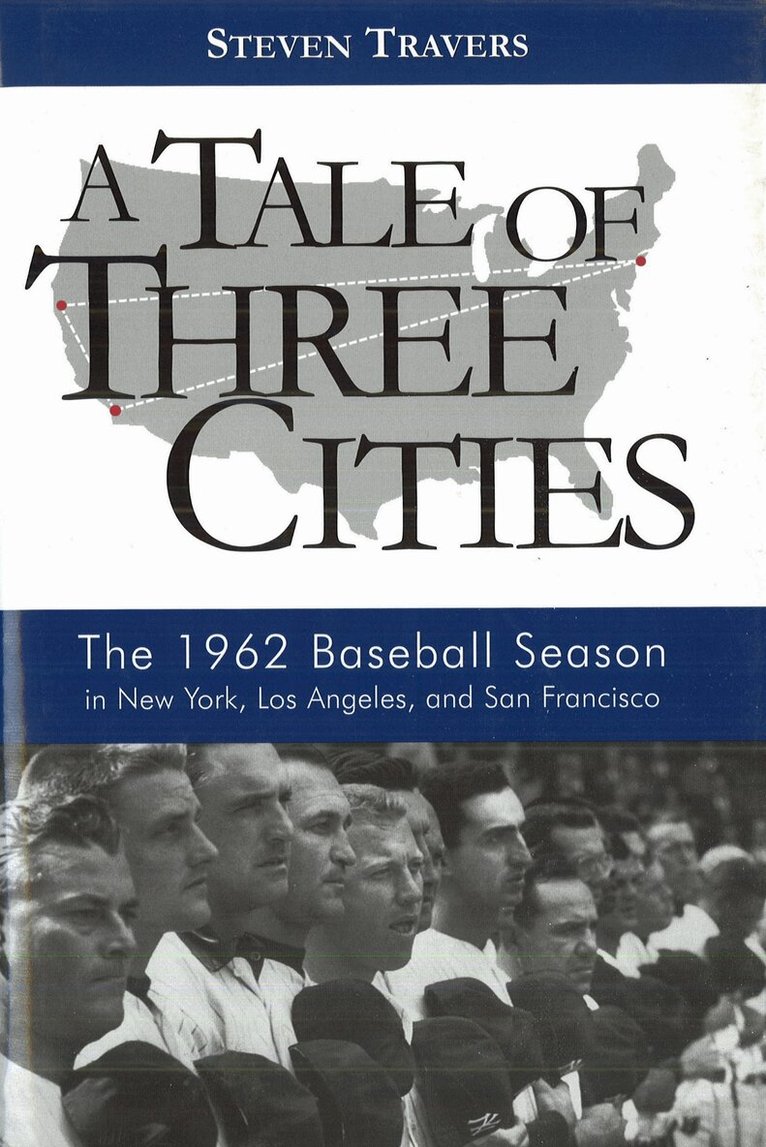
Tale of Three Cities
The 1962 Baseball Season in New York, Los Angeles, and San Francisco
Inbunden, Engelska, 2009
397 kr
Skickas inom 3-6 vardagar
Nineteen sixty-two—it's been called "the end of innocence," as America witnessed the Cuban Missile Crisis and the following year saw the Kennedy assassination and the early stirrings of Vietnam.In baseball, 1962 was a thrilling season. Five years prior the Brooklyn Dodgers and New York Giants had migrated west to Los Angeles and San Francisco, respectively, leaving New York to the Yankees. In 1962, those same Giants and Dodgers faced off to see who would advance to the World Series. Waiting to do battle were the Yankees, who were also battling for allegiance in New York with the Mets' debut. The old Subway Series had gone cross-country.Just as it was the end of innocence, it was an end of an era for the Yankees. Winners of eleven World Series titles in twenty years, they would go fifteen years— a record for the modern-era Bombers at the time—until their next championship. They appeared in the next two World Series, but by the end of the decade it was those upstart Mets amazin' fans. The Dodgers would break through the following year and again in 1965 while the Giants—convinced they'd be back many times— have yet to win a title on the West Coast. Mickey Mantle and Whitey Ford, Willie Mays and Willie McCovey, Sandy Koufax and Don Drysdale, Casey Stengel. Steven Travers details Hollywood's adoration of the Dodgers, San Francisco's battle between inferiority and superiority, and New York, rulers of sport and society, experiencing the beginnings of a changing of the guard. Three cities, five teams, and one great year are all here in A Tale of Three Cities.
207 kr
Skickas inom 7-10 vardagar
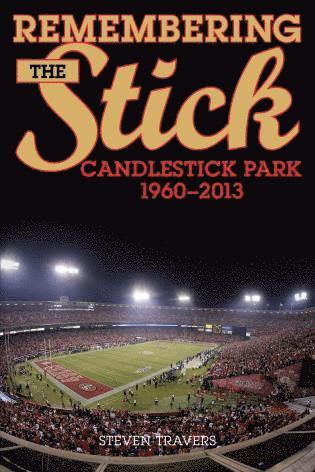
Described by famed baseball scribe Roger Angell as looking like “a festive prison yard” during the 1962 World Series, Candlestick was loved and hated by sports teams and fans alike for its 43 years of existence. Built on a landfill above a garbage dump in a city rocked by an 8.6 earthquake only 54 years earlier, it was notorious for the tornadic winds that came off the bay, probably costing Willie Mays at least 100 career home runs. The fogs that rolled in looked like something God sent to pass over His Chosen people. And of course, there was the famous 1989 World Series earthquake that postponed the opening game for 10 days. But it was also home to the greatest run of sustained excellence in pro football history: the 1981–1994 49ers, as well as the exploits of baseball stars such as Mays and Juan Marichal.