Stjepan Mestrovic – författare
1 672 kr
Skickas inom 10-15 vardagar
742 kr
Skickas inom 10-15 vardagar
2 158 kr
Skickas inom 10-15 vardagar
659 kr
Skickas inom 10-15 vardagar
2 294 kr
Skickas inom 10-15 vardagar
765 kr
Skickas inom 10-15 vardagar
2 158 kr
Skickas inom 10-15 vardagar
673 kr
Skickas inom 10-15 vardagar
3 396 kr
Skickas inom 11-20 vardagar
1 871 kr
Skickas inom 3-6 vardagar
1 217 kr
Skickas inom 10-15 vardagar
423 kr
Skickas inom 5-8 vardagar
763 kr
Läs direkt efter köp
Anthony Giddens is arguably the world''s leading sociologist. In this controversial contribution to the Giddens debate, Stjepan Mestrovic takes up and criticizes the major themes of his work - particularly the concept of ''high modernity'' as opposed to ''postmodernity'' and his attempted construction of a ''synthetic'' tradition based on human agency and structure. Testing Giddens'' theories against what is happening in the real world from genocide in Africa to near secession in Quebec, Mestrovic discerns in the construction of synthetic traditions not the promise of freedom held out by Giddens but rather the ominous potential for new forms of totalitarian control.
769 kr
Läs direkt efter köp
Anthony Giddens is arguably the world''s leading sociologist. In this controversial contribution to the Giddens debate, Stjepan Mestrovic takes up and criticizes the major themes of his work - particularly the concept of ''high modernity'' as opposed to ''postmodernity'' and his attempted construction of a ''synthetic'' tradition based on human agency and structure. Testing Giddens'' theories against what is happening in the real world from genocide in Africa to near secession in Quebec, Mestrovic discerns in the construction of synthetic traditions not the promise of freedom held out by Giddens but rather the ominous potential for new forms of totalitarian control.
860 kr
Läs direkt efter köp
860 kr
Läs direkt efter köp
786 kr
Läs direkt efter köp
First Published in 1991, this book attempts to show the relevance of Durkheim’s sociology to the debate on modernity and postmodernism. It does so by examining how Durkheim’s ideas can be applied to current social issues. The author argues that there are striking parallels between the social context of the 1890s, when Durkheim began to publish in book form, and today.
The book will appeal to the readers of sociology, as well as the related disciplines of philosophy, psychology, cultural studies and history. It is also intended for anyone interested in the issues and questions that were being raised as humanity approached the end of the twentieth century and the end of the millennium.
779 kr
Läs direkt efter köp
First Published in 1991, this book attempts to show the relevance of Durkheim’s sociology to the debate on modernity and postmodernism. It does so by examining how Durkheim’s ideas can be applied to current social issues. The author argues that there are striking parallels between the social context of the 1890s, when Durkheim began to publish in book form, and today.
The book will appeal to the readers of sociology, as well as the related disciplines of philosophy, psychology, cultural studies and history. It is also intended for anyone interested in the issues and questions that were being raised as humanity approached the end of the twentieth century and the end of the millennium.
868 kr
Läs direkt efter köp
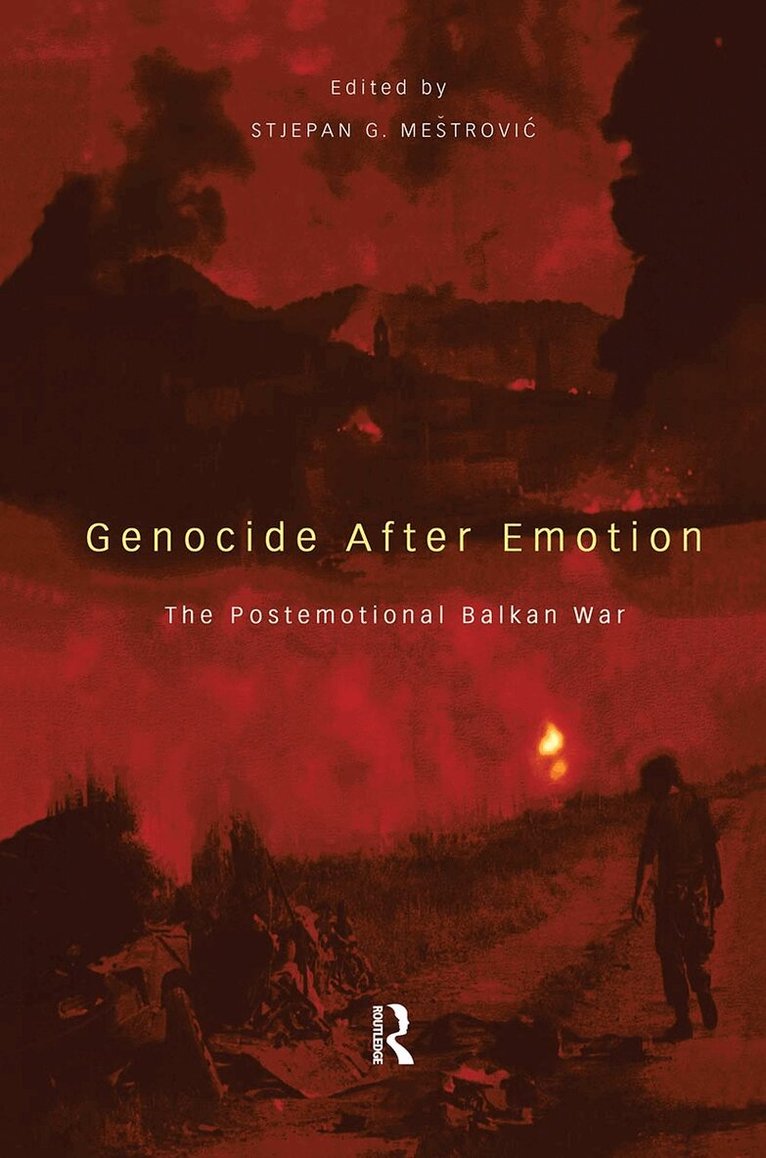
The failure to adequately respond on the part of the major Western superpowers to the atrocities in the Balkans constitutes a major moral and political scandal. In Genocide after Emotion Mestrovic and the contributors thoroughly interrogate the war, its media coverage and response in the West. The result is alarming, both for the progress of the war and for the condition of our society today: the authors argue that the West is suffering from a "postemotional" condition - we are beyond caring about anything anymore.
860 kr
Läs direkt efter köp
The failure to adequately respond on the part of the major Western superpowers to the atrocities in the Balkans constitutes a major moral and political scandal. In Genocide after Emotion Mestrovic and the contributors thoroughly interrogate the war, its media coverage and response in the West. The result is alarming, both for the progress of the war and for the condition of our society today: the authors argue that the West is suffering from a "postemotional" condition - we are beyond caring about anything anymore.
2 222 kr
Skickas inom 10-15 vardagar
795 kr
Läs direkt efter köp
795 kr
Läs direkt efter köp
973 kr
Skickas
1 172 kr
Skickas inom 3-6 vardagar
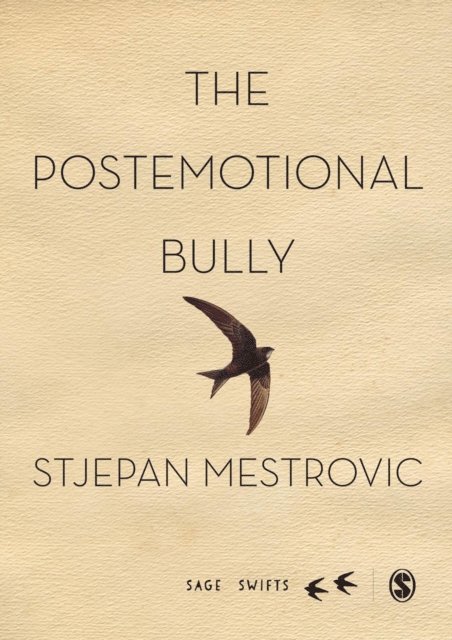
The topics of bullying and hazing have sparked interest and discussion in recent years. Hazing is a crime in the United States, and Western nations have made efforts to stamp out bullying in schools, the workplace, and institutions. However, for the most part, bullying and hazing are ill-defined and lack theoretical perspective. Mestrovic brings classical as well as contemporary social theory to bear on this discussion. Thorstein Veblen defined the predatory barbarian as the social type, enshrined by modernity, who prefers to use force over peacable means to achieve ends. On the other extreme, Marcel Mauss wrote about the spirit of the gift and its obligations - to give, to receive, and to reciprocate - as the fundamental basis of social life. Yet, he argued that the spirit of modernity was disappearing with the progress of modernity. Mestrovic traces this fundamental opposition between barbaric force or bullying versus benign obligation that is the spirit of the gift through a host of modernist and postmodernist thinkers and theories. He introduces the concept of the 'postemotional bully' as an alternative to both of these major bodies of social theory. The postemotional bully, as a social type, is fungible, beset by screen-images on media and social media that are isolating, and is at the mercy of the peer-group. Case studies focus on bullying and hazing, specifically the cases of an American solider who committed suicide in Afghanistan, instances of torture at Abu Ghraib, and the murder of a 23-year-old African-American inmate in a Southern state prison in the US.
937 kr
Skickas
The topics of bullying and hazing have sparked interest and discussion in recent years. Hazing is a crime in the United States, and Western nations have made efforts to stamp out bullying in schools, the workplace, and institutions. However, for the most part, bullying and hazing are ill-defined and lack theoretical perspective. Mestrovic brings classical as well as contemporary social theory to bear on this discussion. Thorstein Veblen defined the predatory barbarian as the social type, enshrined by modernity, who prefers to use force over peacable means to achieve ends. On the other extreme, Marcel Mauss wrote about the spirit of the gift and its obligations - to give, to receive, and to reciprocate - as the fundamental basis of social life. Yet, he argued that the spirit of modernity was disappearing with the progress of modernity. Mestrovic traces this fundamental opposition between barbaric force or bullying versus benign obligation that is the spirit of the gift through a host of modernist and postmodernist thinkers and theories. He introduces the concept of the 'postemotional bully' as an alternative to both of these major bodies of social theory. The postemotional bully, as a social type, is fungible, beset by screen-images on media and social media that are isolating, and is at the mercy of the peer-group. Case studies focus on bullying and hazing, specifically the cases of an American solider who committed suicide in Afghanistan, instances of torture at Abu Ghraib, and the murder of a 23-year-old African-American inmate in a Southern state prison in the US.
801 kr
Läs direkt efter köp
The topics of bullying and hazing have sparked interest and discussion in recent years. Hazing is a crime in the United States, and Western nations have made efforts to stamp out bullying in schools, the workplace, and institutions. However, for the most part, bullying and hazing are ill-defined and lack theoretical perspective. Mestrovic brings classical as well as contemporary social theory to bear on this discussion. Thorstein Veblen defined the predatory barbarian as the social type, enshrined by modernity, who prefers to use force over peacable means to achieve ends. On the other extreme, Marcel Mauss wrote about the spirit of the gift and its obligations - to give, to receive, and to reciprocate - as the fundamental basis of social life. Yet, he argued that the spirit of modernity was disappearing with the progress of modernity. Mestrovic traces this fundamental opposition between barbaric force or bullying versus benign obligation that is the spirit of the gift through a host of modernist and postmodernist thinkers and theories. He introduces the concept of the ′postemotional bully′ as an alternative to both of these major bodies of social theory. The postemotional bully, as a social type, is fungible, beset by screen-images on media and social media that are isolating, and is at the mercy of the peer-group. Case studies focus on bullying and hazing, specifically the cases of an American solider who committed suicide in Afghanistan, instances of torture at Abu Ghraib, and the murder of a 23-year-old African-American inmate in a Southern state prison in the US.
825 kr
Läs direkt efter köp
515 kr
Tillfälligt slut
1 393 kr
Tillfälligt slut