• Fri frakt över 249 kr
  • •
  • Snabba leveranser
  • •
  • Billiga böcker
Kundservice

Du är på sajten för privatpersoner.

Företag, bibliotek eller offentlig verksamhet?

Du handlar på classic.bokus.com, där alla dina funktioner finns intakta.
Till classic.bokus.com
Bokus logotyp. Gå till startsidan.
  • Erbjudanden
  • Nyheter
  • Student
  • Topplistor
  • Barn & ungdom
  • Bokus Play
  • E-böcker
  • Pocketböcker
  • Spel & pussel

10% rabatt på allt med kod: NYSTART10 →

Sidfot

Mina sidor

    Hjälp

    • Kundservice
    • Vanliga frågor och svar
    • Frakt och leverans
    • Retur vid ångerrätt
    • Reklamera vara
    • Betalning
    • Köpvillkor
    • Allmänna villkor
    • Information om webbplatsens tillgänglighet

    Om Bokus

    • Om oss
    • Pressrum
    • För studenter
    • För företag
    • För bibliotek och offentlig verksamhet
    • För leverantörer
    • Hållbarhet

    Populärt

    • Aktuella erbjudanden
    • Presentkort
    • Studentlitteratur
    • Nya böcker
    • Topplistor
    • Signerade böcker
    • Engelska böcker

    Inspiration

    • Boktips
    • BookTok
    • Populära bokserier
    • Barnbokskaraktärer
    • Populära författare
    Logotyp för Bokus
    Följ oss på Facebook (extern länk)Följ oss på Instagram (extern länk)Följ oss på YouTube (extern länk)Följ oss på TikTok (extern länk)
    bokus @ CookiesAnpassa cookiesIntegritetspolicyKöpvillkor
    Till Citymail hemsida (extern länk)Till Budbee hemsida (extern länk)Till Postnord hemsida (extern länk)Till Schenker hemsida (extern länk)Till Early Bird hemsida (extern länk)Till Walleys hemsida (extern länk)
    1. Samhälle och politik
    2. Sociologi och antropologi
    3. Sociologi

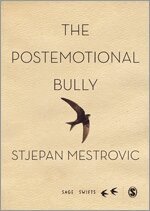
    The Postemotional Bully

    AvStjepan Mestrovic

    Inbunden, Engelska, 2015

    Del i serien SAGE Swifts

    1 244 kr

    Beställningsvara. Skickas inom 3-6 vardagar. Fri frakt över 249 kr.

    Beskrivning

    The topics of bullying and hazing have sparked interest and discussion in recent years. Hazing is a crime in the United States, and Western nations have made efforts to stamp out bullying in schools, the workplace, and institutions. However, for the most part, bullying and hazing are ill-defined and lack theoretical perspective. Mestrovic brings classical as well as contemporary social theory to bear on this discussion.

    Thorstein Veblen defined the predatory barbarian as the social type, enshrined by modernity, who prefers to use force over peacable means to achieve ends. On the other extreme, Marcel Mauss wrote about the spirit of the gift and its obligations - to give, to receive, and to reciprocate - as the fundamental basis of social life. Yet, he argued that the spirit of modernity was disappearing with the progress of modernity.

    Mestrovic traces this fundamental opposition between barbaric force or bullying versus benign obligation that is the spirit of the gift through a host of modernist and postmodernist thinkers and theories. He introduces the concept of the 'postemotional bully' as an alternative to both of these major bodies of social theory. The postemotional bully, as a social type, is fungible, beset by screen-images on media and social media that are isolating, and is at the mercy of the peer-group.

    Case studies focus on bullying and hazing, specifically the cases of an American solider who committed suicide in Afghanistan, instances of torture at Abu Ghraib, and the murder of a 23-year-old African-American inmate in a Southern state prison in the US.

    Produktinformation

    • Utgivningsdatum:2015-01-21
    • Mått:148 x 210 x 10 mm
    • Vikt:300 g
    • Format:Inbunden
    • Språk:Engelska
    • Serie:SAGE Swifts
    • Antal sidor:136
    • Upplaga:1
    • Förlag:SAGE Publications
    • ISBN:9781473907805

    Utforska kategorier

    • Sociologi inom Samhälle och politik

    Mer om författaren

    Stjepan Mestrovic holds three degrees from Harvard University (in psychology, education, and theology) and a PhD in sociology from Syracuse University. He is the author of twenty books and numerous scholarly articles on classical and contemporary social theory, war crimes, and culture.

    Recensioner i media

    Stjepan Mestrovic has always been worth reading, and here is Mestrovic at his very best. Written with passion and principle, this book builds on the sociological tradition to explore the darkness of these postemotional times. A shining example of sociology as it should be - and so rarely is.

    Innehållsförteckning

    • CHAPTER: 1 THE PROBLEMDefining bullyingForce versus obligation: Revisiting Marcel Mauss’s The GiftThe forced gift—the connection to bullyingCHAPTER 2: MODERNITY AS A BULLYAuguste Comte: positivism at war with theologyCharles Darwin, emotions, and cooperationDurkheim’s application of Darwin’s insightsFerdinand Tonnies on the extinction of communityMax Weber on the disappearance of charismaWilliam James and the bullying inherent in vicious abstractionismThe Chicago School of sociology and the movement from primary to secondary groupsDavid Riesman and the society of samenessThe battle hymn of the lonely crowdThe Buffy television series as the Shakespearean drama of the postemotional ageGeorge Ritzer and the McDonaldization of societyMcDonaldization as the postemotionalization of PuritanismPostemotional charismaCHAPTER 3: POSTMODERNISM AS NEGATION OF THE GIFTDeconstruction: tear down, but do not rebuildDecentering: everything and everyone is marginalizedThe Marxist basis for postmodernismWalter Benjamin: the loss of aura, and simulacraThe postmodern theme of disenchantmentTruths are cut down to sizeCHAPTER 4: POSTEMOTIONALISM ILLUSTRATEDRevisiting David Riesman and Marshall McLuhan on oral, written, and screen image societiesPostemotionalism in Dostoevsky’s “The Grand Inquisitor”Dostoevsky’s Notes From the UndergroundThe narrative in the film, Idiocracy, as an example of postemotional societyThe pharmaceutical control of emotions in The Giver and EquilibriumCHAPTER 5: ABU GHRAIB AND POSTEMOTIONAL SOCIETYThe digital photographs, or screen image elementThe postemotional carry-over of Zimbardo’s theoryPostemotional soldiers as “fungible assets”The lawyers as fungible assets, and postemotional lawThe postemotional smileHolding back emotions, and reliance upon techniquesPostemotional manipulationThe scripted, postemotional societyCHAPTER 6: DRIVEN TO SUICIDE BY BULLYINGImmediate desiccation of emotional importDisavowal by Johnny’s parentsPostemotional suicide preventionDefinition of hazingWhat is the conduct of corrective training?Jury selection: over as soon as it startedRacial slurs postemotionalized into nicknames and terms of endearmentThe social disorganization at the outpostCHAPTER 7: BEATEN TO DEATHPostemotional groupthinkThe dysfunctional social system that will not self-correctPostemotional anomieThe postemotional panopticonCHAPTER 8 CONCLUSIONS: WHERE DO WE GO FROM HERE?