Strom C. Thacker - Böcker
Visar alla böcker från författaren Strom C. Thacker. Handla med fri frakt och snabb leverans.
4 produkter
4 produkter
441 kr
Skickas inom 7-10 vardagar
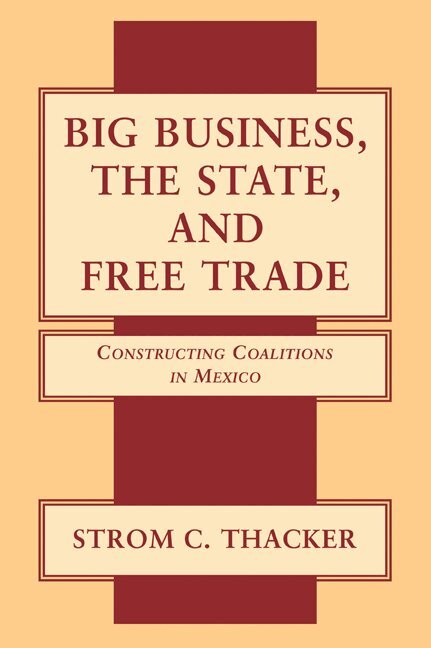
Many existing theories of economic liberalization fail to account for Mexico's experiences. Why has the Mexican government risked alienating its primary constituencies by pursuing trade opening and joining NAFTA? Big Business, the State, and Free Trade develops a general explanation of trade policy coalition politics and uses it to explain the opening of Mexico's economy. It emphasizes the role of business and state actors in constructing competing trade policy coalitions. The book traces the formation and relative strength of a protectionist and a free trade coalition across a series of policy episodes from the 1970s to the 1980s. It pays particular attention to the North American Free Trade Agreement, which consolidated a strong free trade coalition between big business and state elites. The conditions that strengthened the free trade coalition have also contributed to higher levels of political and economic instability since 1994. Coalition politics is likely to become more important as Mexico's political system democratizes.
347 kr
Skickas inom 7-10 vardagar
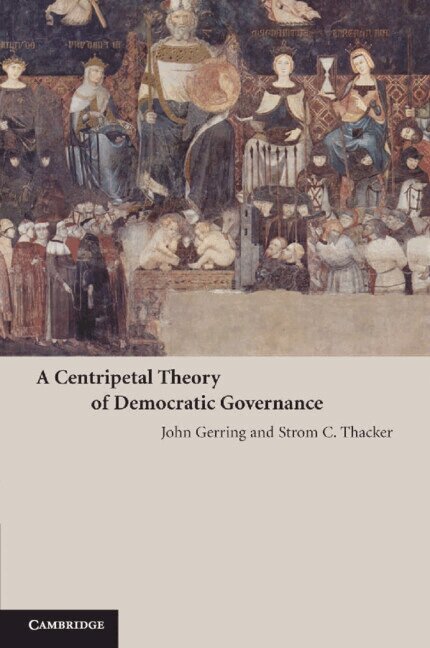
This book outlines the importance of political institutions in achieving good governance within a democratic polity and sets forth an argument to explore what sorts of institutions do the job best. By focusing on 'centripetal institutions', which maximize both representation and authority by bringing political energy and actors toward the centre of a polity, the authors set forth a relatively novel theory of democratic governance, applicable to all political settings in which multi-party competition obtains. Basing their theory on national-level political institutions, the authors argue that there are three types of political institutions that are fundamental in securing a centripetal style of democratic governance: unitary (rather than federal) sovereignty, a parliamentary (rather than presidential) executive, and a closed-list PR electoral system (rather than a single-member district or preferential-vote system).
1 228 kr
Skickas inom 7-10 vardagar
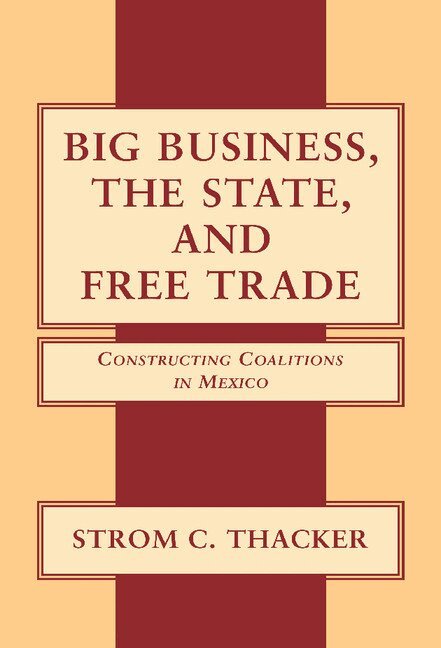
Many existing theories of economic liberalization fail to account for Mexico's experiences. Why has the Mexican government risked alienating its primary constituencies by pursuing trade opening and joining NAFTA? Big Business, the State, and Free Trade develops a general explanation of trade policy coalition politics and uses it to explain the opening of Mexico's economy. It emphasizes the role of business and state actors in constructing competing trade policy coalitions. The book traces the formation and relative strength of a protectionist and a free trade coalition across a series of policy episodes from the 1970s to the 1980s. It pays particular attention to the North American Free Trade Agreement, which consolidated a strong free trade coalition between big business and state elites. The conditions that strengthened the free trade coalition have also contributed to higher levels of political and economic instability since 1994. Coalition politics is likely to become more important as Mexico's political system democratizes.
560 kr
Skickas inom 7-10 vardagar
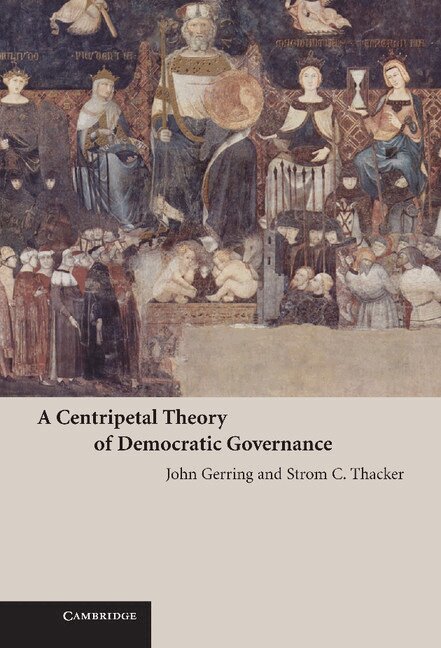
This book outlines the importance of political institutions in achieving good governance within a democratic polity and sets forth an argument to explore what sorts of institutions do the job best. By focusing on 'centripetal institutions', which maximize both representation and authority by bringing political energy and actors toward the centre of a polity, the authors set forth a relatively novel theory of democratic governance, applicable to all political settings in which multi-party competition obtains. Basing their theory on national-level political institutions, the authors argue that there are three types of political institutions that are fundamental in securing a centripetal style of democratic governance: unitary (rather than federal) sovereignty, a parliamentary (rather than presidential) executive, and a closed-list PR electoral system (rather than a single-member district or preferential-vote system).