Sumit K. Mandal – författare
Visar alla böcker från författaren Sumit K. Mandal. Handla med fri frakt och snabb leverans.
8 produkter
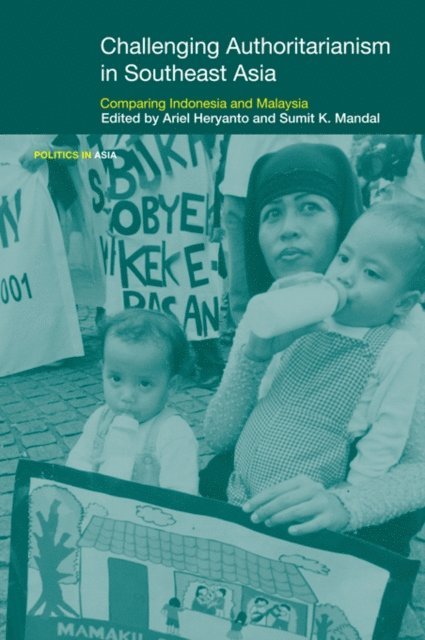
Challenging Authoritarianism in Southeast Asia
Comparing Indonesia and Malaysia
Av Ariel Heryanto, Sumit K. Mandal
Inbunden, 2003
2513 kr
Lägg i varukorg
Challenging Authoritarianism in Southeast Asia is one of the first substantial comparative studies of contemporary Indonesia and Malaysia, homes to the world's largest Muslim population. Following the collapse of New Order rule in Indonesia in 1998, this book provides an in-depth examination of …
Challenging Authoritarian Rule - SEA NIP
Comparing Indonesia and Malaysia
Av Ariel Heryanto, Sumit K. Mandal
Häftad, 2004
648 kr
Lägg i varukorg
Challenging Authoritarianism in Southeast Asia is one of the first substantial comparative studies of contemporary Indonesia and Malaysia, homes to the world's largest Muslim population. Following the collapse of New Order rule in Indonesia in 1998, this book provides an in-depth examination of …
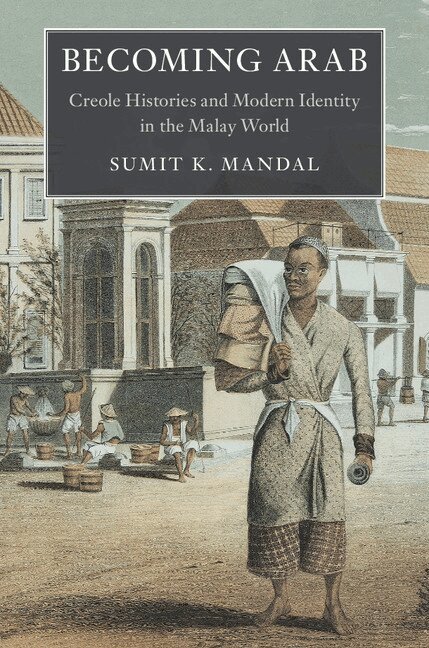
Becoming Arab
Creole Histories and Modern Identity in the Malay World
Inbunden, 2017
1624 kr
Lägg i varukorg
Sumit K. Mandal uncovers the hybridity and transregional connections underlying modern Asian identities. By considering Arabs in the Malay world under European rule, Becoming Arab explores how a long history of inter-Asian interaction was altered by nineteenth-century racial categorisation and …
Challenging Authoritarianism in Southeast Asia
Comparing Indonesia and Malaysia
Av Sumit K. Mandal, Ariel Heryanto
E-bok, 2003
813 kr
Lägg i varukorg
Challenging Authoritarianism in Southeast Asia is one of the first substantial comparative studies of contemporary Indonesia and Malaysia, homes to the world''s largest Muslim population. Following the collapse of New Order rule in Indonesia in 1998, this book provides an in-depth examination of …
Challenging Authoritarianism in Southeast Asia
Comparing Indonesia and Malaysia
Av Sumit K. Mandal, Ariel Heryanto
E-bok, 2003
831 kr
Lägg i varukorg
Challenging Authoritarianism in Southeast Asia is one of the first substantial comparative studies of contemporary Indonesia and Malaysia, homes to the world''s largest Muslim population. Following the collapse of New Order rule in Indonesia in 1998, this book provides an in-depth examination of …
Challenging Authoritarian Rule - SEA NIP
Comparing Indonesia and Malaysia
Av Sumit K. Mandal, Ariel Heryanto
E-bok, 2013
762 kr
Lägg i varukorg
Challenging Authoritarianism in Southeast Asia is one of the first substantial comparative studies of contemporary Indonesia and Malaysia, homes to the world''s largest Muslim population. Following the collapse of New Order rule in Indonesia in 1998, this book provides an in-depth examination of …
Challenging Authoritarian Rule - SEA NIP
Comparing Indonesia and Malaysia
Av Sumit K. Mandal, Ariel Heryanto
E-bok, 2013
762 kr
Lägg i varukorg
Challenging Authoritarianism in Southeast Asia is one of the first substantial comparative studies of contemporary Indonesia and Malaysia, homes to the world''s largest Muslim population. Following the collapse of New Order rule in Indonesia in 1998, this book provides an in-depth examination of …
Becoming Arab
Creole Histories and Modern Identity in the Malay World
Häftad, 2017
720 kr
Lägg i varukorg
Sumit K. Mandal uncovers the hybridity and transregional connections underlying modern Asian identities. By considering Arabs in the Malay world under European rule, Becoming Arab explores how a long history of inter-Asian interaction was altered by nineteenth-century racial categorisation and …